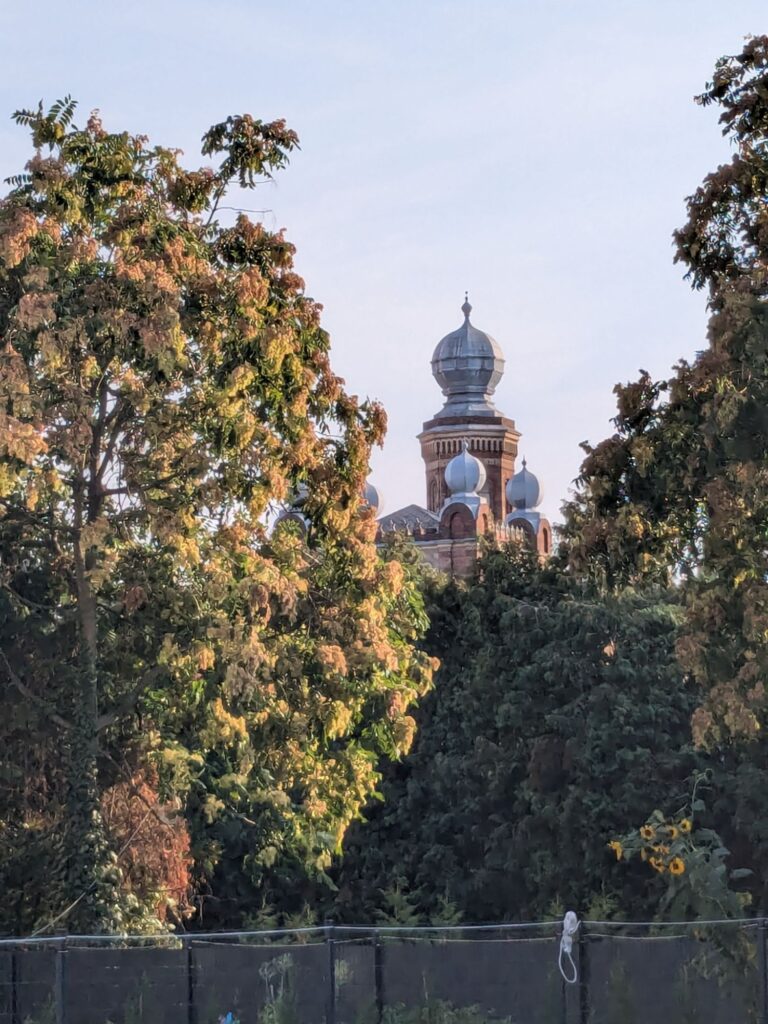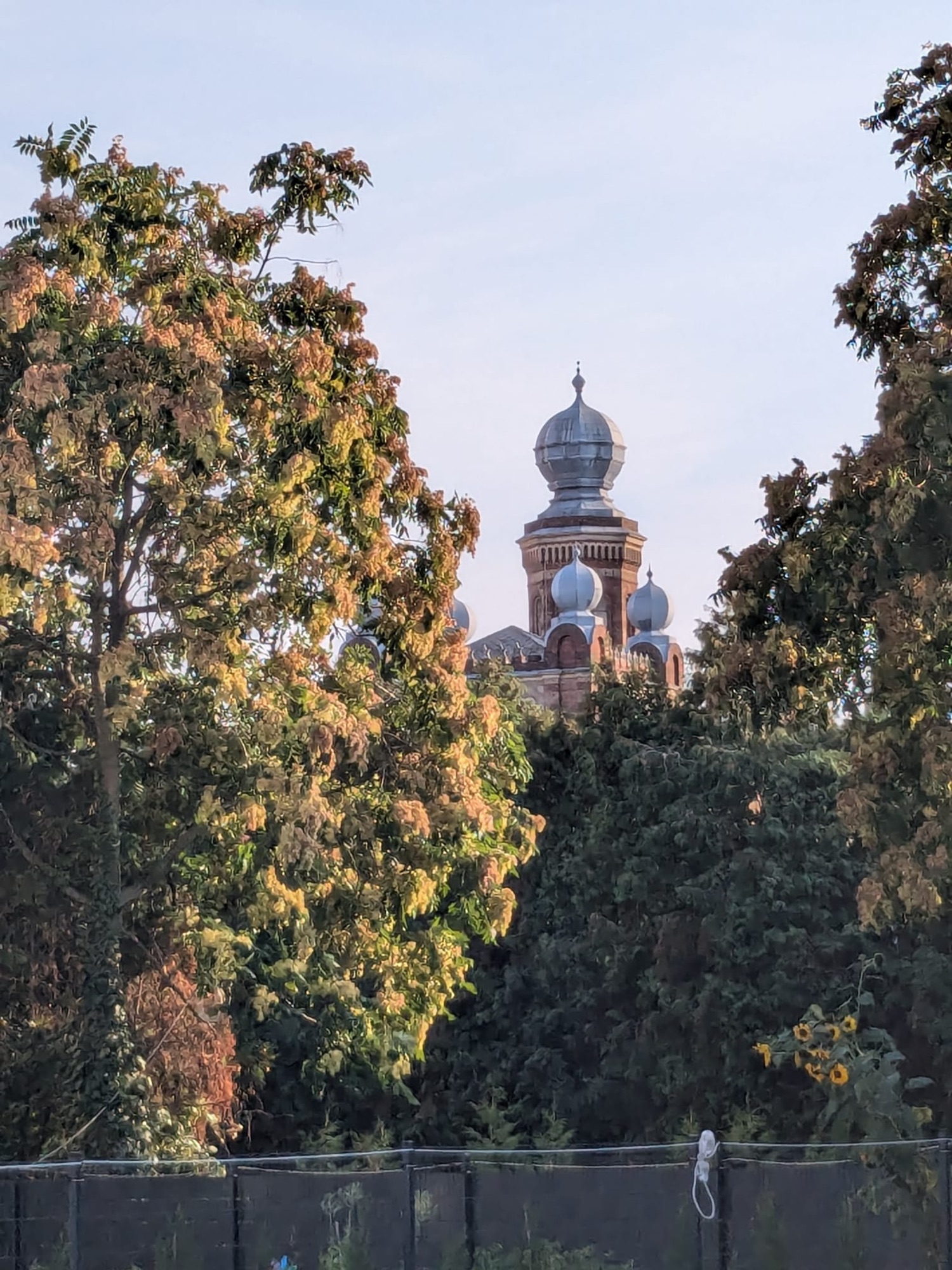
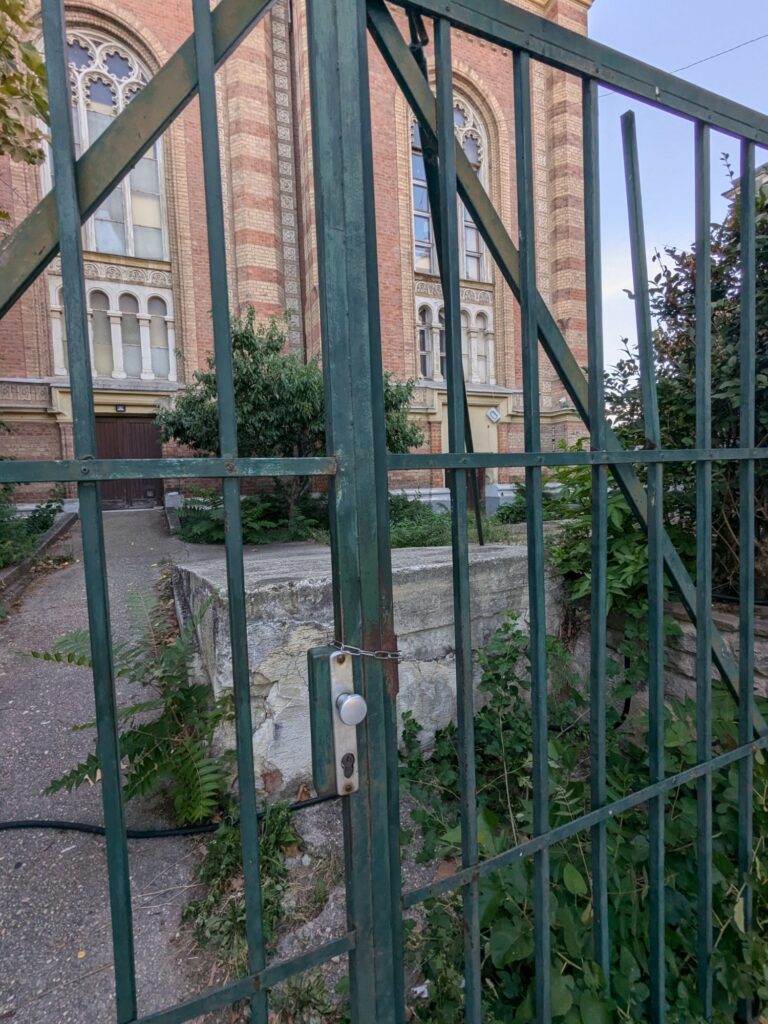
It is blisteringly hot. Few people on the streets, most coffee houses are closed. On Rákóczi Ferenc utca, the main street leading to Batthyány Tér, a large square where the defunct Neolog Synagogue of Szombathely is located, components of wooden huts have been distributed on the sidewalks. This is in preparation to the Hungarian national holiday this coming Tuesday, August 20th.
(Rákóczi is a Hungarian national hero who led a rebellion against the Habsburgs at the beginning of the 18th century. When the rebellion failed he fled to Paris where he ran a gambling establishment. He spent his last 18 years in relative comfort in Turkey.
Batthyány, on the other hand, is the name of one of the oldest Hungarian families of nobility, typically to be found on the Emperor’s side. Hungarian history is complicated.)
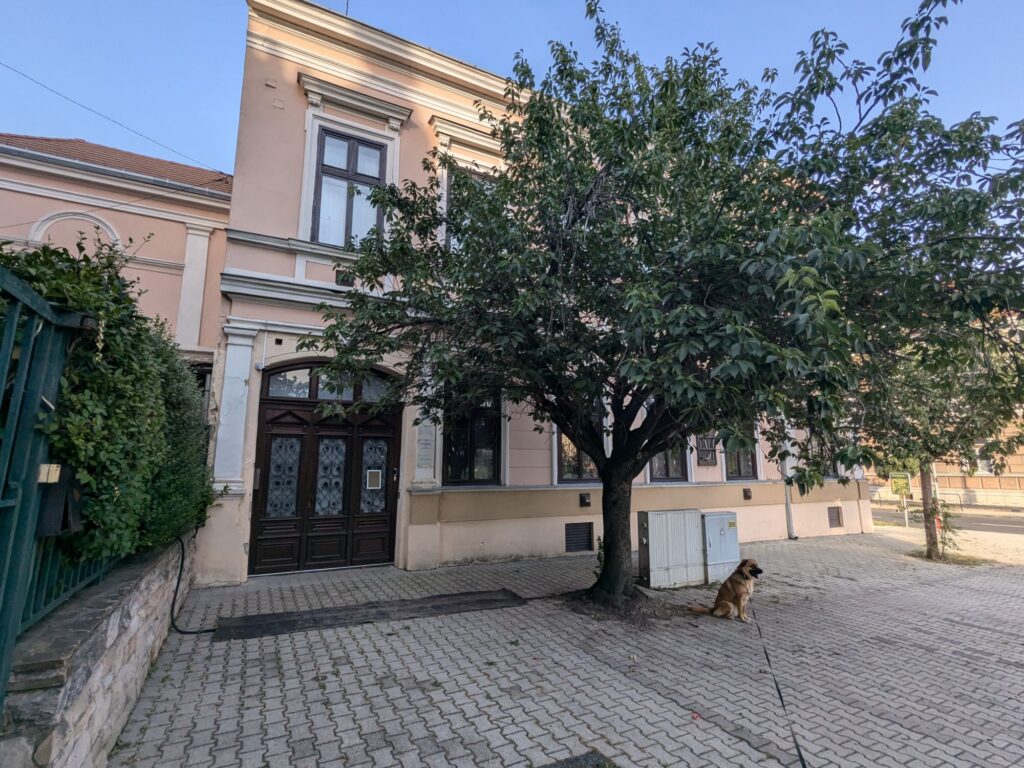
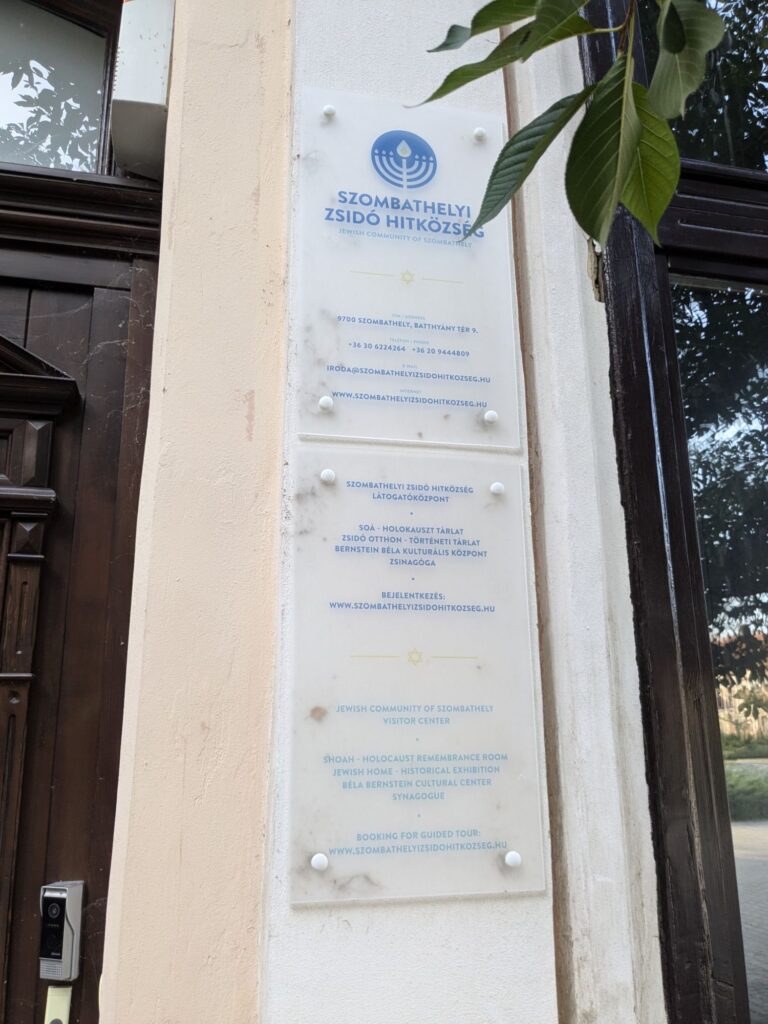
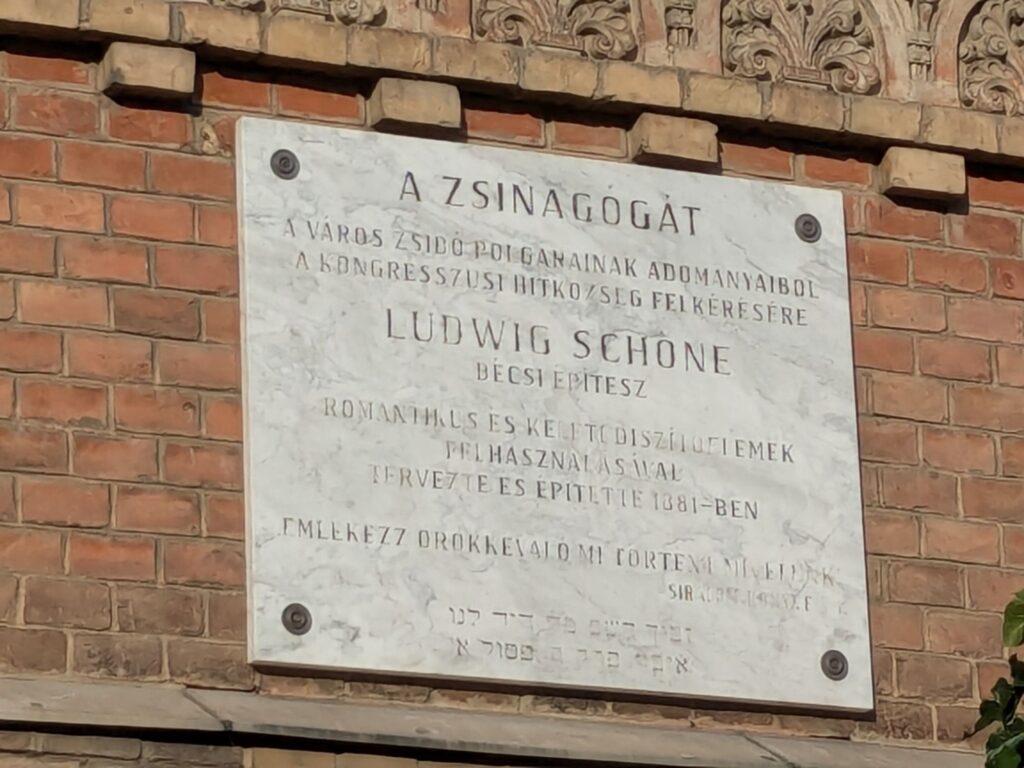
The Synagogue is used as a concert venue for the adjoining Bartók Béla School of Music and can be visited only by prior appointment. Contact may be made via the Jewish community’s web site https://www.szombathelyizsidohitkozseg.hu/ — a domain name apparently aiming at pure obfuscation!
(This is what happens to those magnificent Neolog Synagogues: they are renovated with great effort and turned into music schools, concert venues or museums. Scroll down to what happens to the Orthodox Shuls!)
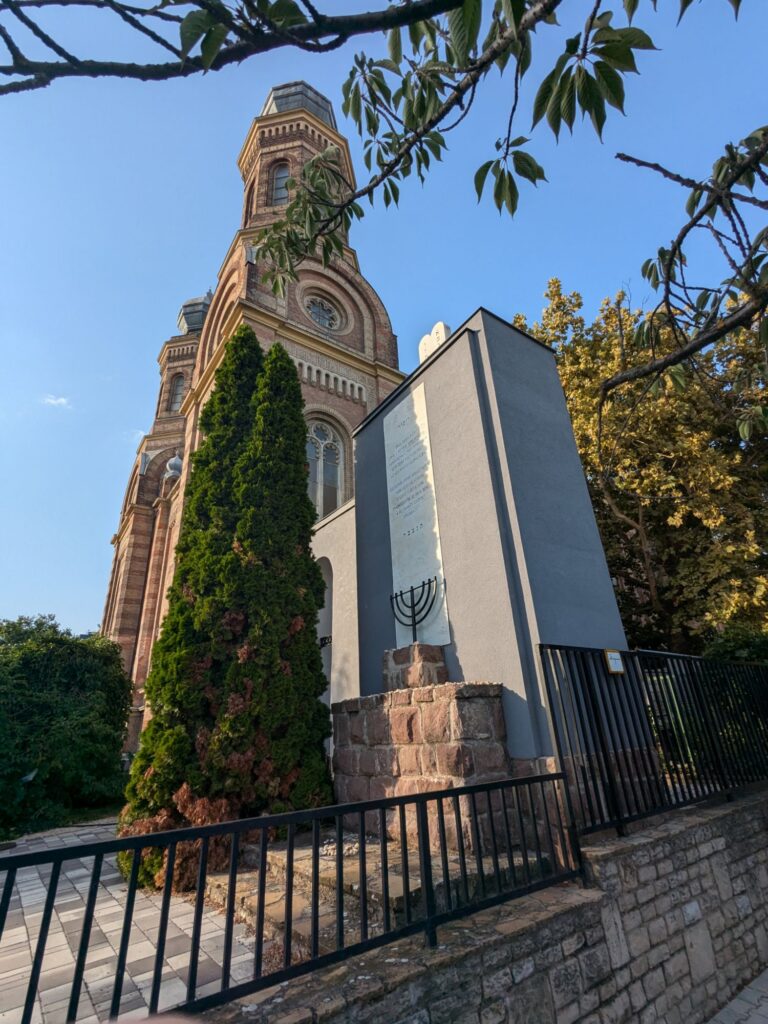
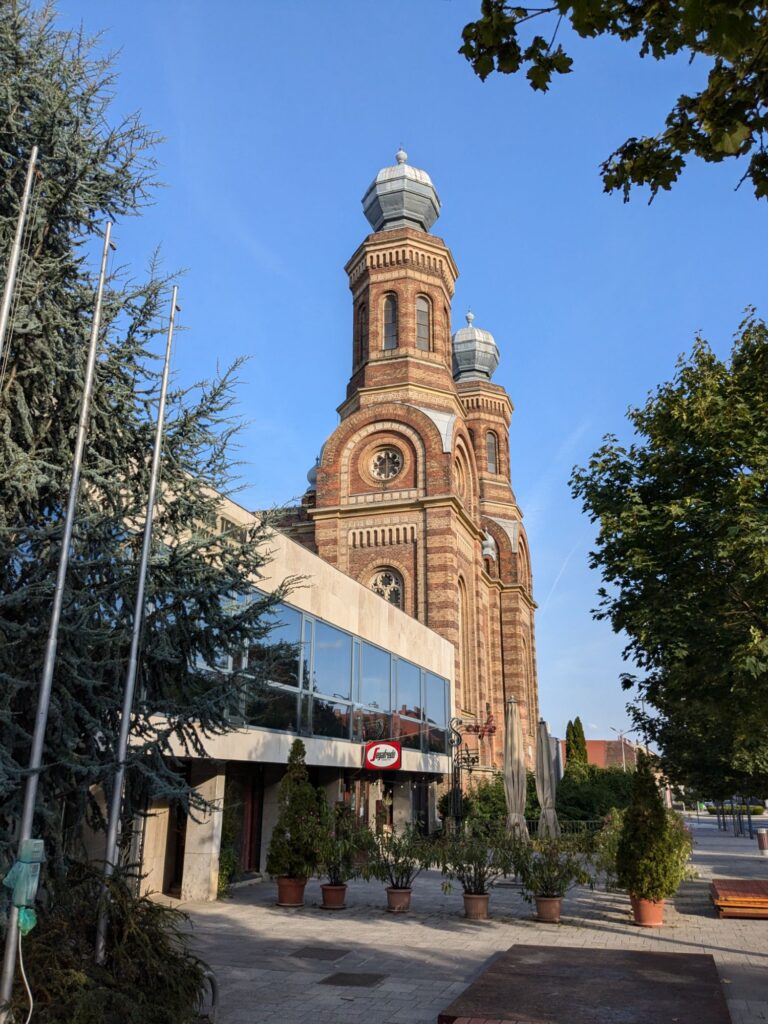
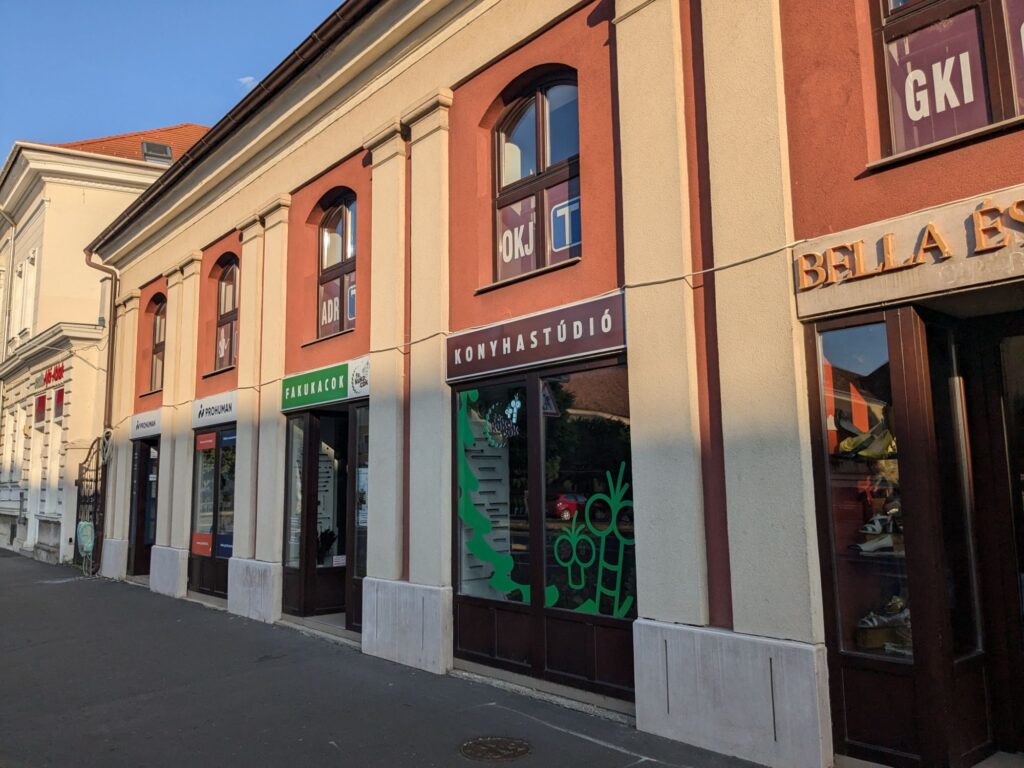
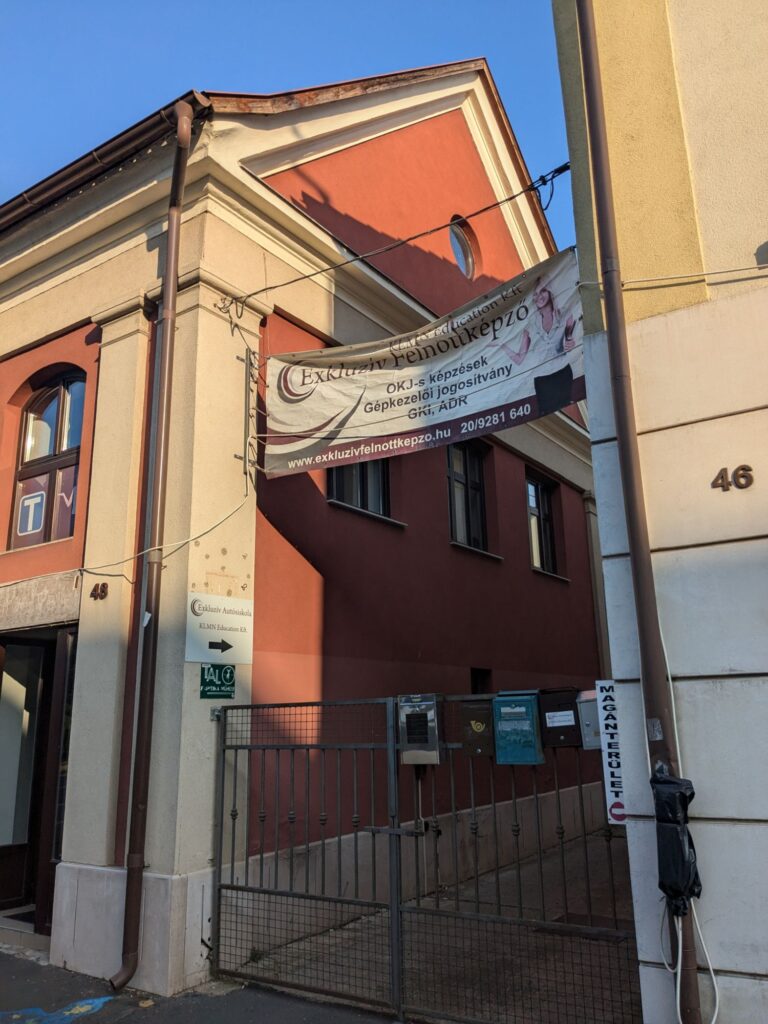
The next day we returned to Szombathely to visit the Orthodox Shul in Thököly Imre utca number 48.
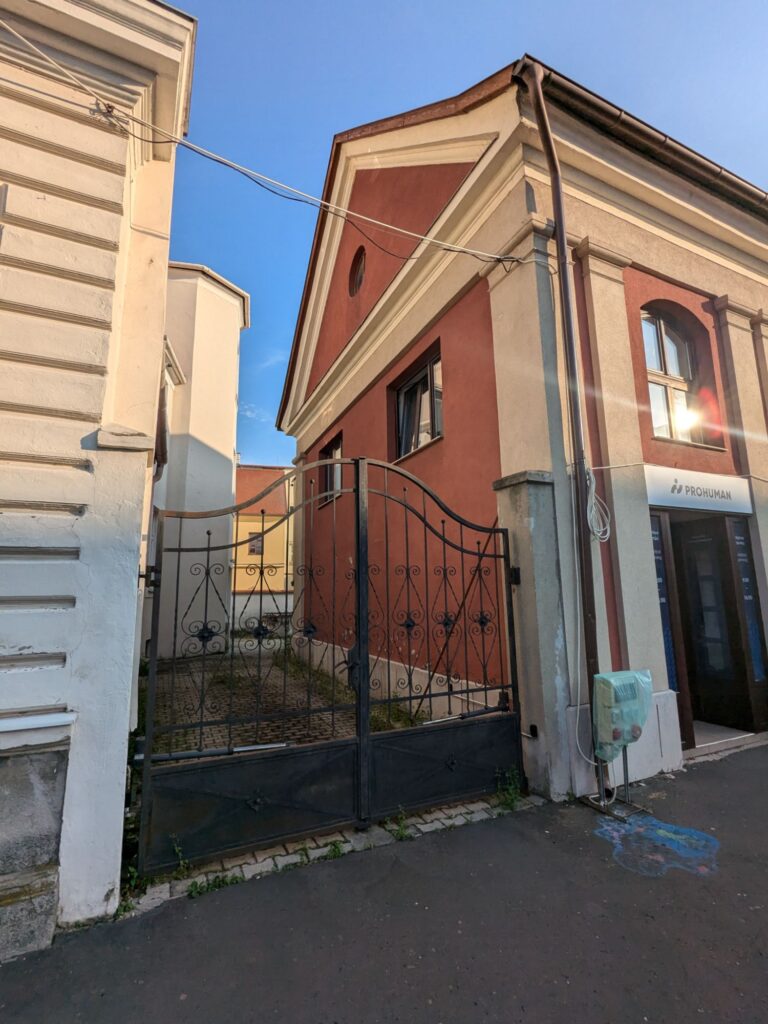
It is not a museum, it is not a concert hall. Instead it contains a barber shop, a driving school, a kitchen studio, a carpenter and other small shops. Except for the slightly unusual facade there is nothing to indicate that this was once a building for worship of the Almighty.
I tried the gates to the left and to the right to get a glimpse of the back, and I surrounded most of the block to see if I could reach the back yard. No luck.
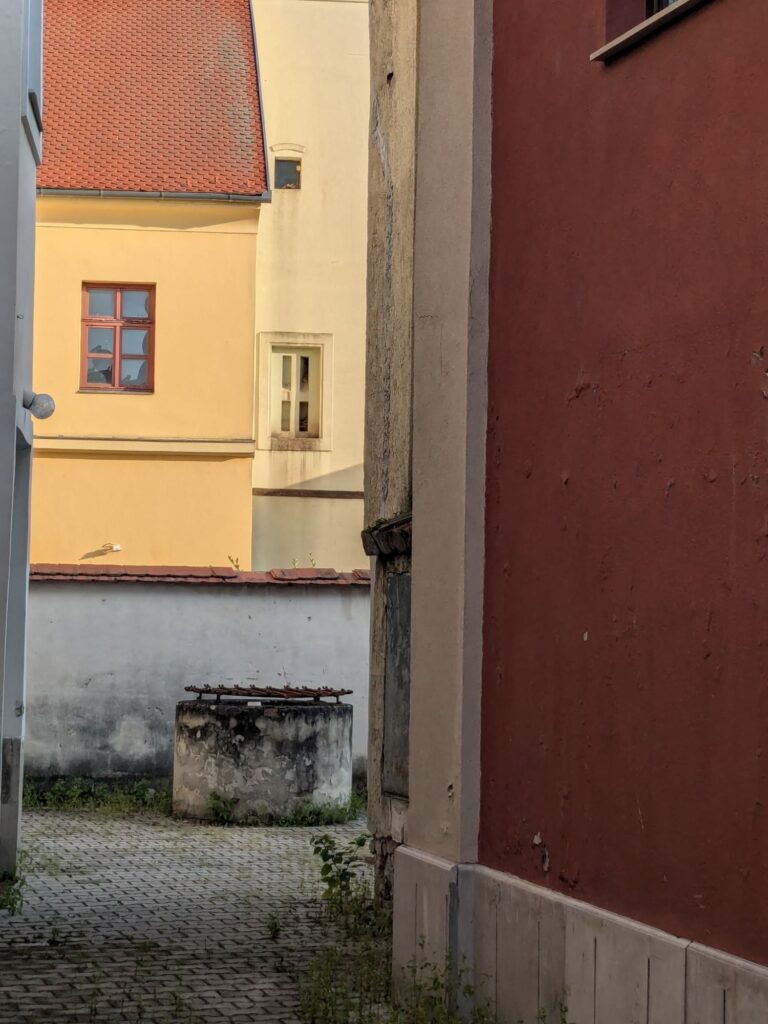
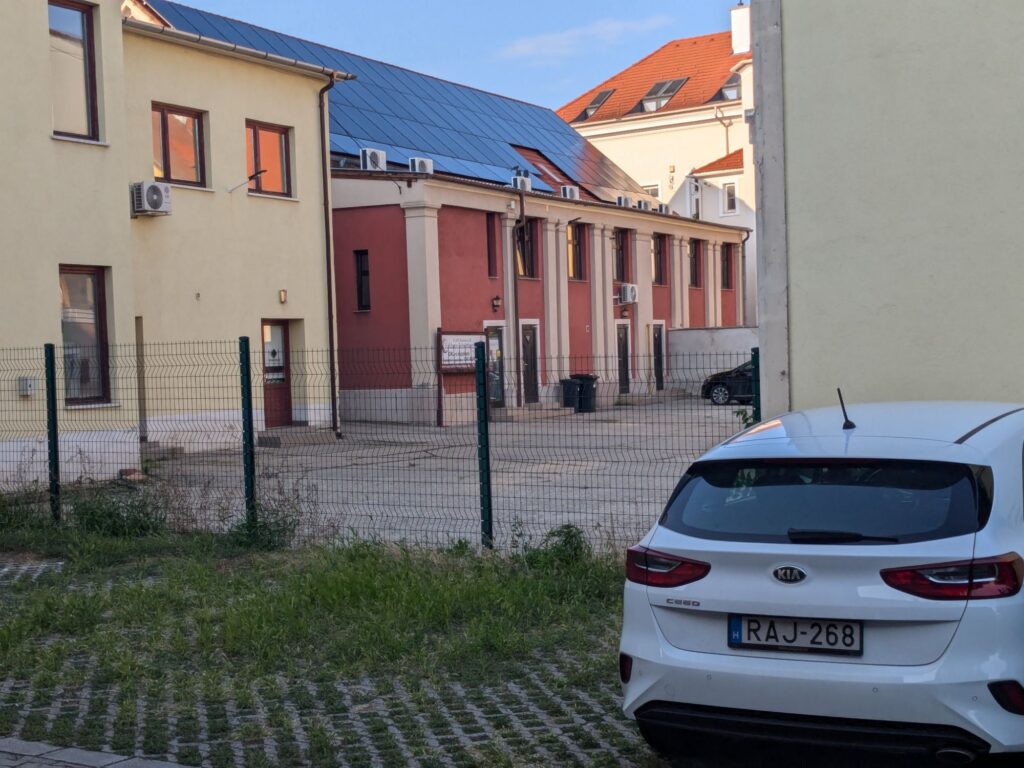
But when I turned to walk back to the car, I suddenly saw this in the distance: