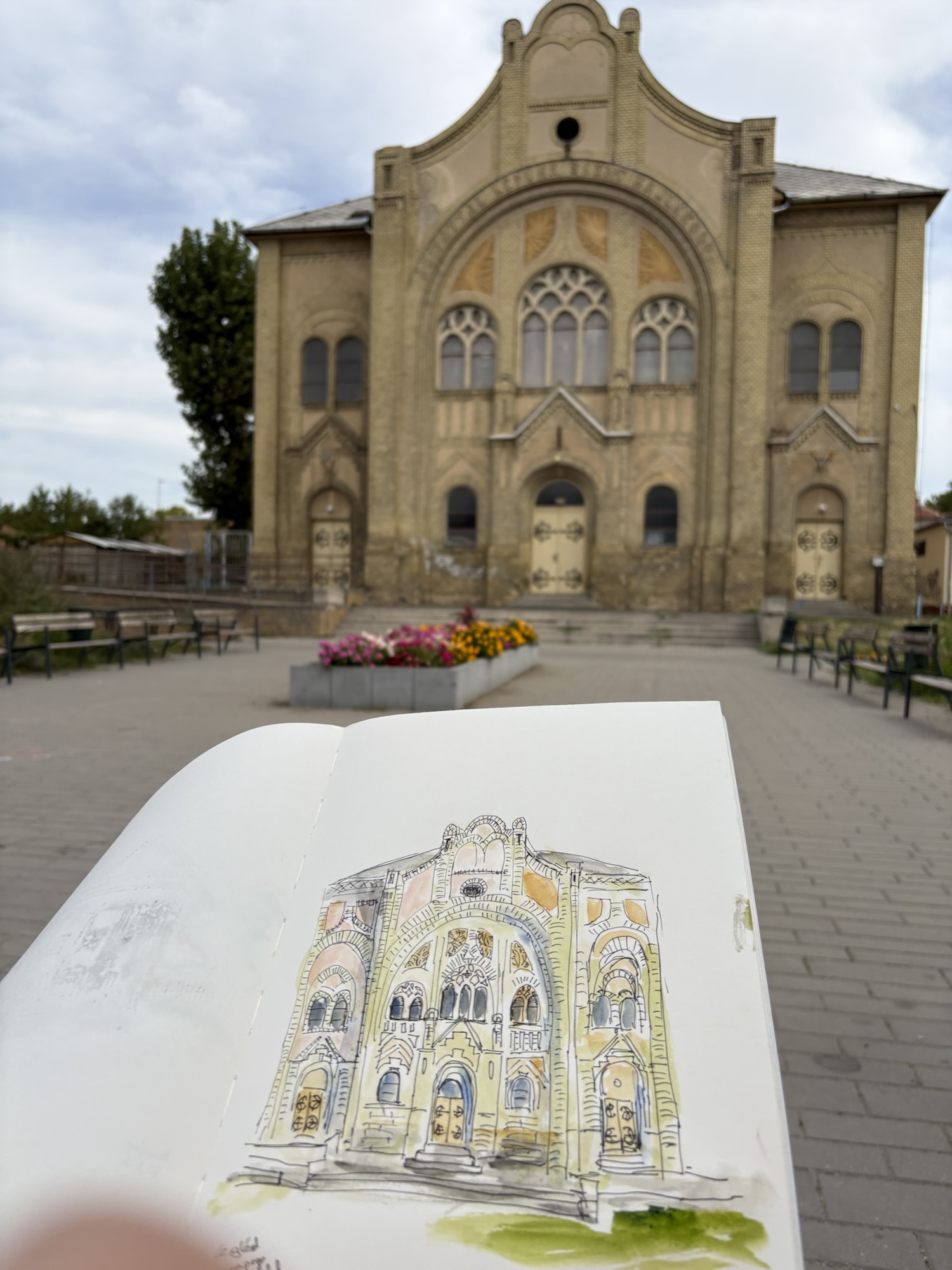
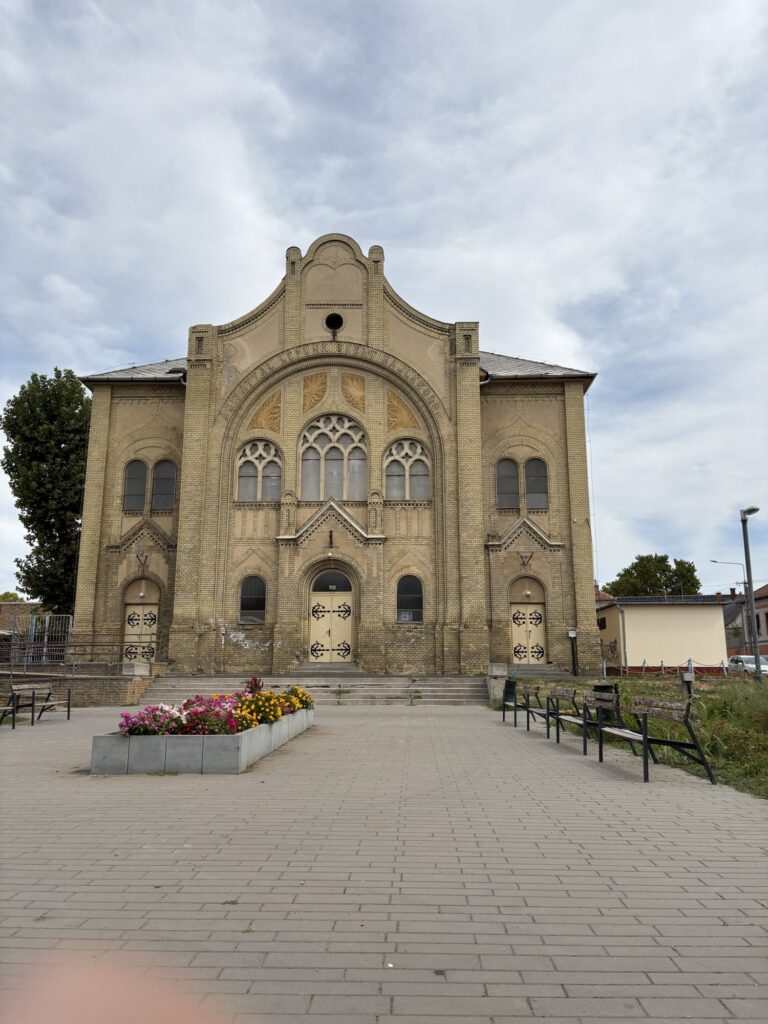
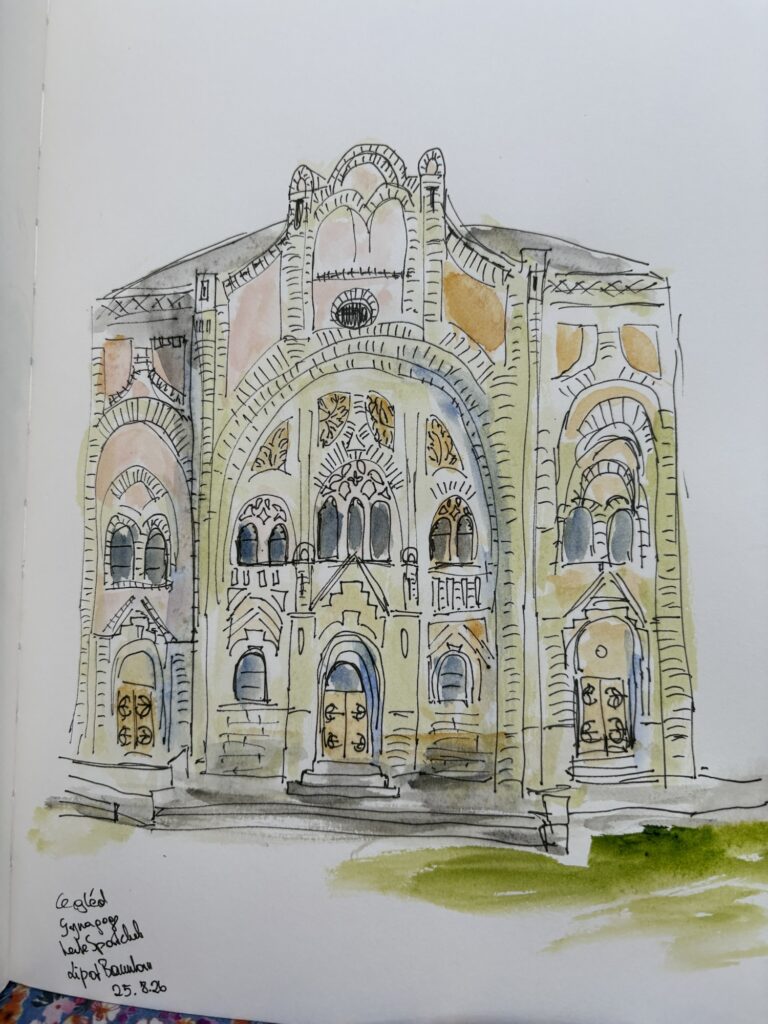
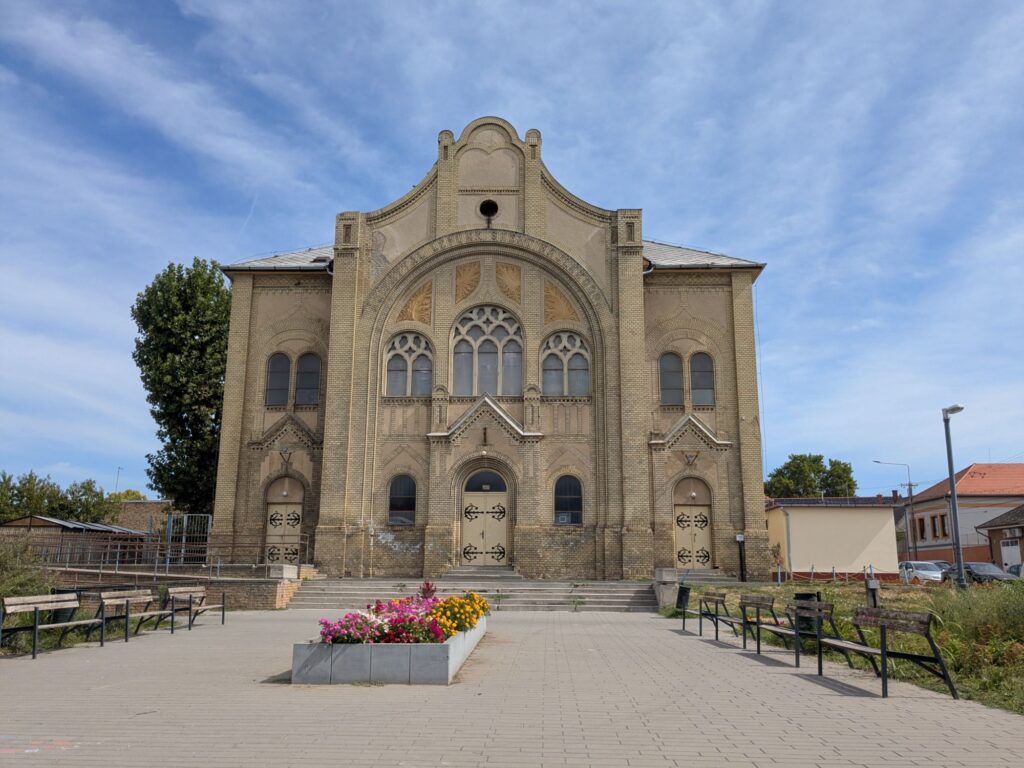
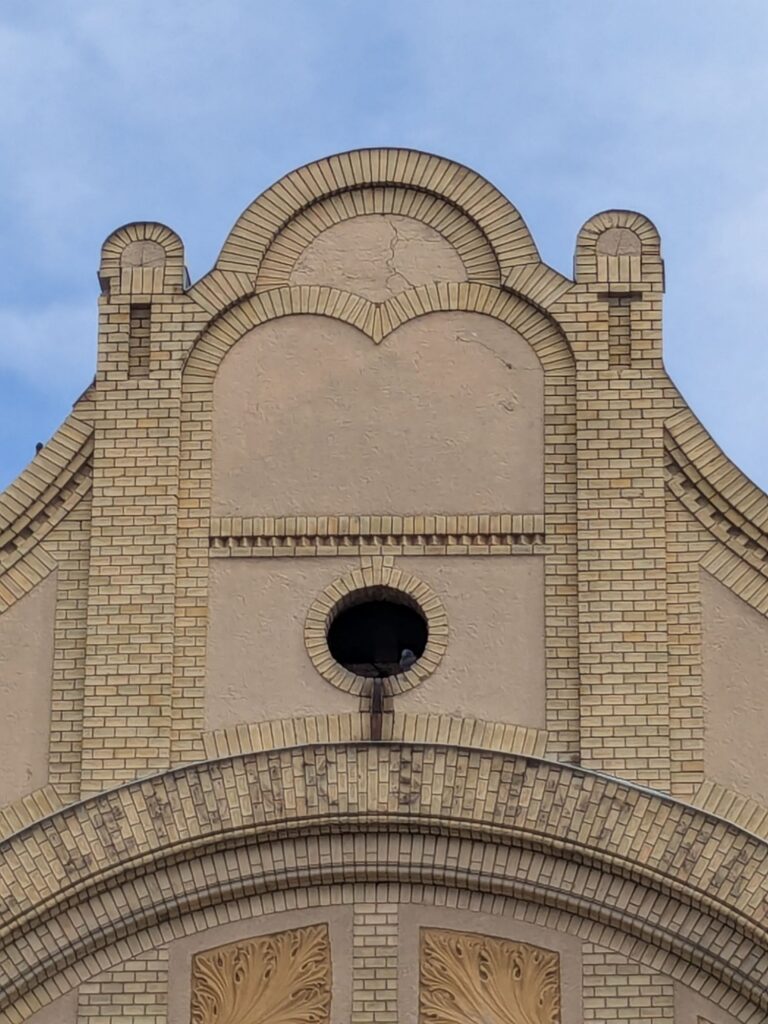
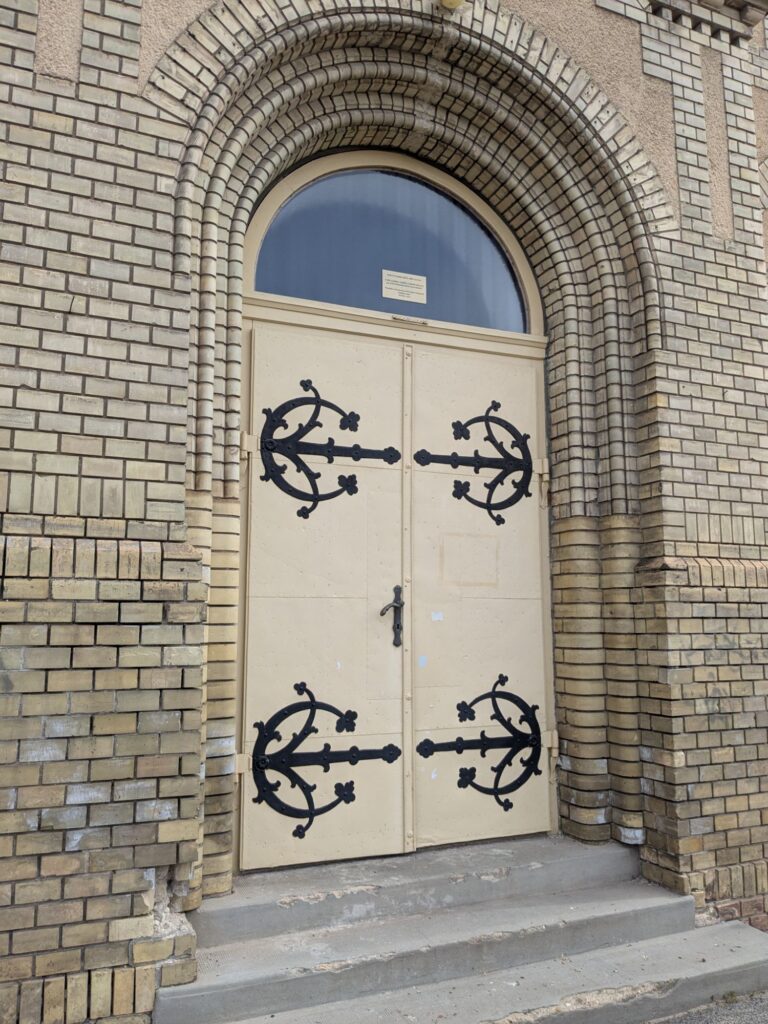
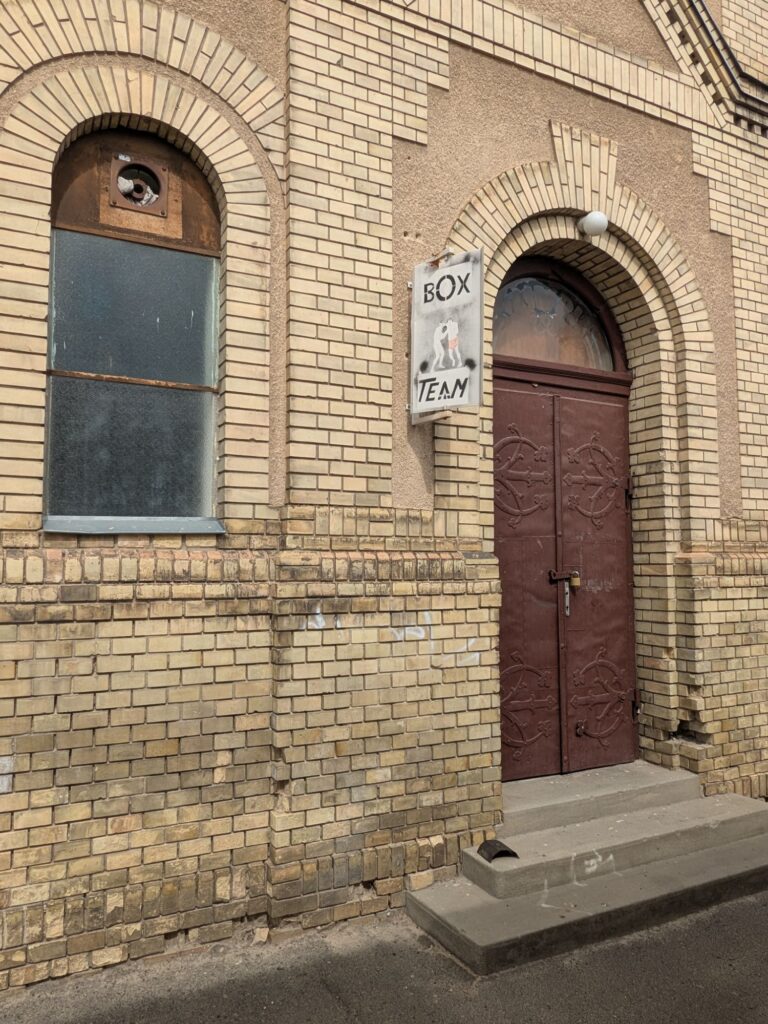
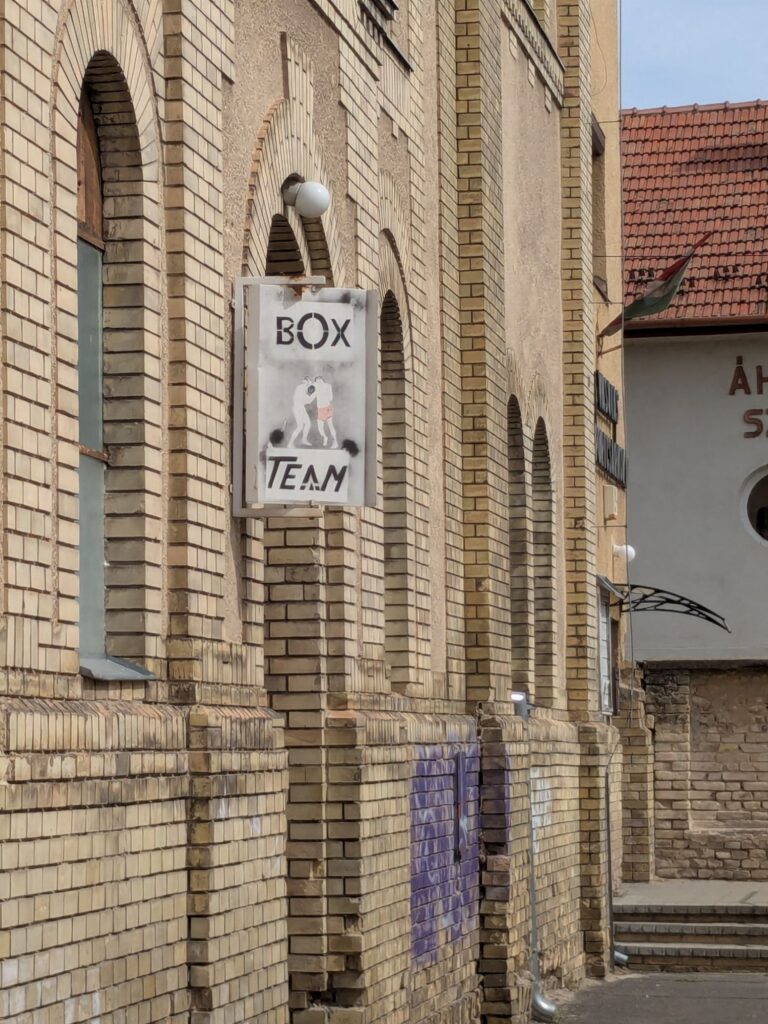
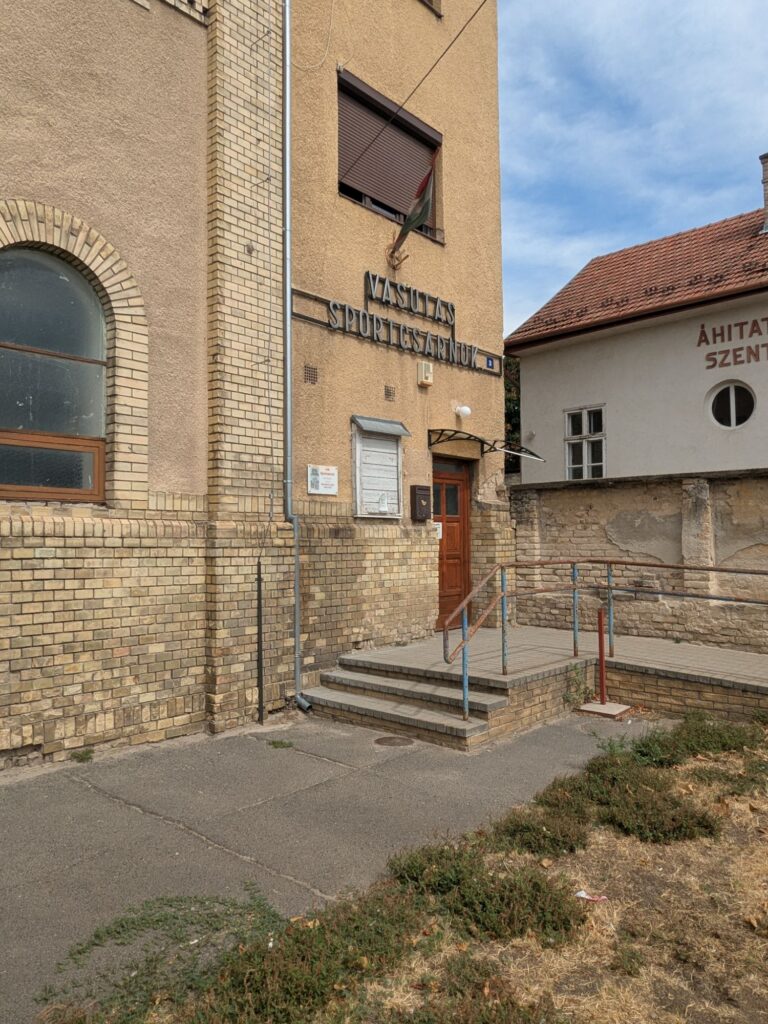
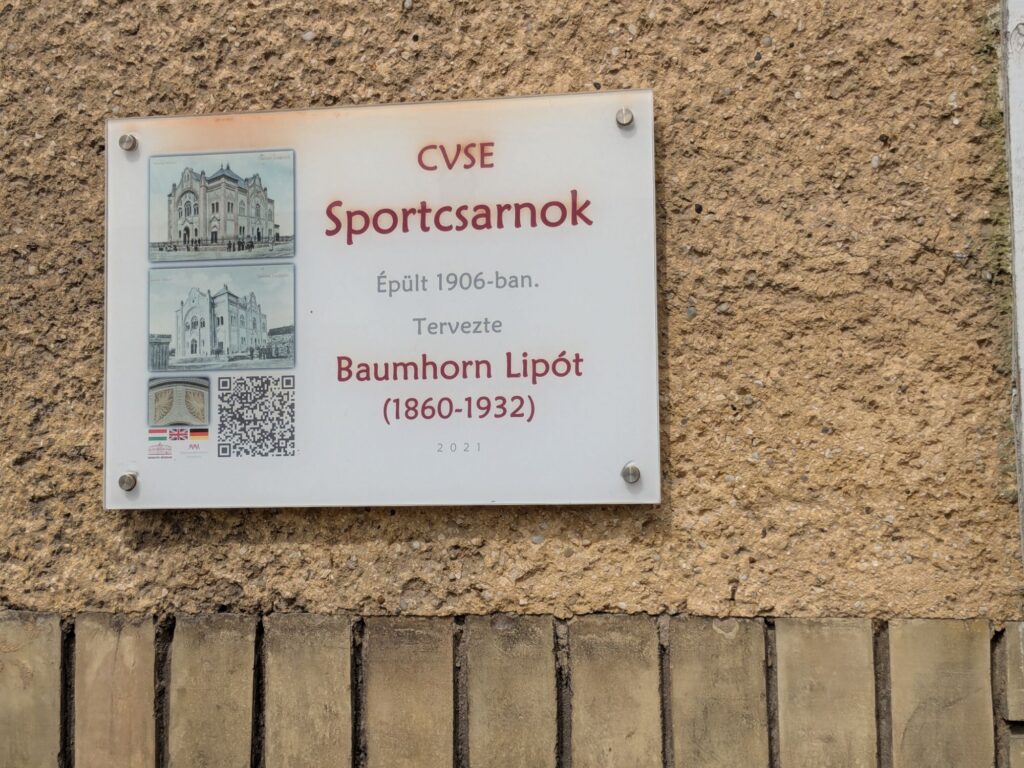
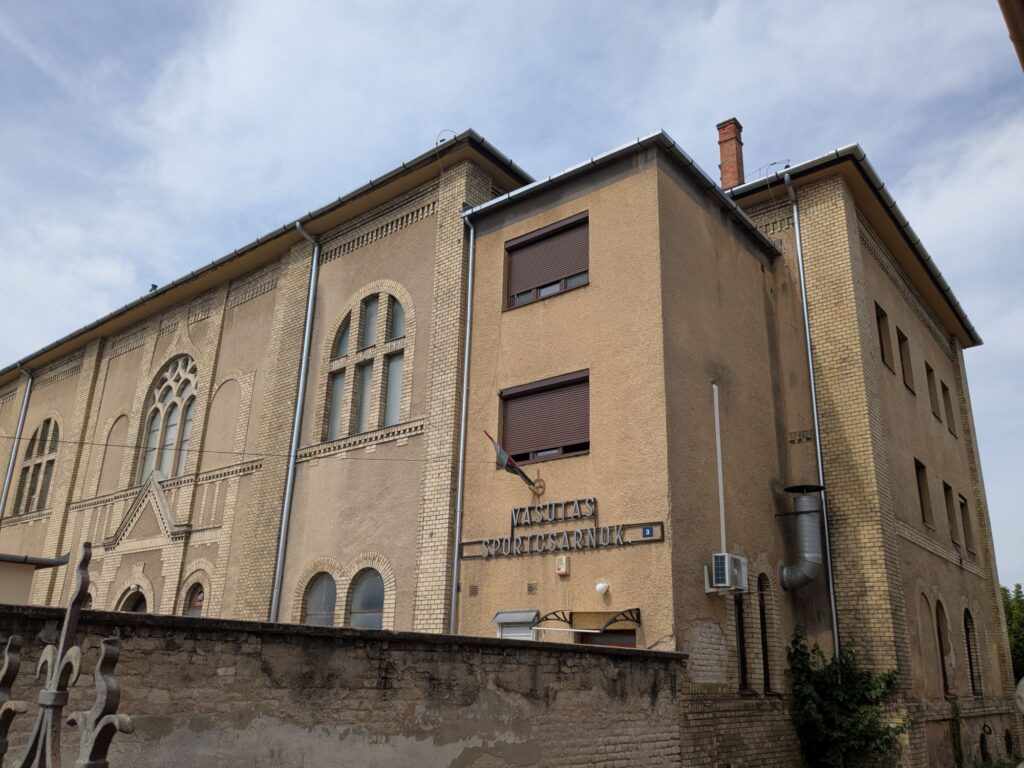
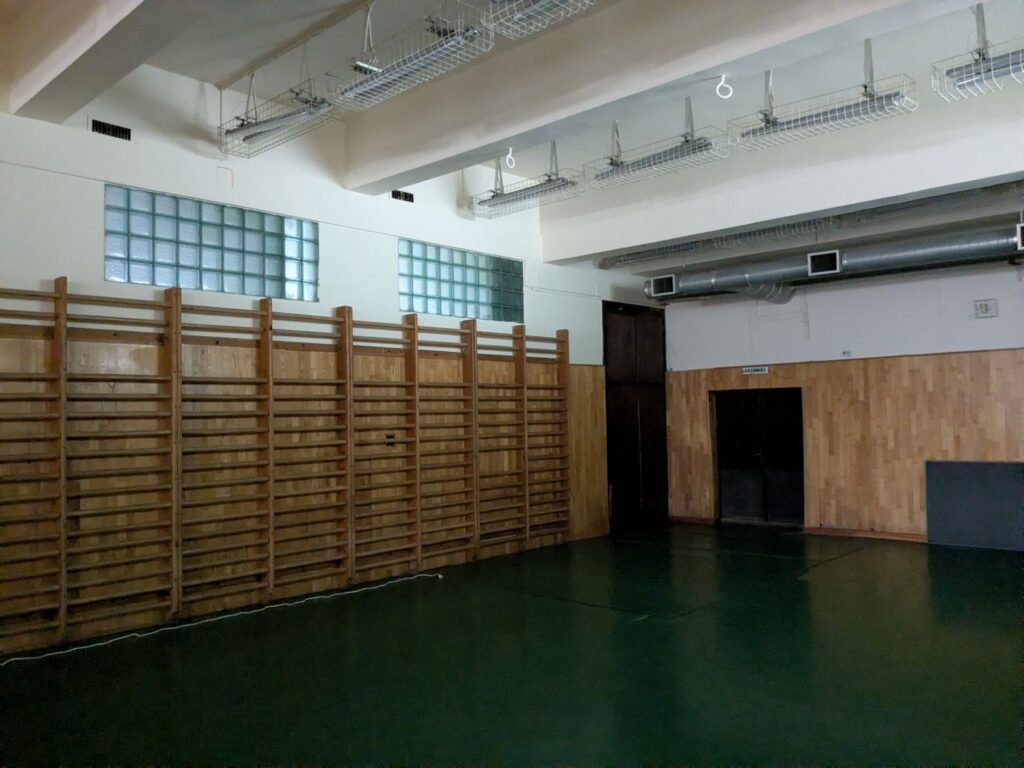
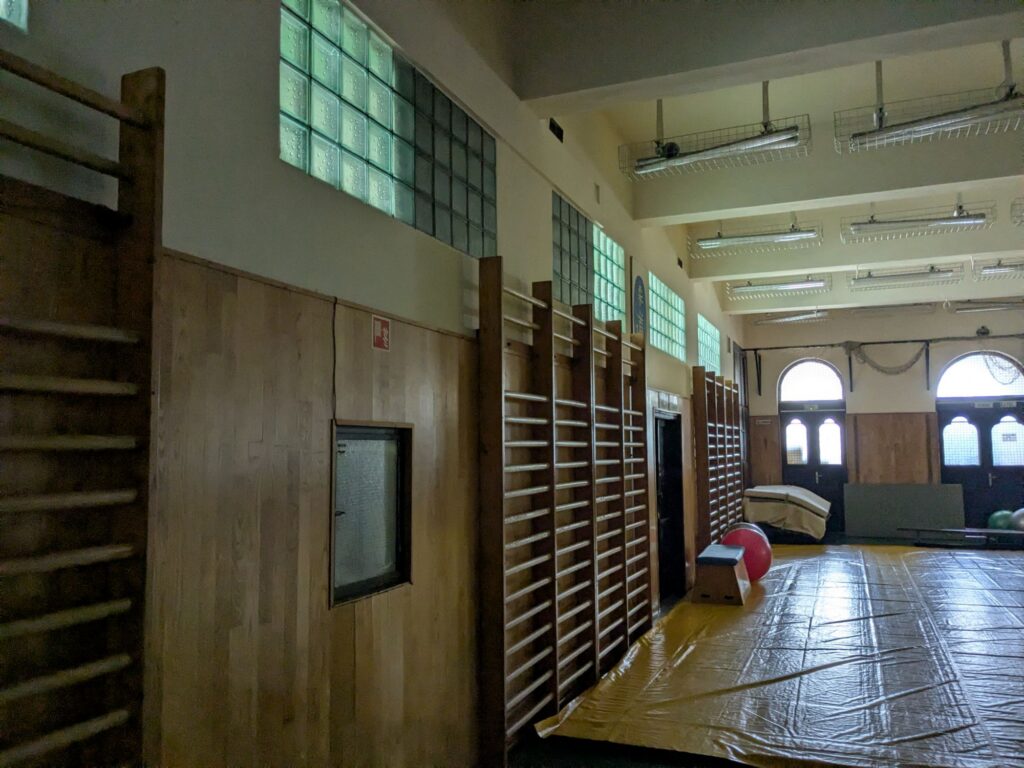
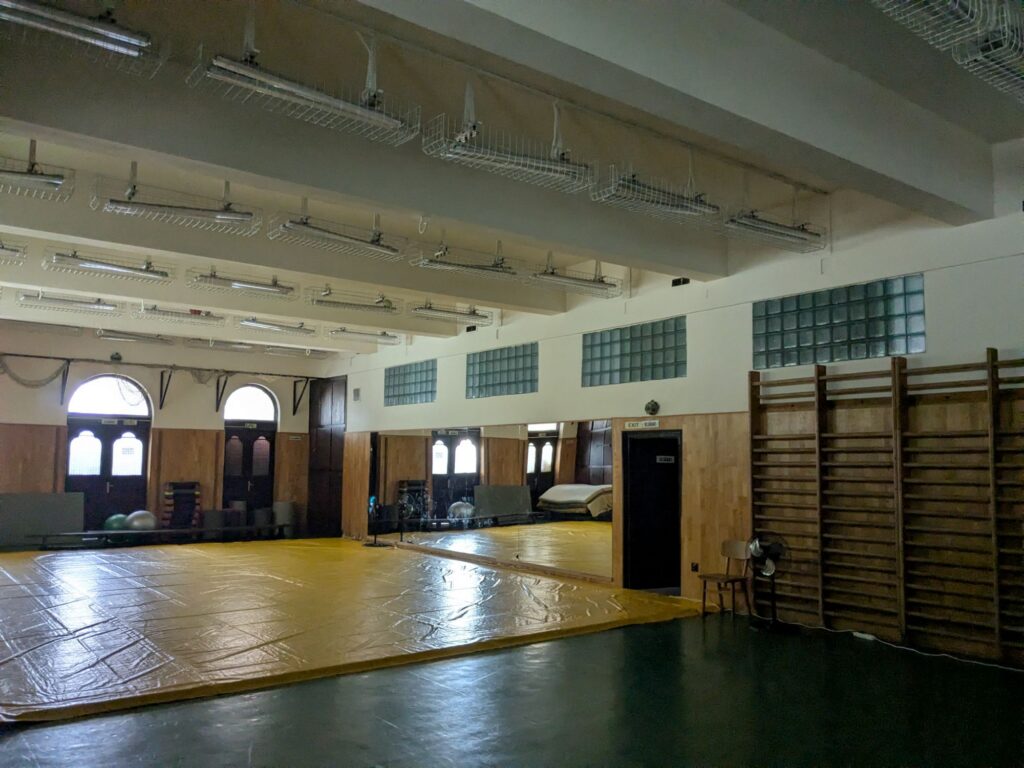
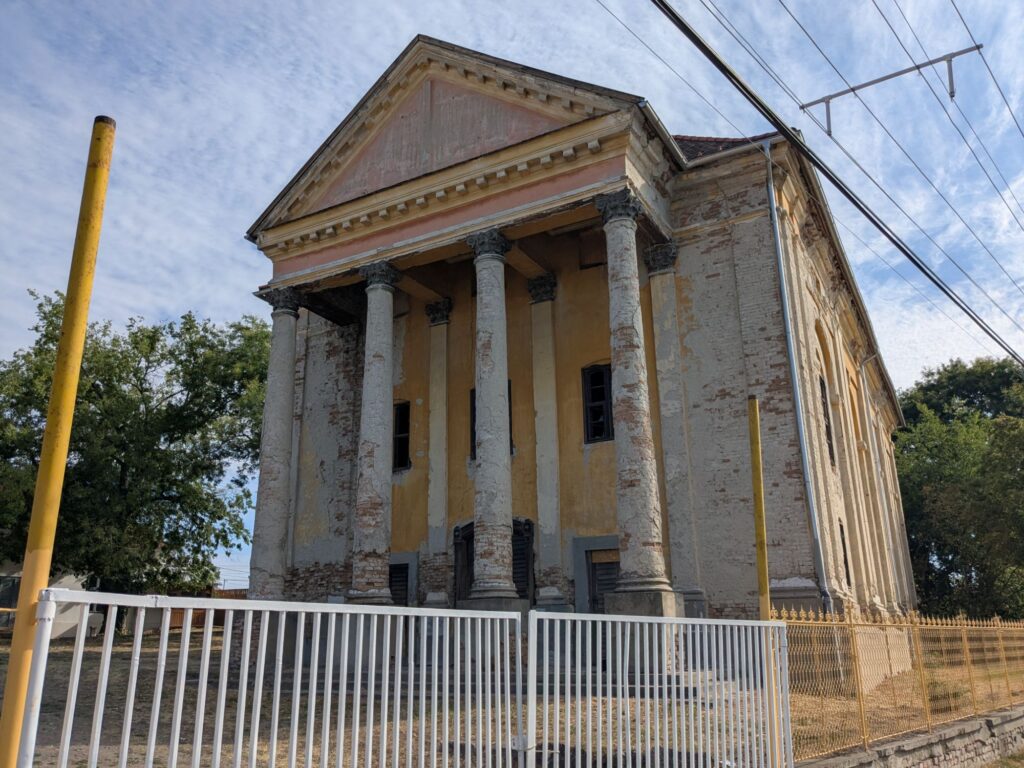
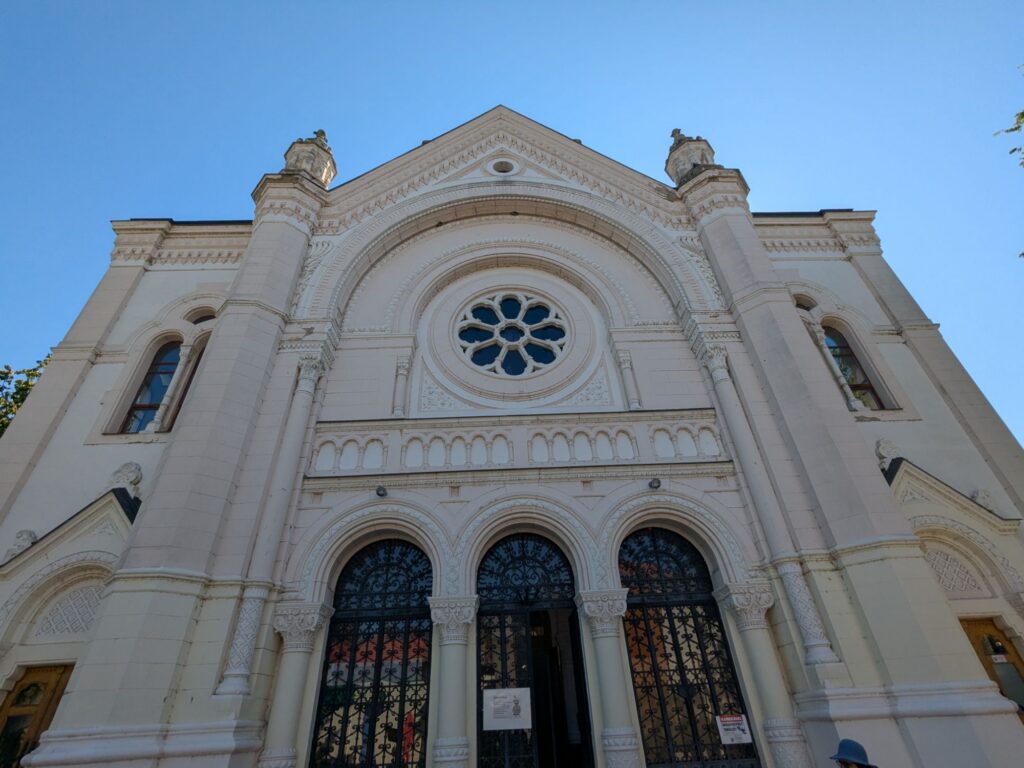
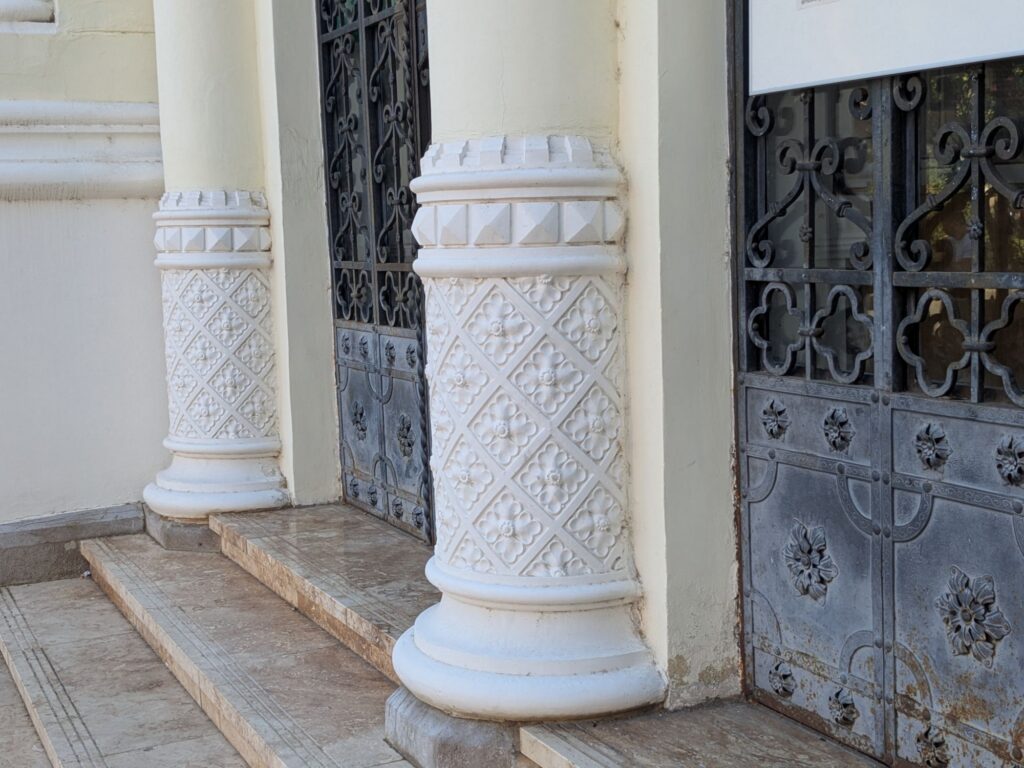
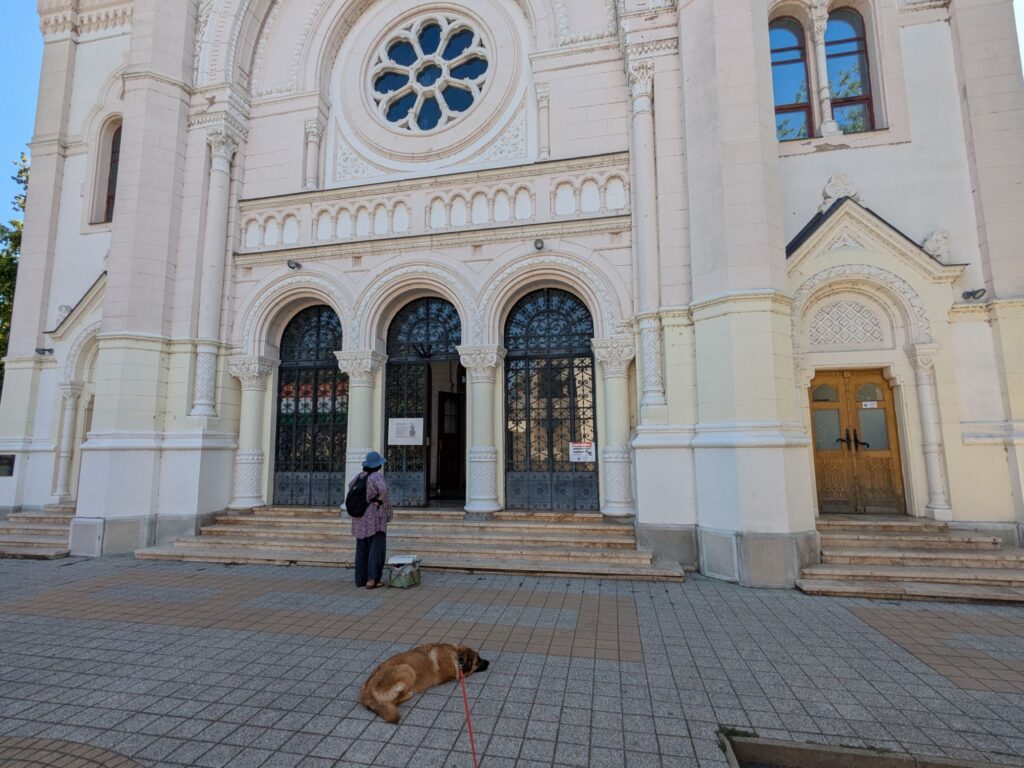
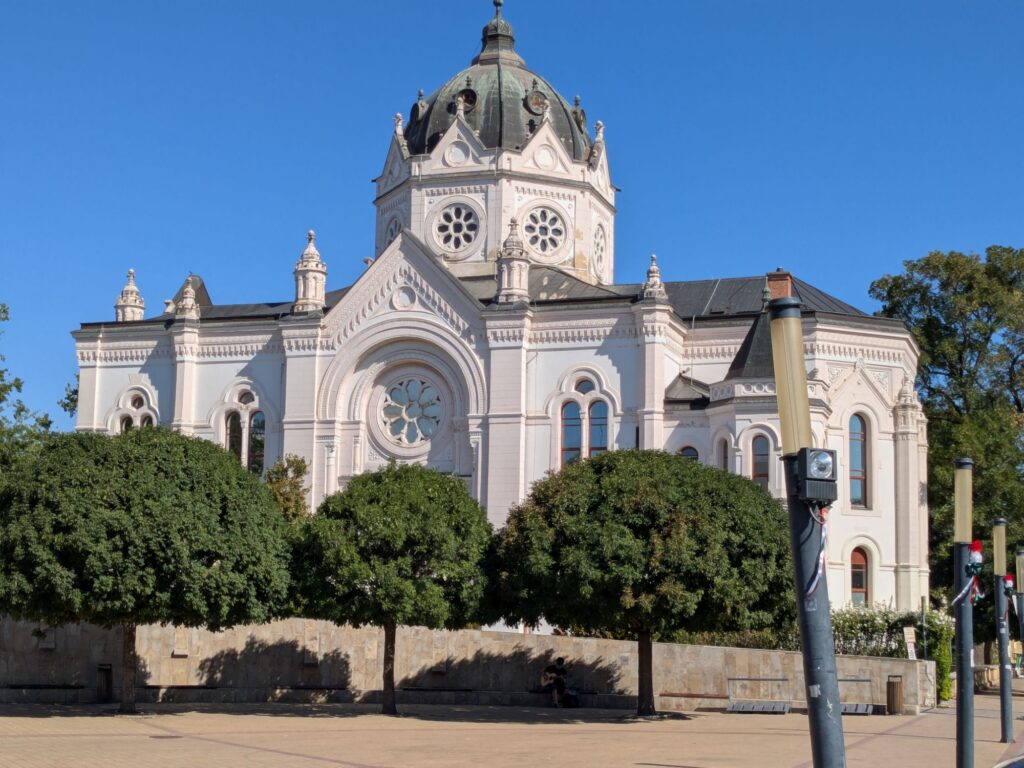
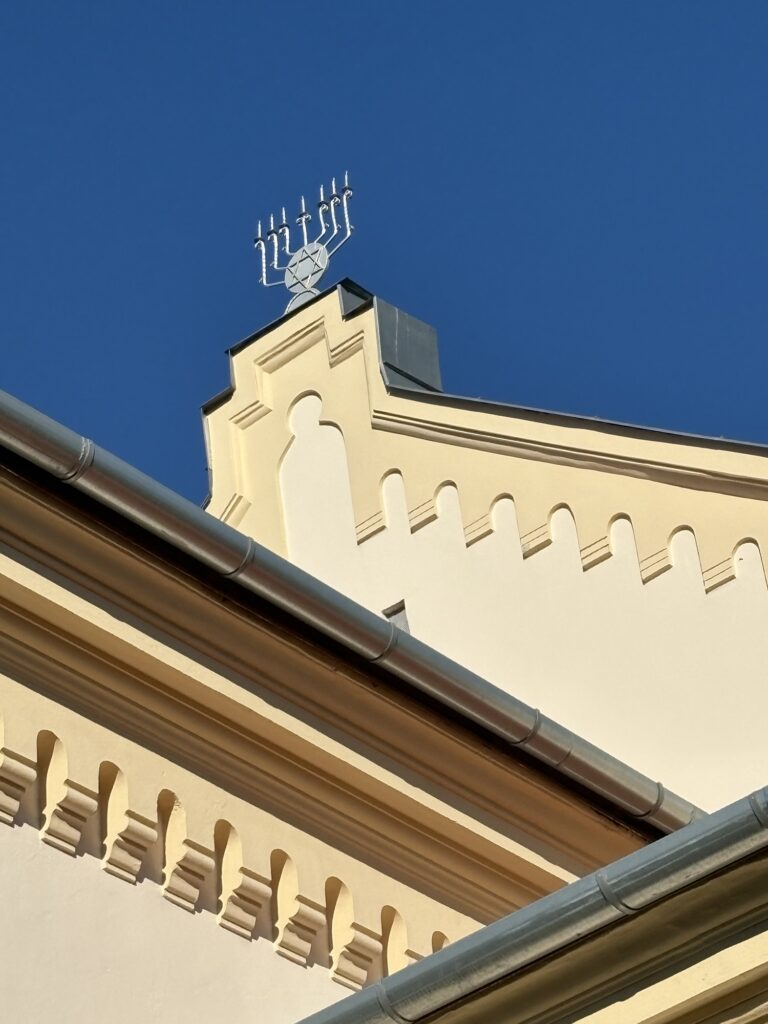
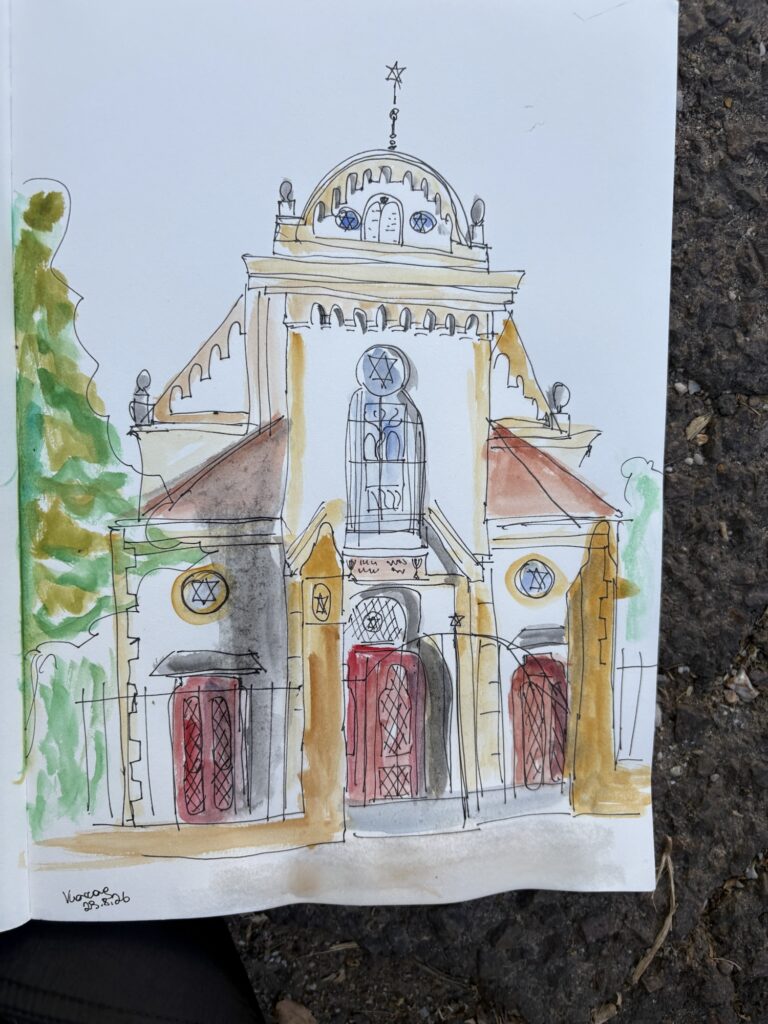
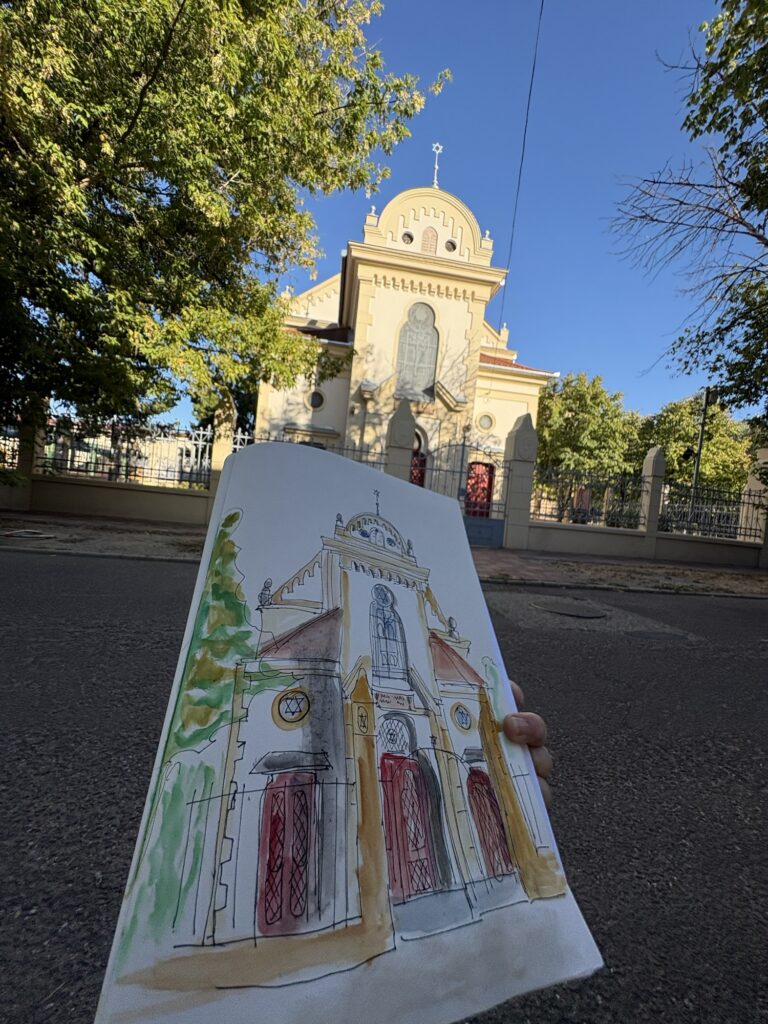
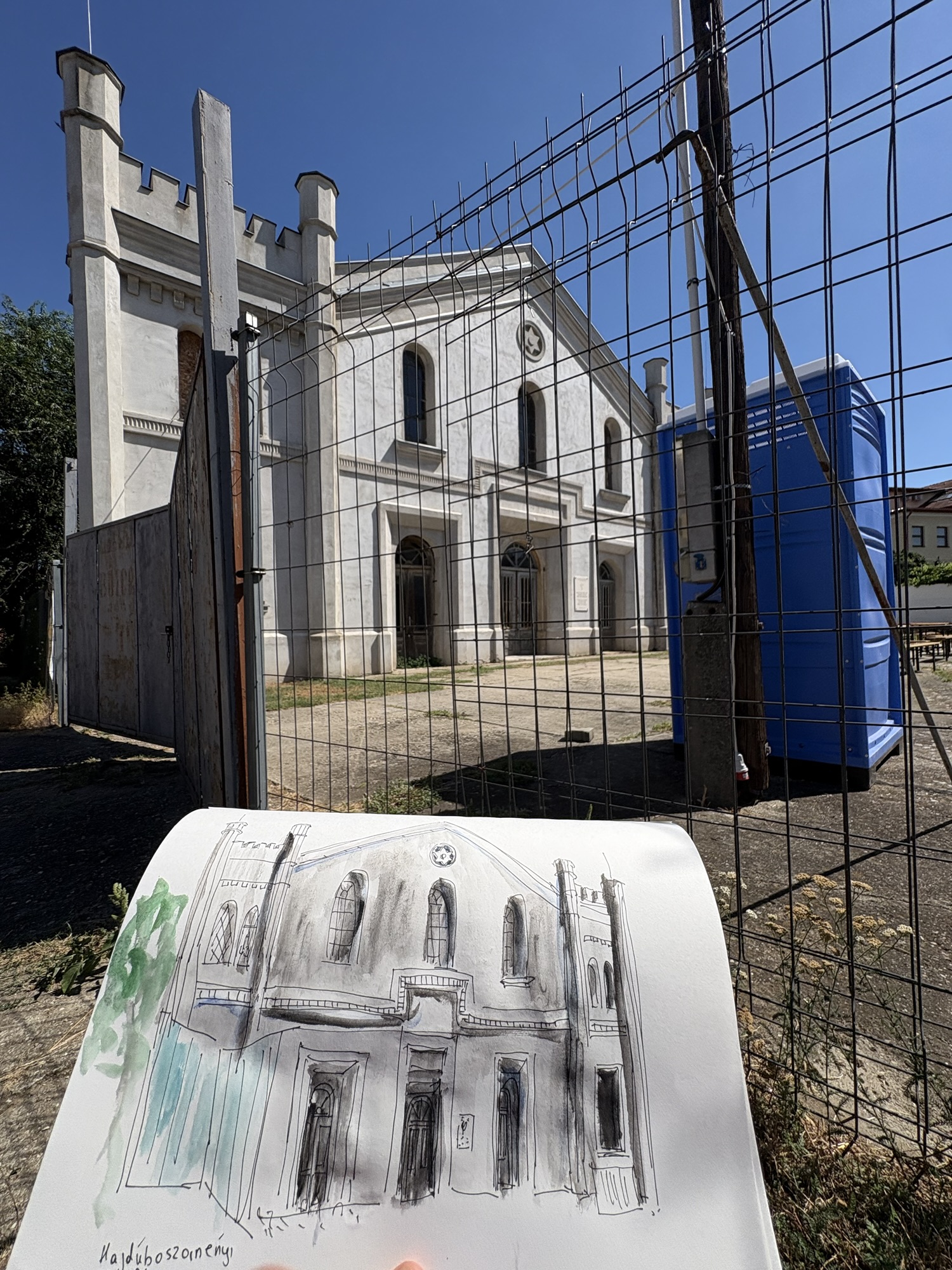
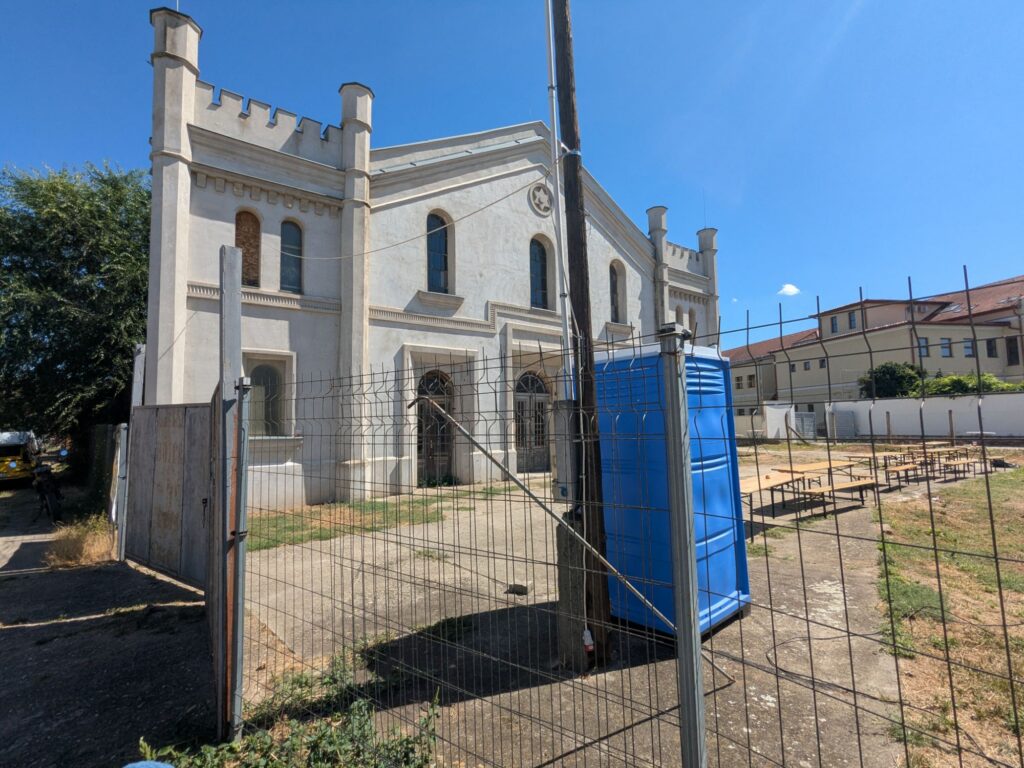
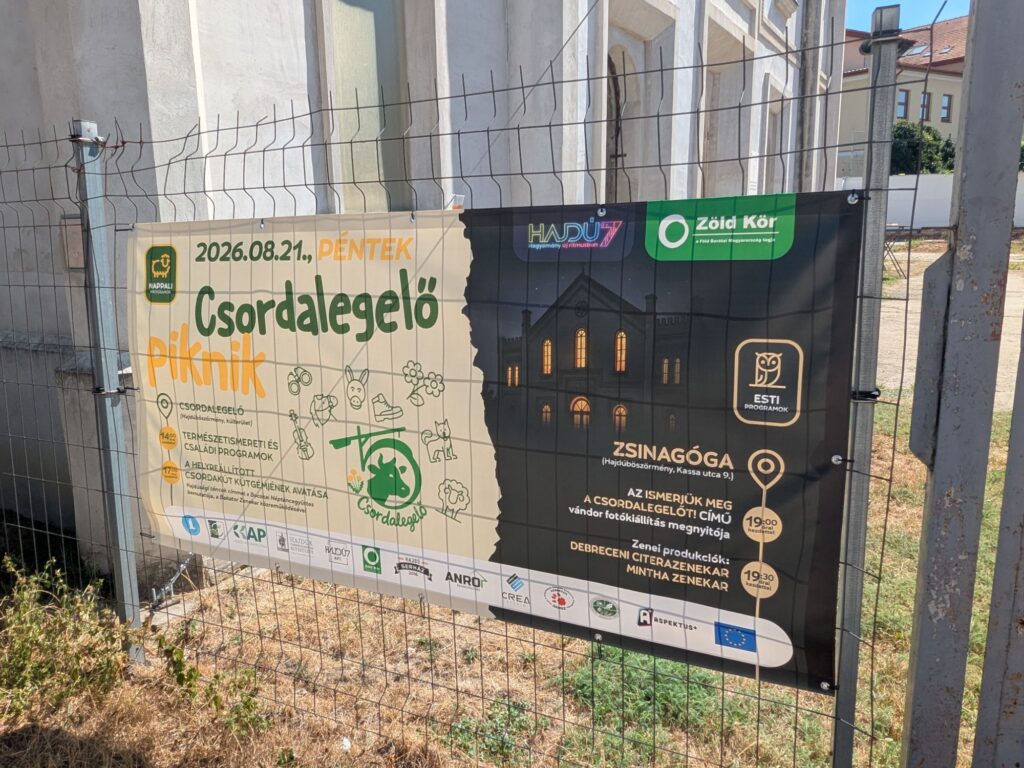
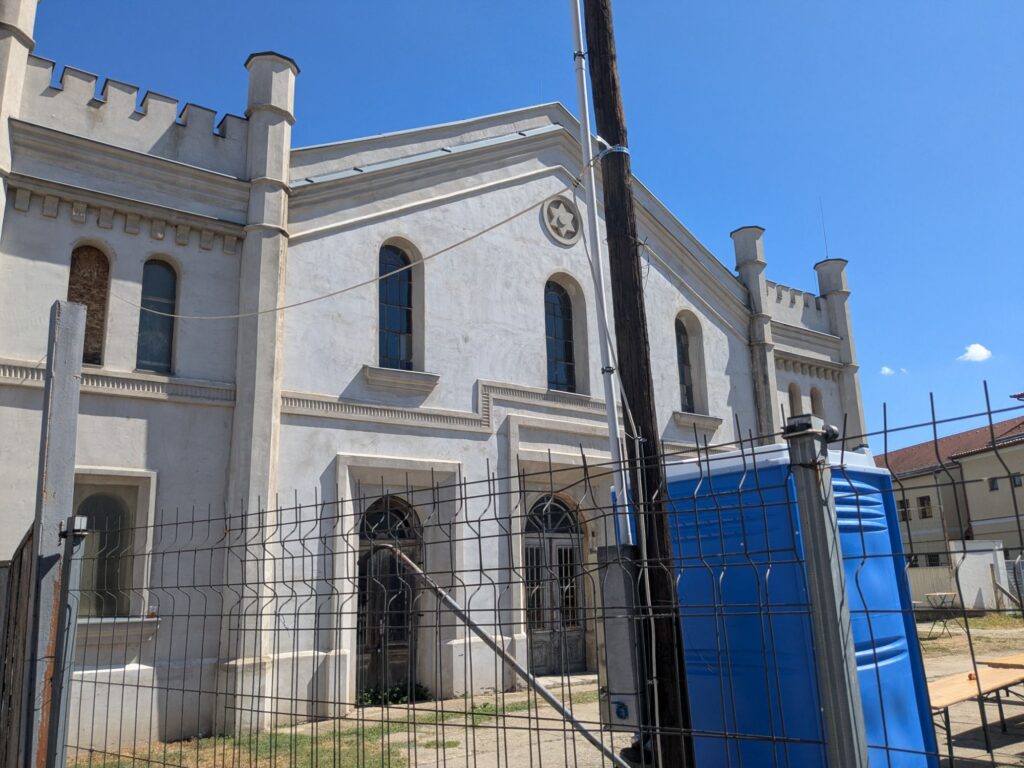
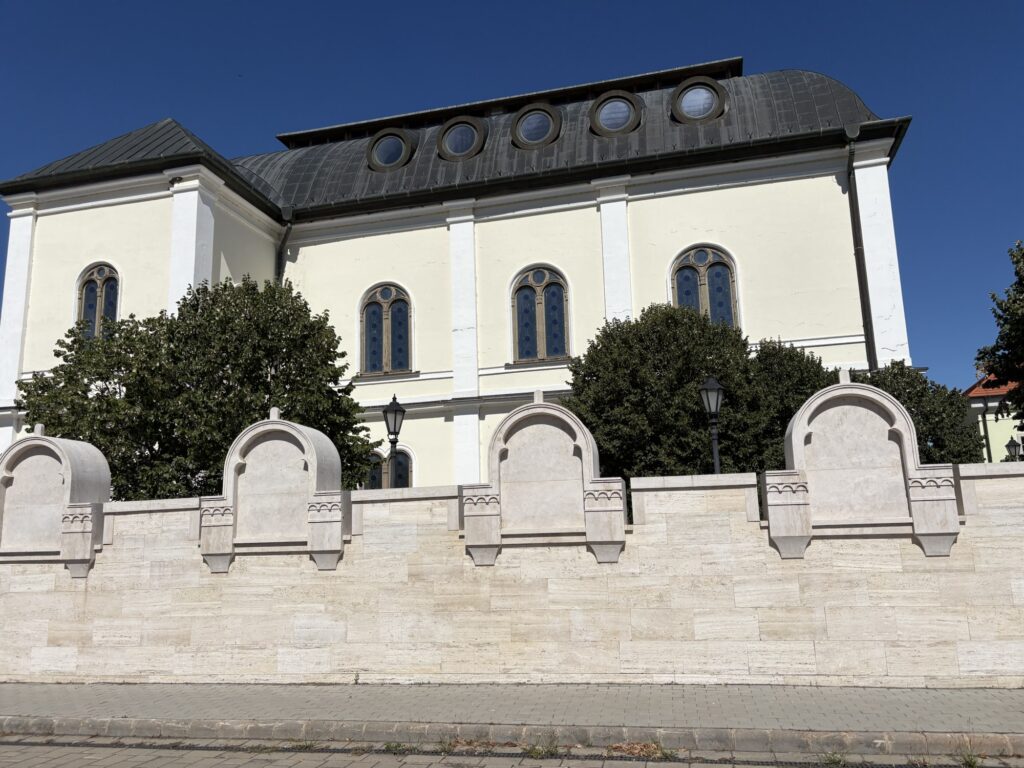
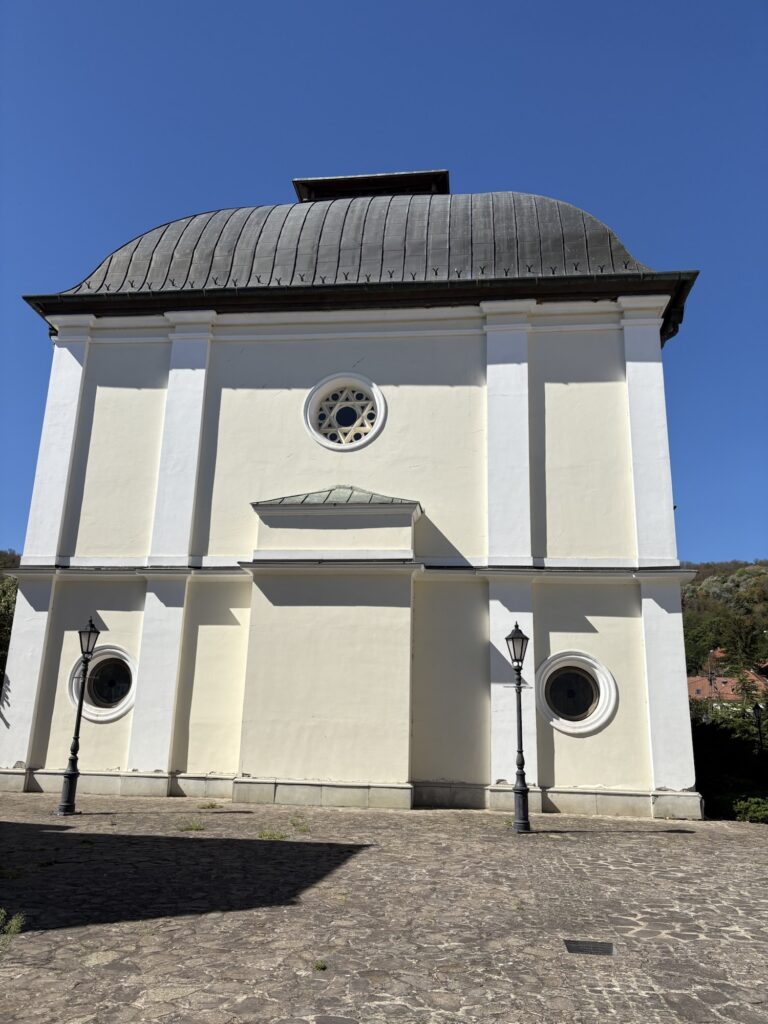
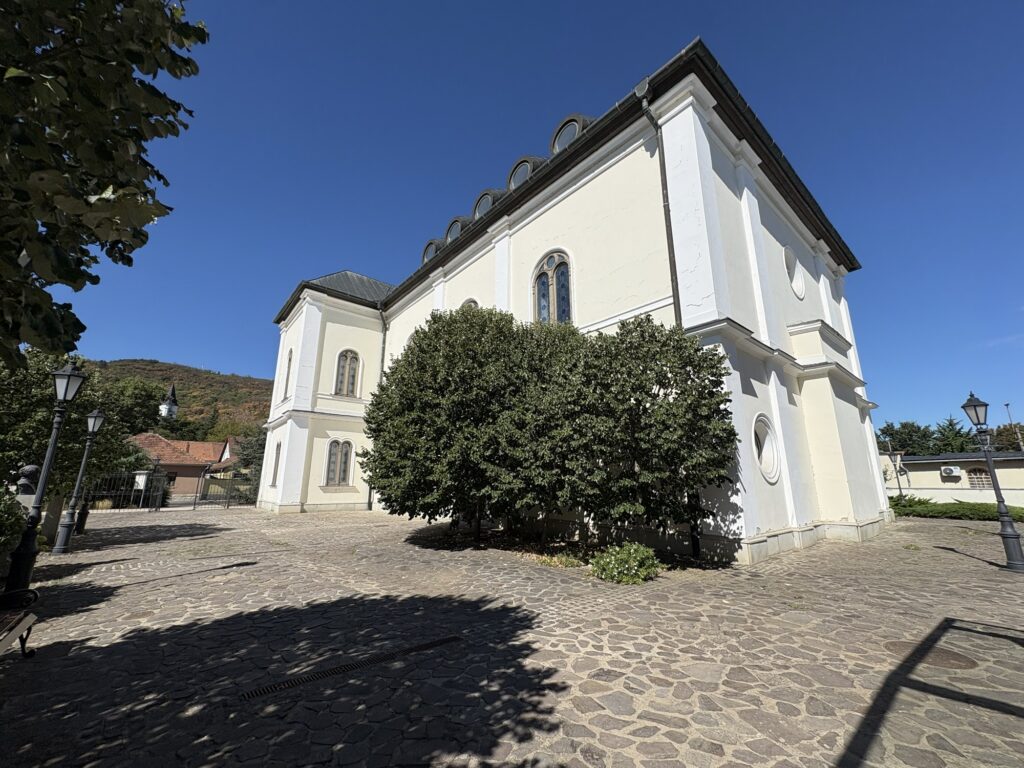
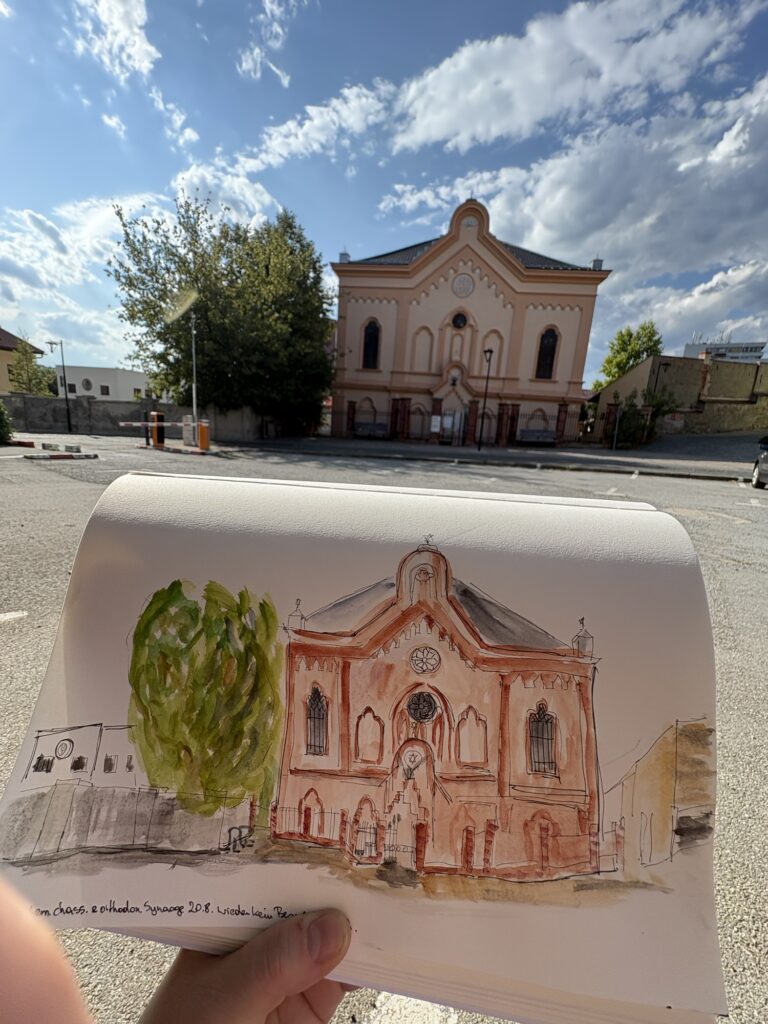
The synagogue planned by Lipot Baumhorn is today a Sports Center. At the front there’s a well kept park, people crossing by foot or bicycle — a lively place.
The synagogue was inaugurated in 1904. The usage of bricks on the facade is similar to the Lutheran church on main square.
The building is in fairly good condition.
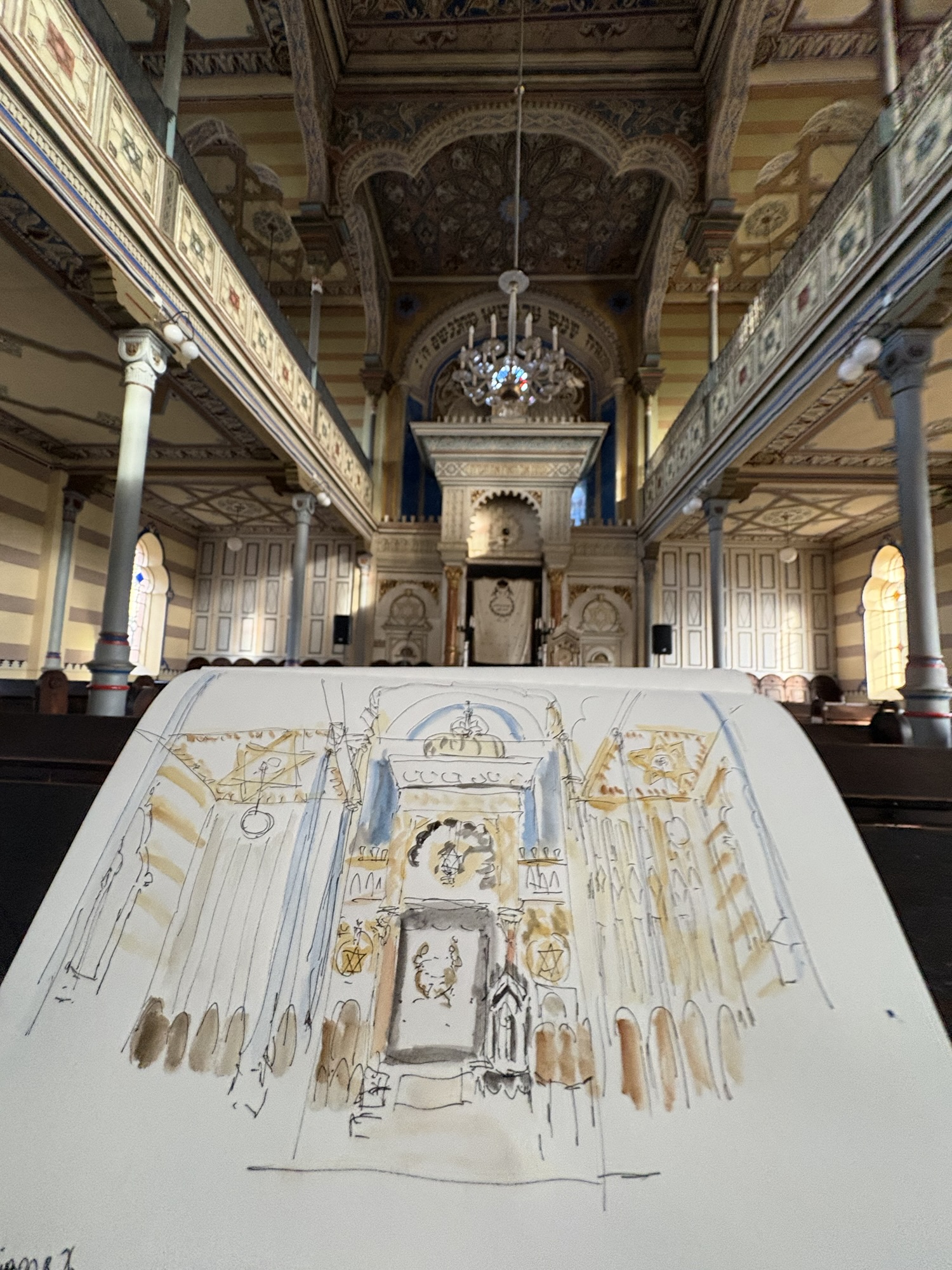
A friendly woman, perhaps the caretaker, allowed me to take a quick look inside. I only saw the ground floor, though.
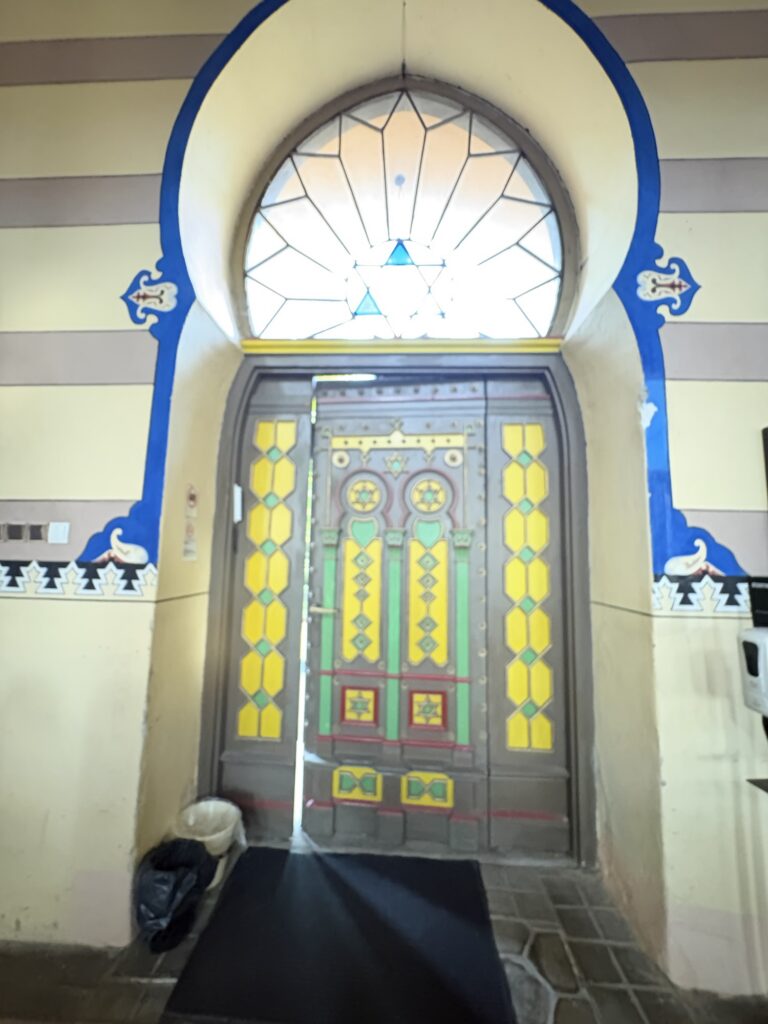
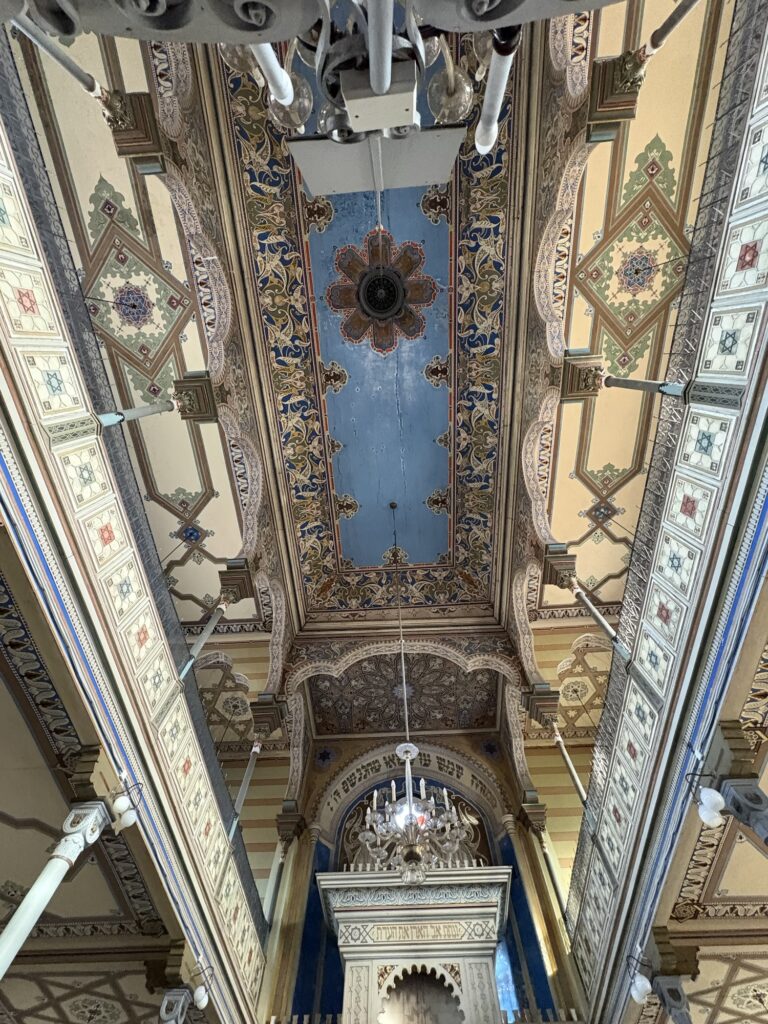
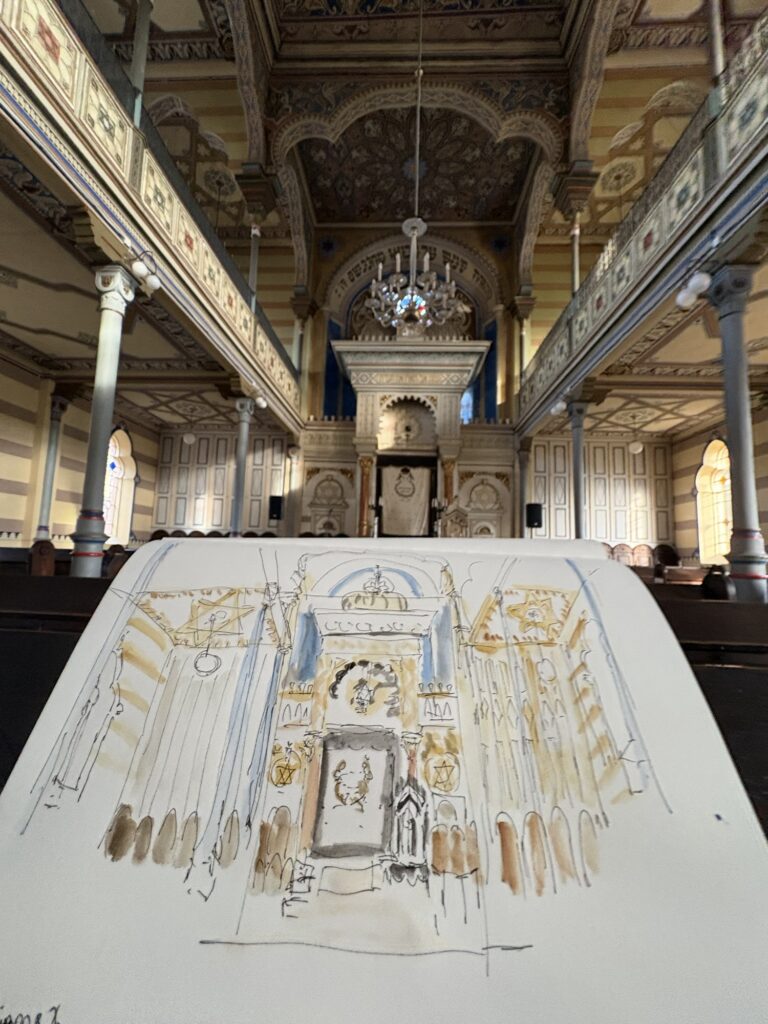
This is what this fine place of worship looks like now, inside:
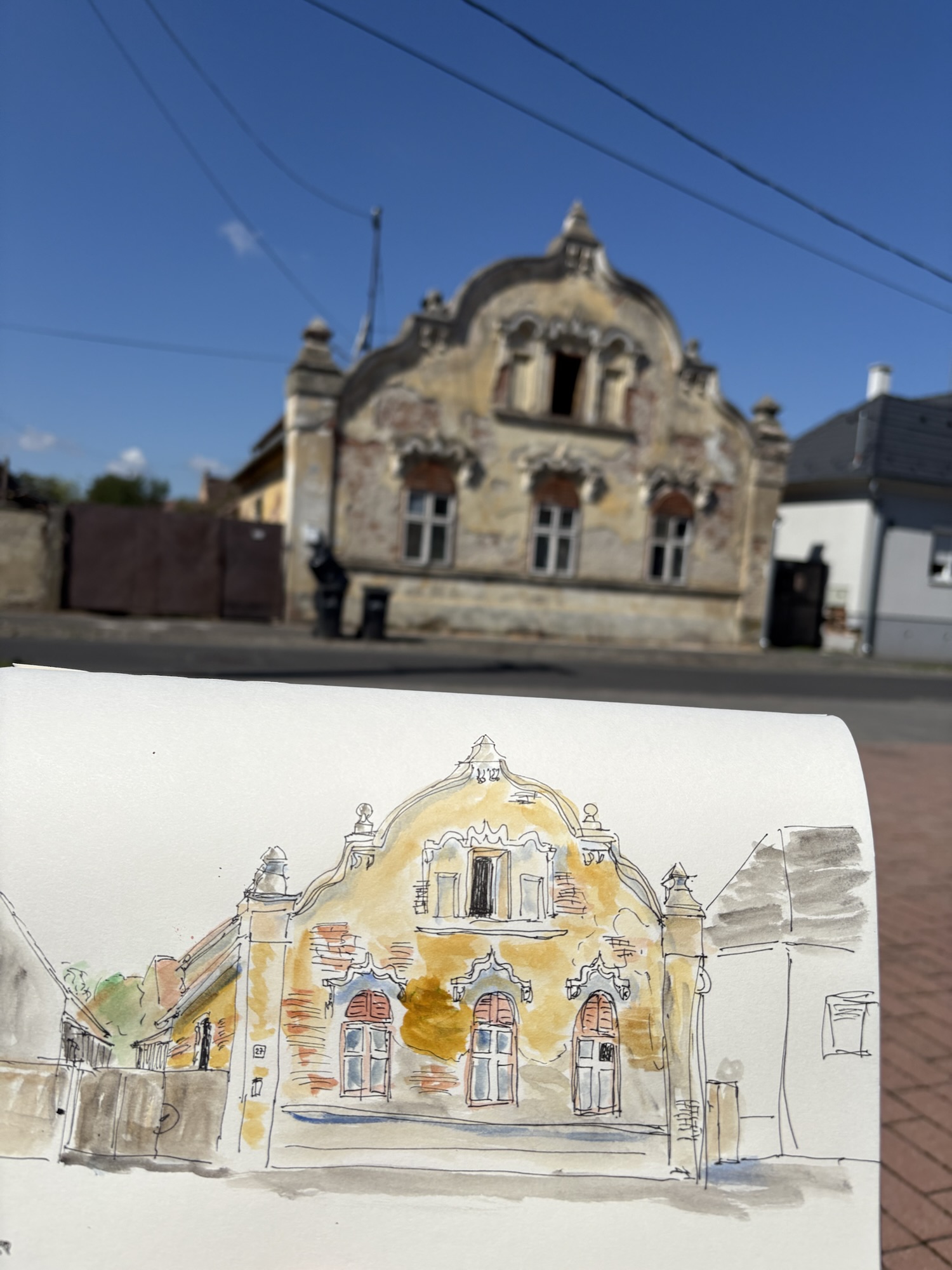
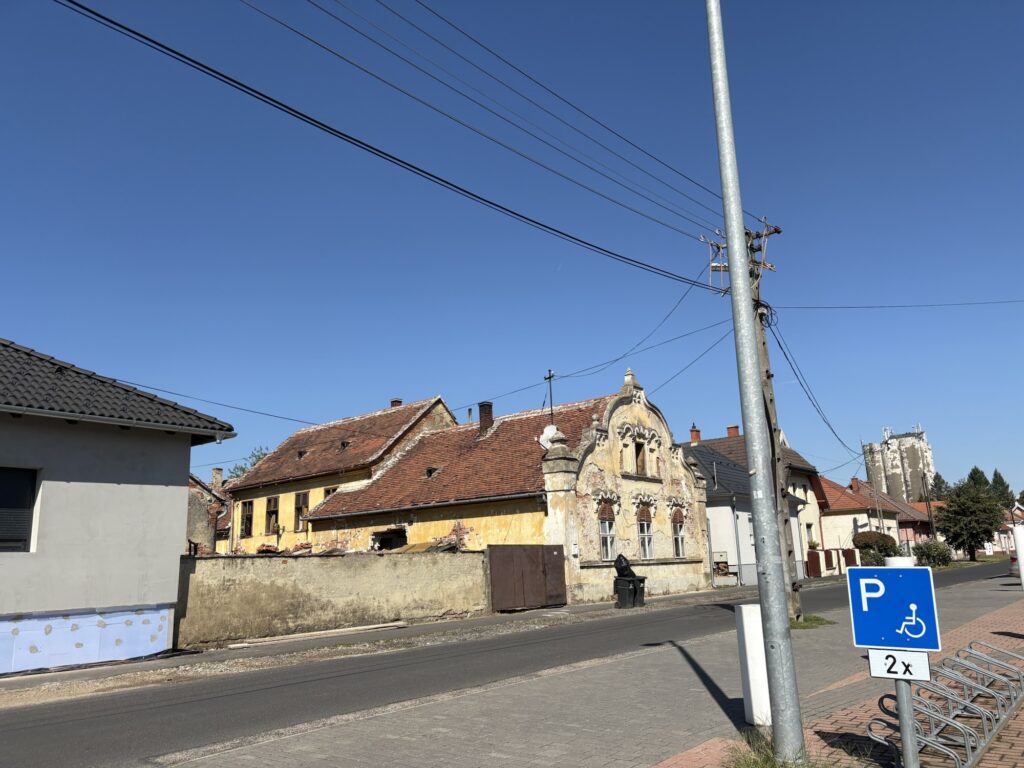
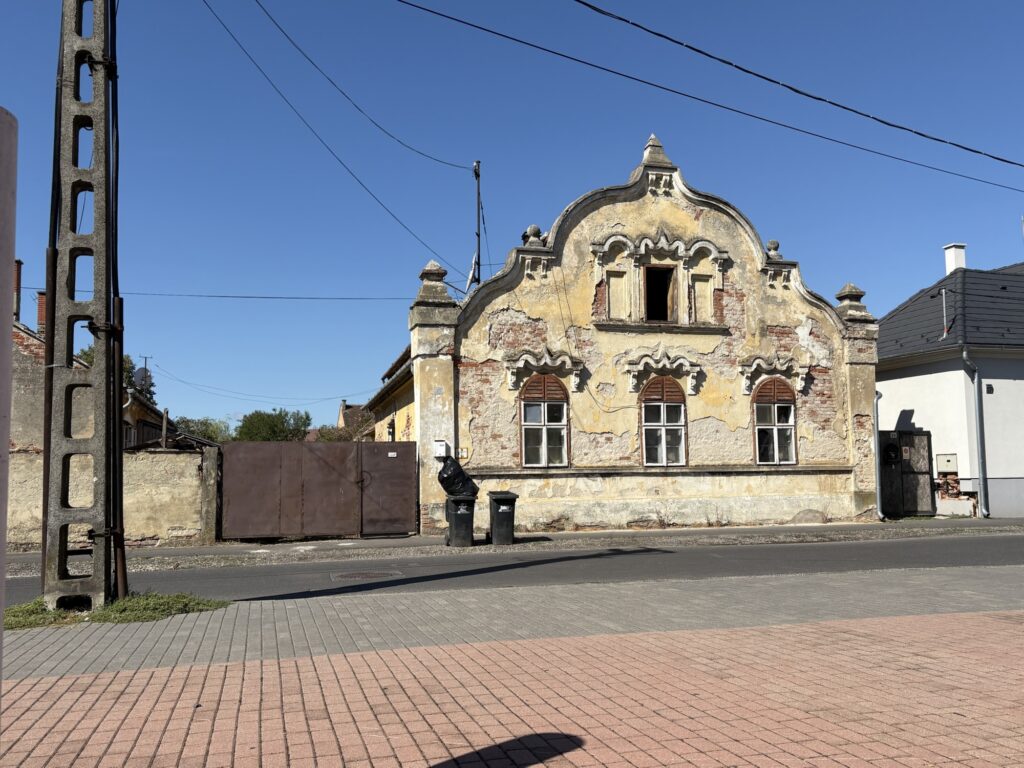
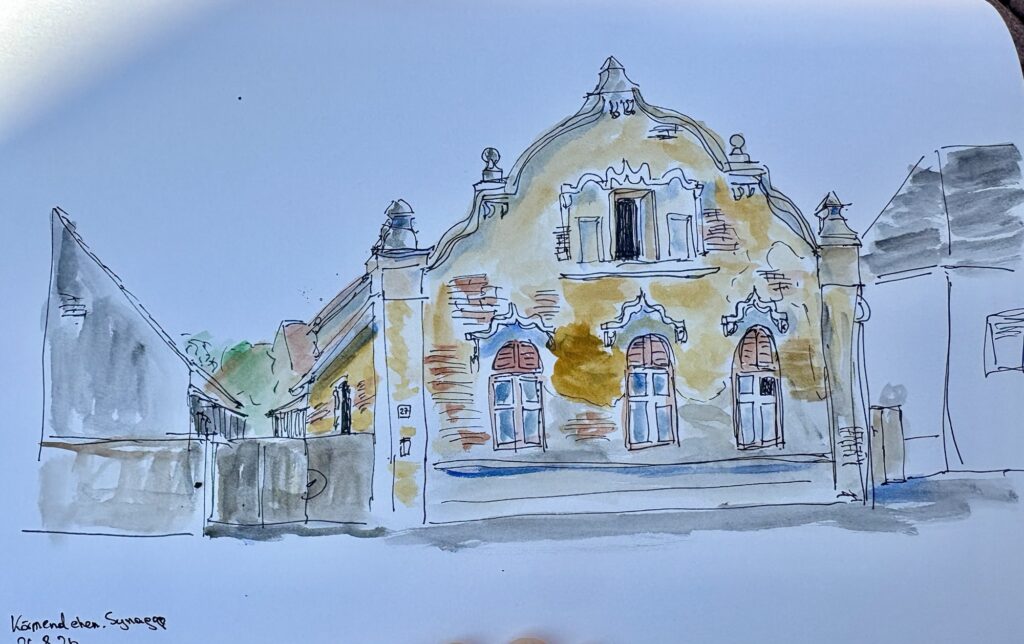
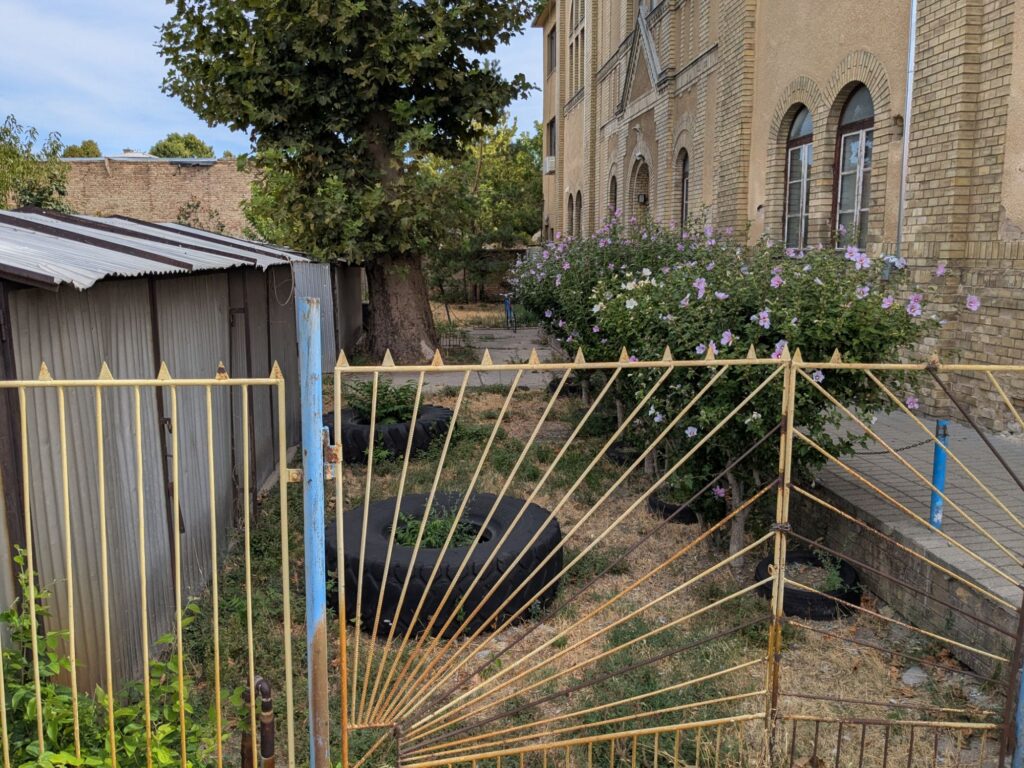
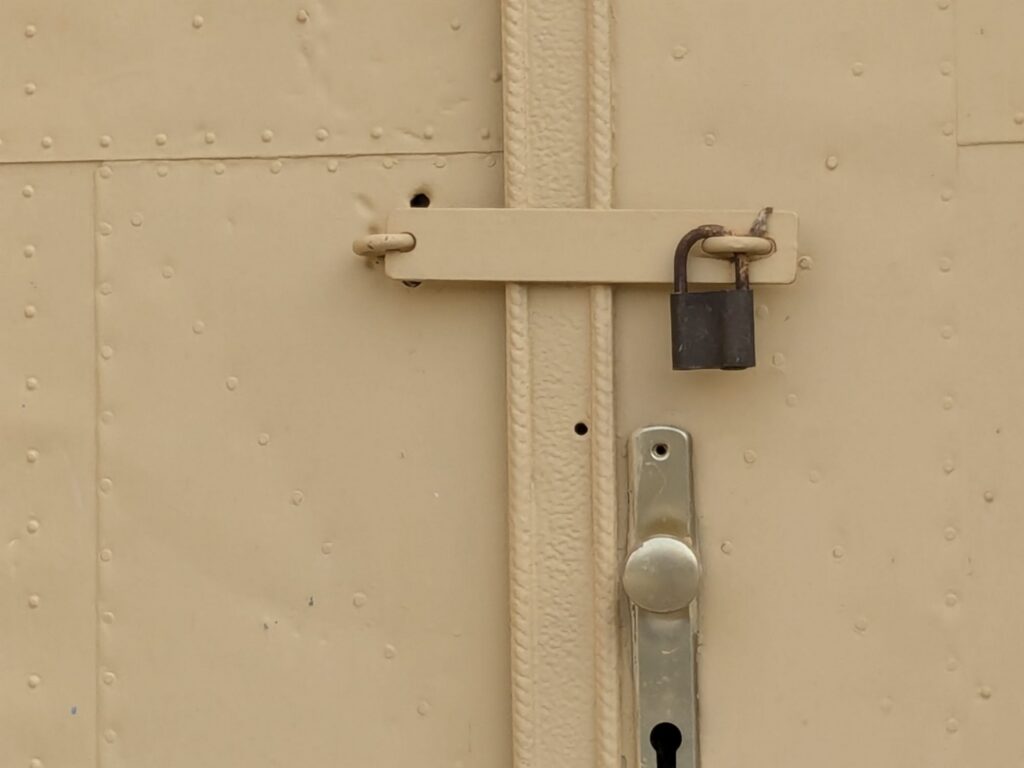
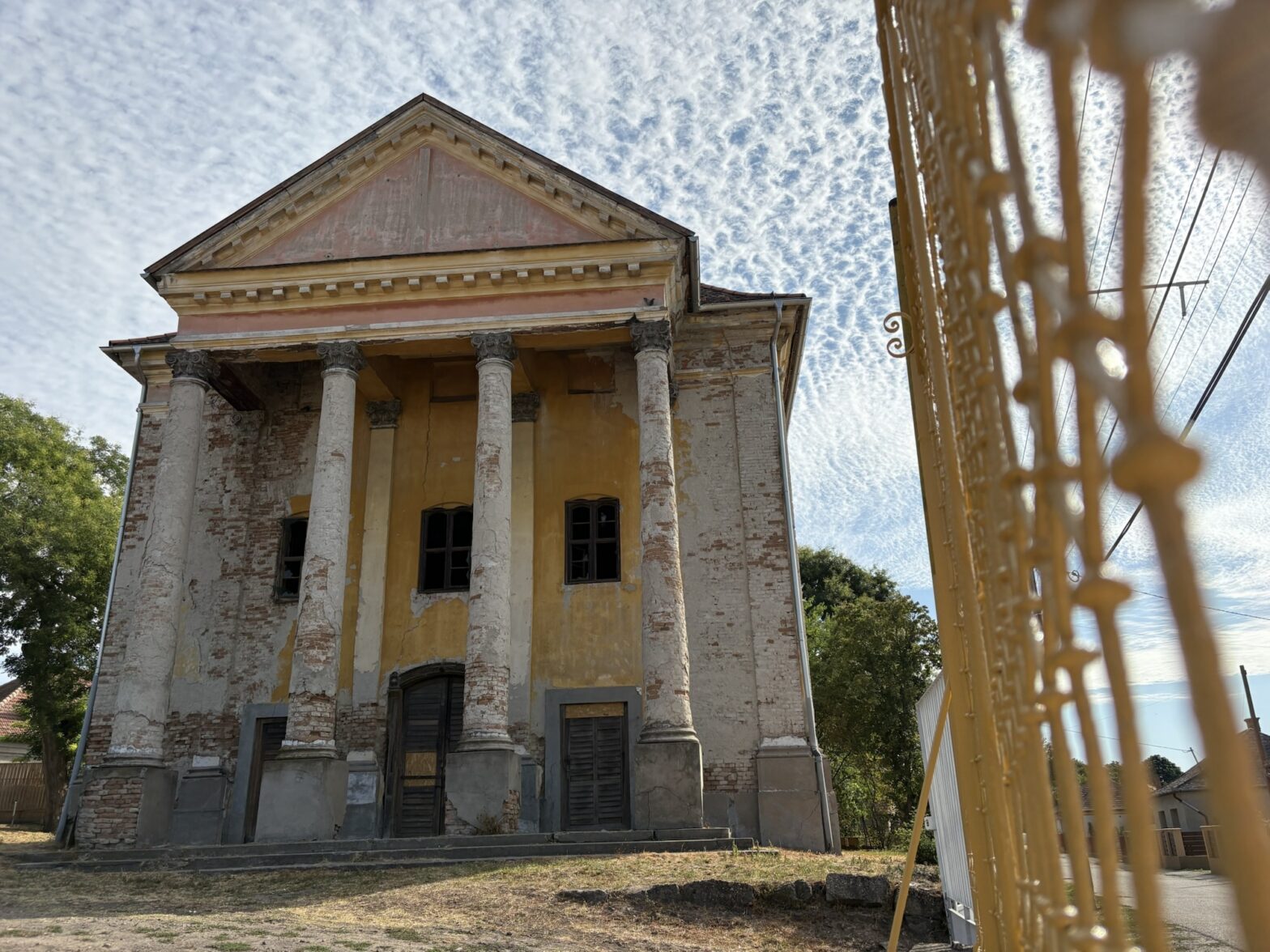
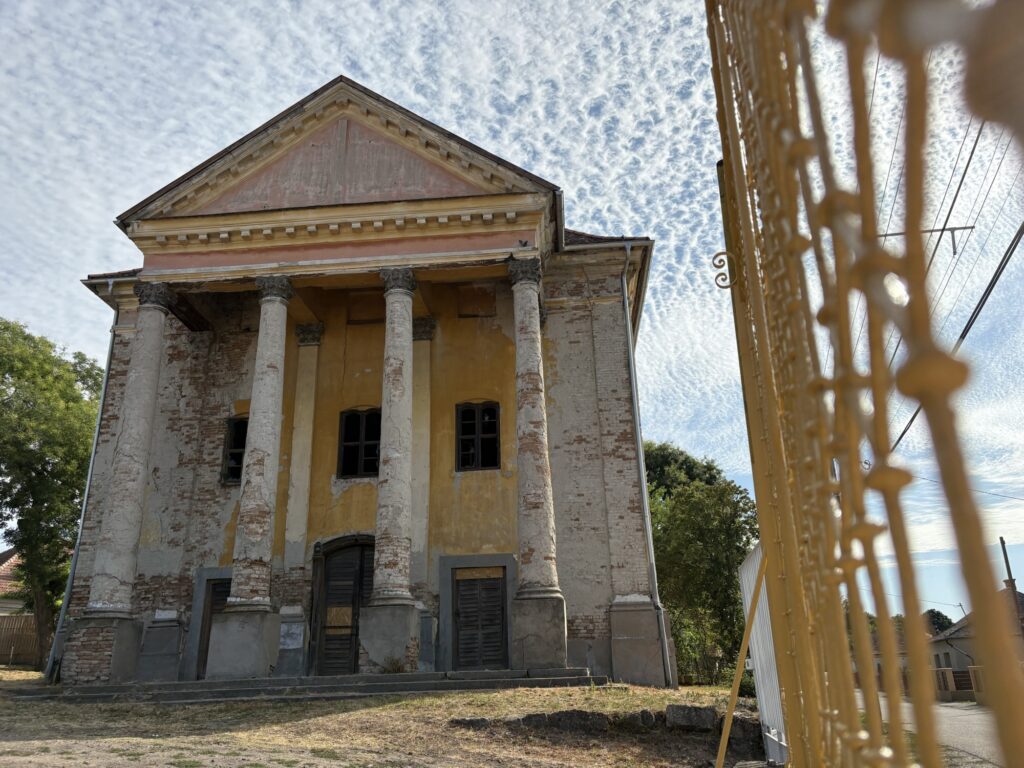
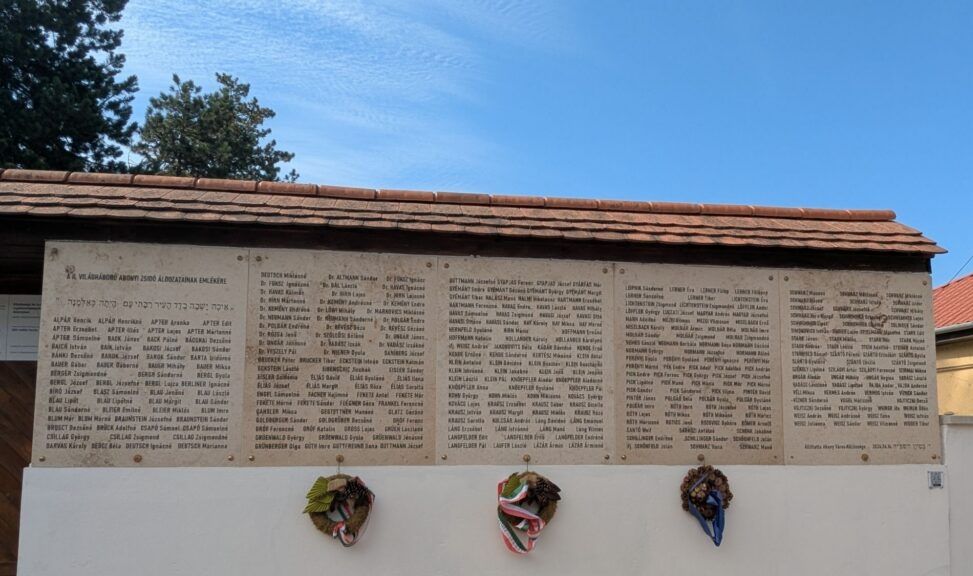
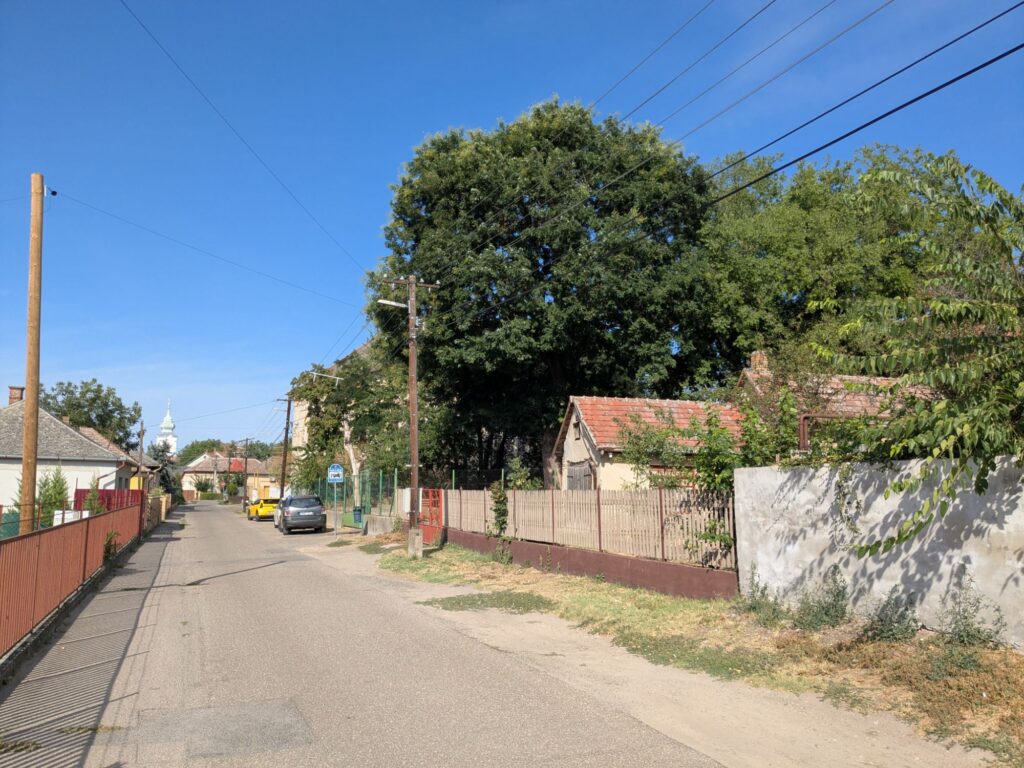
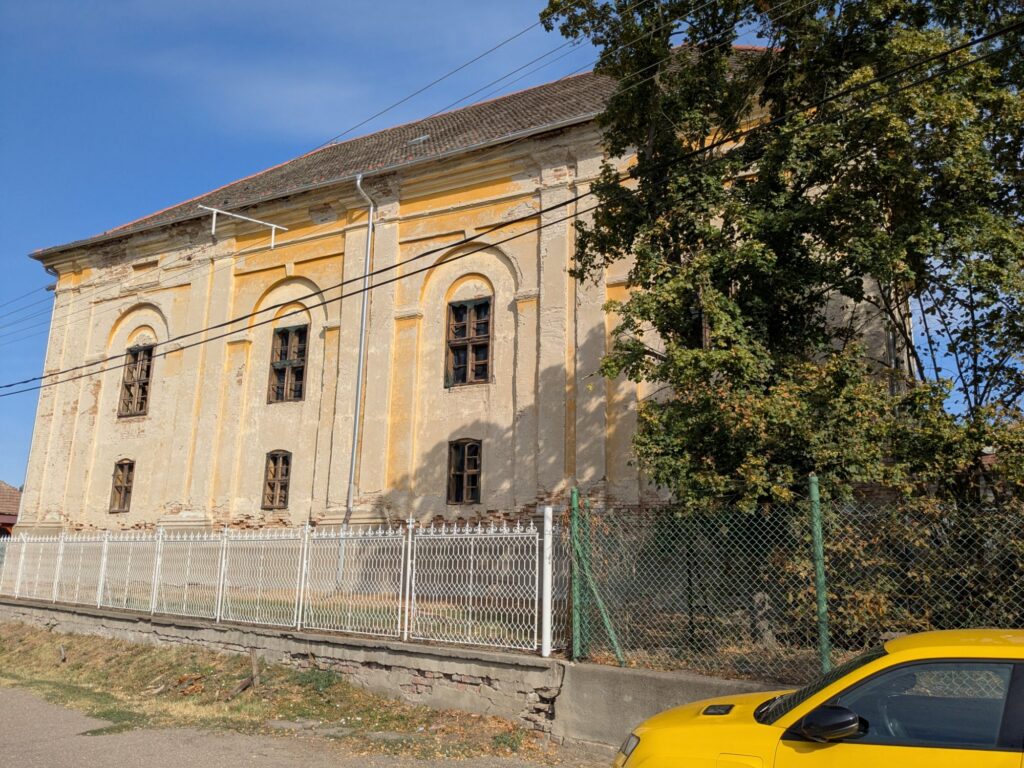
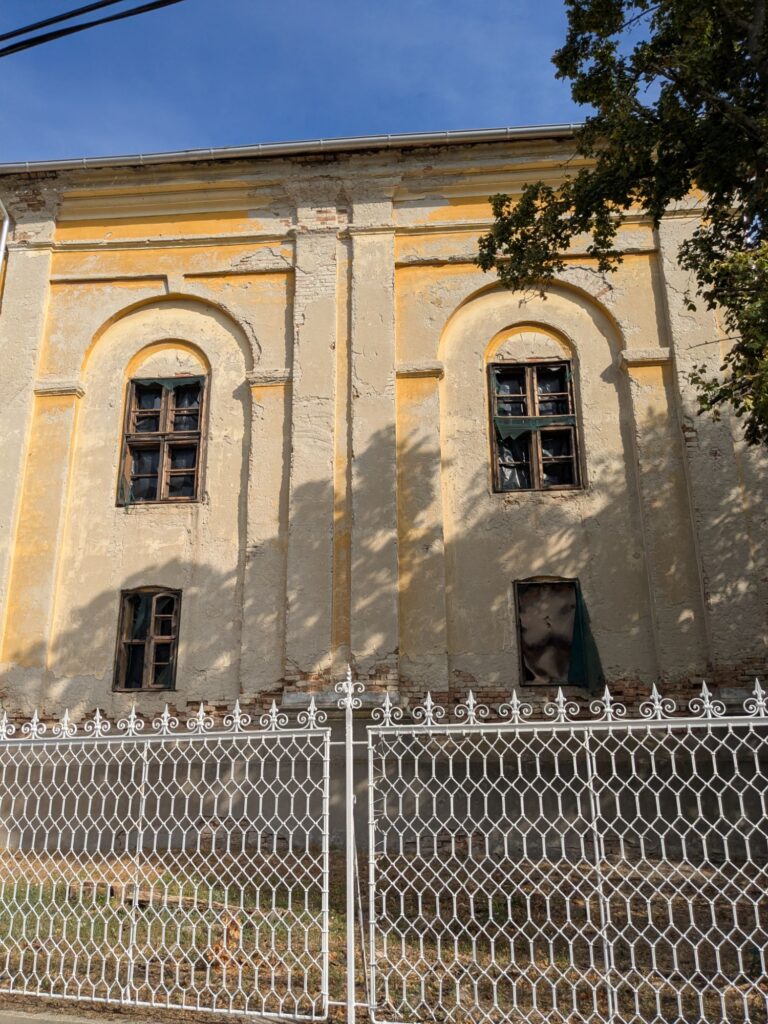
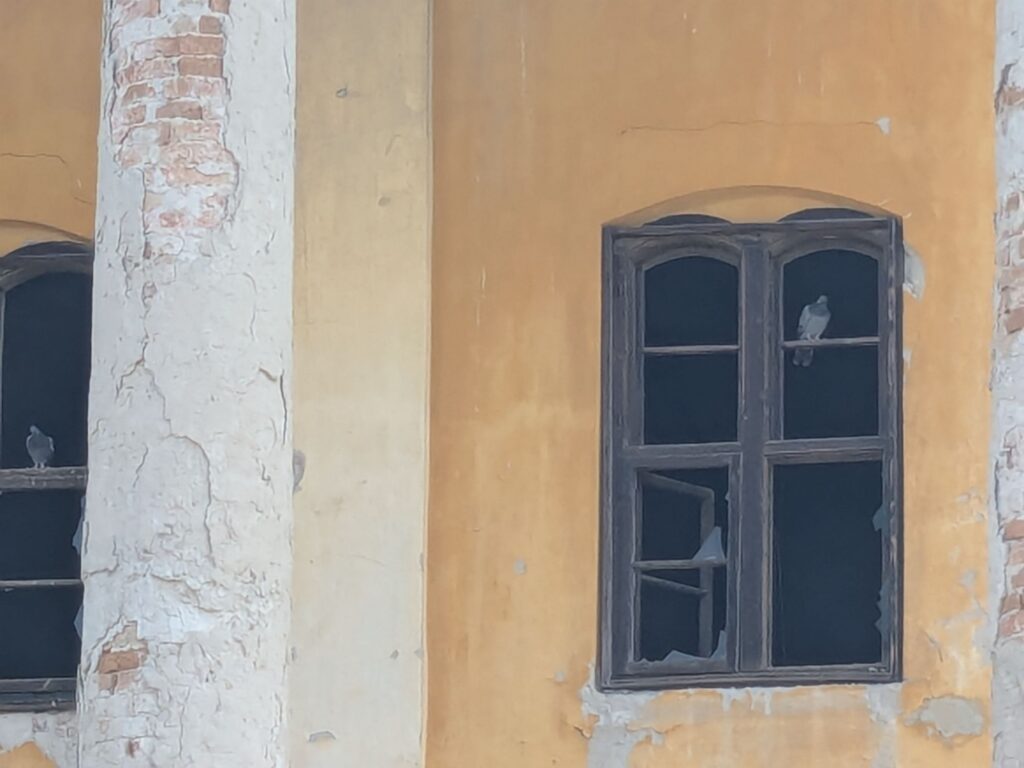
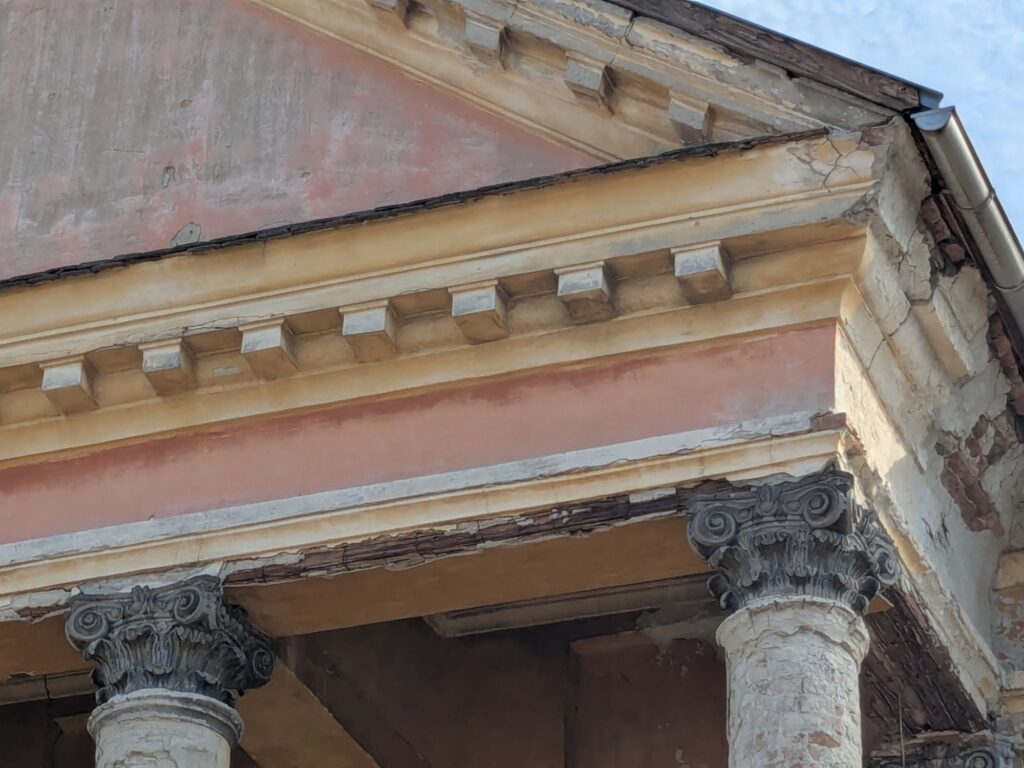
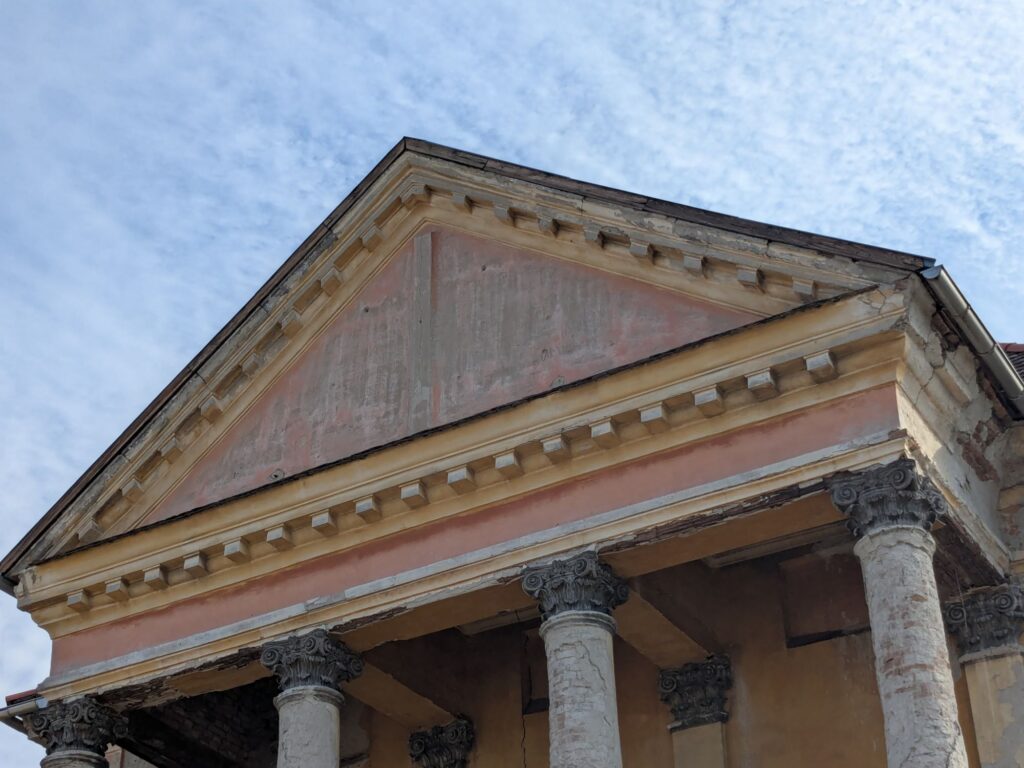
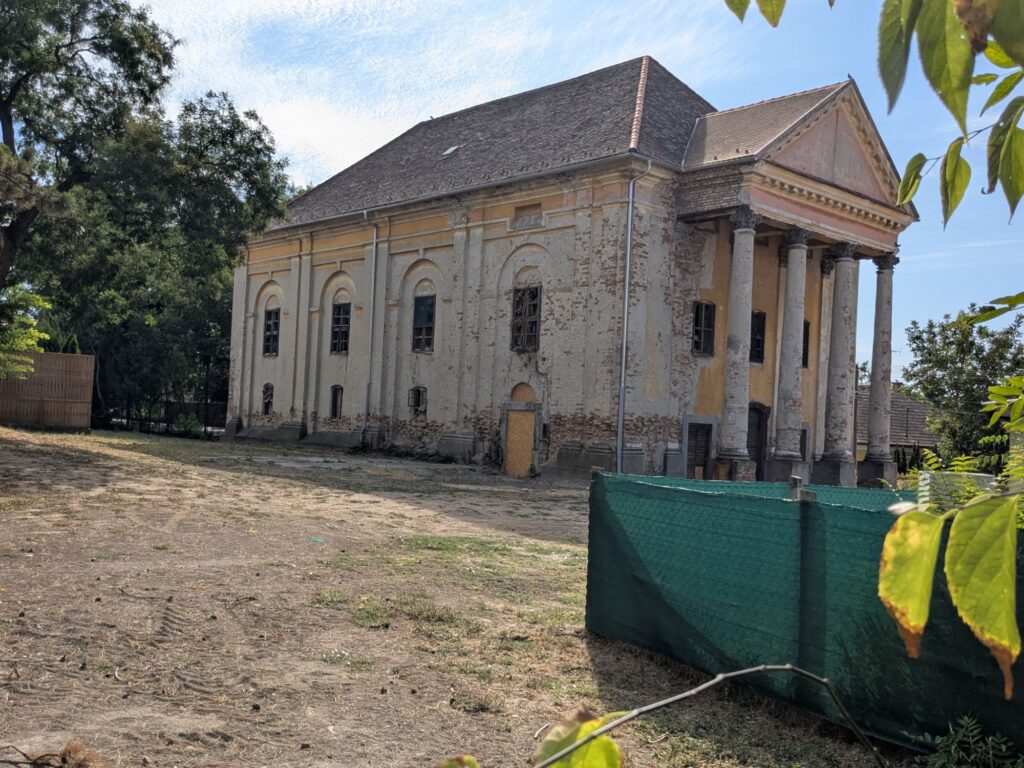
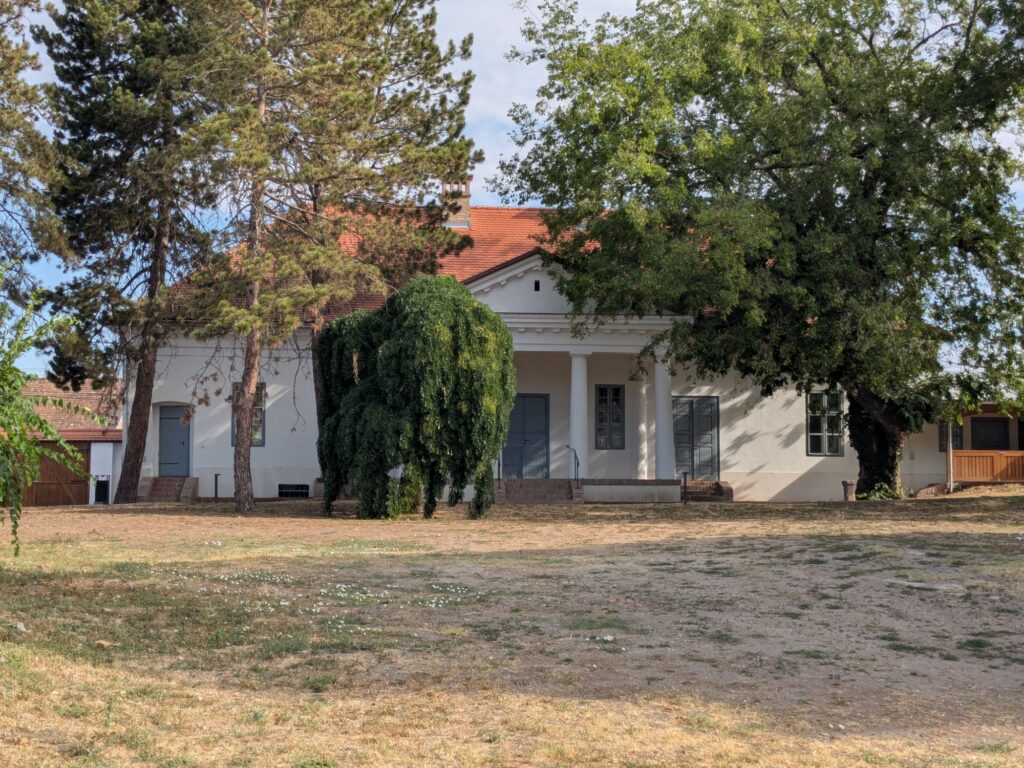
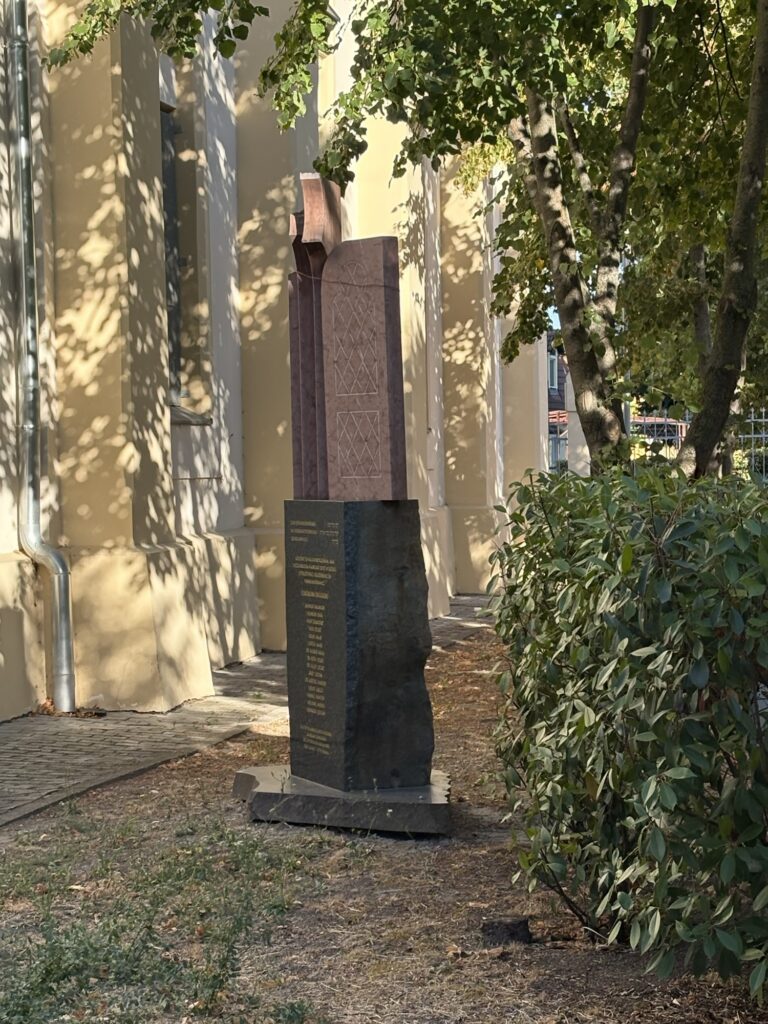
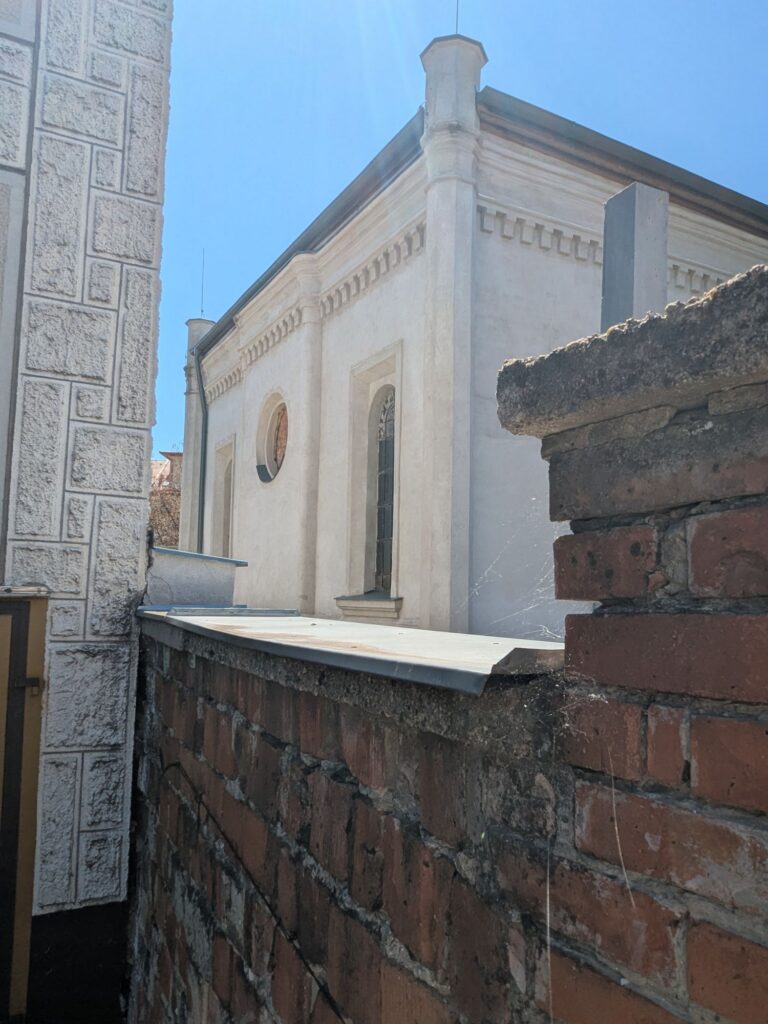
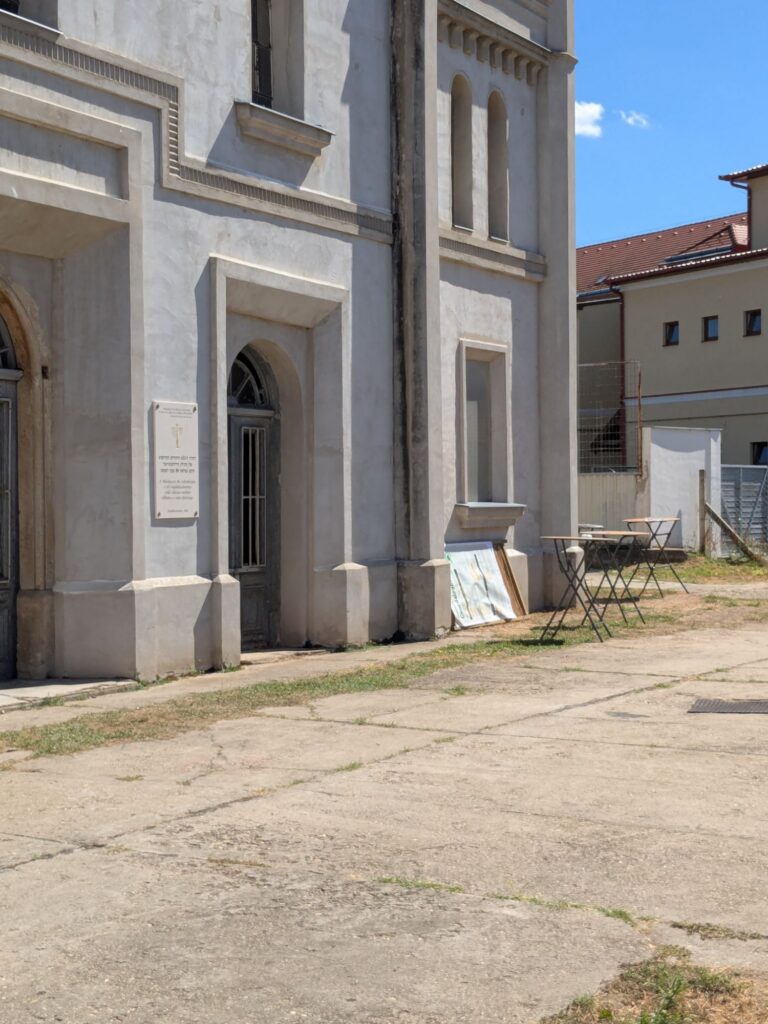
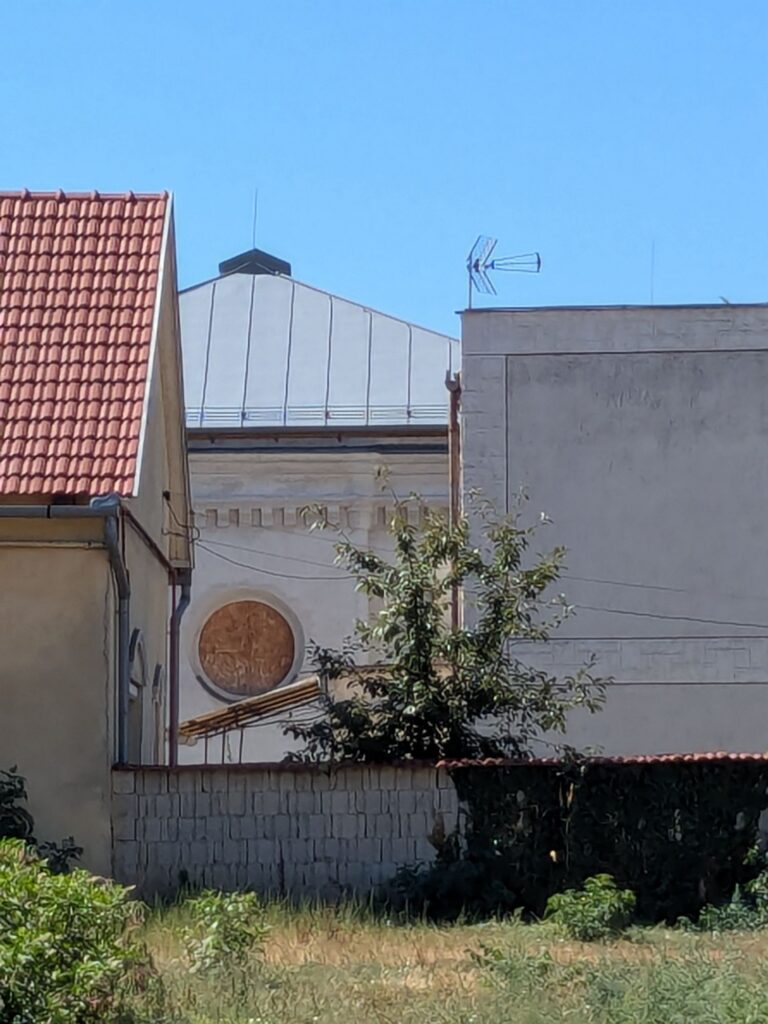
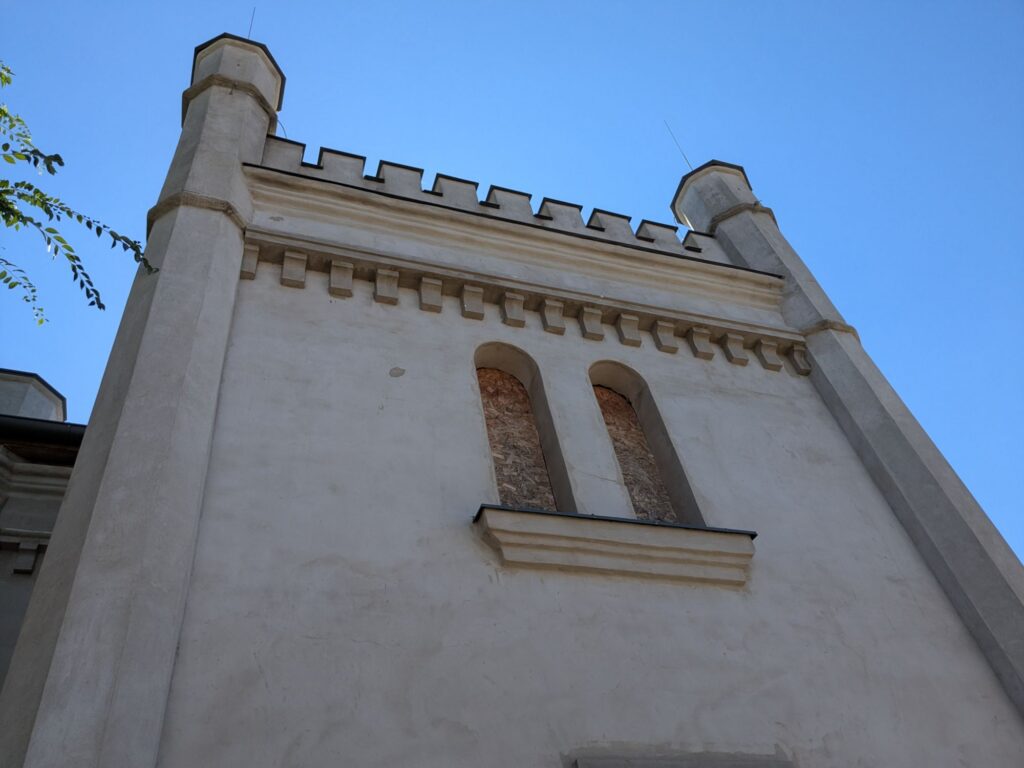
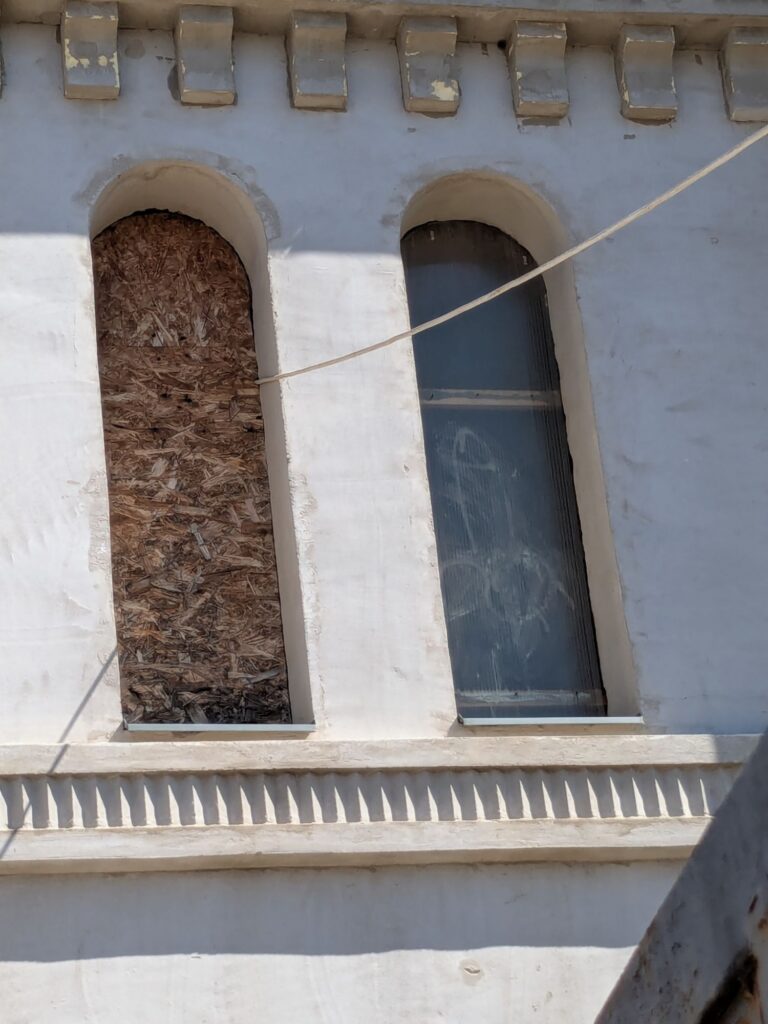
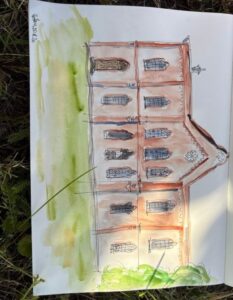
The building adjacent to the synagogue is already renovated, a monument for the murdered Jews of the village is visible from the Main Street. Yet, the synagogue itself is waiting for better times. The roof seems to have been done recently but the window are cracked or boarded up. The facade is crumbling and pigeons fly in and out.
Google Reviews tell us from wonderful paintings inside but we had no chance to see them.
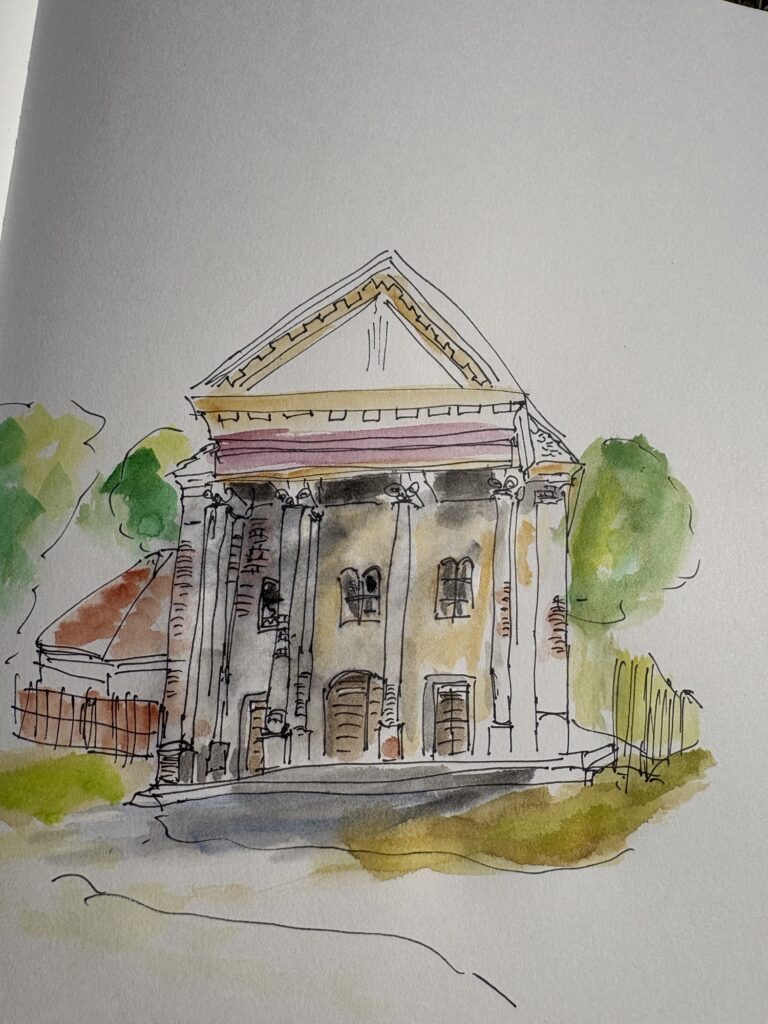
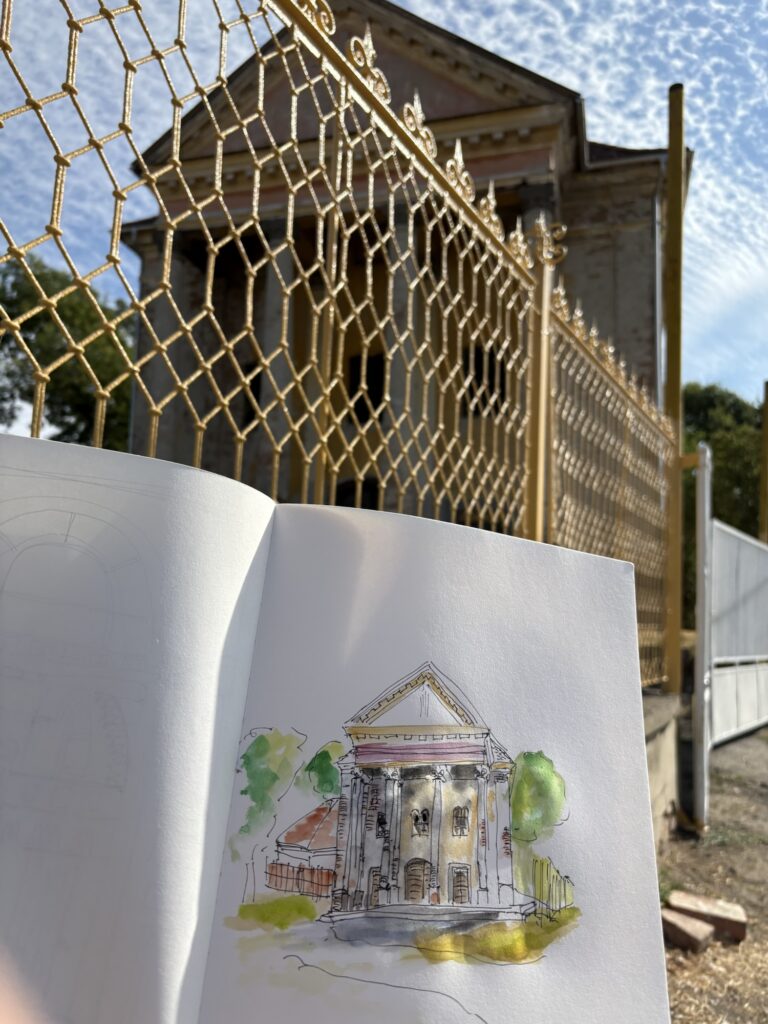
The synagogue of AbonyThe fence was recently painted.Abony’s Jewish victims Happy Pigeons Seen from the neighboring plot The memorial is on the street side of this building
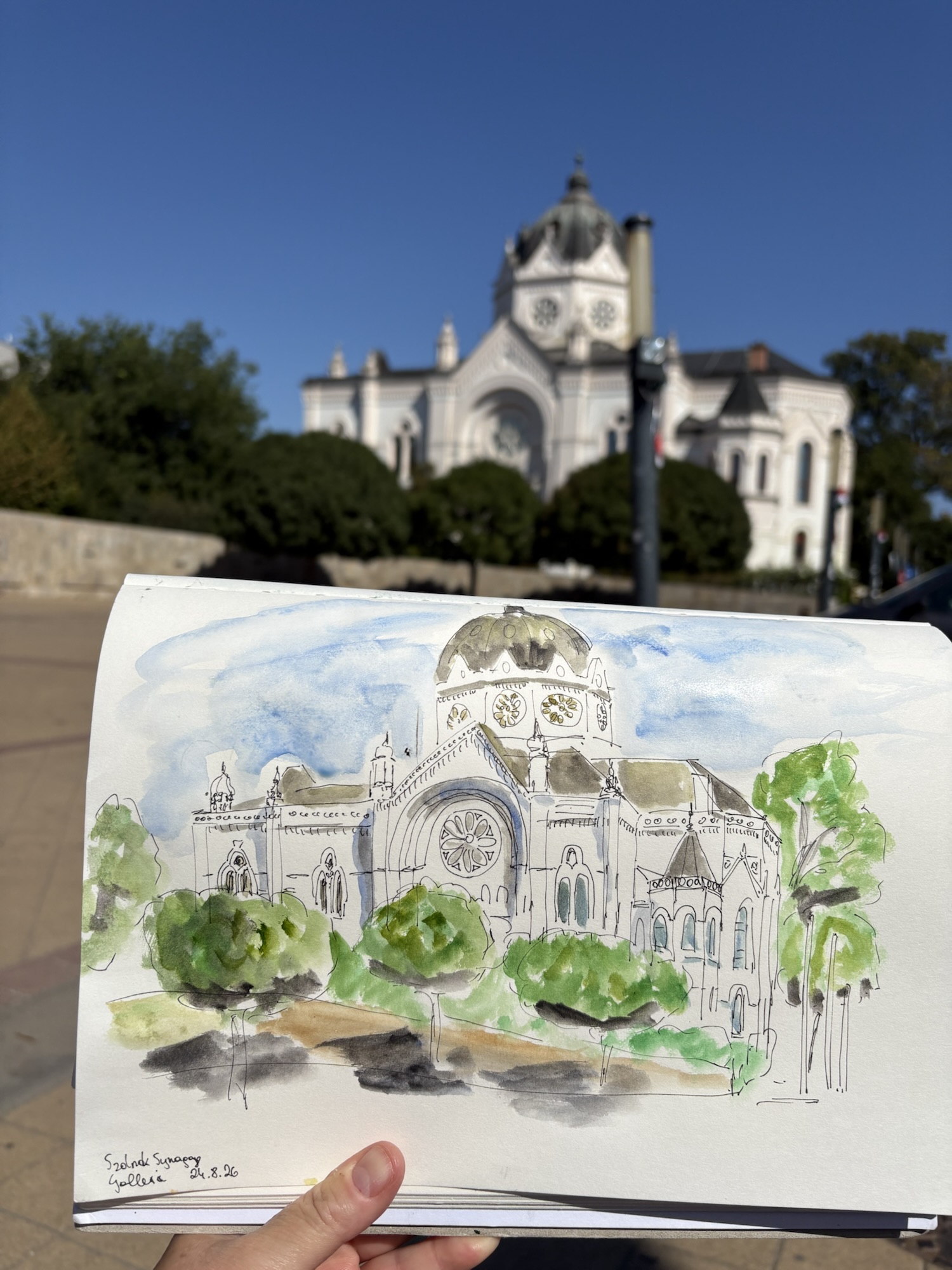
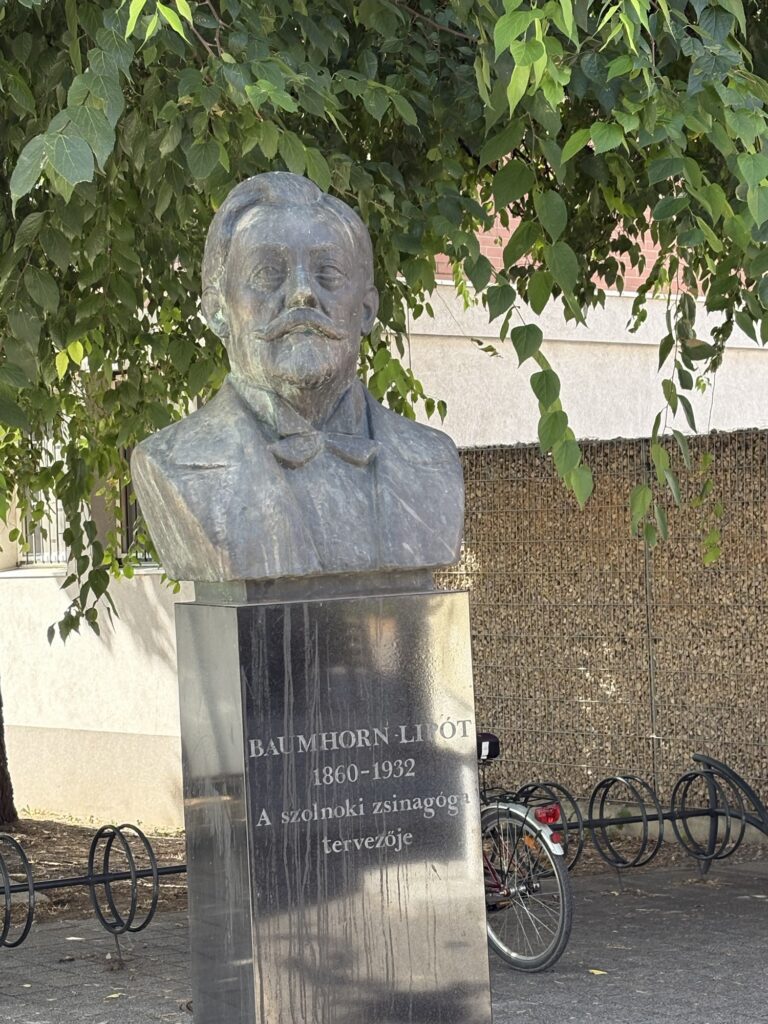
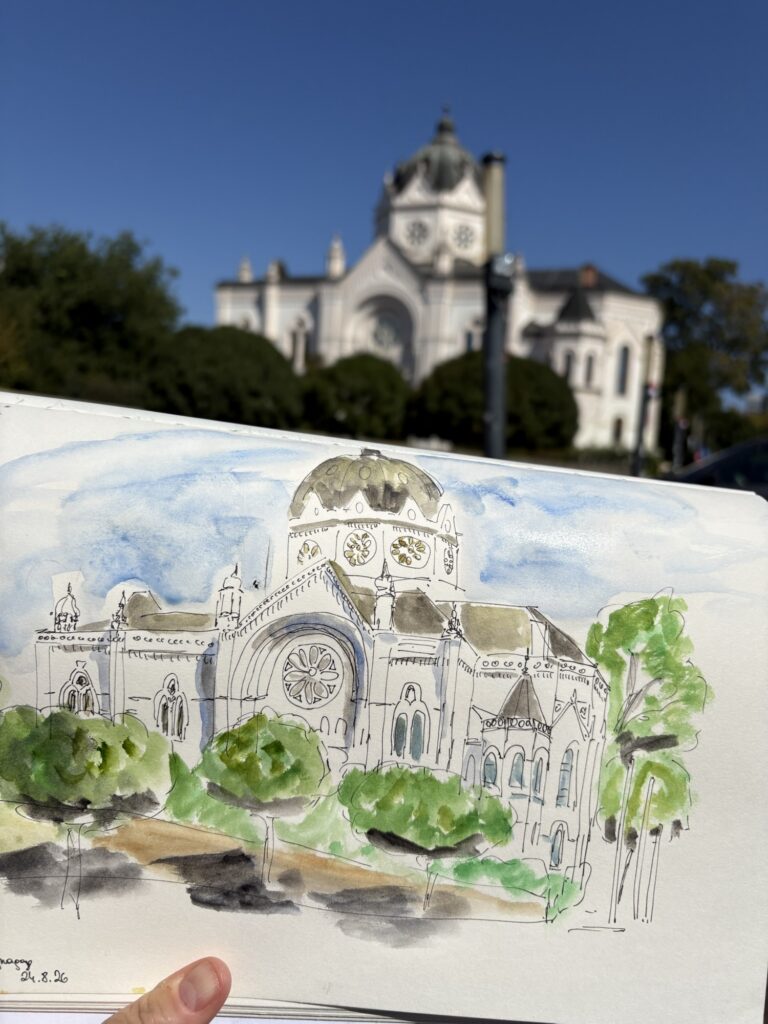
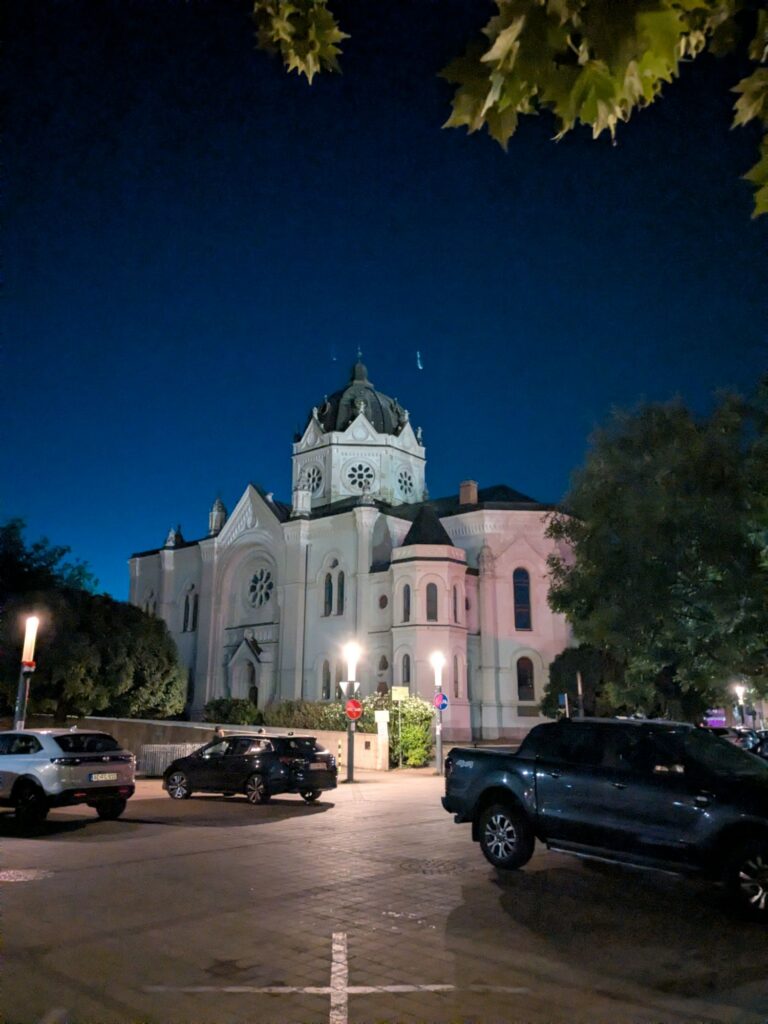
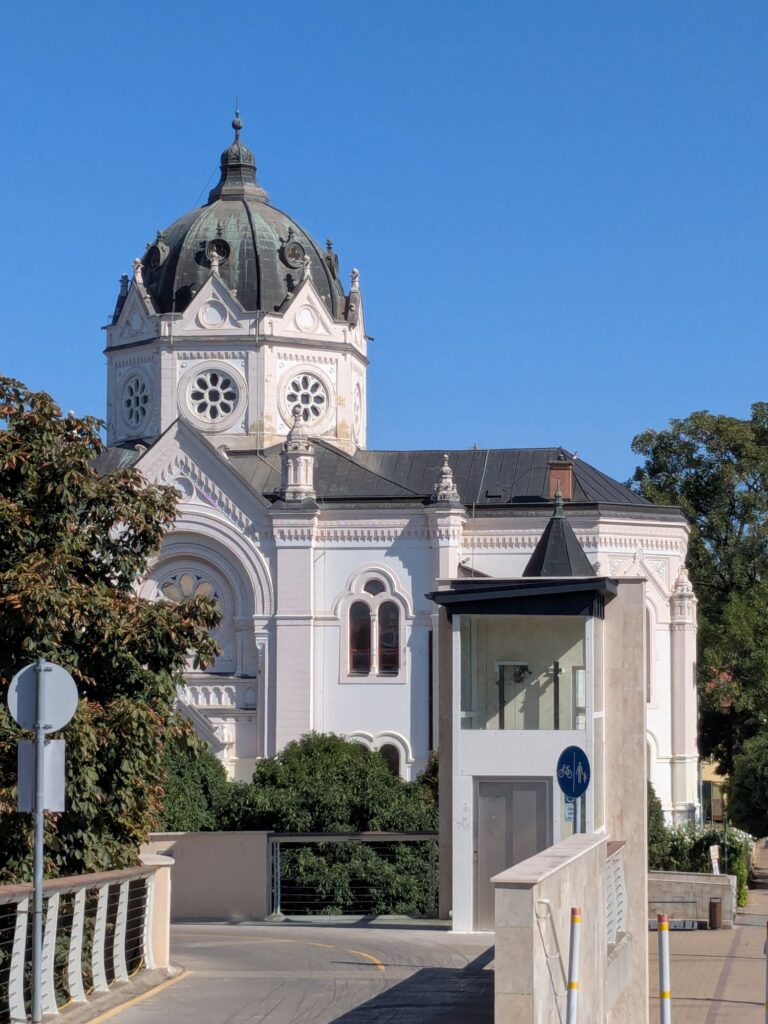
The former synagogue of Szolnok is one of Lipot Baumhorn‘s many. There’s a statue of this famous architect in front of the building that today serves as an art gallery.
Statue of Lipot Baumhorn in Szolnok
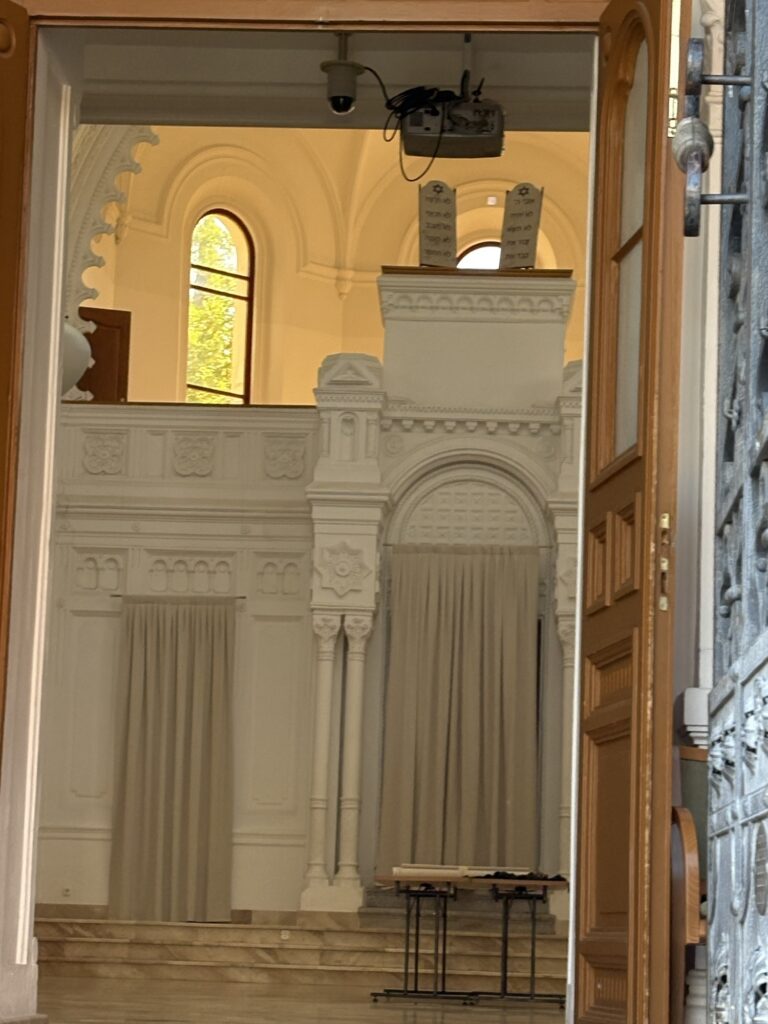
The synagogue itself has a great location at the end of the pedestrian bridge across the river Theiss/tisza on the one side and one of the nicest streets in Szolnok we have seen on the other. It is an impressive building, eclectic style with Rundbogen elements. All architectural elements inside are kept in white, so it can be used for the purpose of an art gallery.
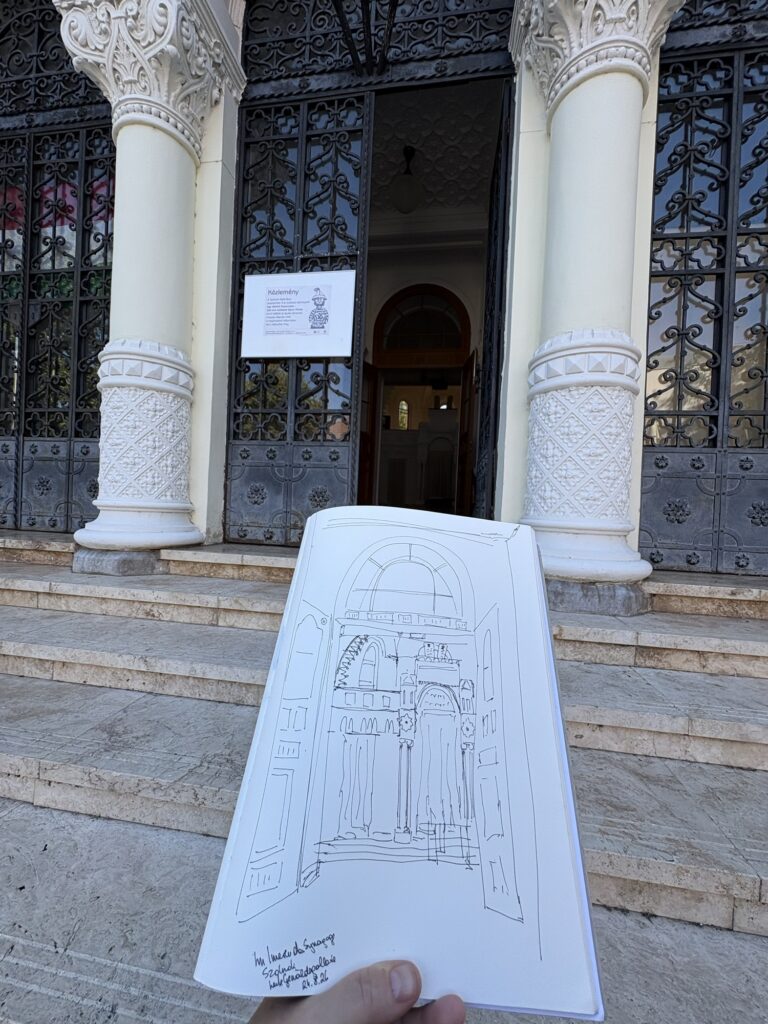
It seems that this place has been renovated with lots of love and devotion. So many details can be seen even from the outside: the doors, windows, fence. Really well done. We could not visit inside, but even for the building itself it was worth coming. Located between a market area and housing buildings from the 70s, it is hard to understand why it is here. Nothing from the surrounding gives an impression how the area might have looked like.
The style is something like neoromantic. It was erected in 1898.
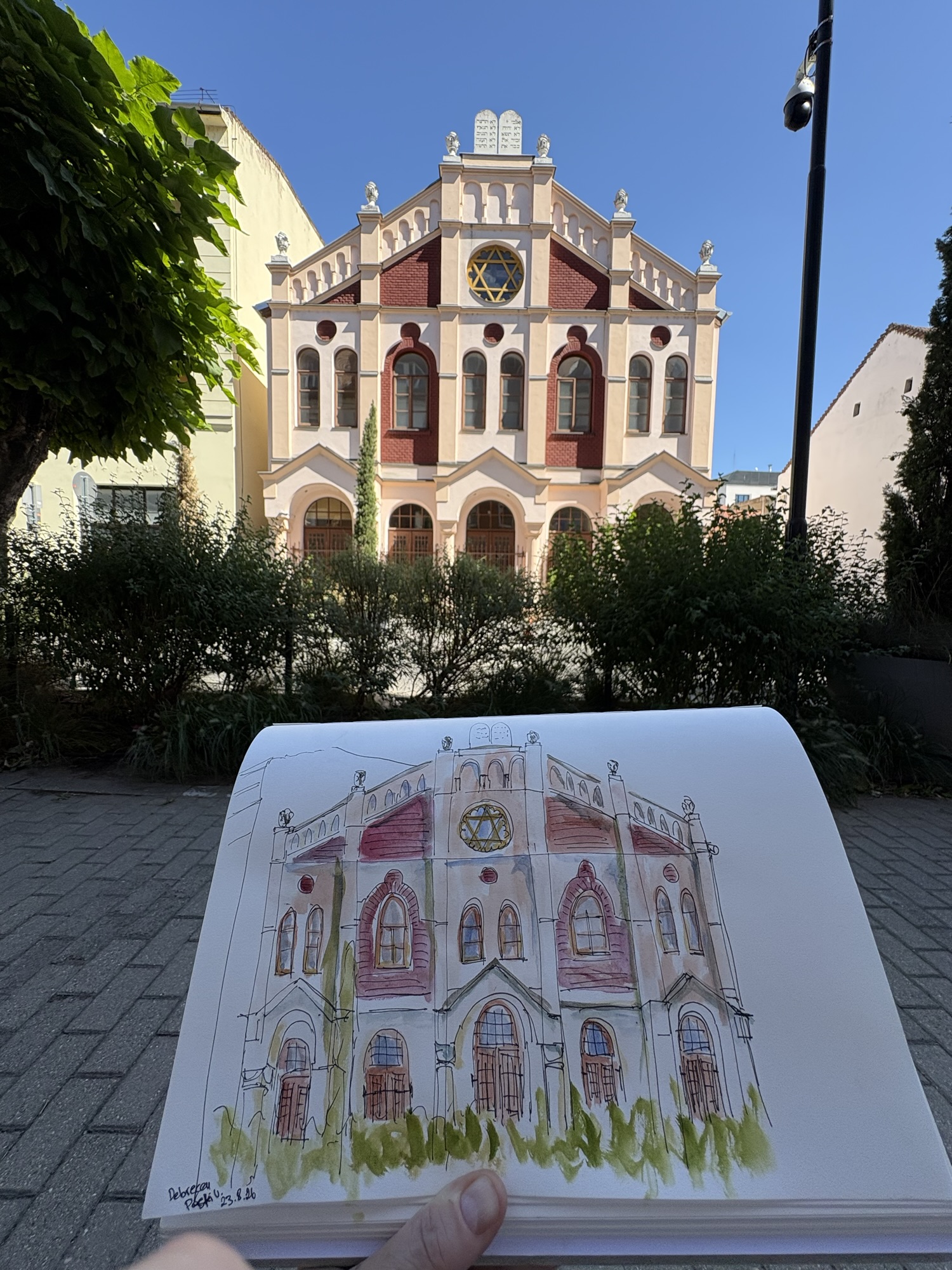
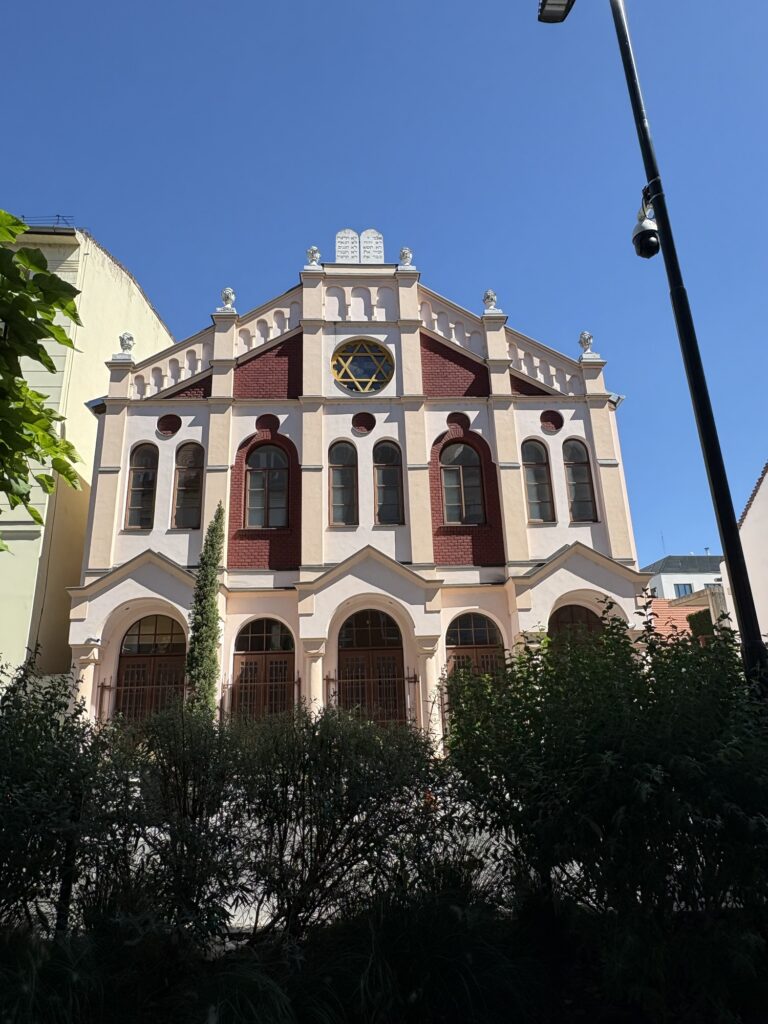
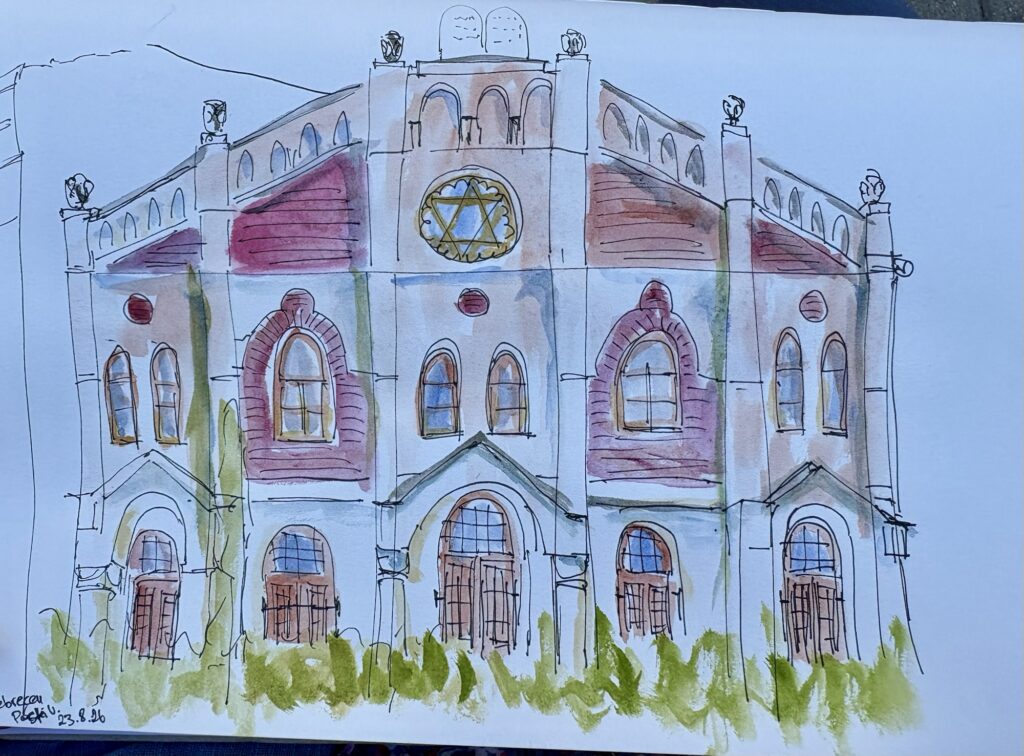
Built in 1880 in an eclectic style, it is today a cultural centre. It was planned by local architect Jenő Berger.
Orthodox Synagoge in Debrecen
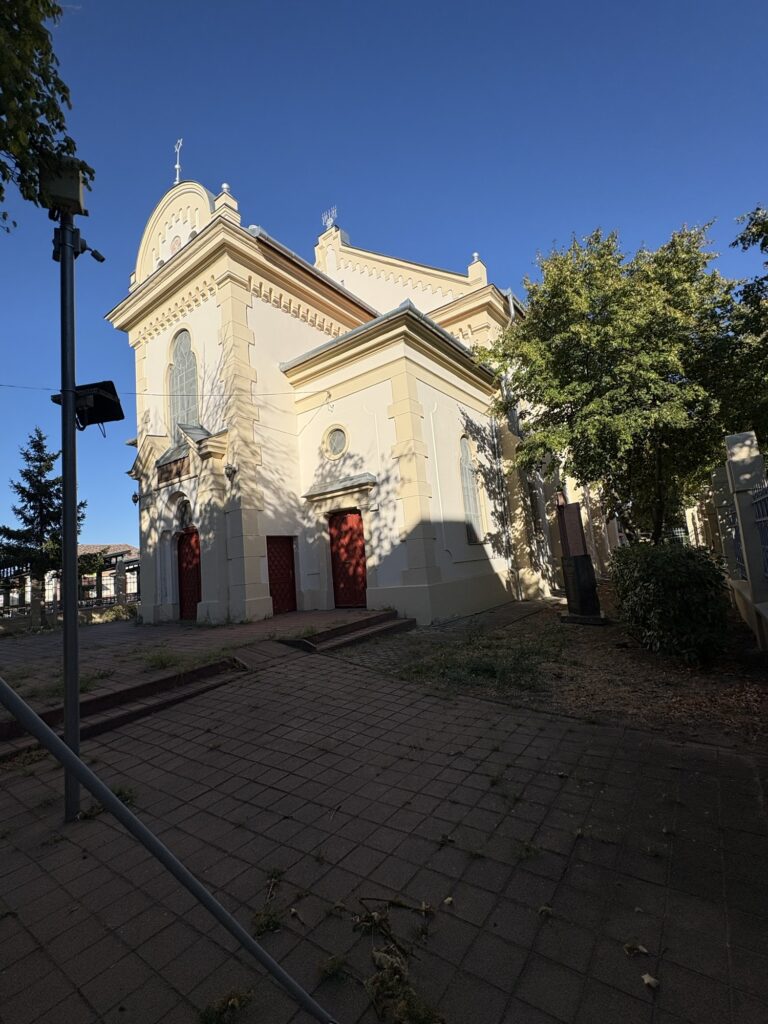
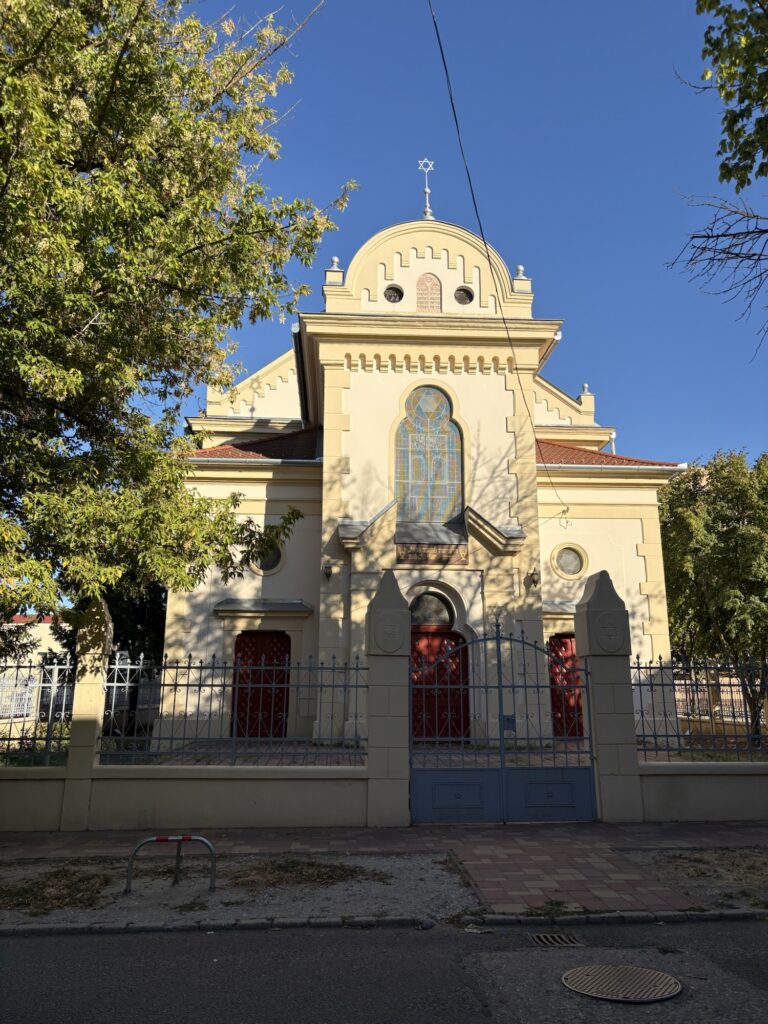
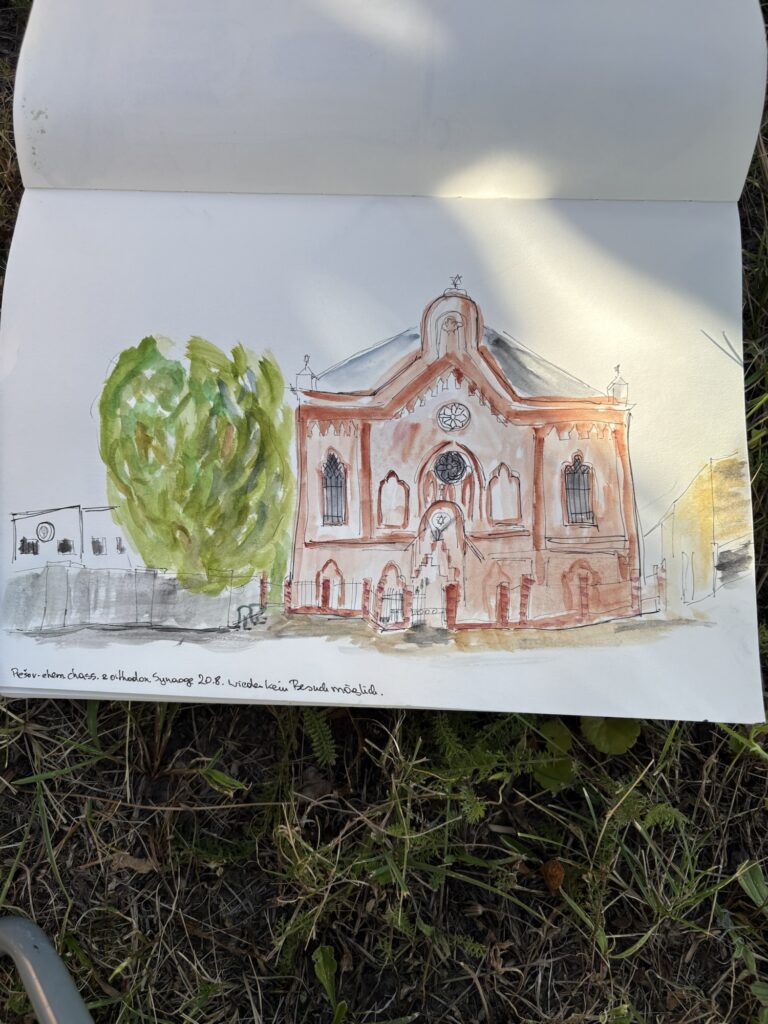
The synagogue in Kápolnás street was erected in 1909 in a mourish style. It serves as the synagogue during holidays. Or is currently closed due to renovation. We found different information, but could not check due to Sunday being closed.
It was planned by the Laszlo brothers László-testvérek.
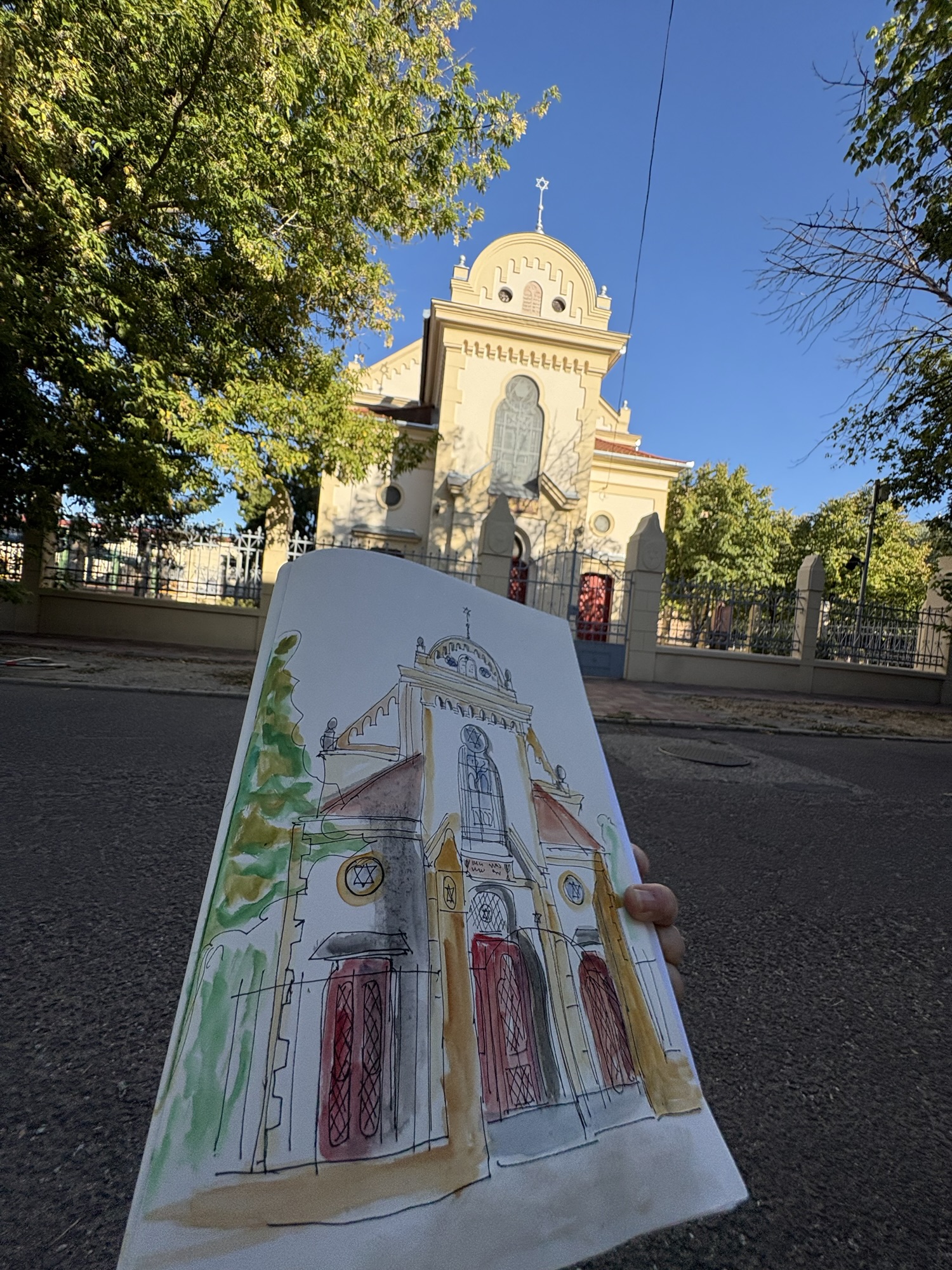
Synagogue in Kápolnás street is difficult to draw
On Sundays, both areas are closed so we could not get any further information.
The famous neolog synagogue planned by Jakob Gartner does not exist any more.
The facade is already in a good condition, the rest is waiting for when it is time. And it seems there was a party in front of the building, which makes sense because it is a nice and rather large space.
The synagogue was built in 1863, in a neoromantic style. It it is in a similar style as a nearby school, this was built by Imre Vecsey. So maybe he also planned the synagogue orchid plans for the school gave the idea.
The building was sold in the 1950 and used as a storehouse for furniture. The renovation started in 2018.
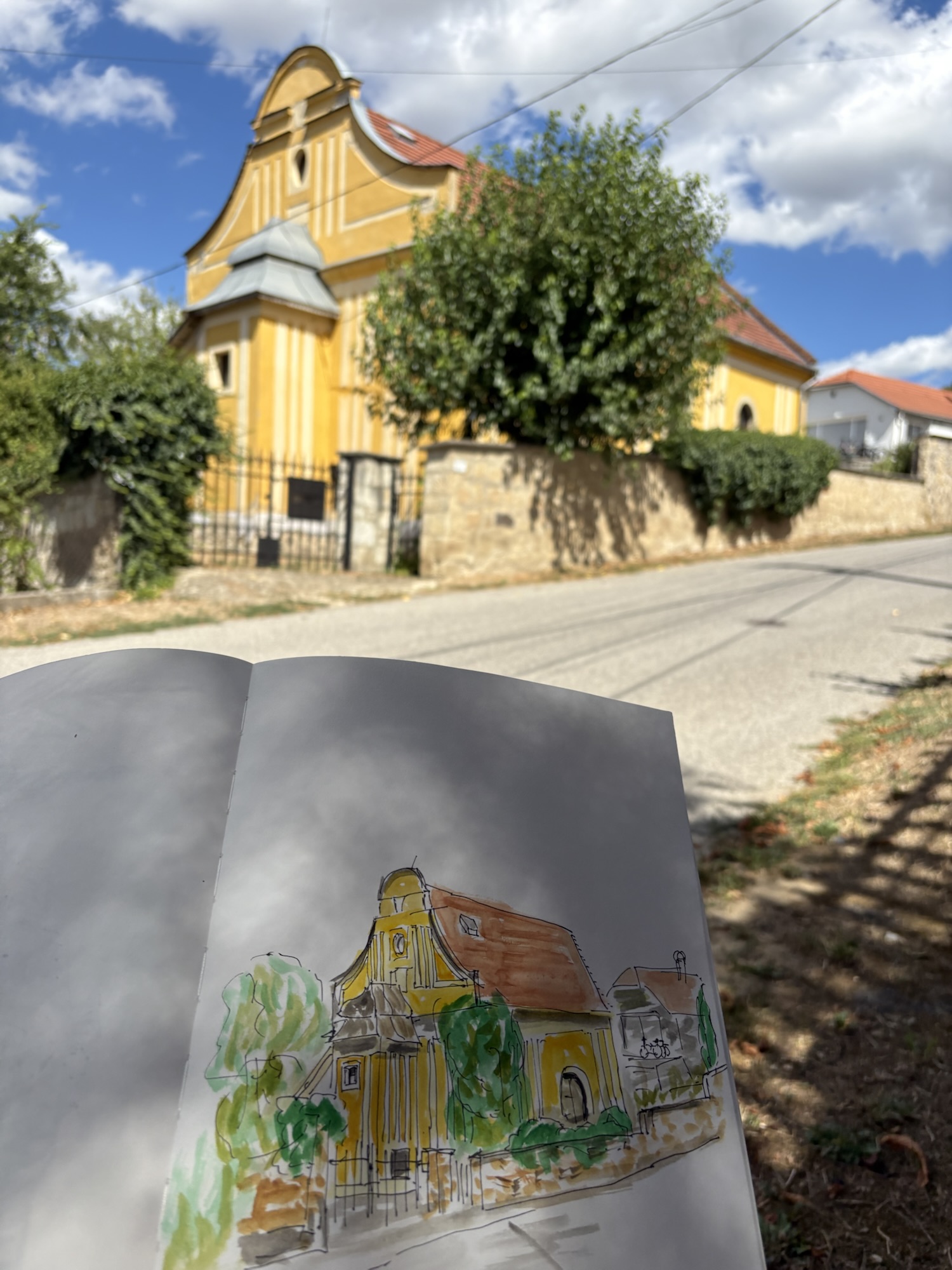
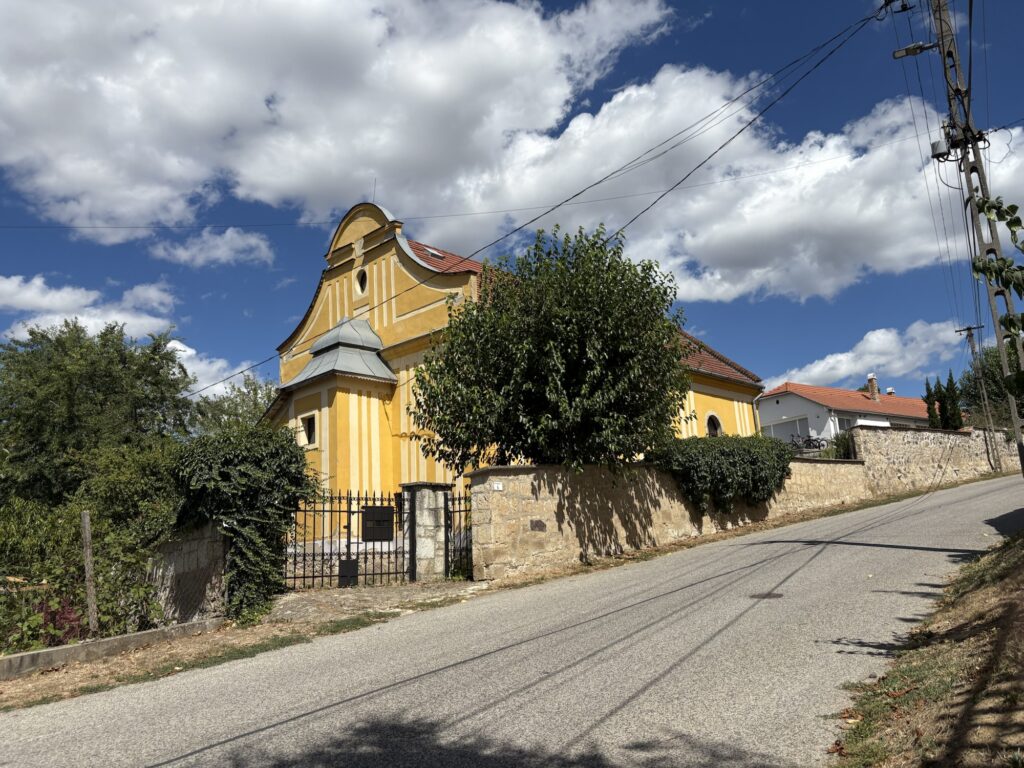
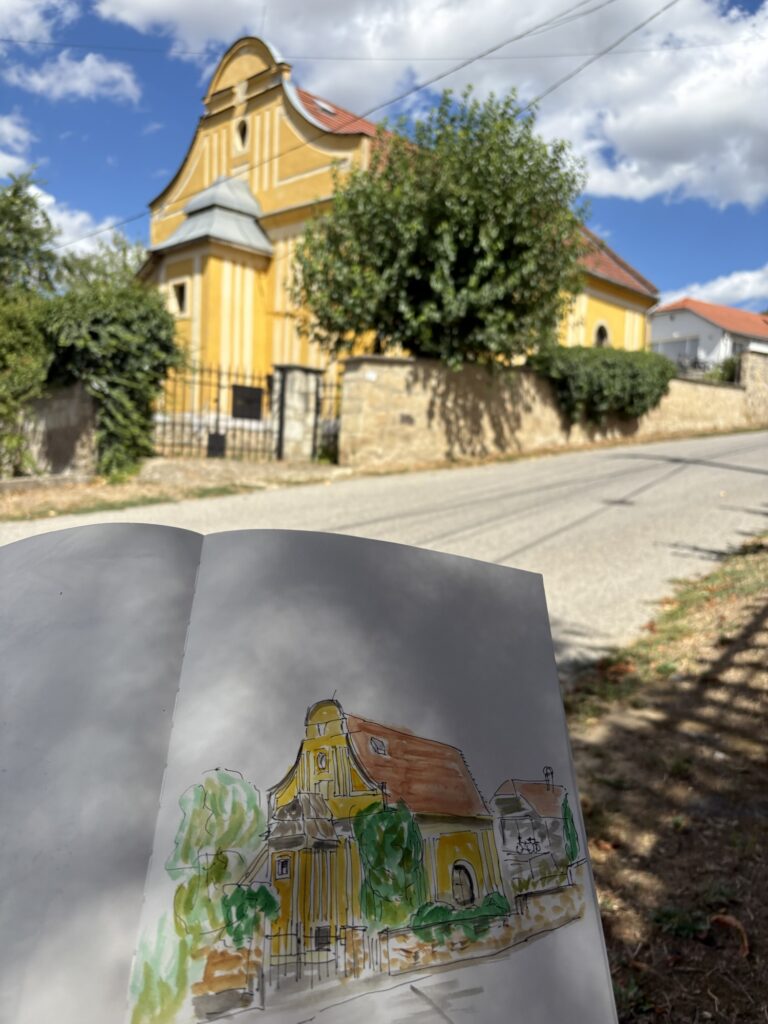
Following a small road uphill, suddenly this synagogue appears. Unexpected inbetween small houses and gardens.
Tarcal Synagoge
In ferenc Orbáns Book we can red that a Finnish family saved the place and renovated it and there is an apartment built into the roof floor. Especially beautiful is the staircase to the women’s gallery. The outline seems to be baroque as a „neun Felder Synagoge“, similar to the one in Mád.
Tokaj is a rather long dwelling along two streets. It seems to be only existing of vinaries and concentrated near the river of Theiss- Tyssen of hotels, pensions and tourist facilities.
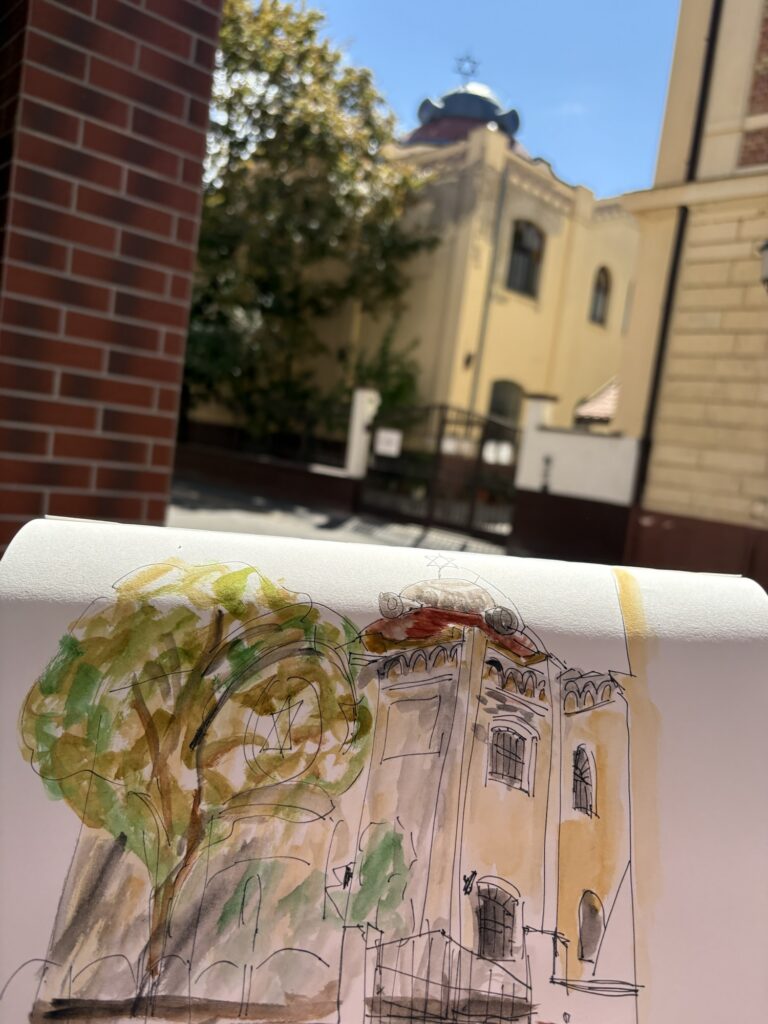
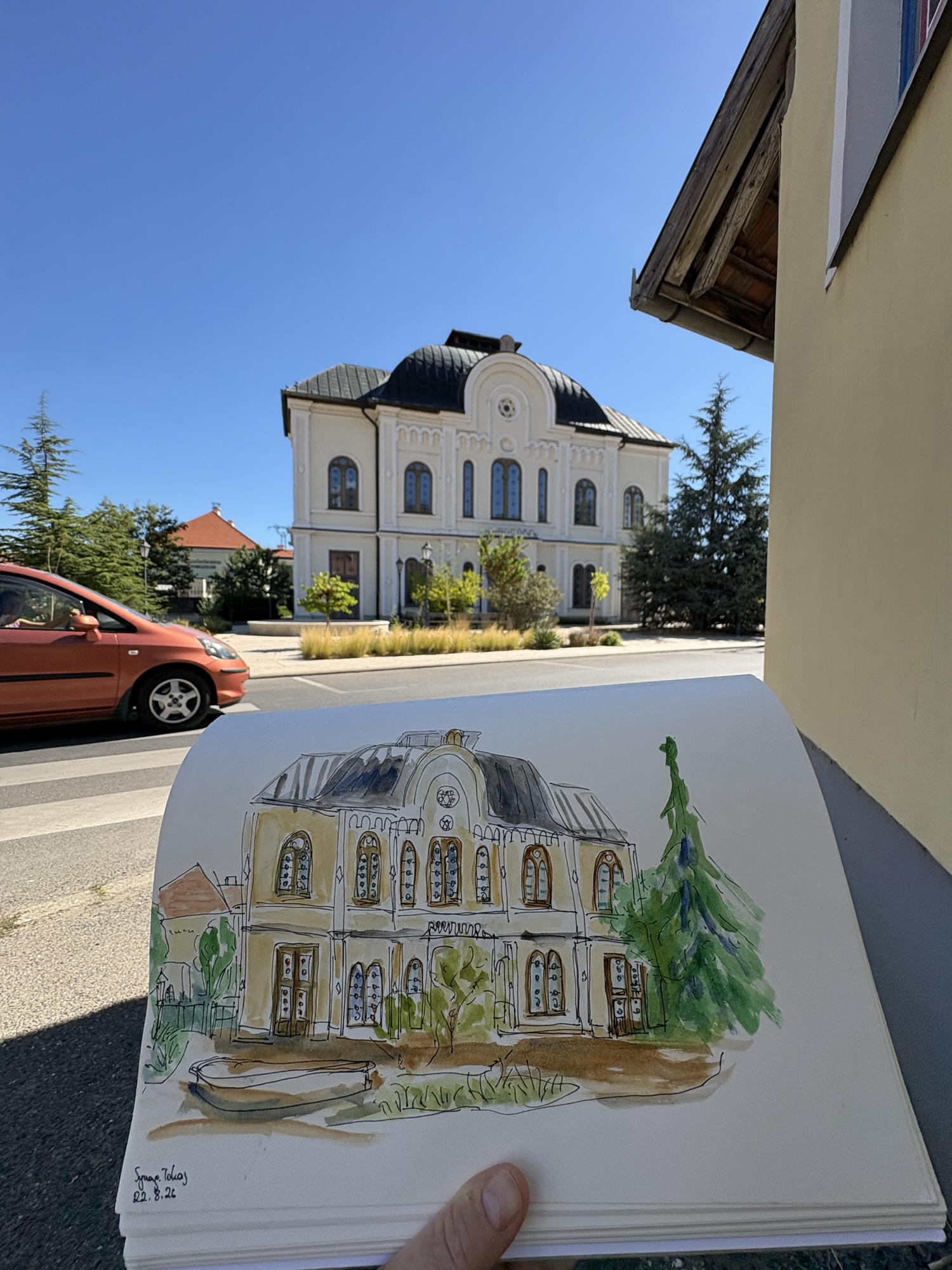
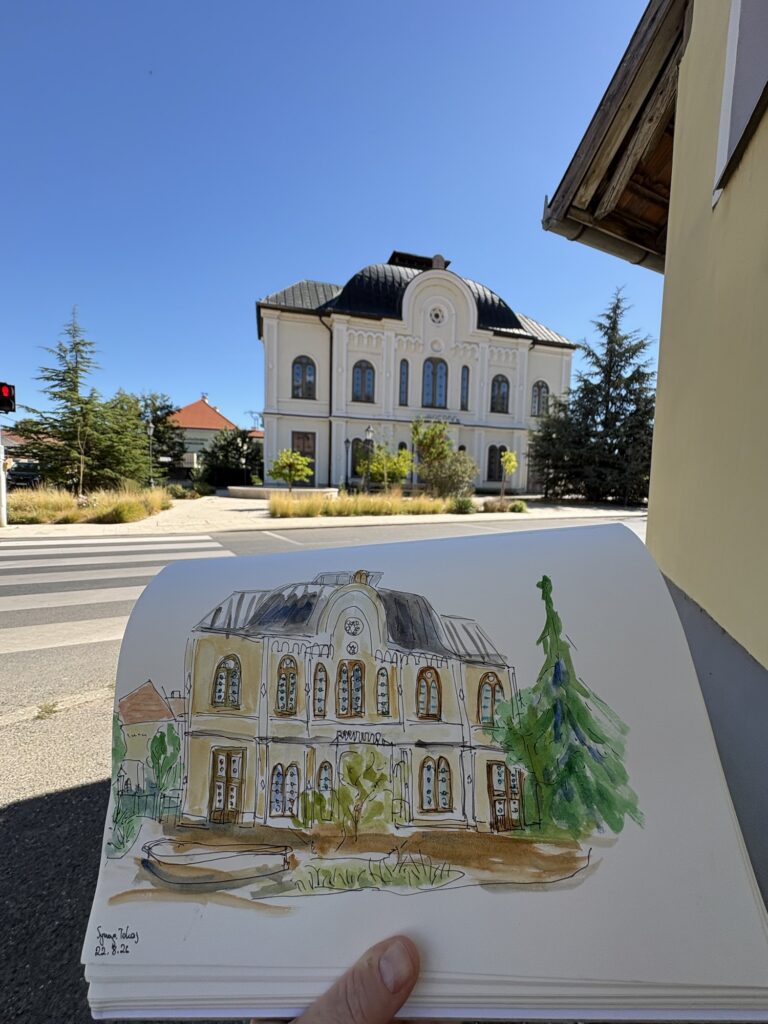
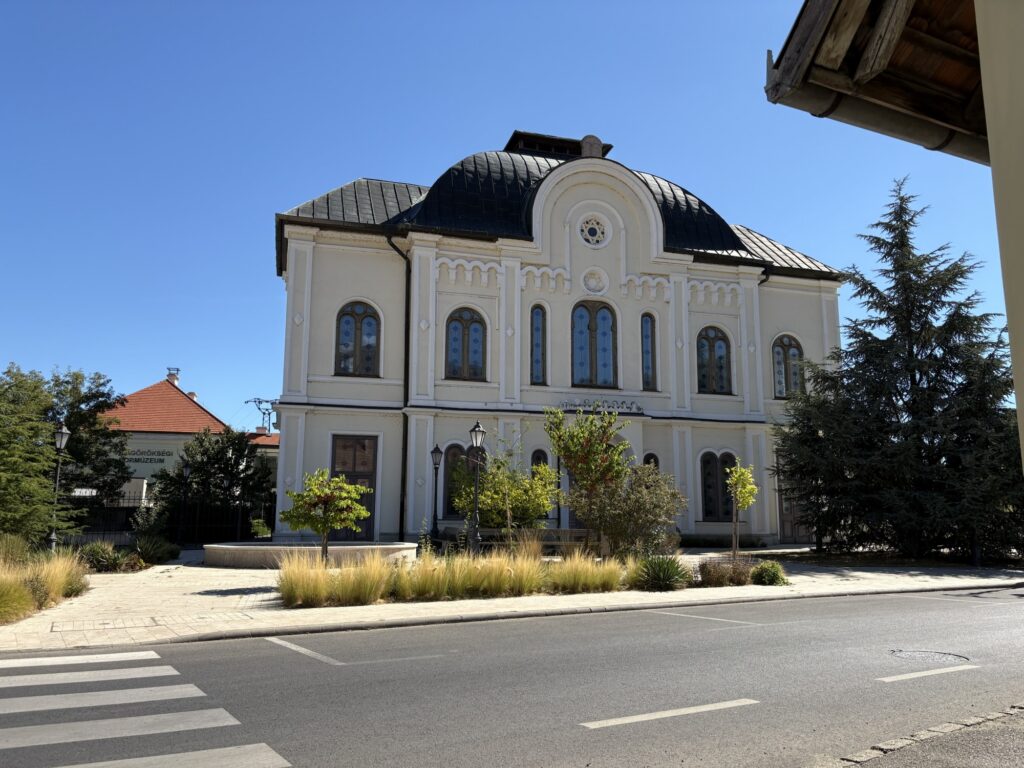
A little further away from the tourist hotspot is the great synagogue, built in 1890 in a mourish style, including „Rundbogen Stil“. It was the first synagogue planned by Lipot Baumhorn.
It seem to have been renovated in the mid 1980s. The neighbouring holocaust memorial was opened in 1984. next to the synagogue is the museum for whine. It might be that it is located in former rabbi house or school.
In the book of Ferenc Orbán a pilgrim house foe chassidic communities is being described. It seems that this moved to the neighbouring village of Bodrogkeresztúr.
Urban sketching the great synagogue of Tokaj A lovely park is located in front of the building