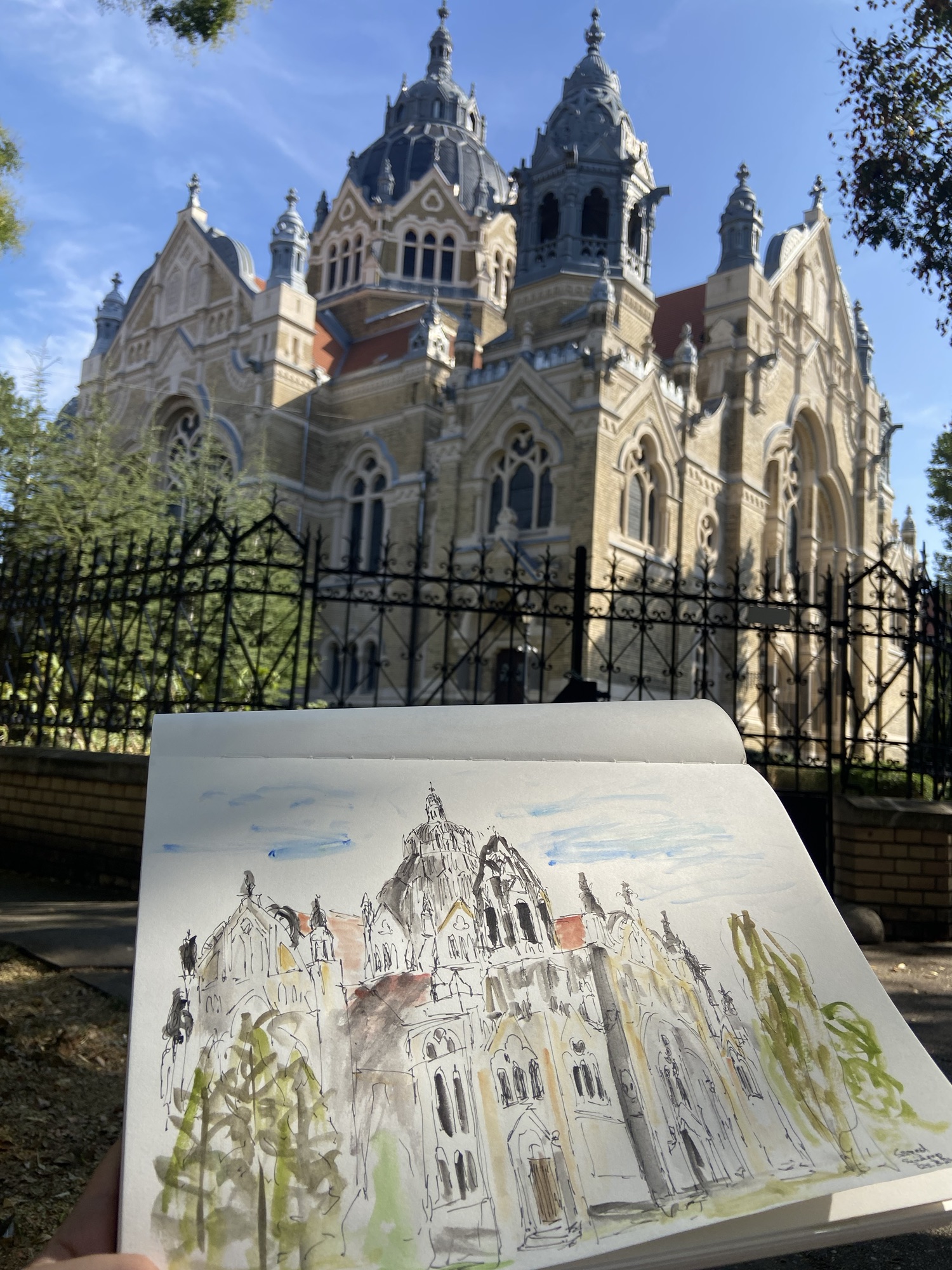
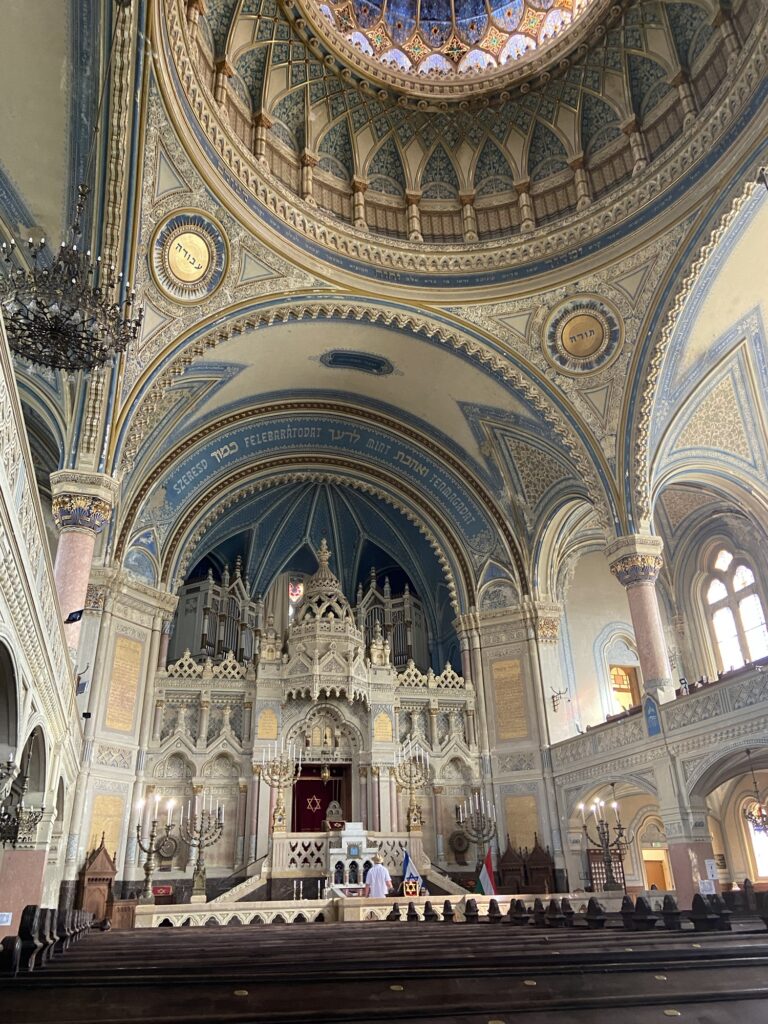
This synagogue is quite something. Huge. Impressive. Magnificent.
Built in only 3 years and opened in 1903 it is still usable as a synagogue. I have read it is one of the largest in the world and second largest in Hungary.
There is a small Jewish community in Szeged that organise a festival every year in beginning of September. Also concerts for funding the place are held.
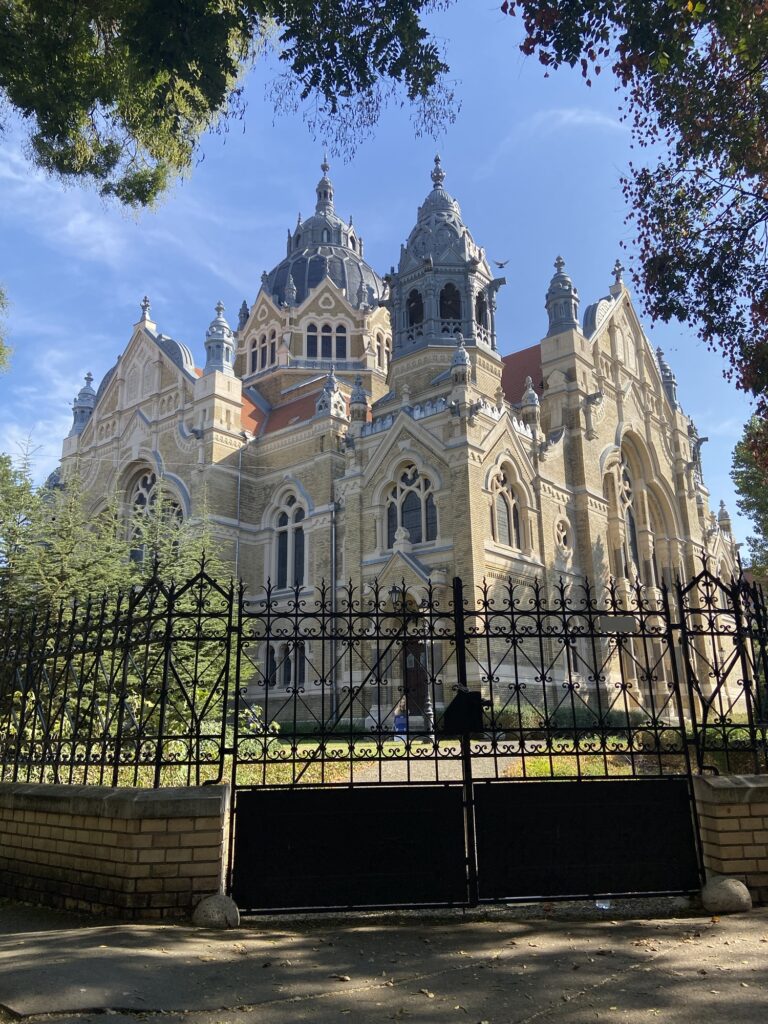
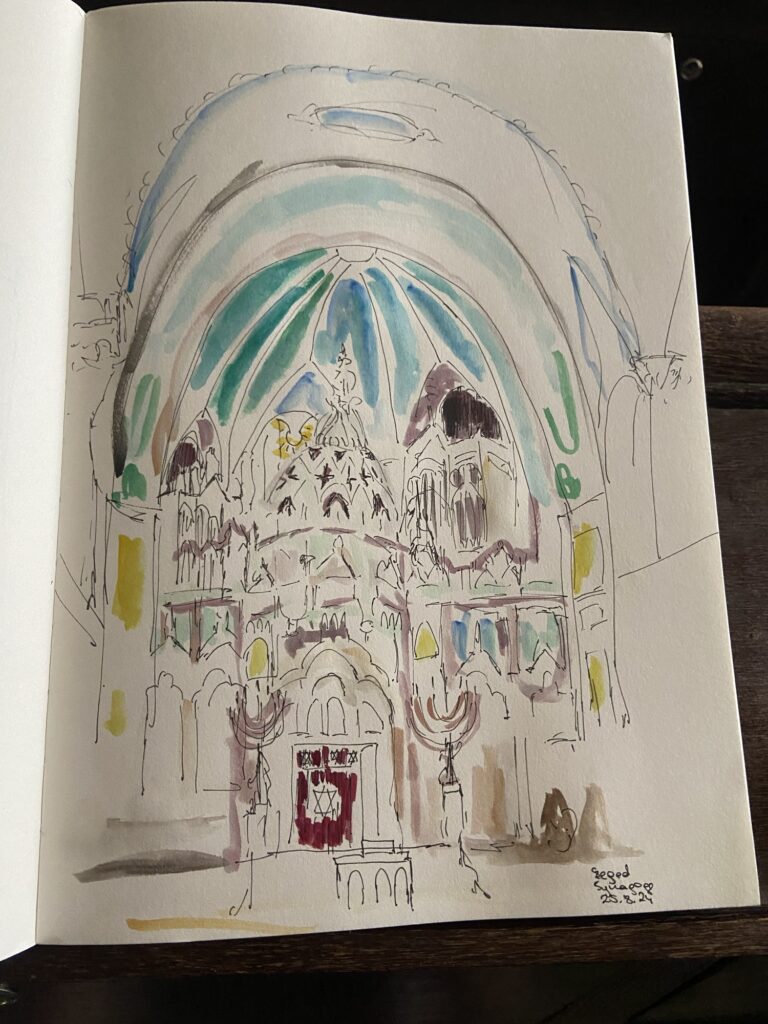
When drawing this picture a man passed by. He agreed that this is a very impressive and important building. He said that he is an artist and trying for years but cannot capture the magnificent of the building. I agree, it is a challenge.
The inside is dominated by the ceiling, a dome.
What style could this be? Historism? Art noveau? Oriental style? I have read many ideas and probably it is a mixture of all possible styles at the time.
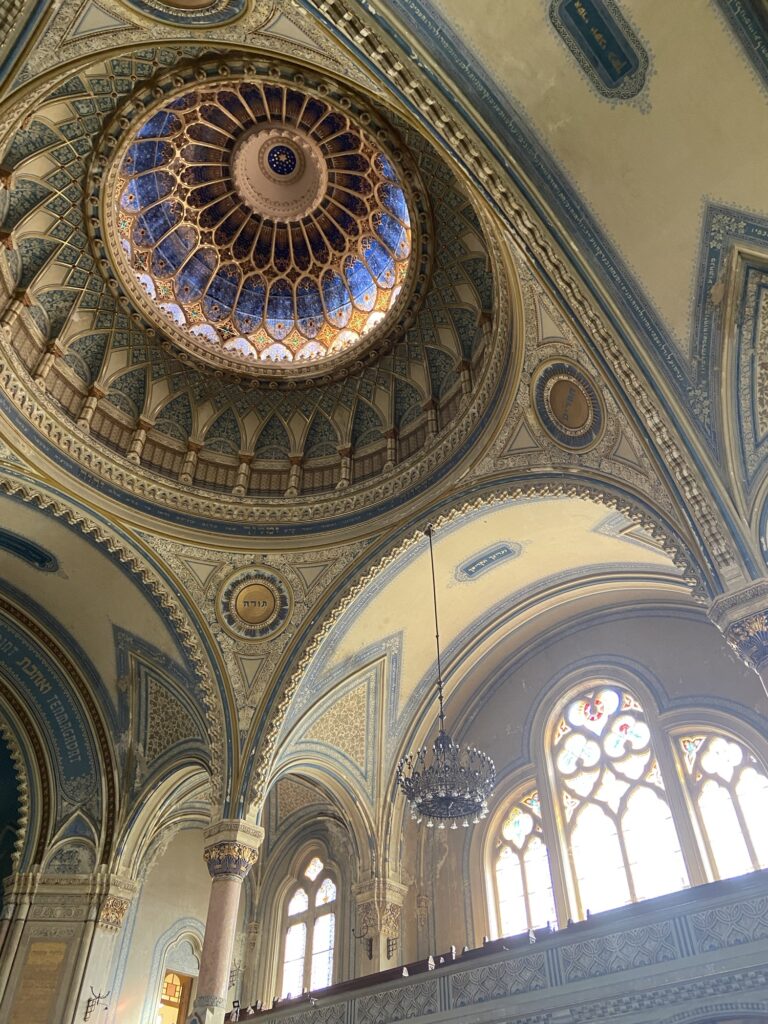
I found especially impressive the many paintings and glass windows with plants. Usually plants are used as ornaments. But here the plants follow botanical facts. Immanuel Löw published the book „Die Flora der Juden“. This is based on this theses „aramäische Pflanzennamen“
My camera could not capture these details. But this is worth to look further into it.
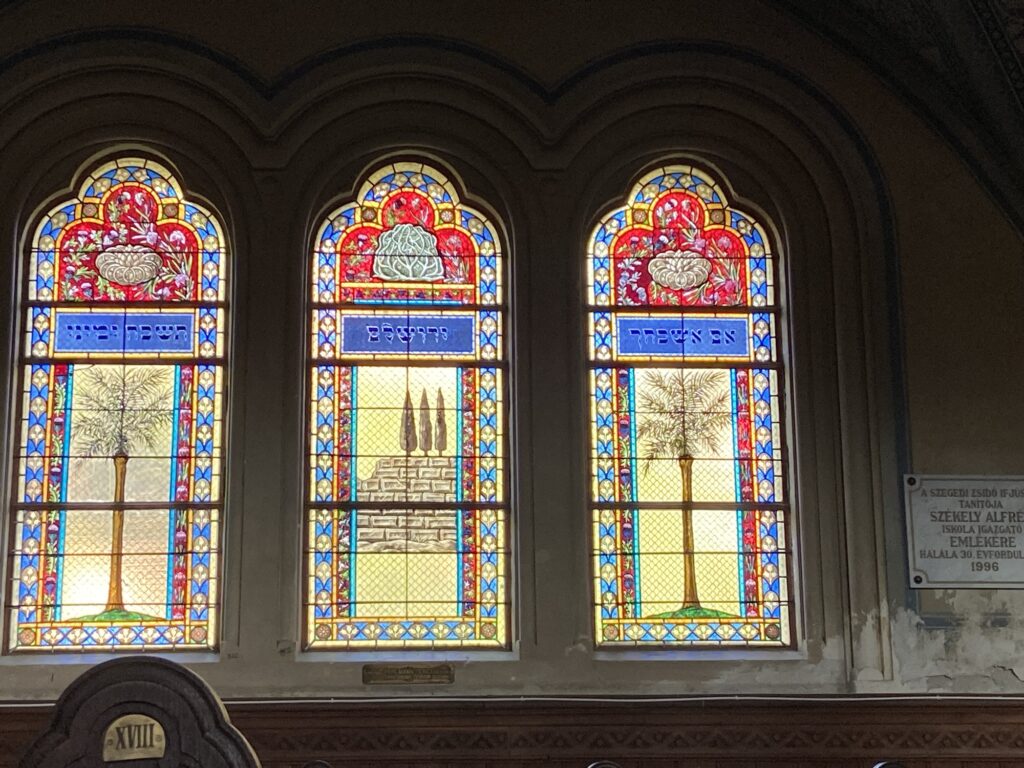
It is said that is due to the fact that Rabbi Löw, who was active here, was a botanical expert. And he took care that botanical facts where respected.
Wandering around in Szeged, we could see that not only on the compound of the synagogue lots of different plants are growing, but throughout the inner city: more variety of plants than I have seen so far in Hungary: different lime trees, Acer, even ginkgo. Large ash trees and sometimes the tree and house colour seem to match perfectly. It might be a coincidence or a legacy of Rabbi Löw. Who knows?
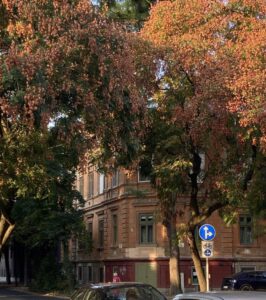
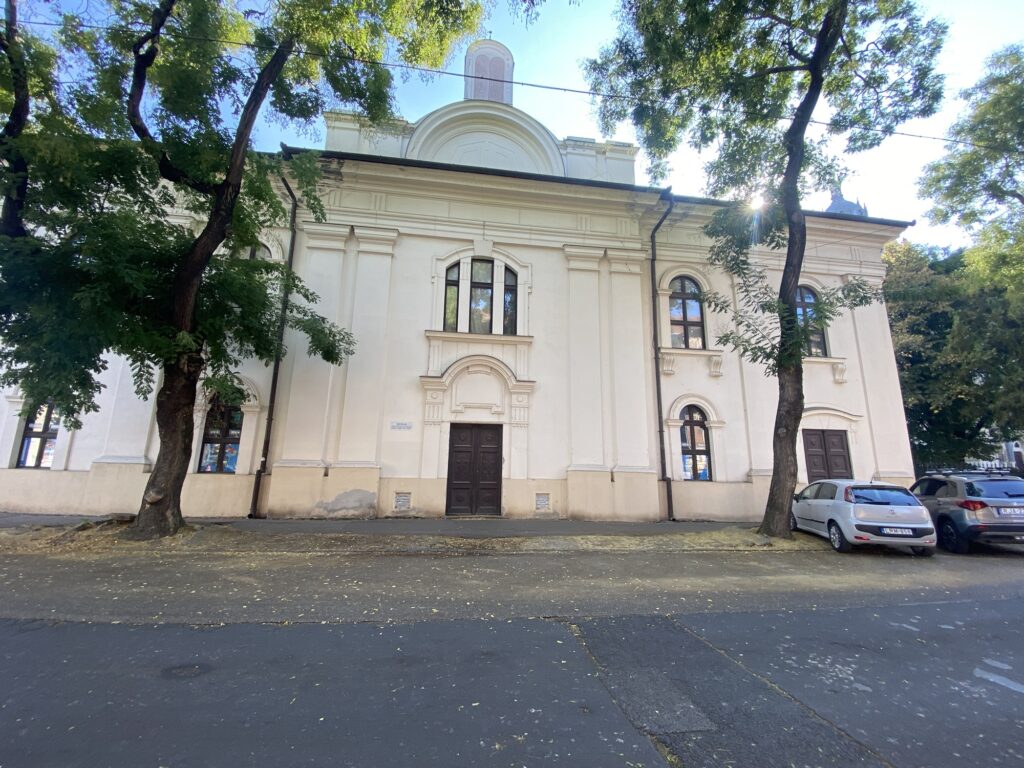
The old synagogue is on the same block as the big one. And it is quite obvious: this building was too small for a growing Jewish population. it is a performance centre today.
Source: Wikipedia and Szeged Jewish archive
