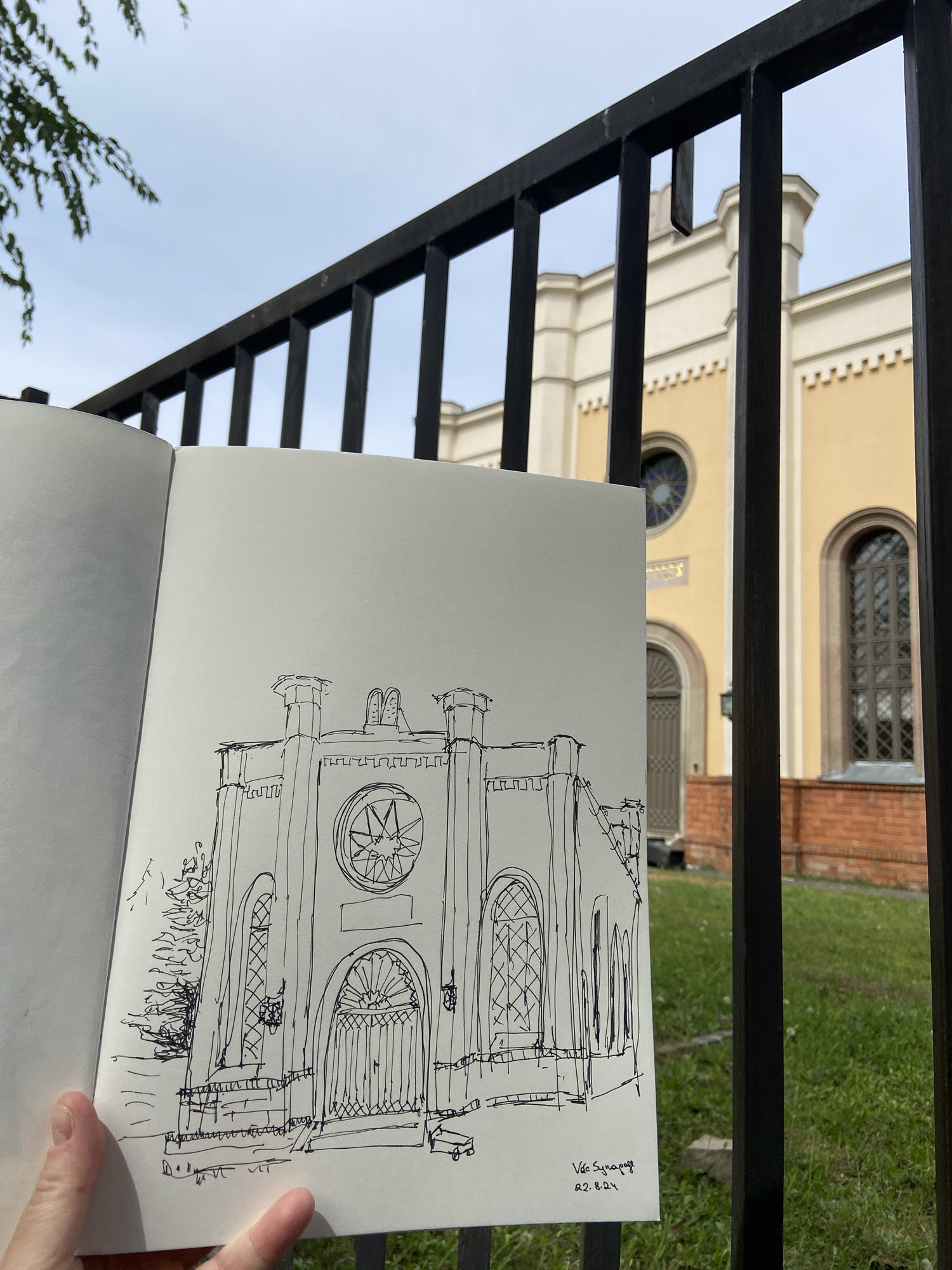
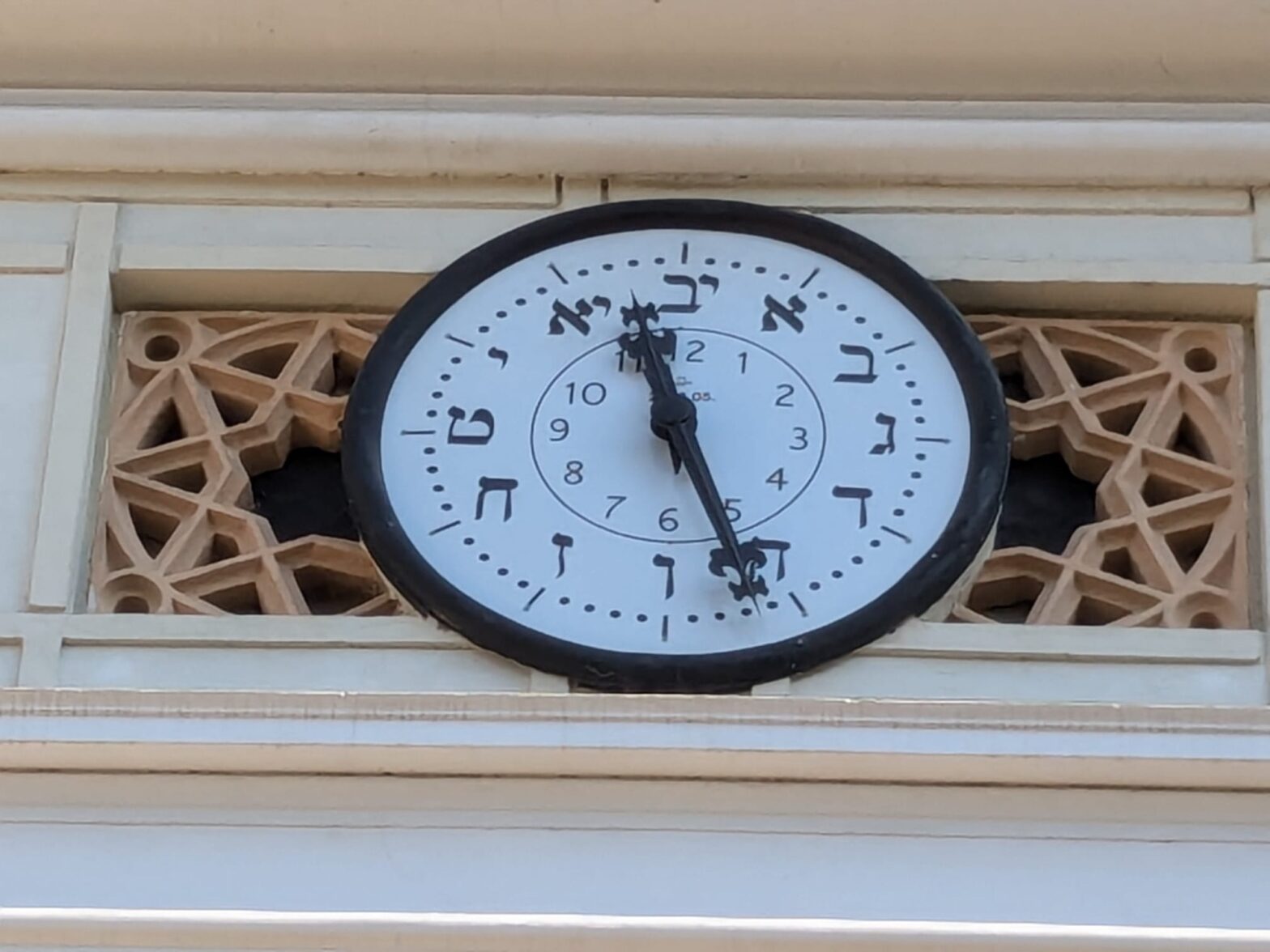
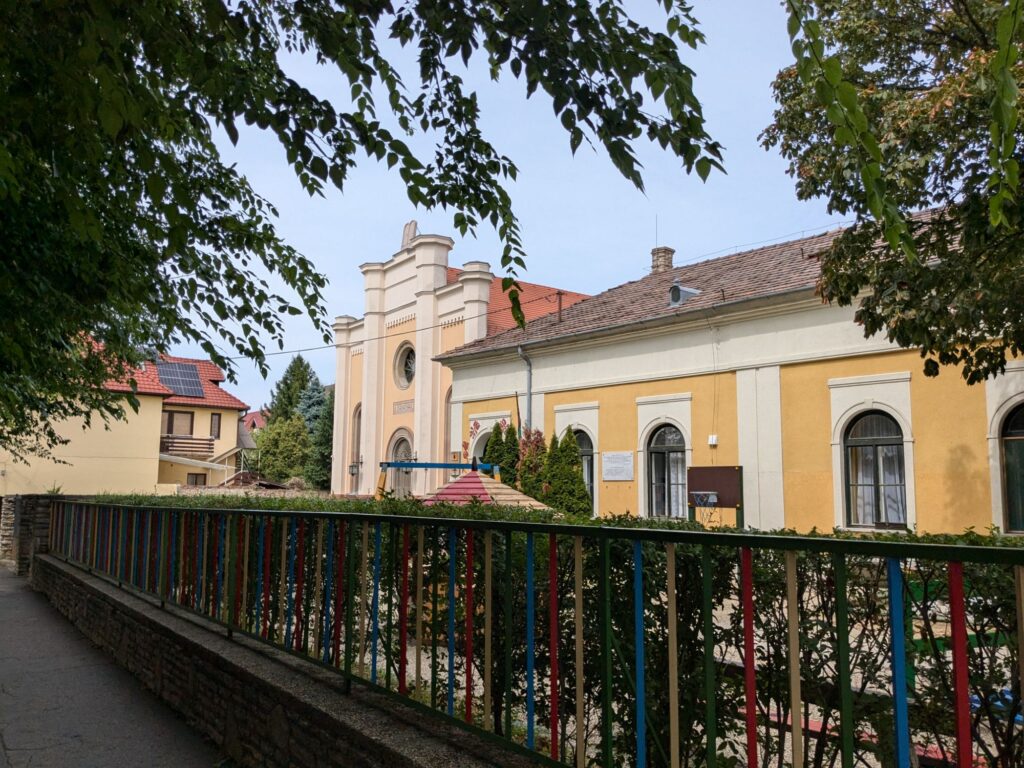
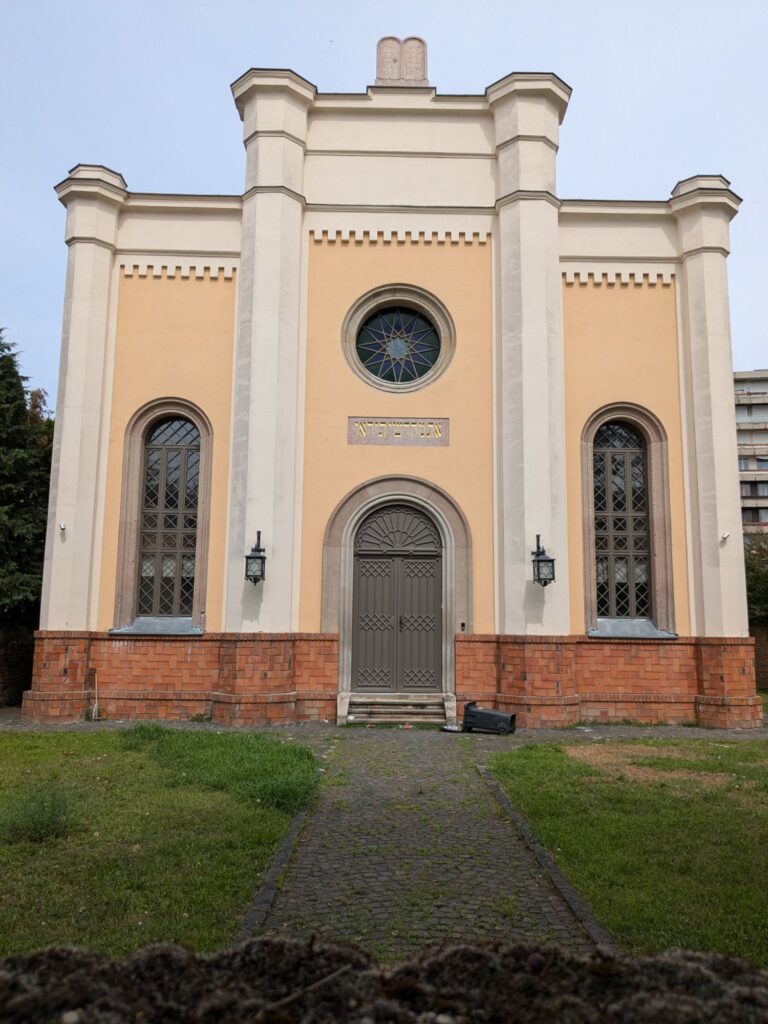
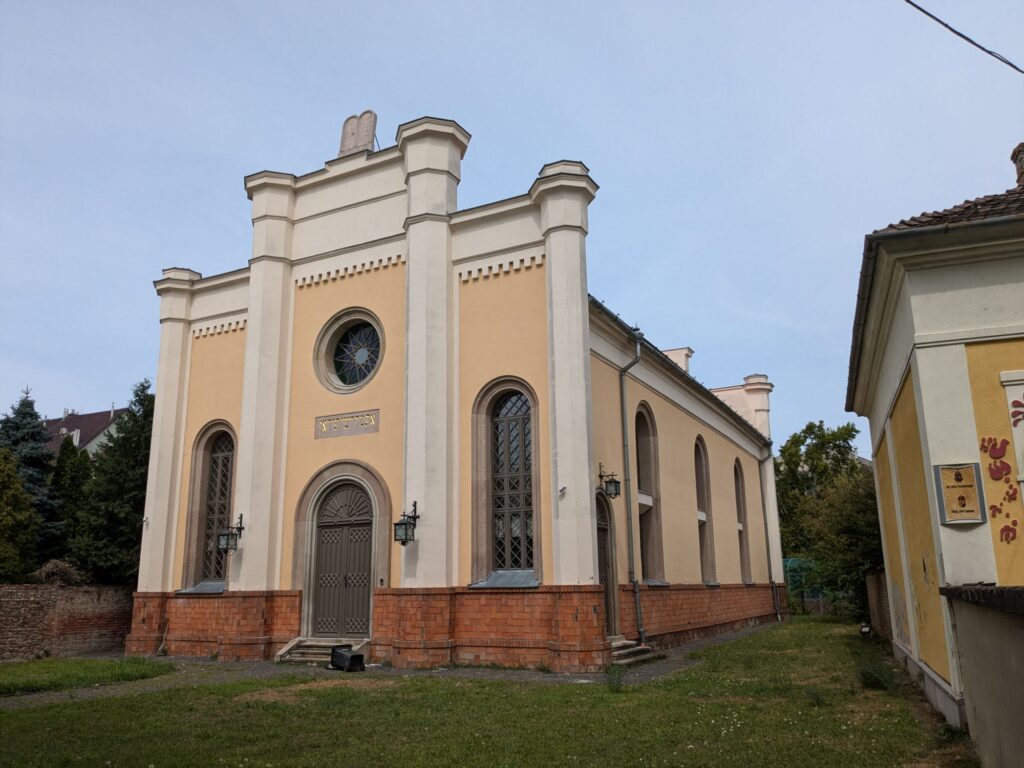
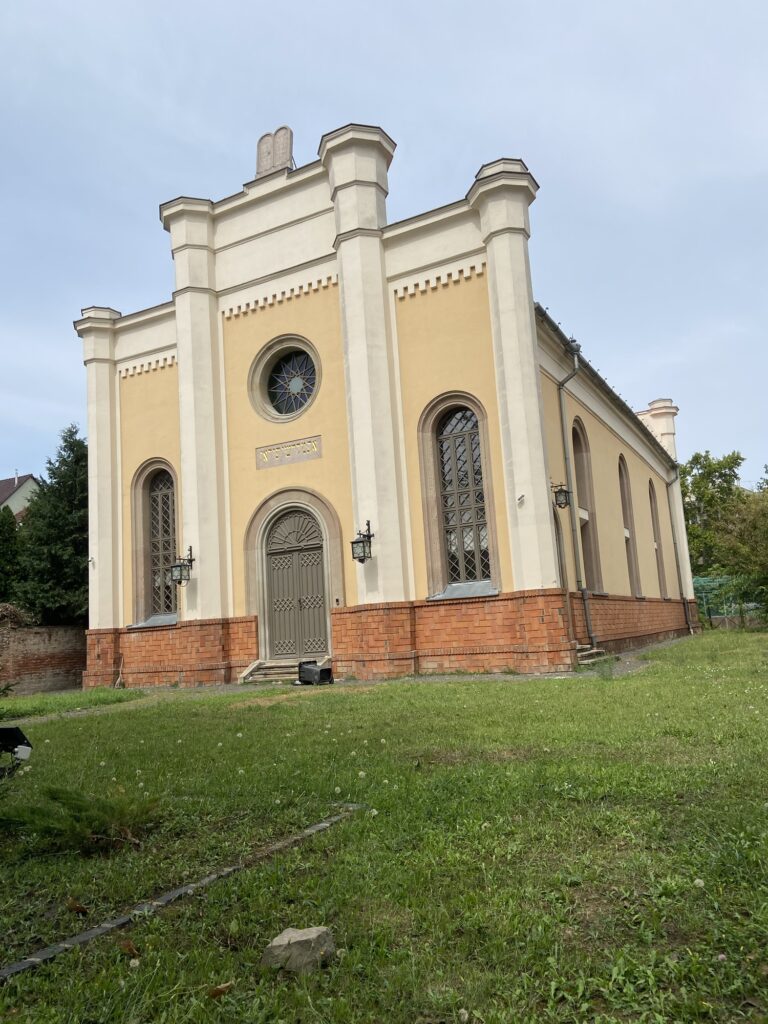
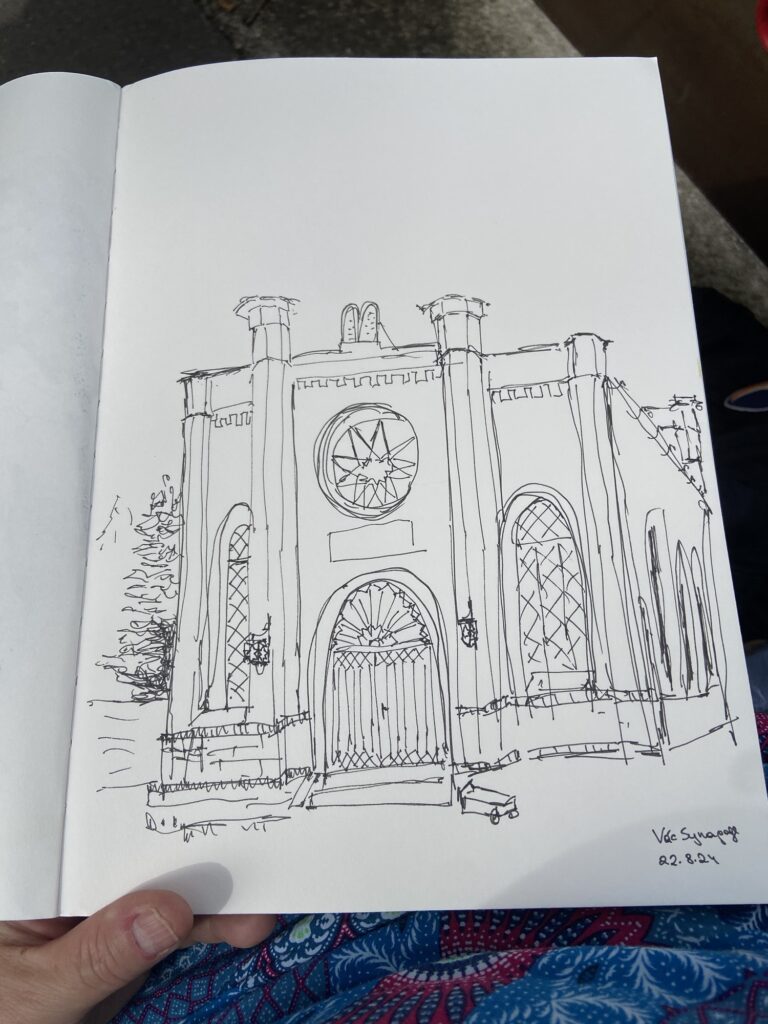
At the banks of the Danube in northern central Hungary you will find the small city of Vác.
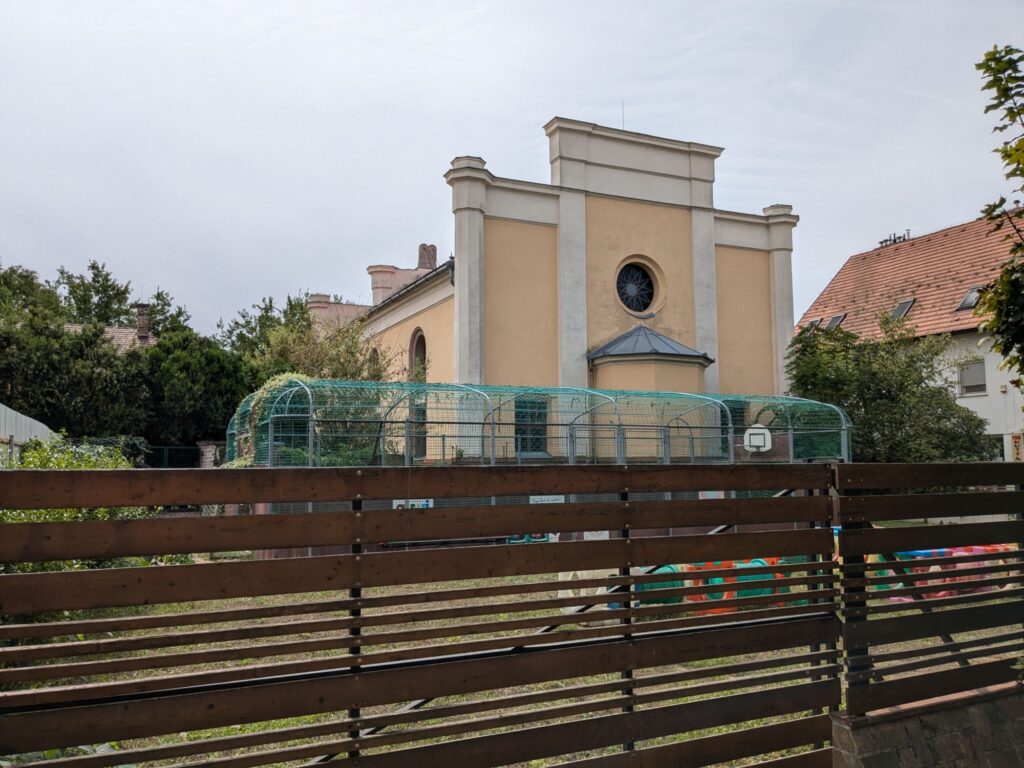
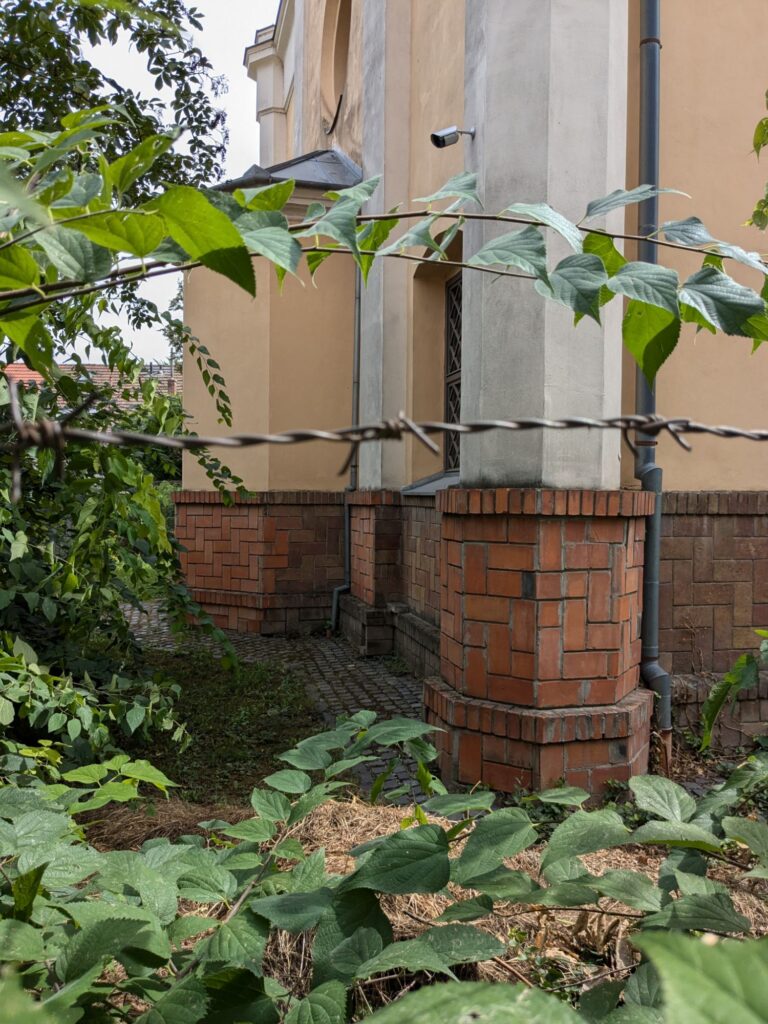
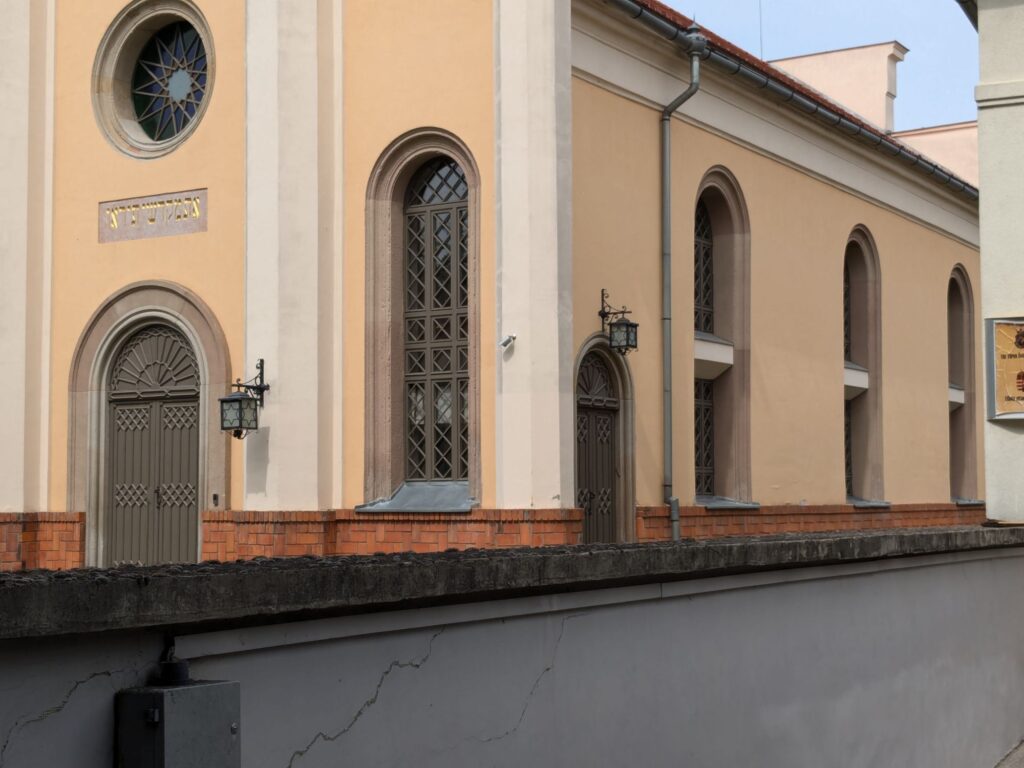
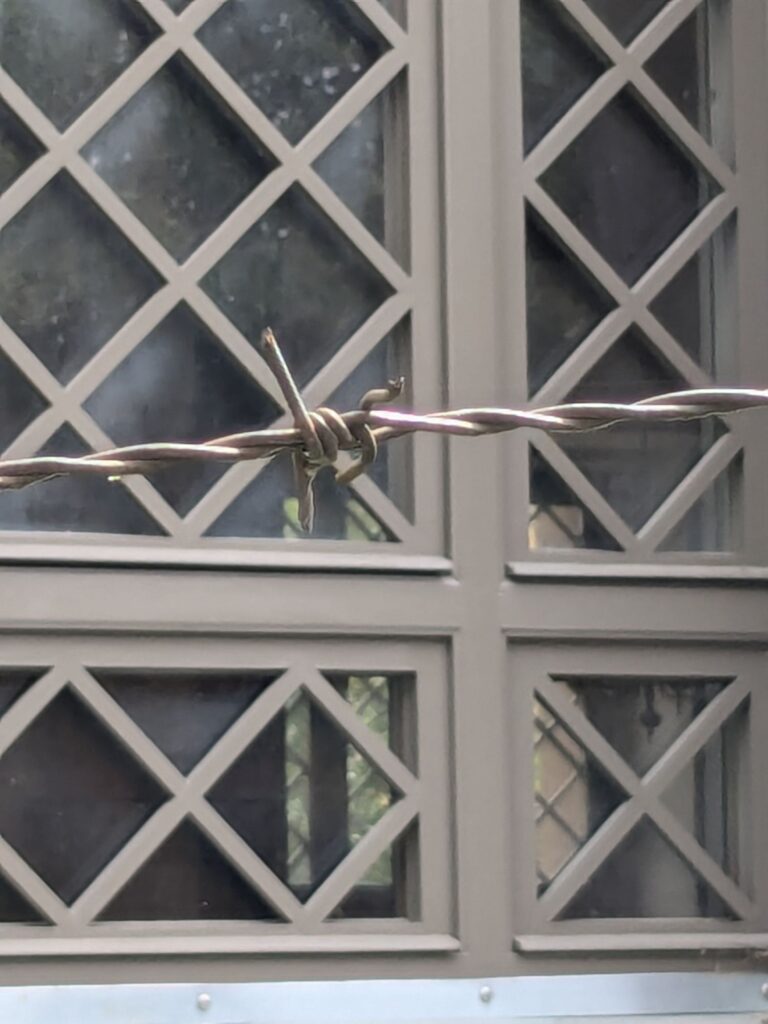
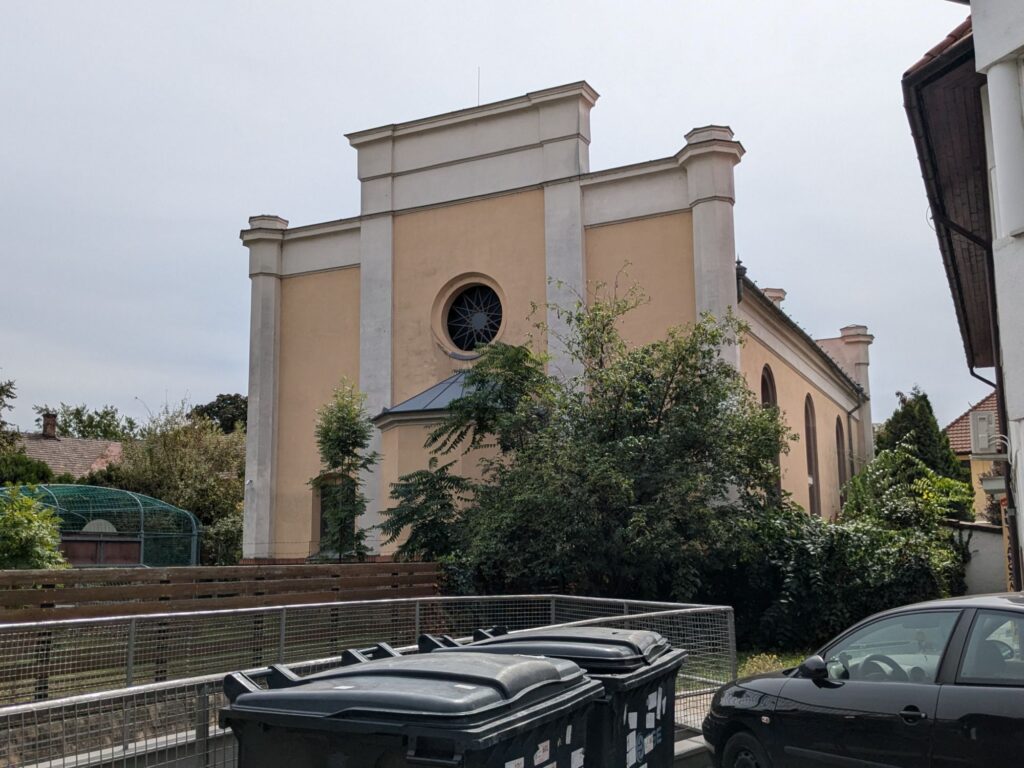
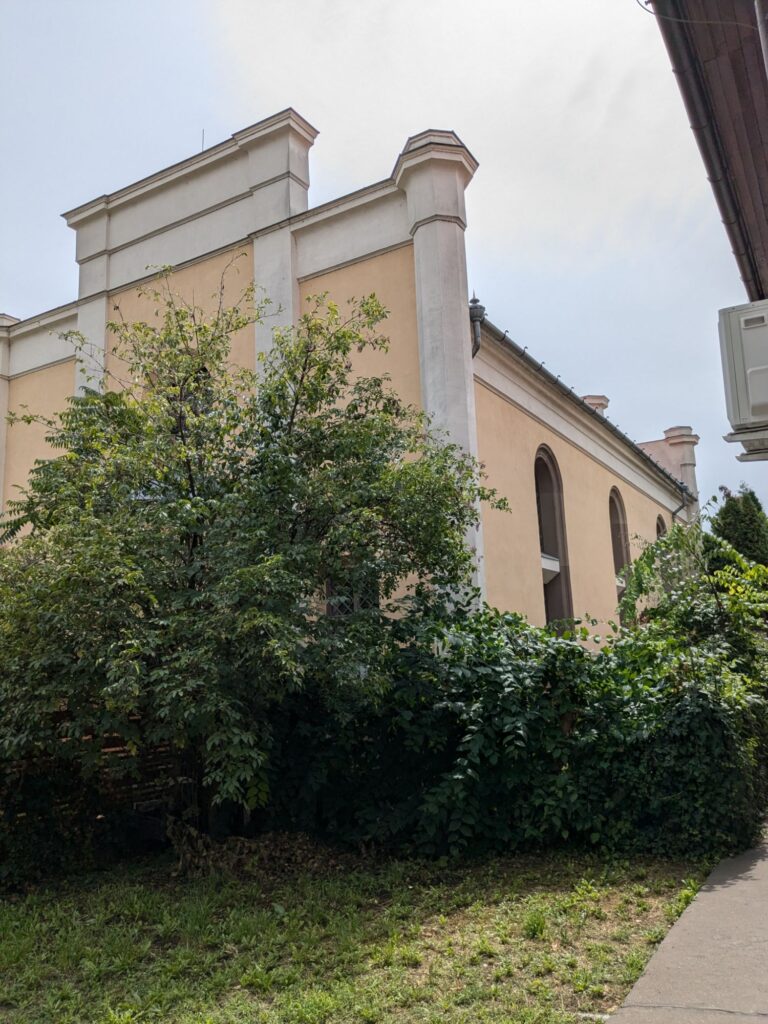
The Synagogue is a beautiful building, but we couldn’t get in.


Excursions to Jewish Sites in Central and Eastern Europe
At the banks of the Danube in northern central Hungary you will find the small city of Vác.
The Synagogue is a beautiful building, but we couldn’t get in.
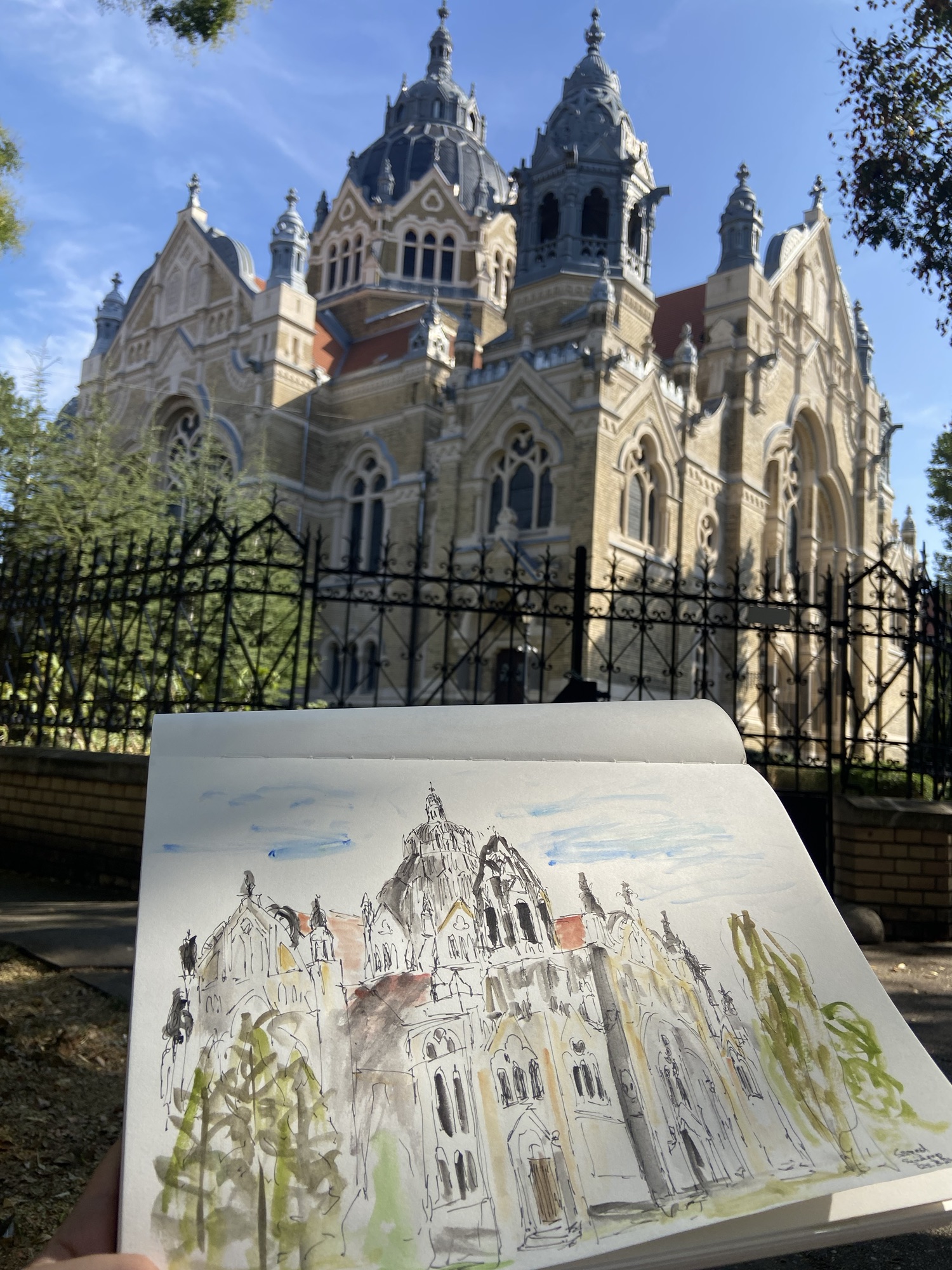
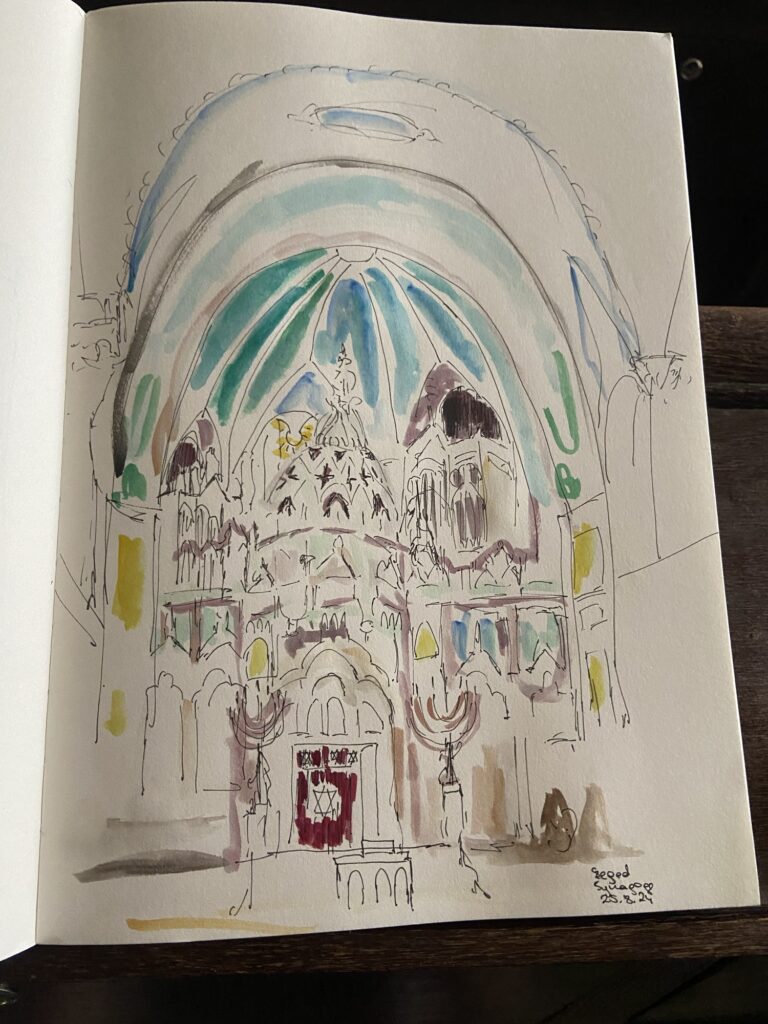
This synagogue is quite something. Huge. Impressive. Magnificent.
Built in only 3 years and opened in 1903 it is still usable as a synagogue. I have read it is one of the largest in the world and second largest in Hungary.
There is a small Jewish community in Szeged that organise a festival every year in beginning of September. Also concerts for funding the place are held.
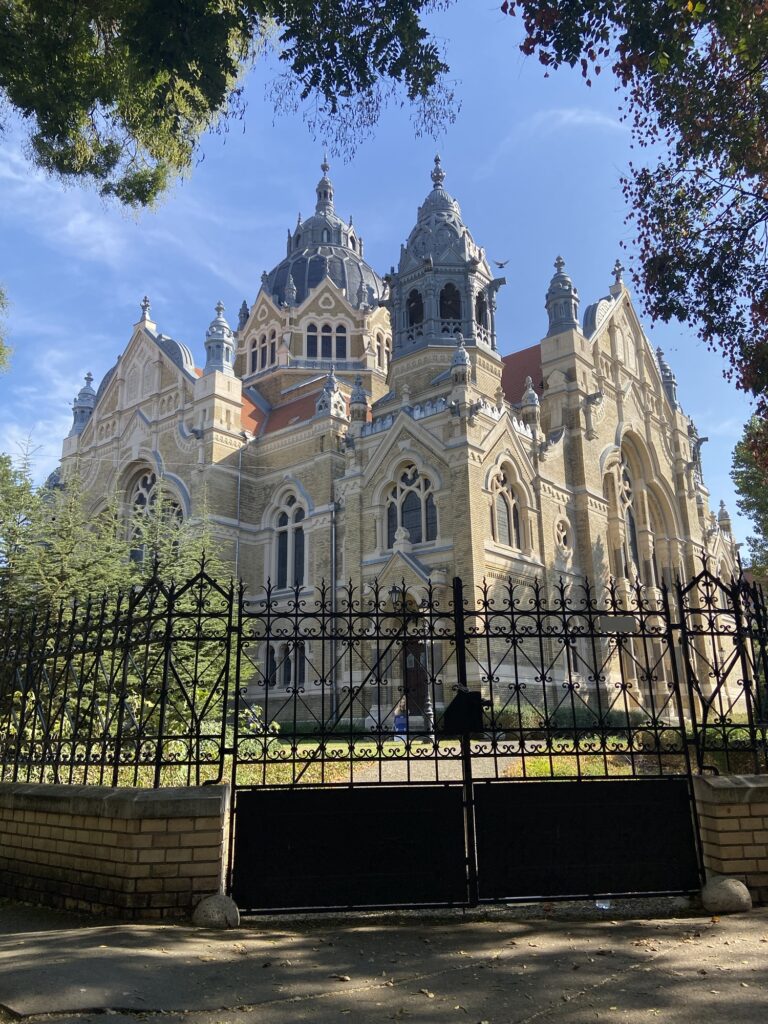
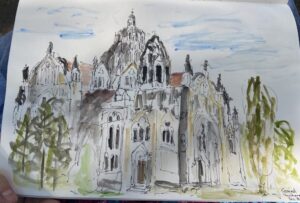
When drawing this picture a man passed by. He agreed that this is a very impressive and important building. He said that he is an artist and trying for years but cannot capture the magnificent of the building. I agree, it is a challenge.
The inside is dominated by the ceiling, a dome.
What style could this be? Historism? Art noveau? Oriental style? I have read many ideas and probably it is a mixture of all possible styles at the time.
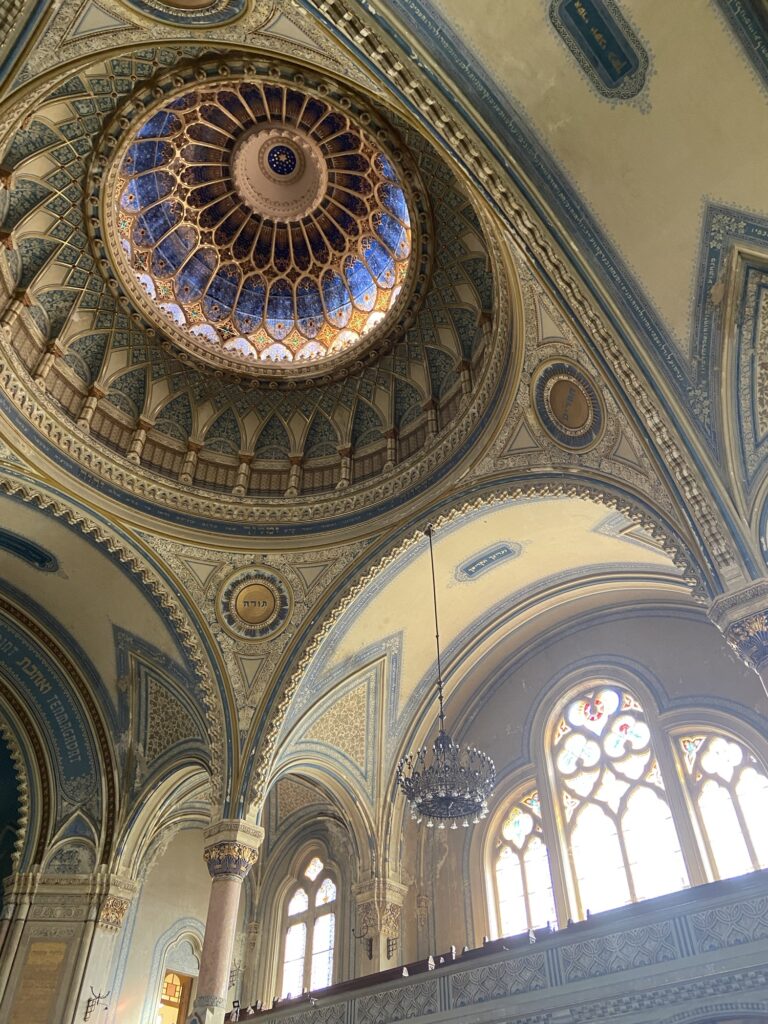
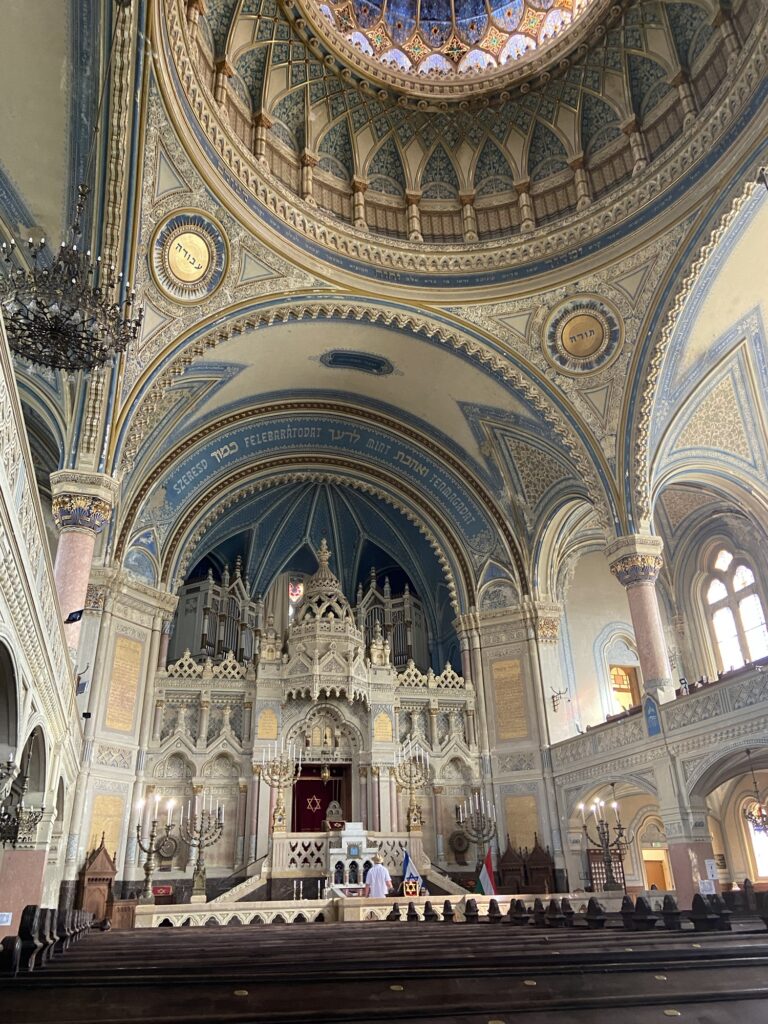
I found especially impressive the many paintings and glass windows with plants. Usually plants are used as ornaments. But here the plants follow botanical facts. Immanuel Löw published the book „Die Flora der Juden“. This is based on this theses „aramäische Pflanzennamen“
My camera could not capture these details. But this is worth to look further into it.
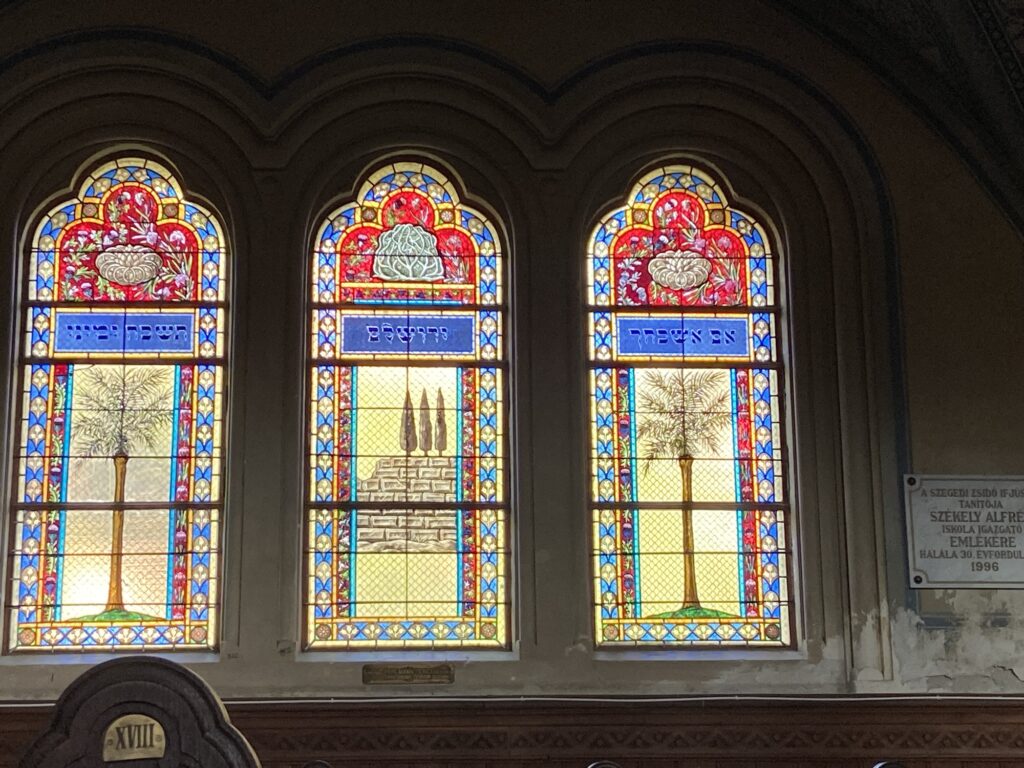
It is said that is due to the fact that Rabbi Löw, who was active here, was a botanical expert. And he took care that botanical facts where respected.
Wandering around in Szeged, we could see that not only on the compound of the synagogue lots of different plants are growing, but throughout the inner city: more variety of plants than I have seen so far in Hungary: different lime trees, Acer, even ginkgo. Large ash trees and sometimes the tree and house colour seem to match perfectly. It might be a coincidence or a legacy of Rabbi Löw. Who knows?
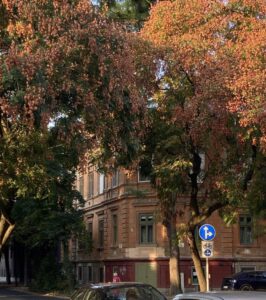
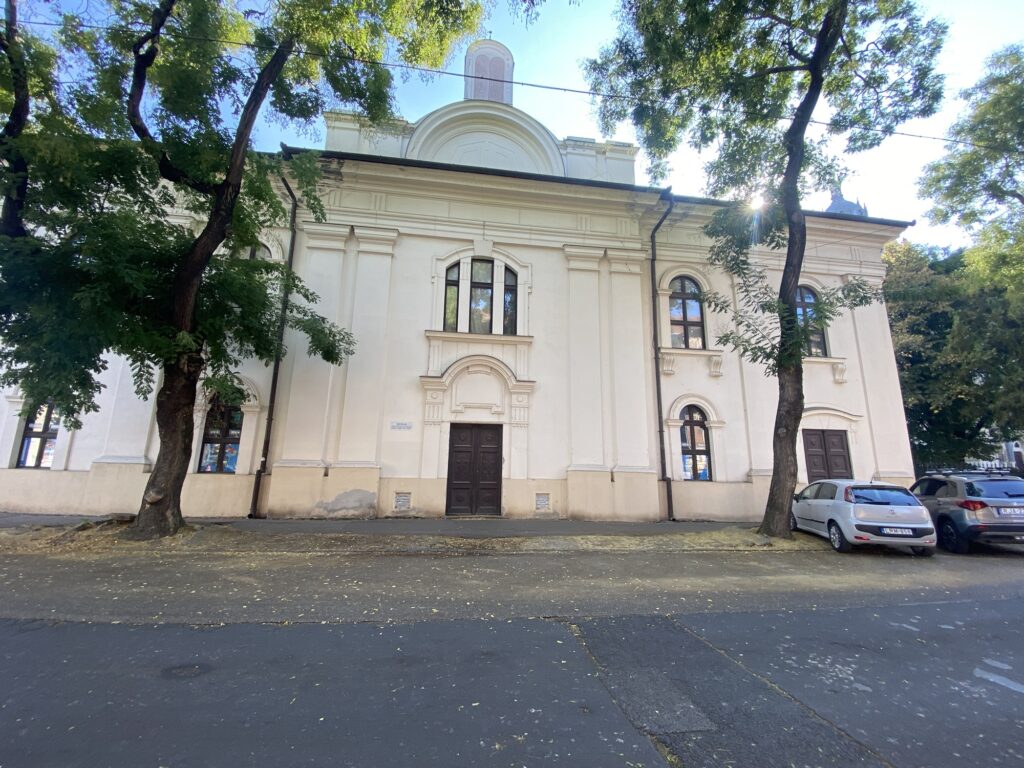
The old synagogue is on the same block as the big one. And it is quite obvious: this building was too small for a growing Jewish population. it is a performance centre today.
Source: Wikipedia and Szeged Jewish archive

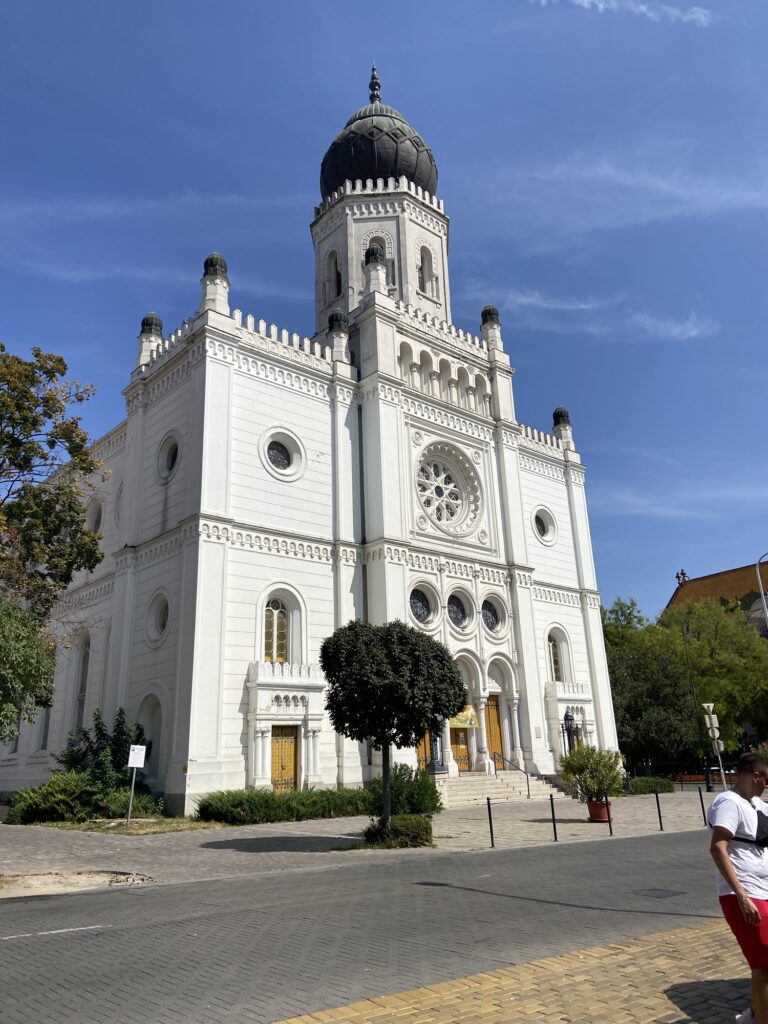
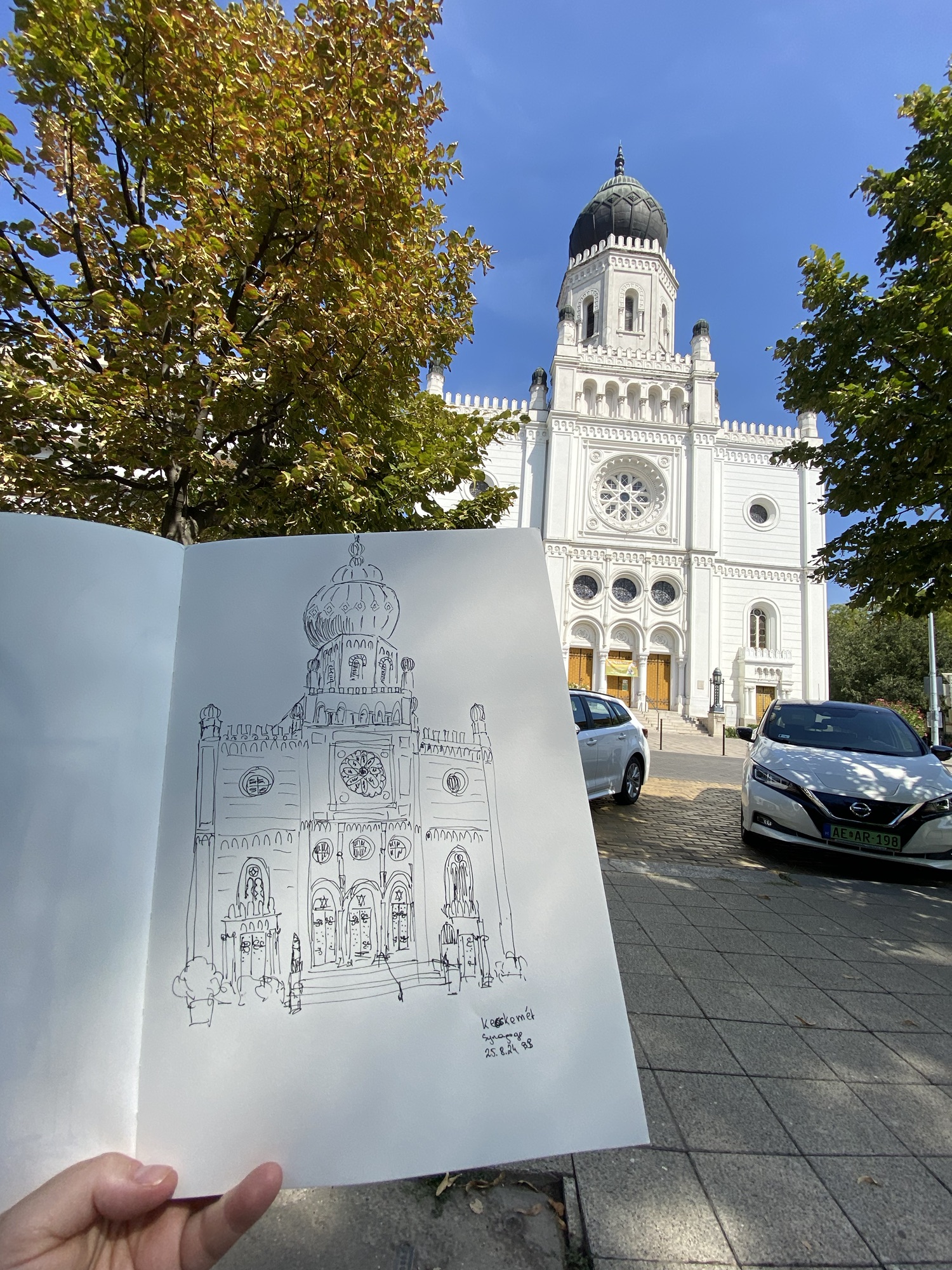
To find good use for former synagogues is not always easy. In Kescemét it is used not for music but for conferences and sciences stuff.
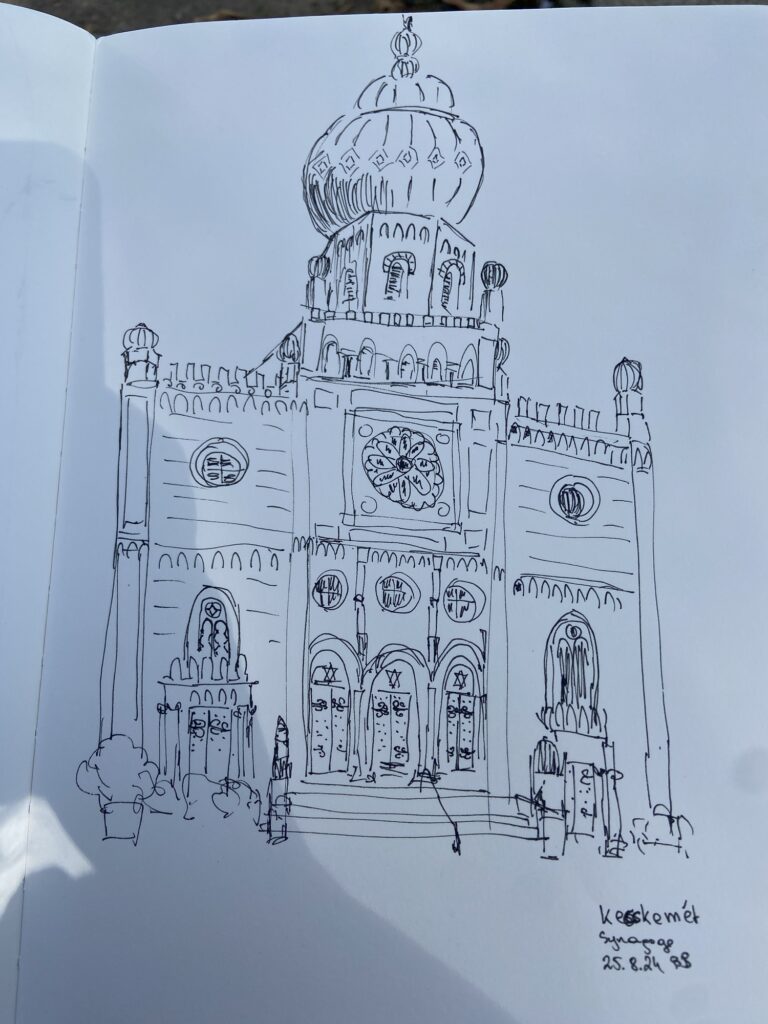
It was built in the 1870s. Due to a change in city development (the park and boulevard was built) it was suddenly located right in the city center. Quite unusual for the location of a synagogue.
Source: Wikipedia
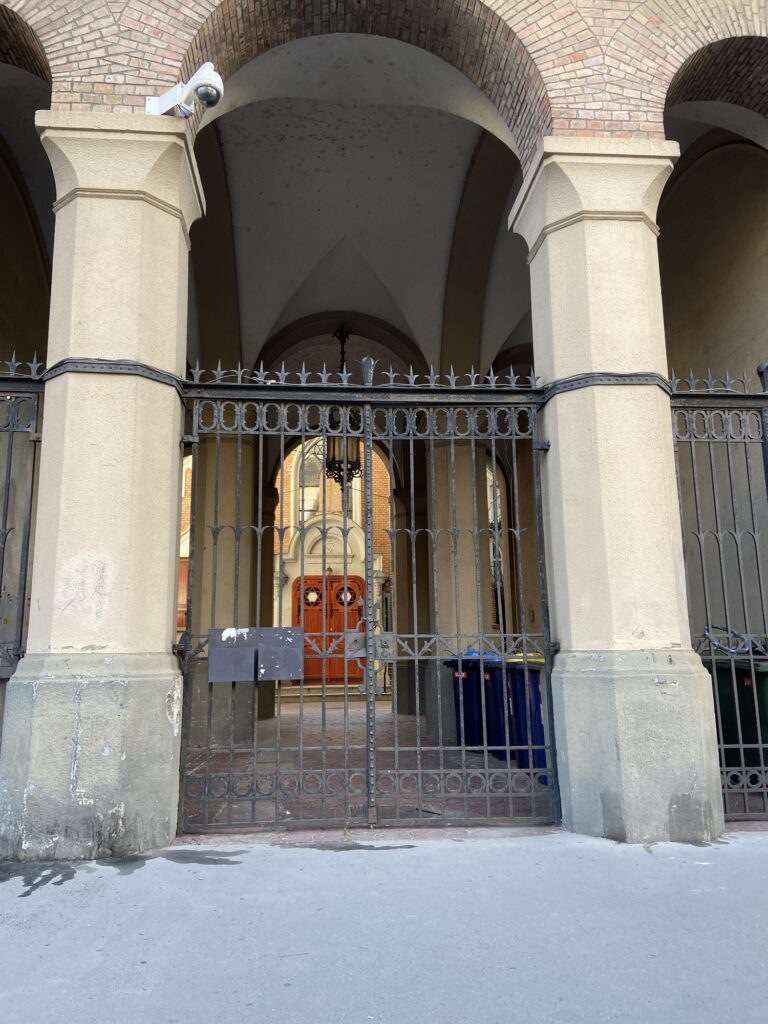
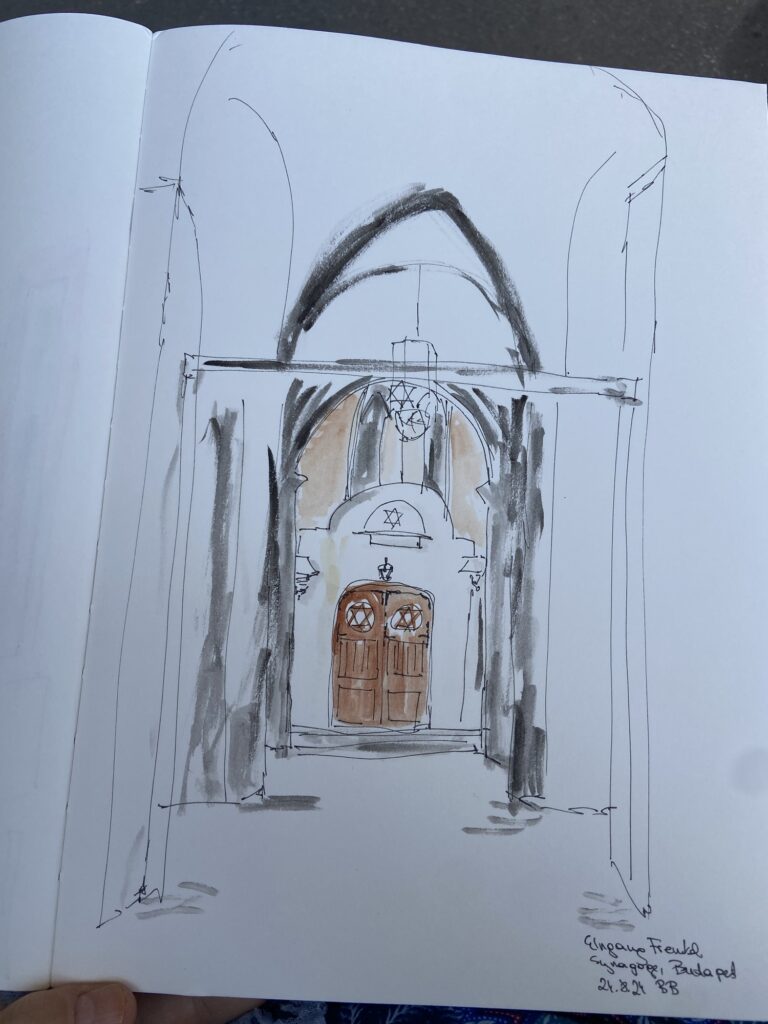
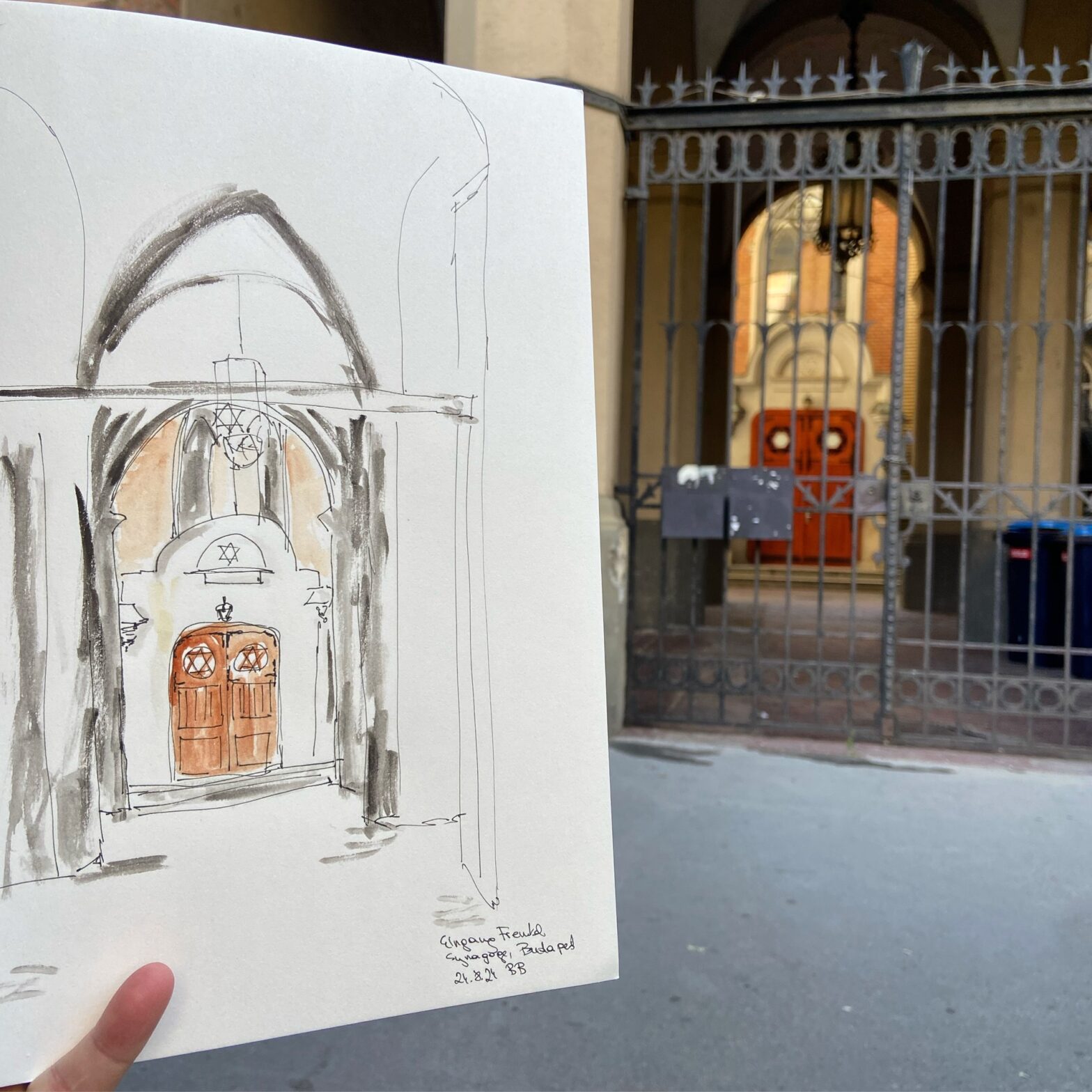
Not many synagogues are located on the Buda side. The Leo Frankel is one of the few. Built in the 1880s, the surrounding building was added in the 1920s. The synagogue is a wonderful example of Neogothic style, especially the windows.
Source: Wikipedia
I did not know where to start, so much to draw would be here. I have to come back to do more drawings…
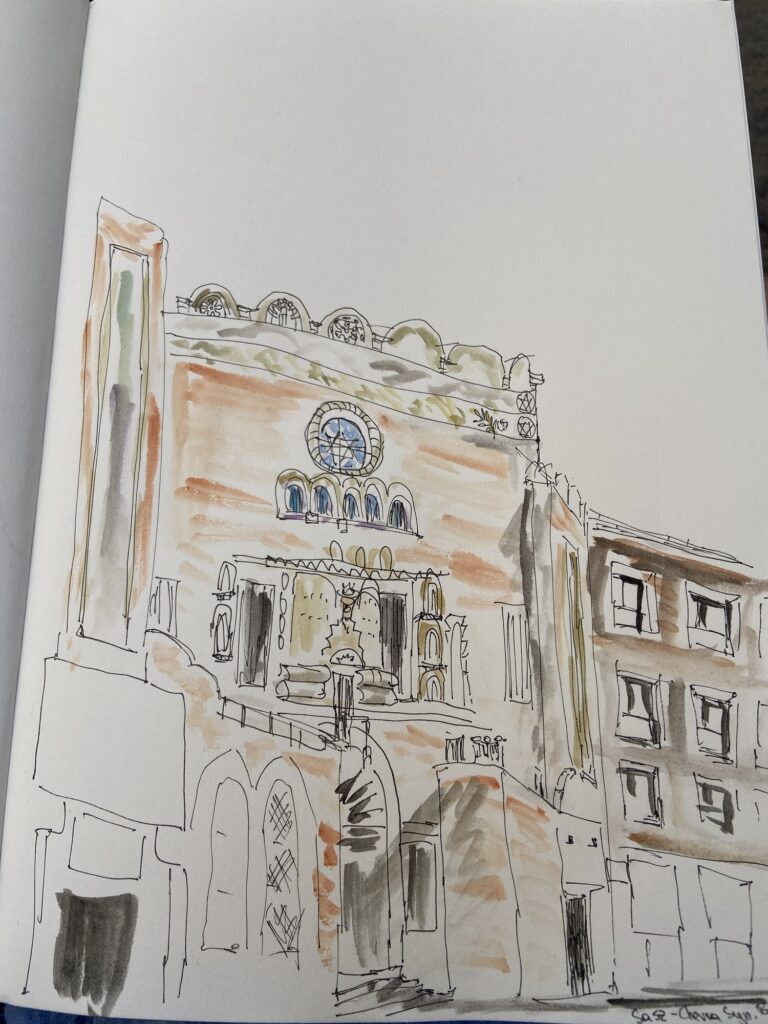
But more than this one synagogue I did not manage. But what a great place!
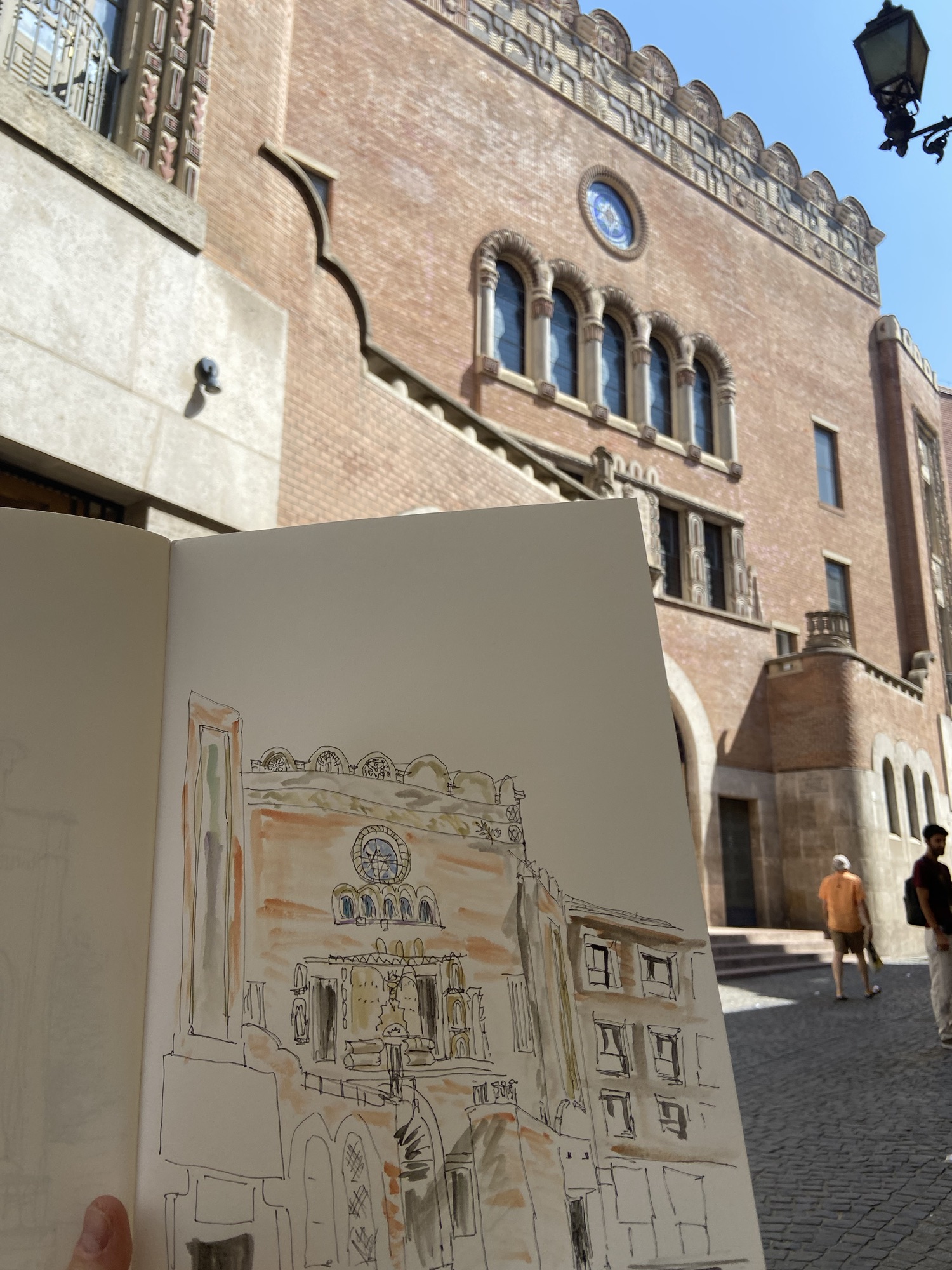
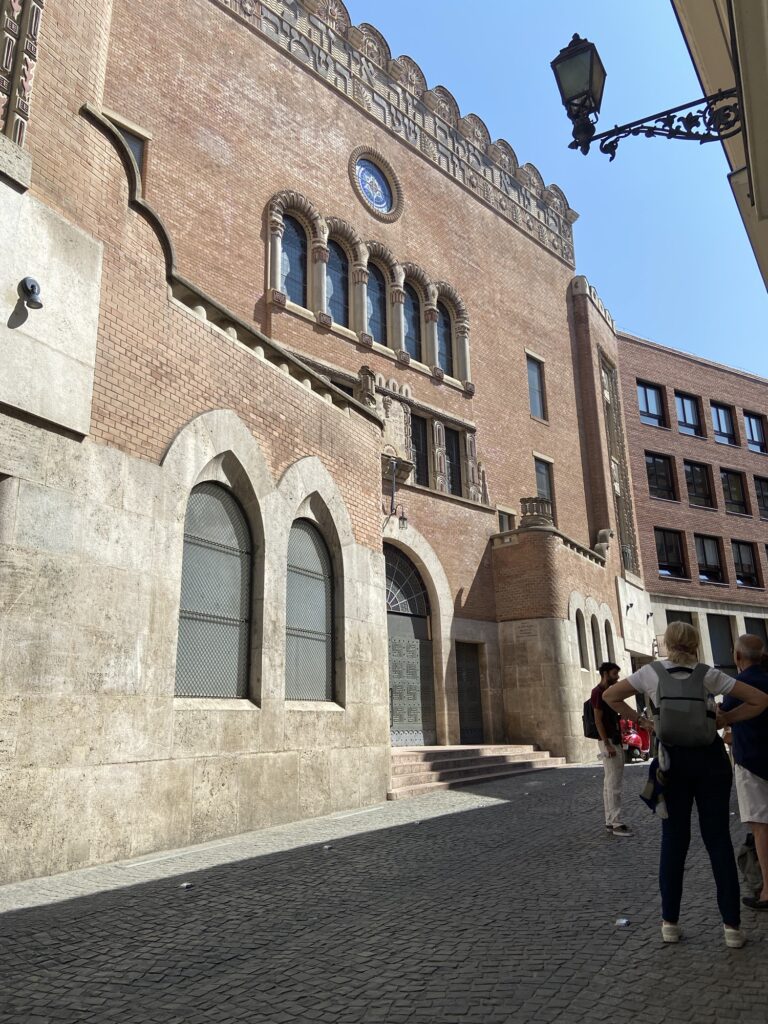
It is the Sasz-Chevra Orthodox Grand Synagogue. Located in the „Jewish quarter“ in Pest in Kacinzky Street. In a small Street, where the tourist groups don’t have enough space when a car tries to pass by. A small bookshop and a kosher restaurant are within the building.
Very impressive is the location of the building, which is different than the line of the fasade of the street. This is probably due to the cardinal orientation. But I don’t know wether this is true or just my imagination.
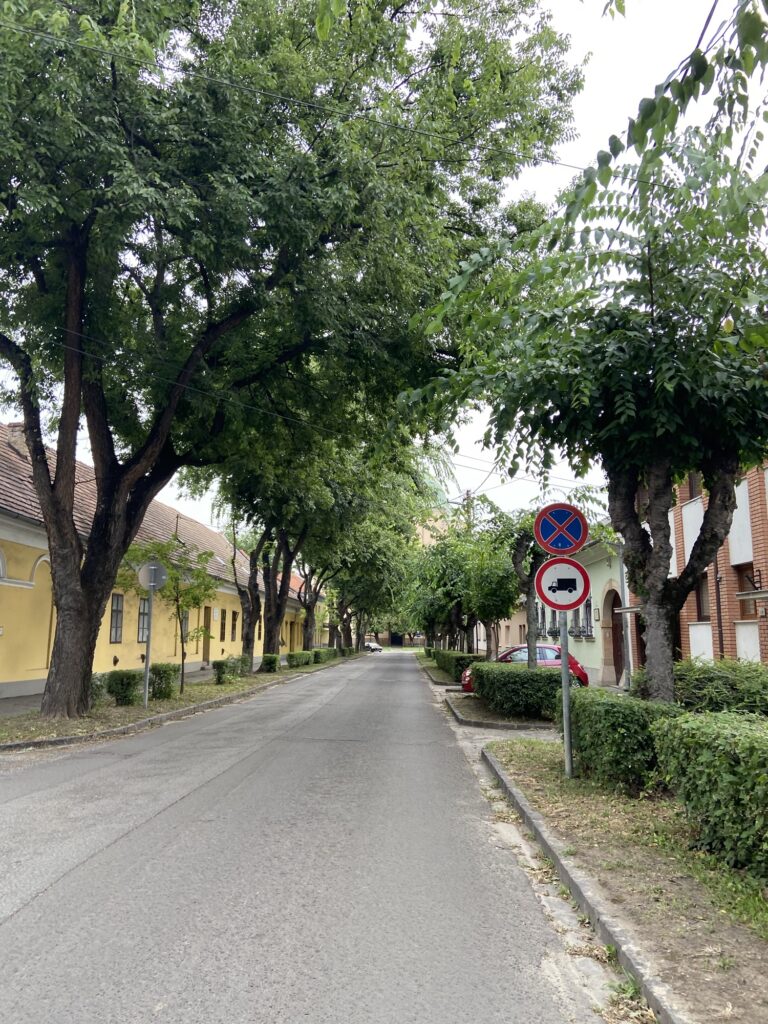
Even on these hot, hot summer days, this city is cool: the streets are lined with nettletrees. They keep a wonderful microclimate.
Also on the street, where the synagogue is located.
The synagogue is in pretty good state. It is not to be visited, but on special occasions.
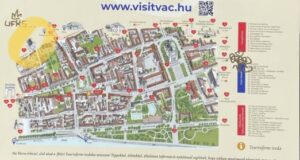
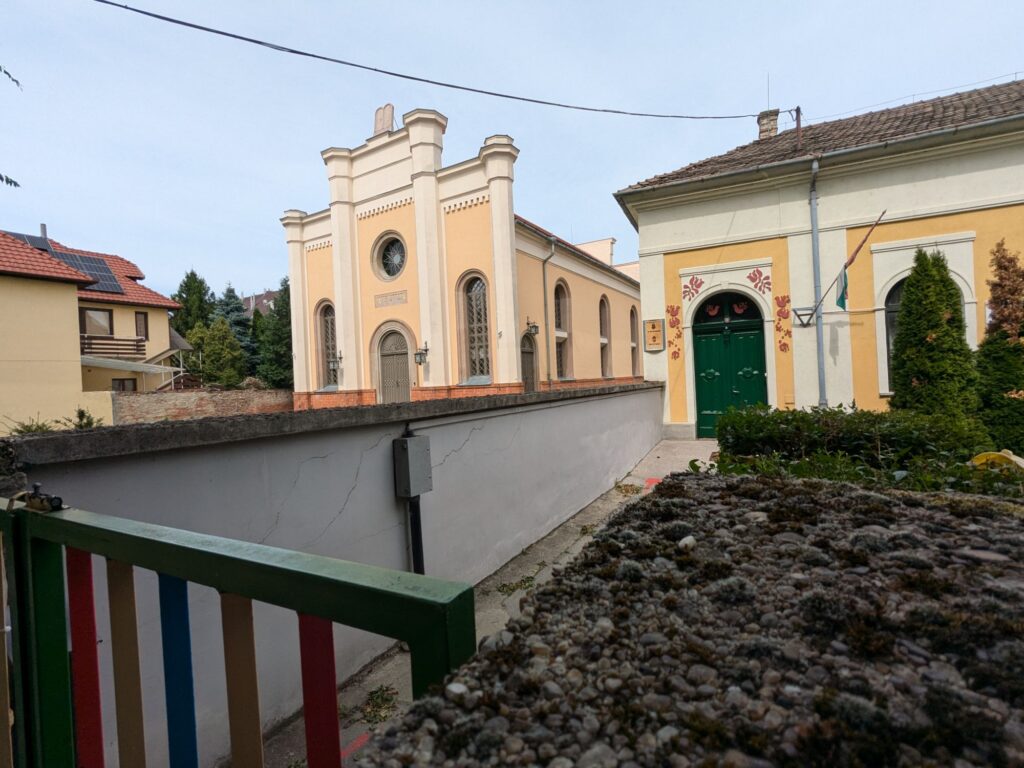
As on this city plan of Vác can be seen, the synagogue is located a little bit outside the old town. Often behind the city gate, in former suburbs, where is the 1850s the city developed floorished. so, if you look for the remains of synagogue look there: on the other side of the former city wall, behind the city gate or the former moat. Where houses are from the architectural period of historism. That is the place to look for a synagogue.
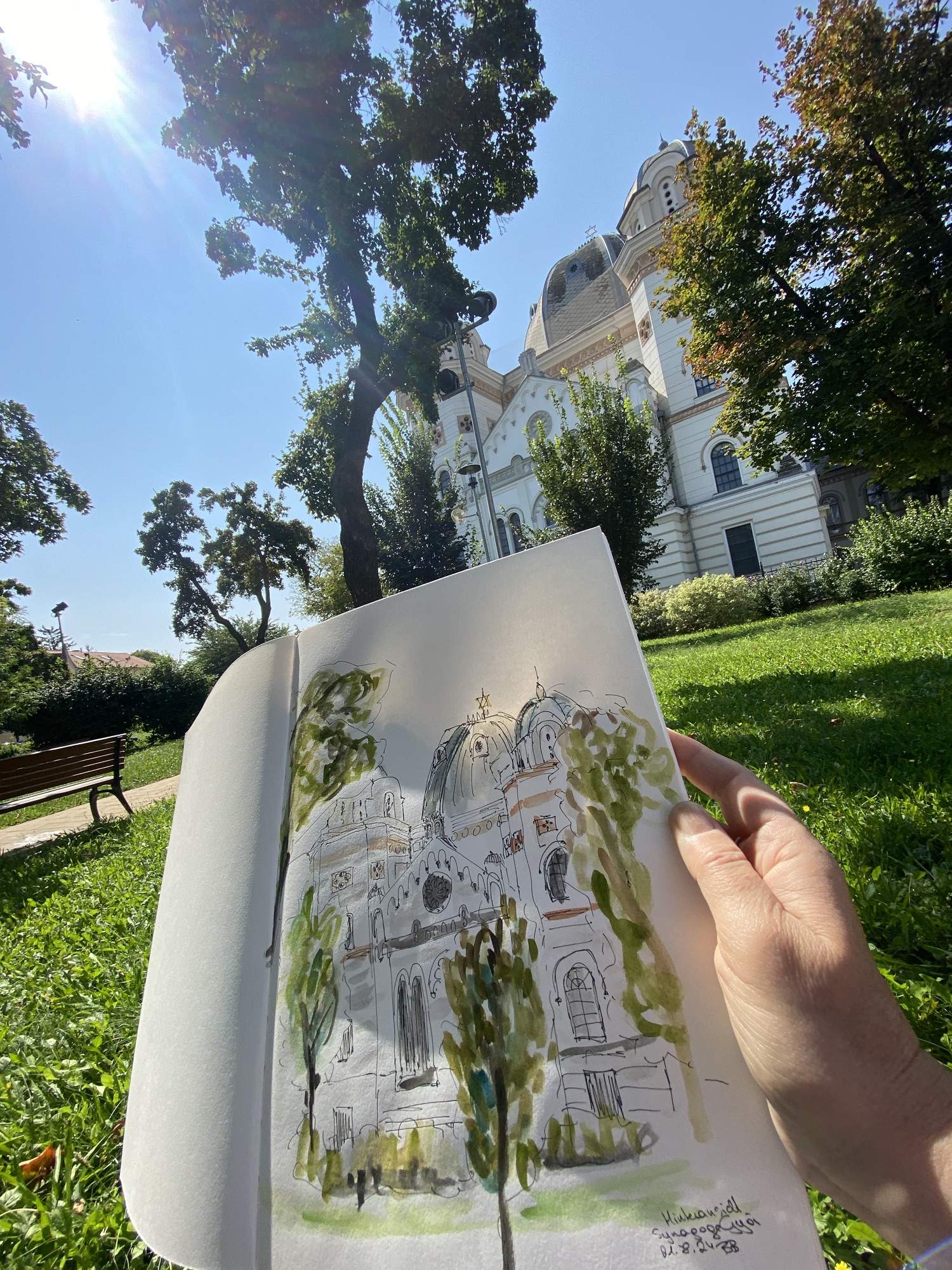
Can be found at Kossuth Lajos utca 5 near the center of Györ, a town of over 100.000 inhabitants, among them approximately 10 Jews.
As the post-Shoah community of 780 survivors didn’t have the means for its upkeep, the building was sold to the city of Györ some time in the 1960s. Since the 1970s it serves as music school.
Though the school is closed in summer, I found a friendly elderly woman who led me through several locked doors in to the main hall and allowed me to take a few pictures.
She is evidently one of the last survivors of this once proud and flourishing community.
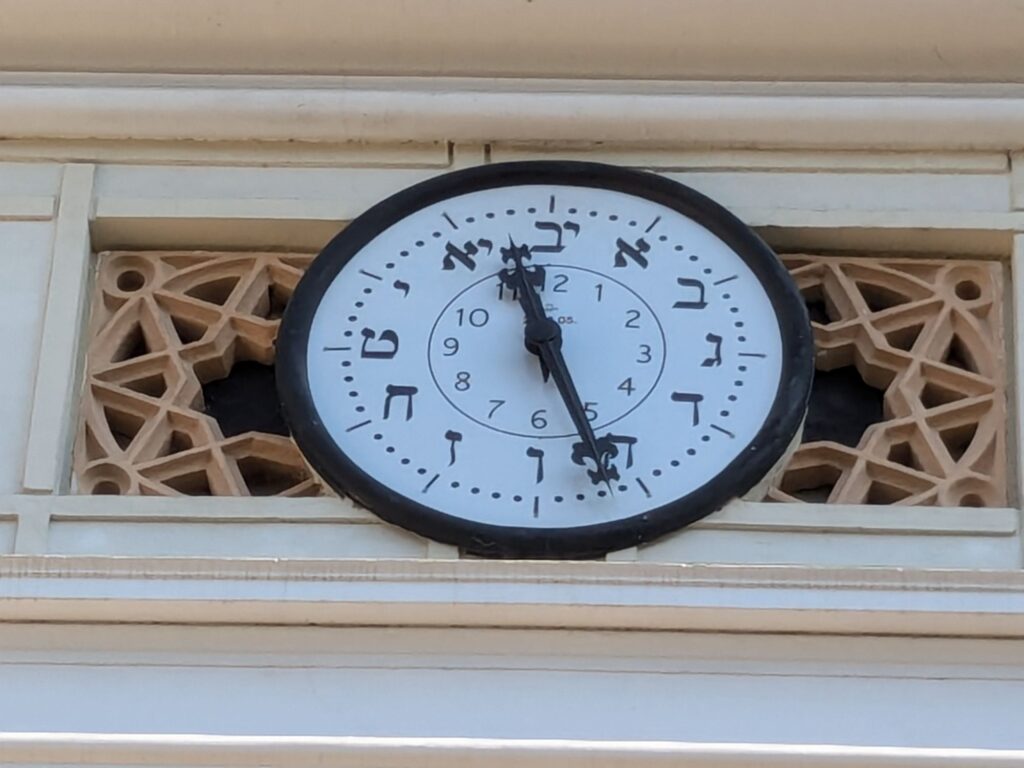
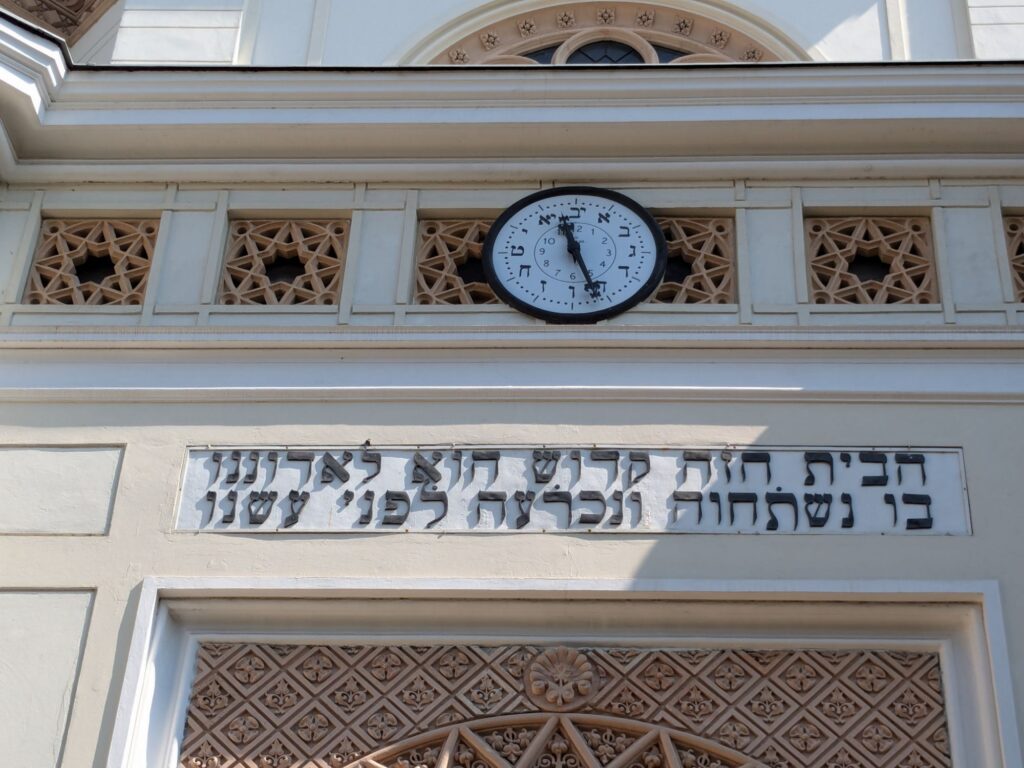
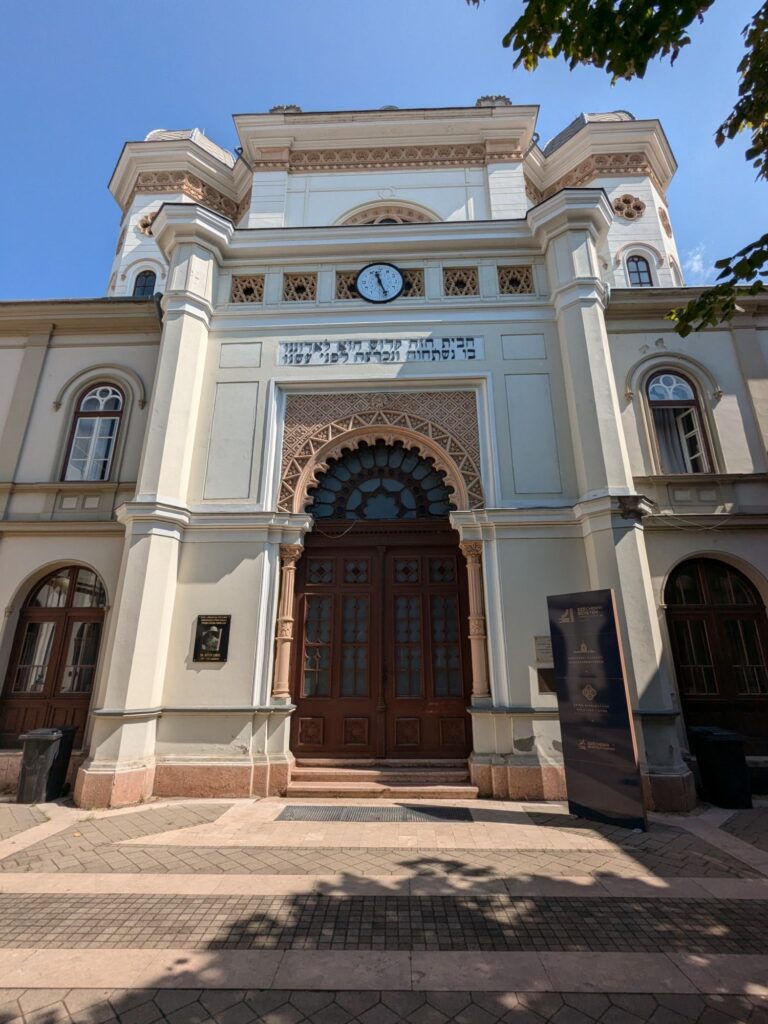
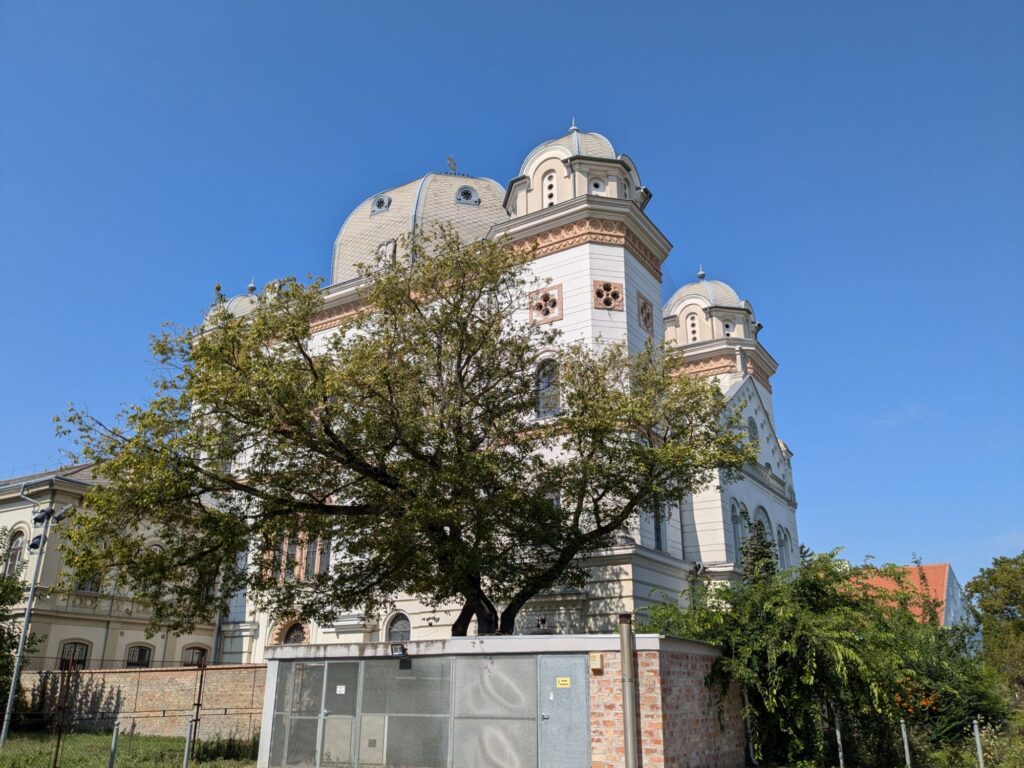
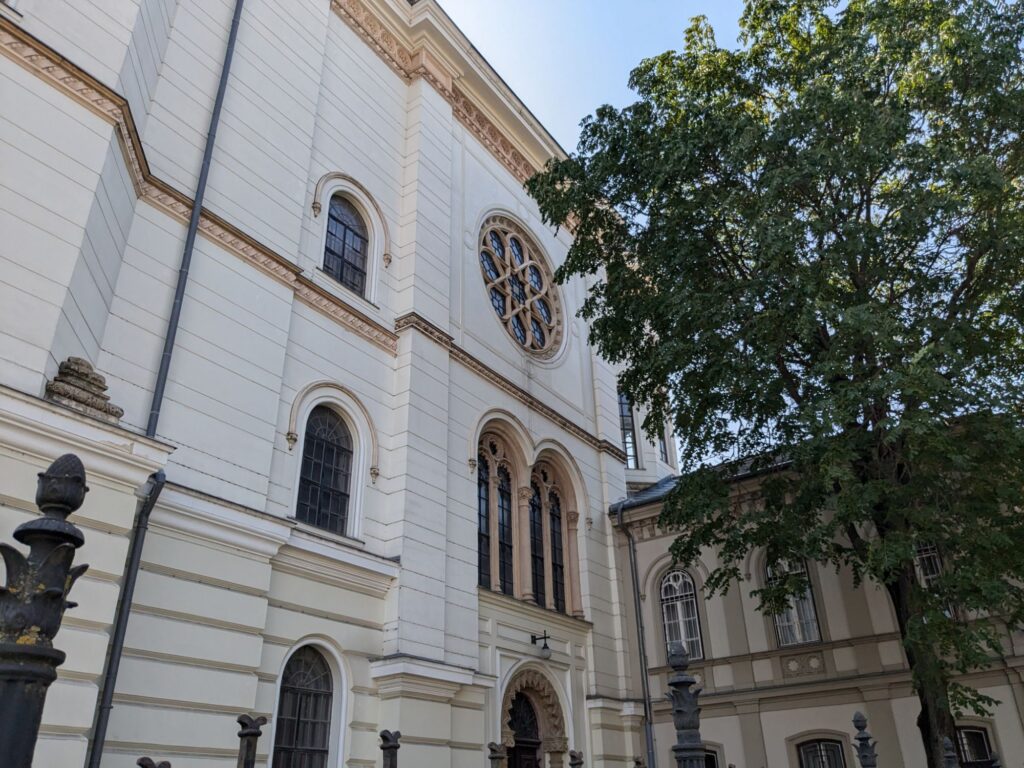
Some photographs of the interior:
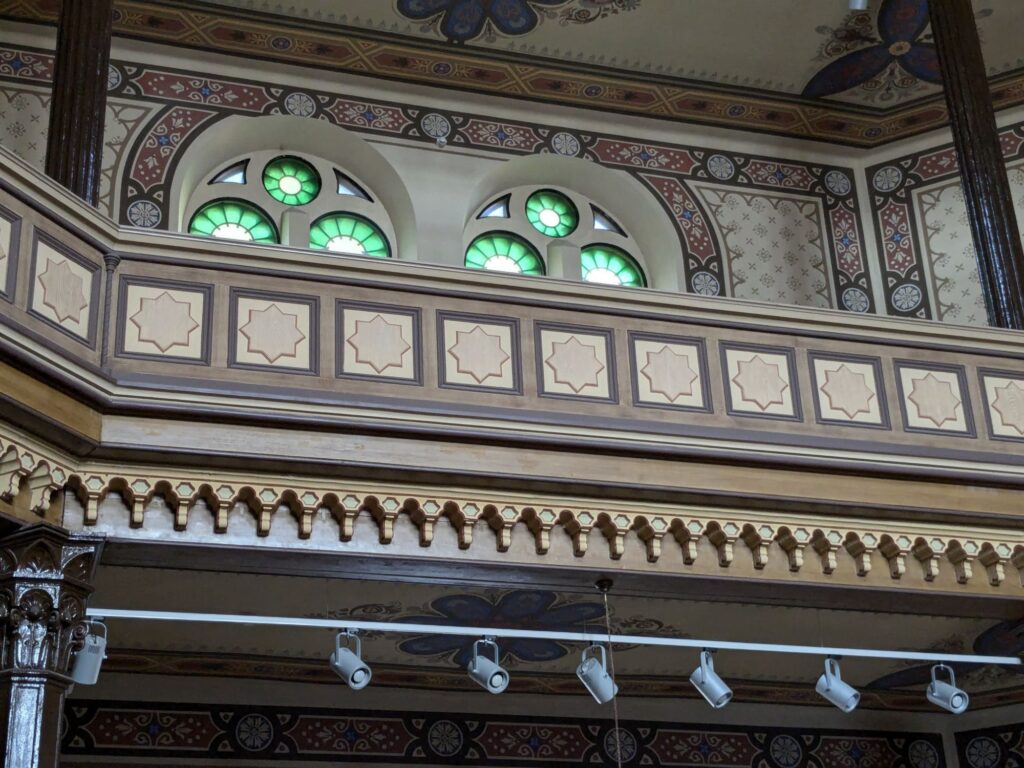
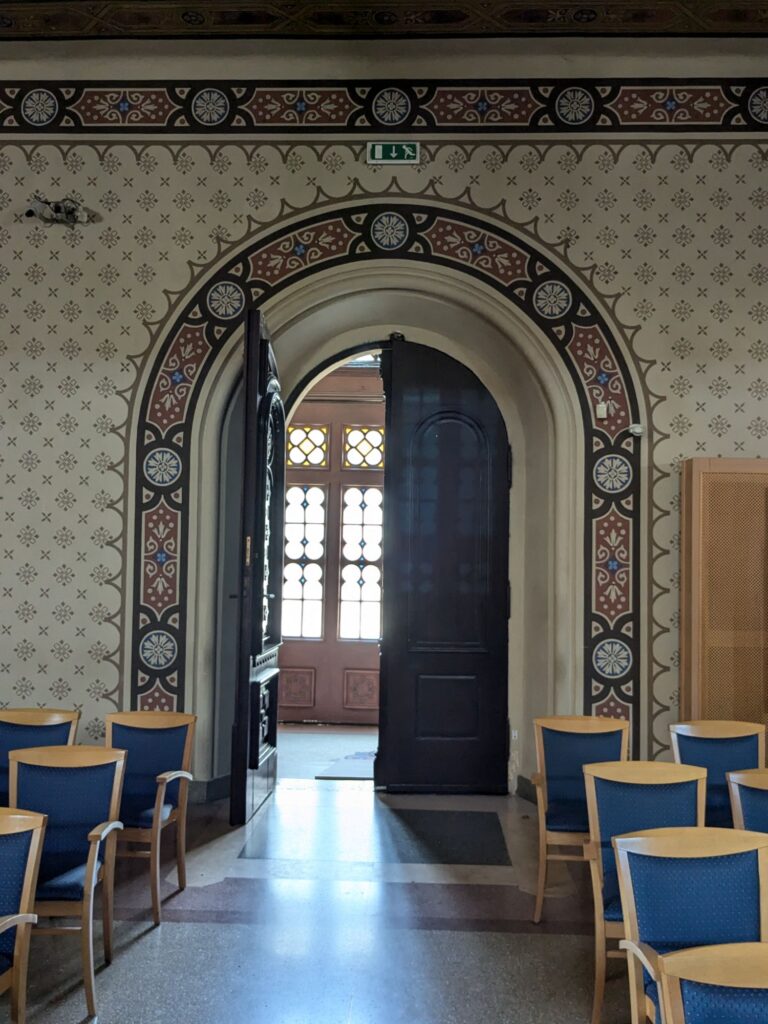
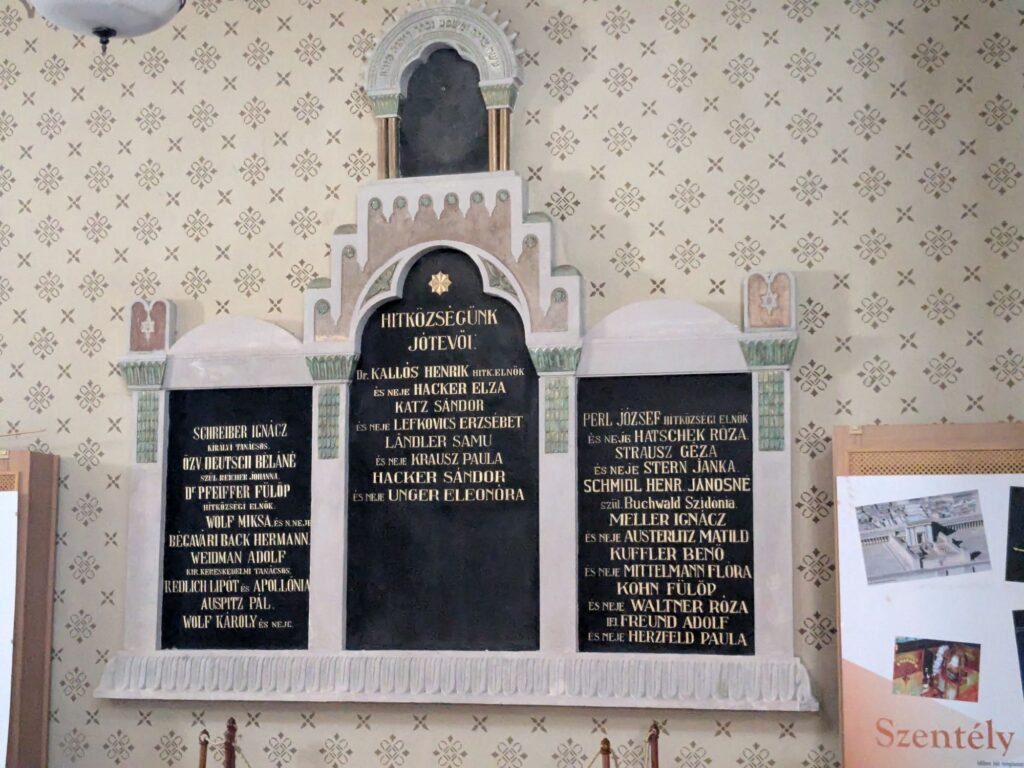

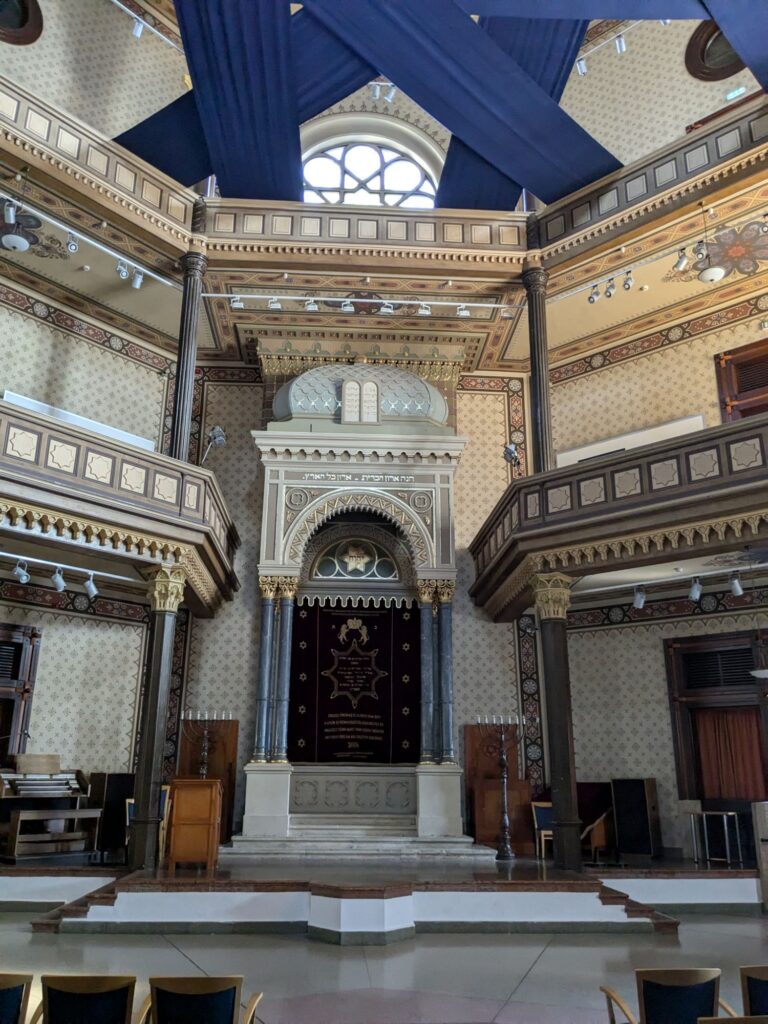

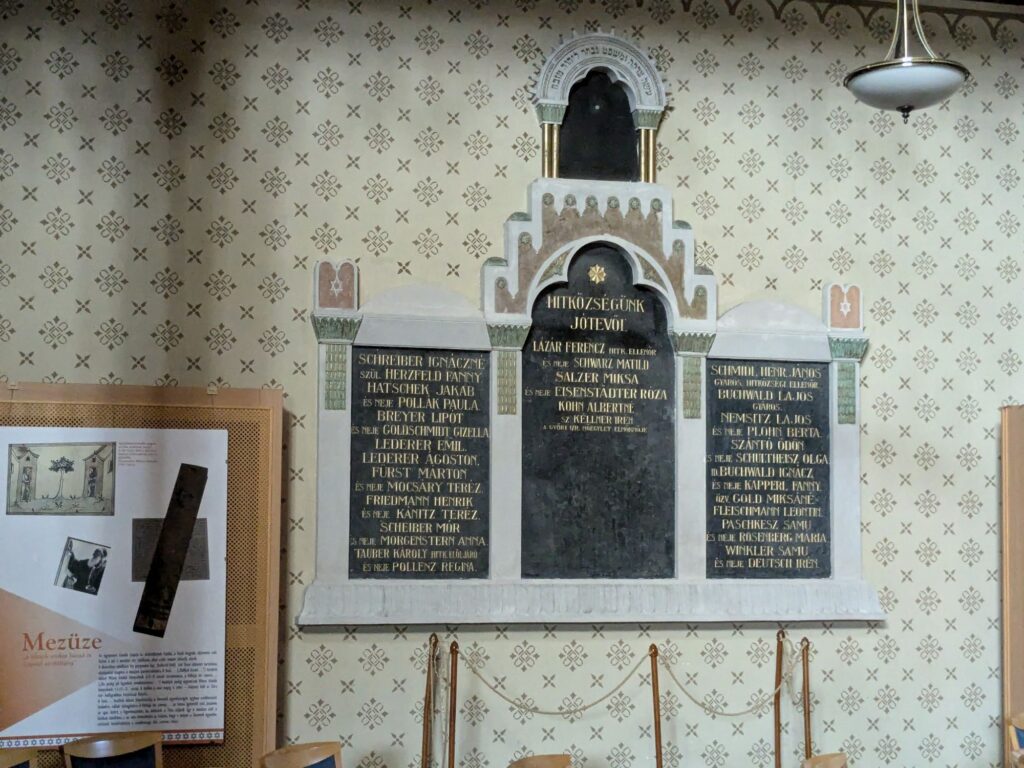
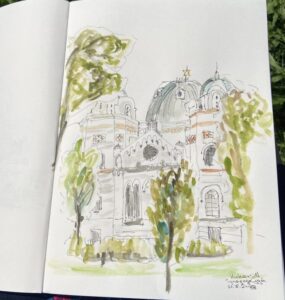
For everyone using this magnificent place it is great: so many trees are around the building. In the back the little park with comfortable benches and in the courtyard a few old horsechestnuttrees: it all adds to a better microclimate. The day is cooler. But for a drawing person it is difficult to find a space to show a little bit of this octagonal building. In the back in the park I found the best spot for that.
Great that all these trees and lawns exist: during school year the pupils from neighbouring schools (music school within the synagogue and technical school) probably like them.
We found three former Synagogues in the town of Sopron: the hidden one, the unrecognizable one, and the blocked one.
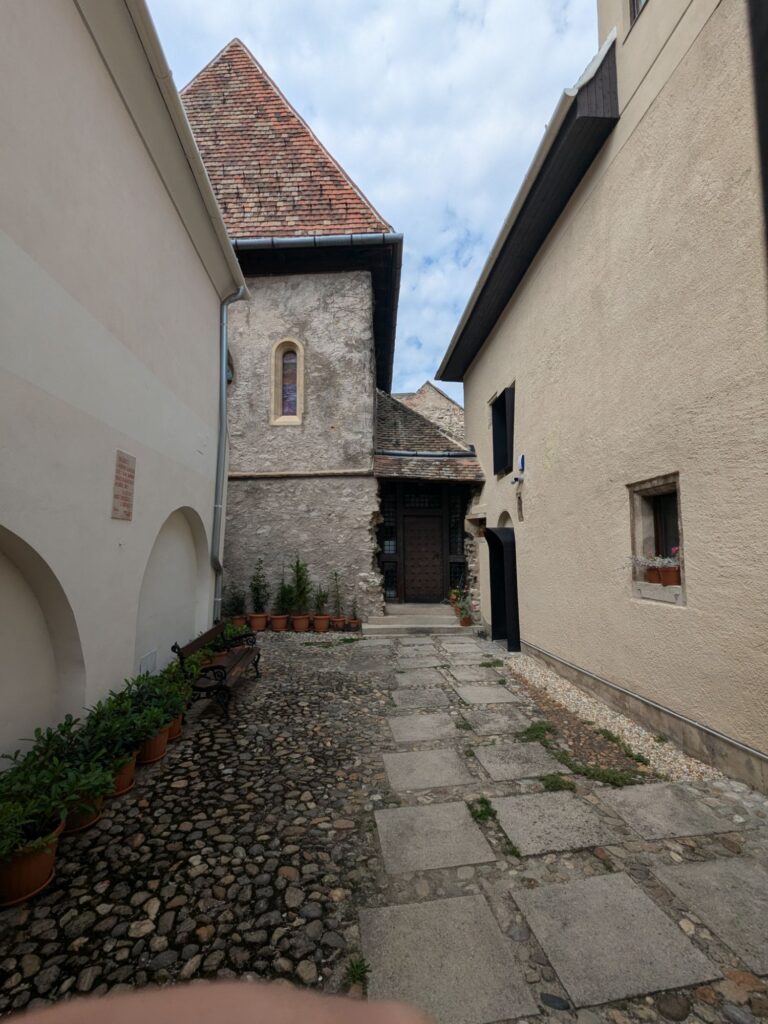
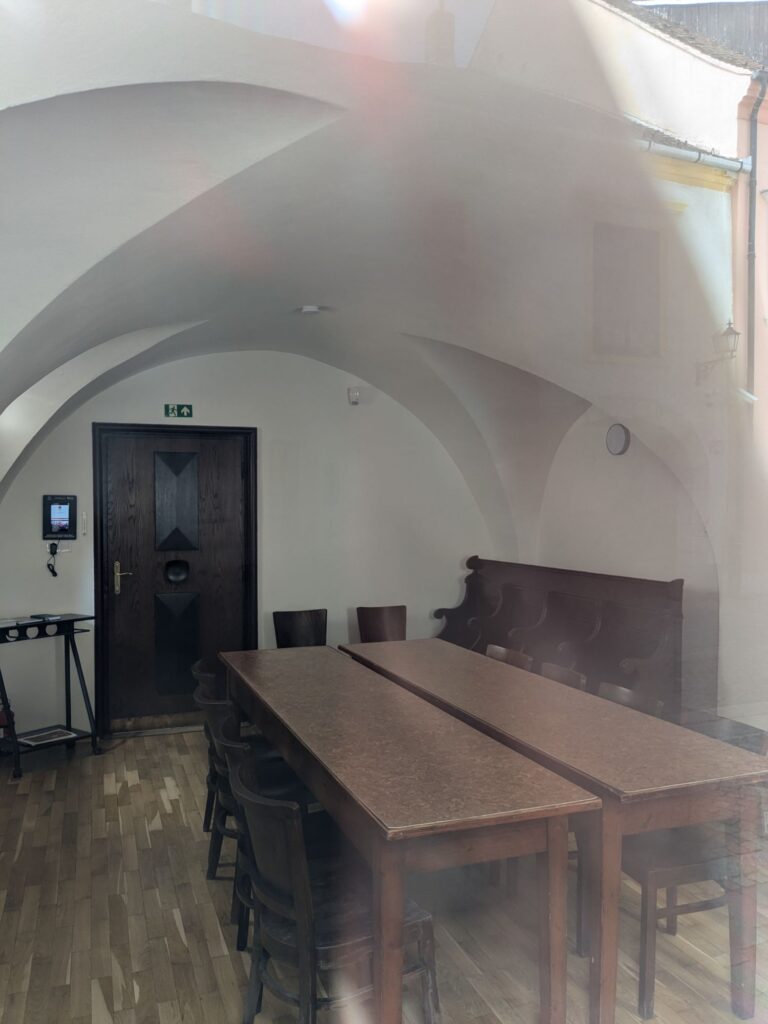


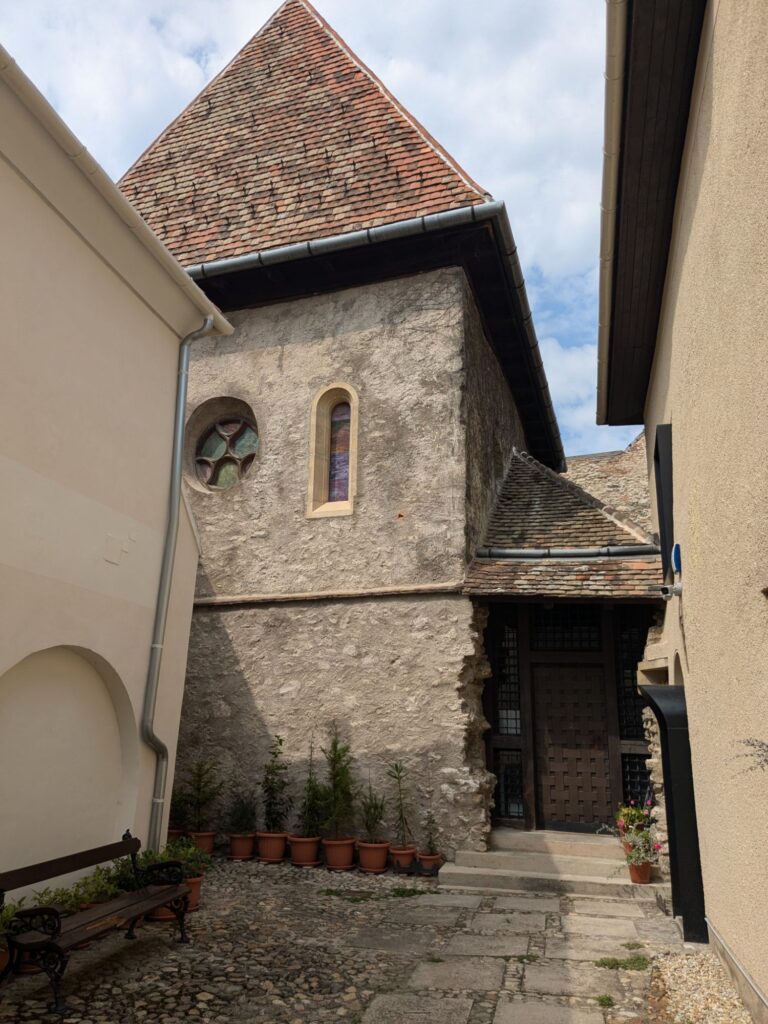
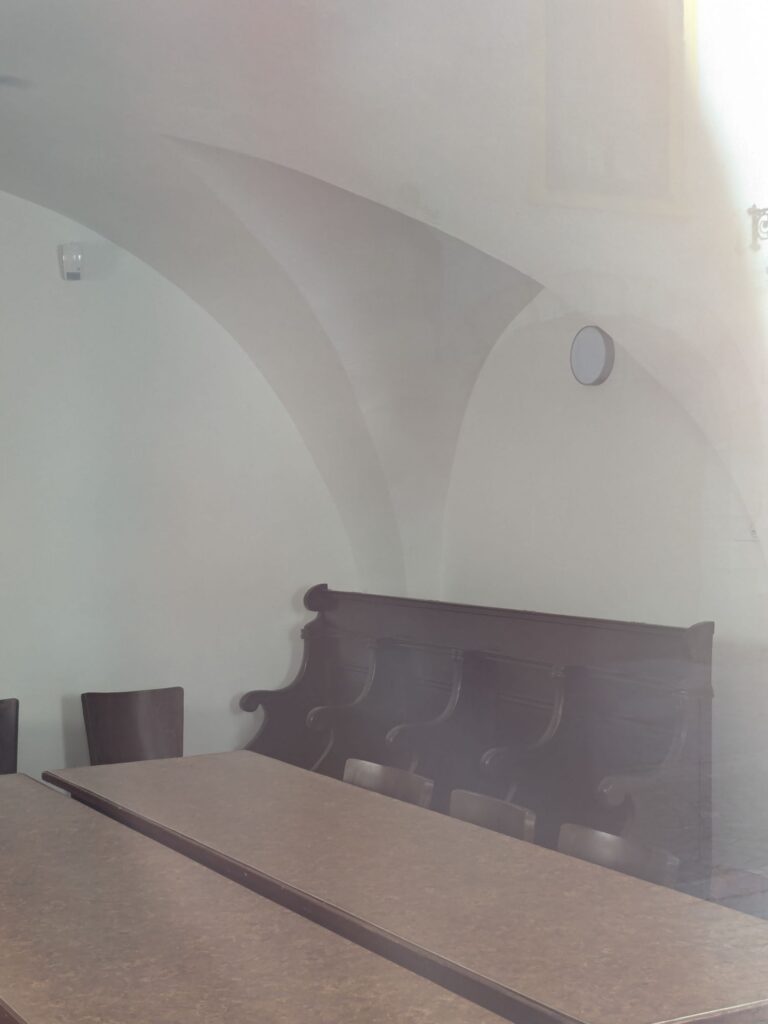
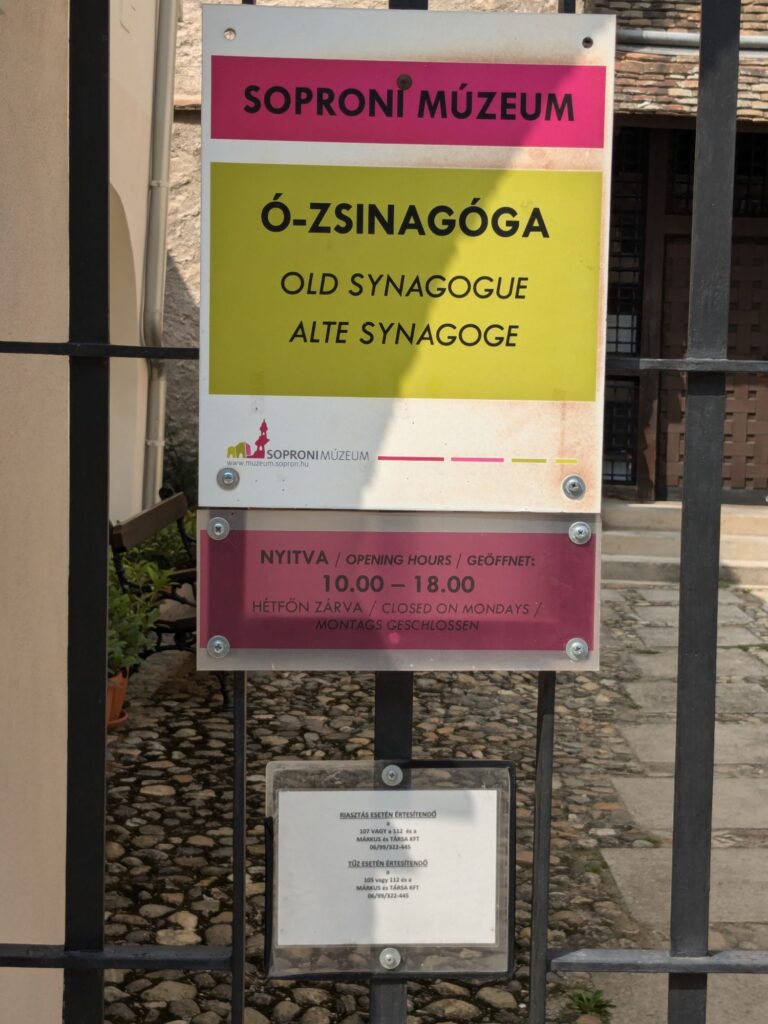

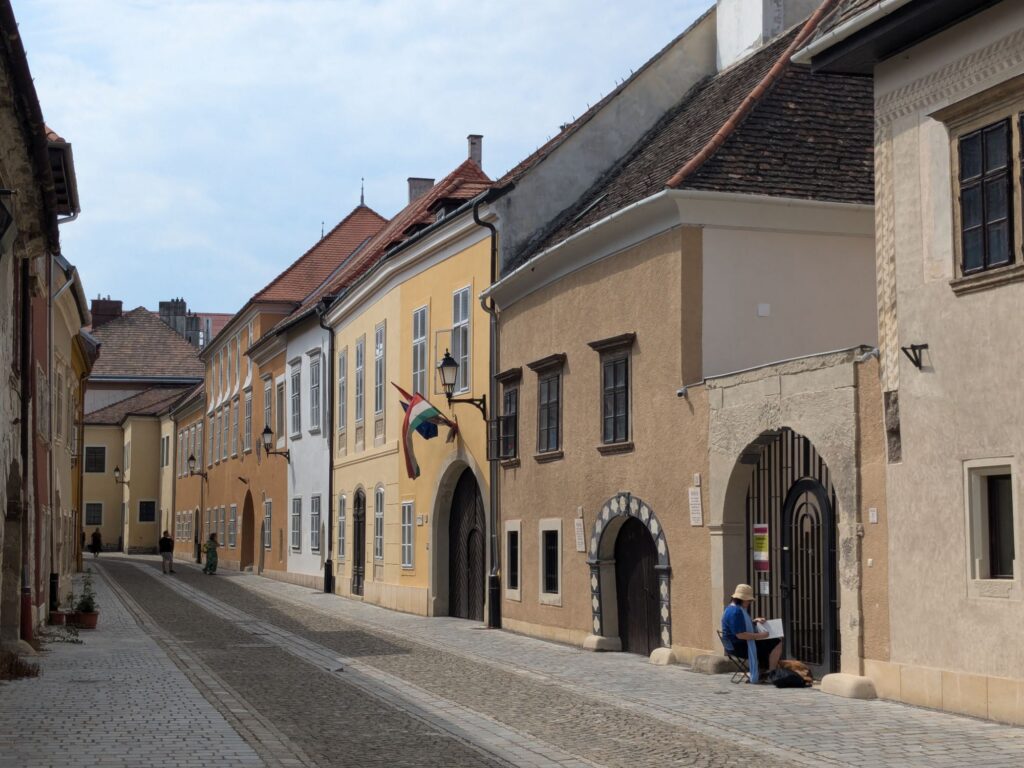
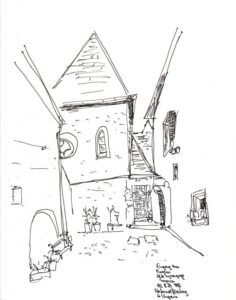
The first one is the “Old Synagogue”. It is said to be a remnant of the first Jewish community in Sopron, that was driven out in 1526. It is built into a back yard and you have only a very slim view from the street, Új utca 22-24.
Nowadays it is a museum that was closed of course on August 20th, which is a Hungarian national holiday.

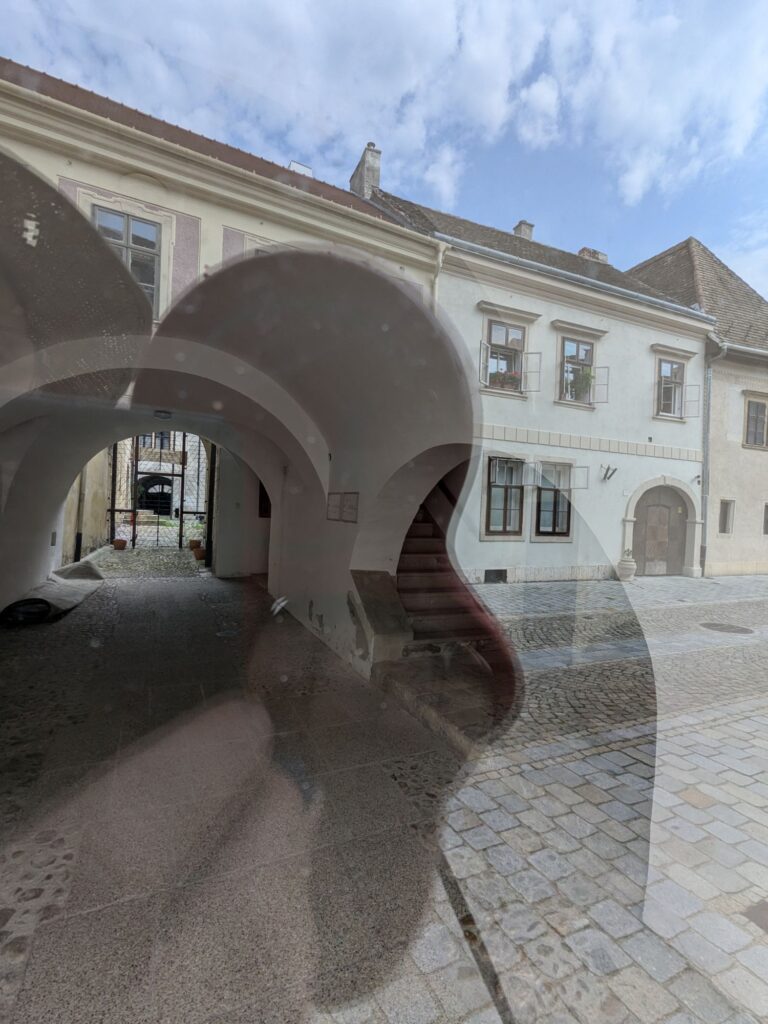
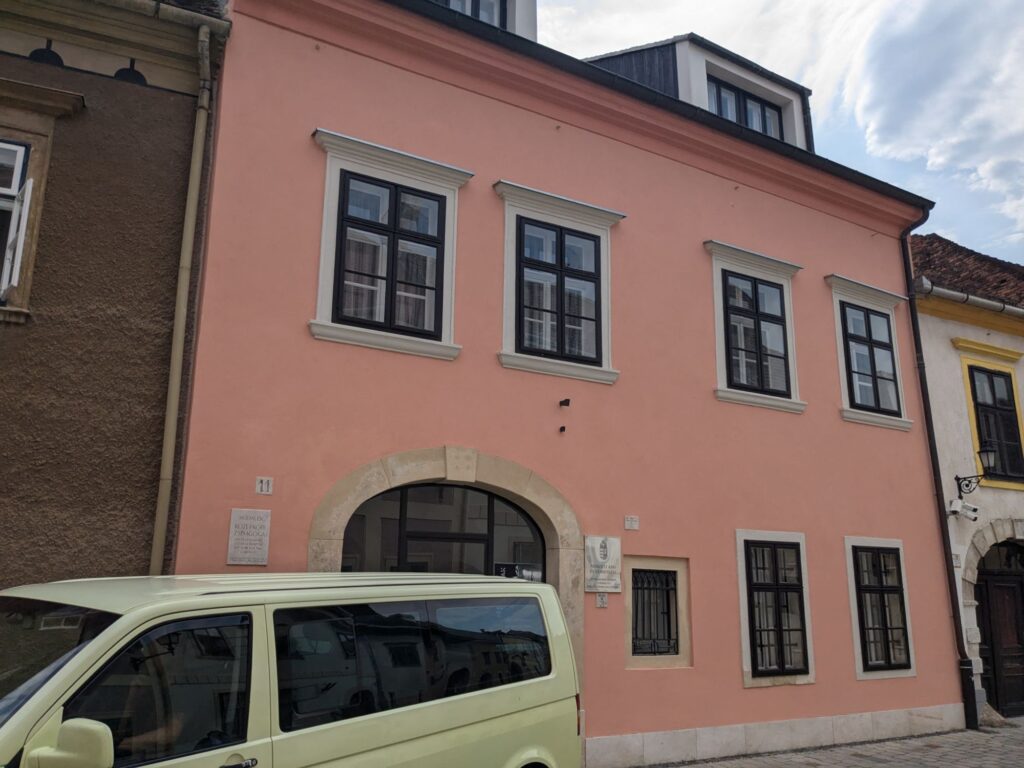
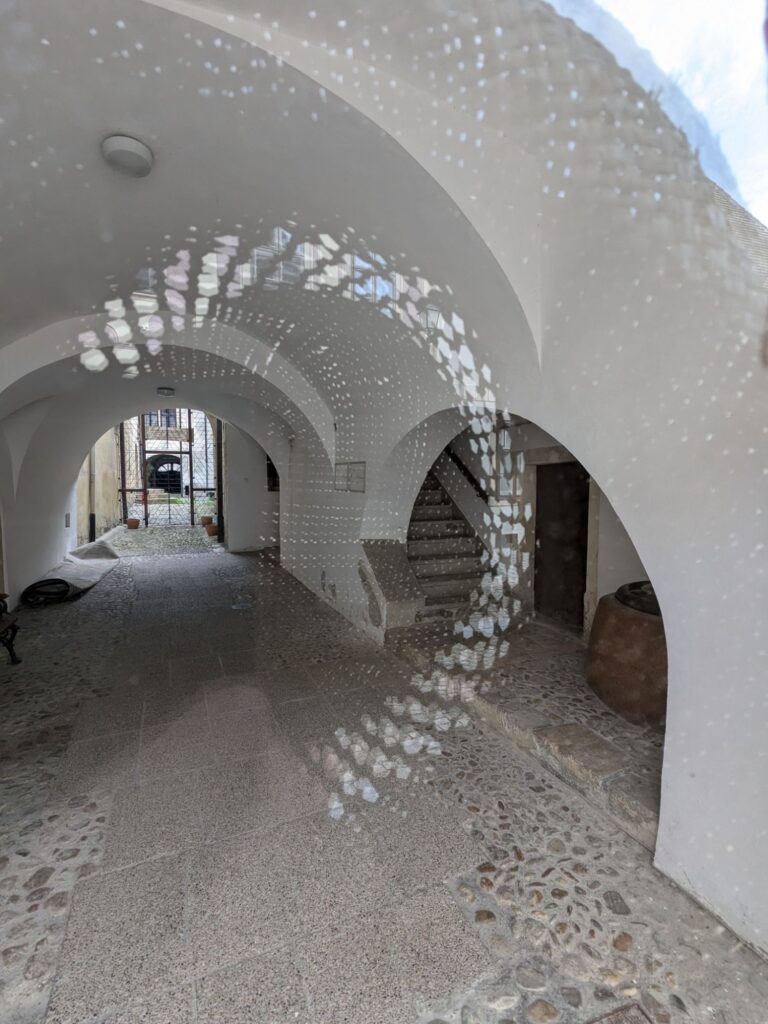
The second one is right across the street one might find the “New Synagogue” which is even more inconspicuous.
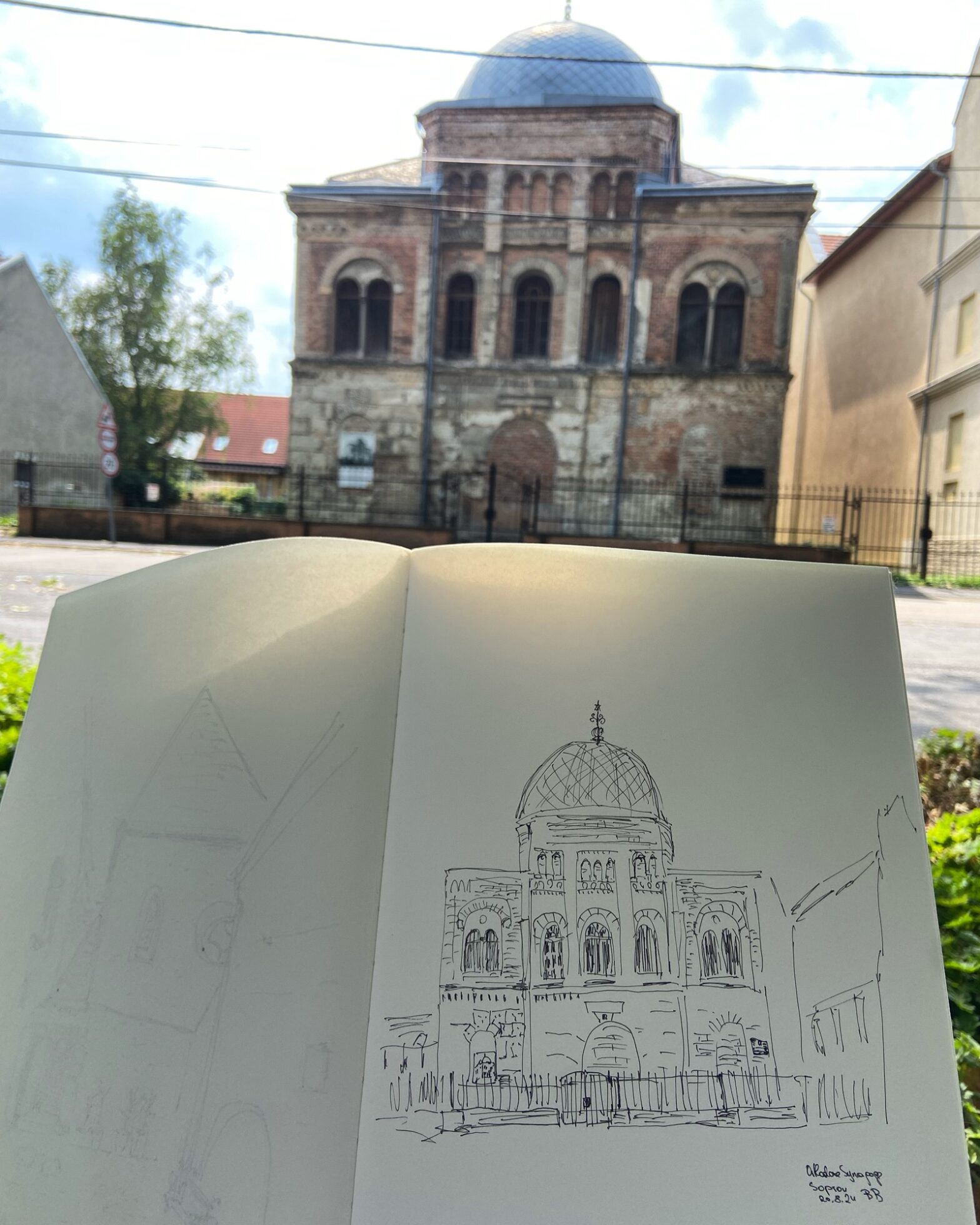
And finally, there is the really new Synagogue, outside the Old City. Contrary to expectations, this was also an Orthodox Synagogue. Apparently, Sopron Jews had little interest in Neolog ways. Perhaps the influence of the Sheva Kehillot in what is now Austria’s province of Burgenland, that were fiercely Orthodox prevented Neologism to gain a foothold in Sopron?
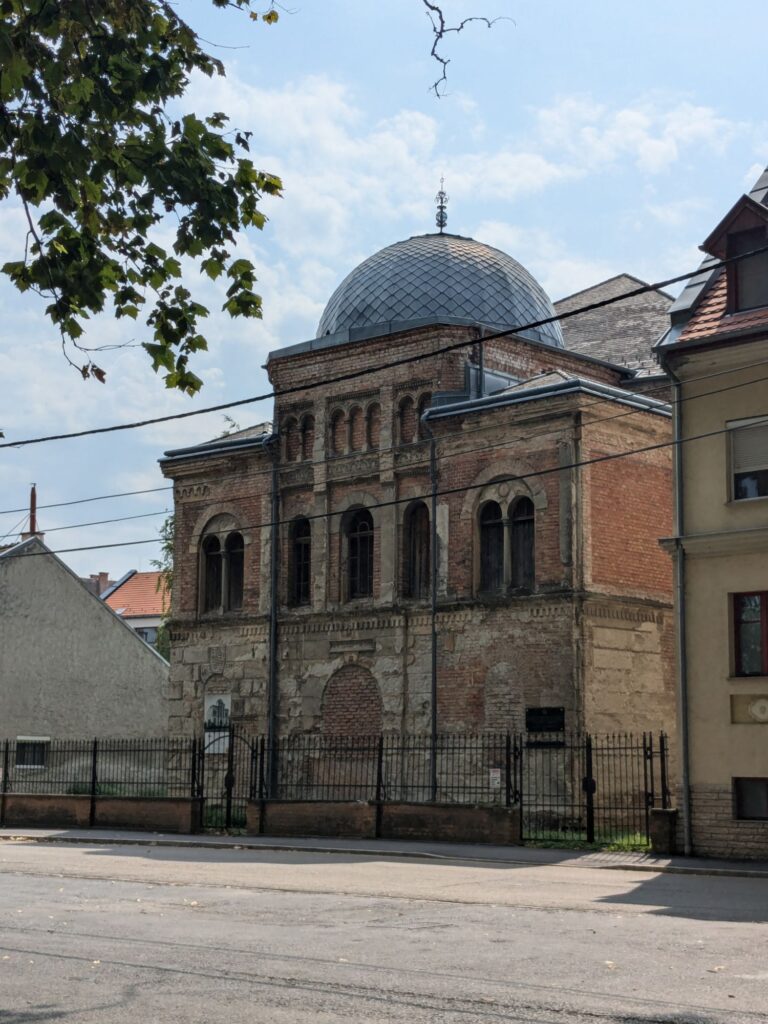
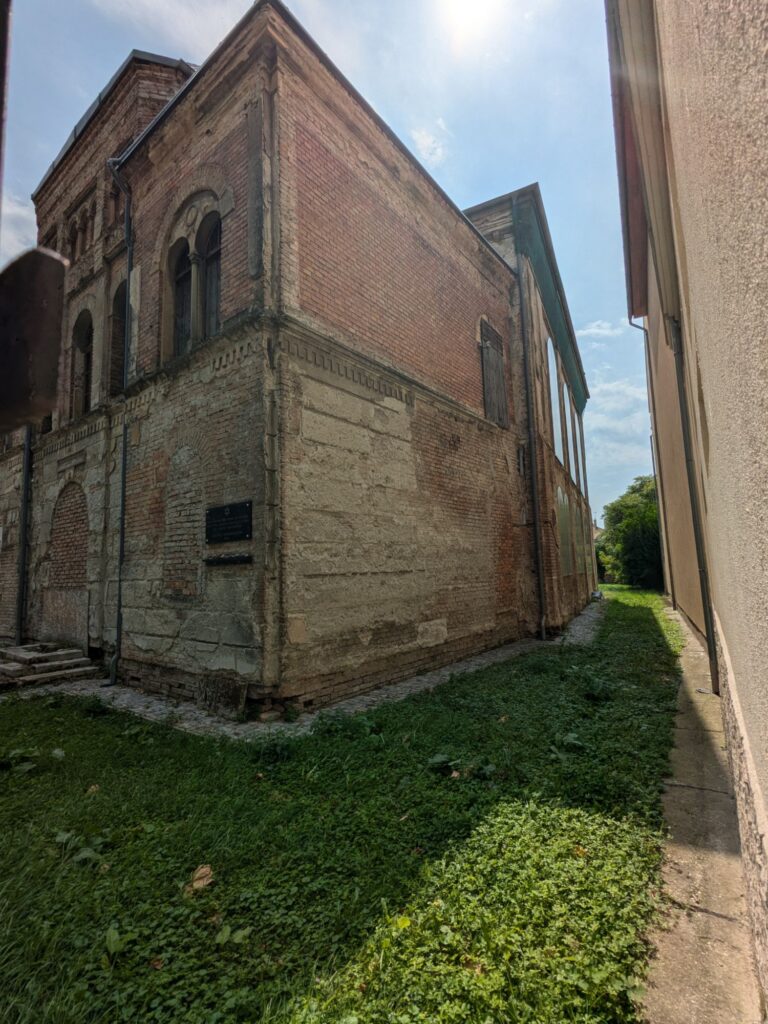
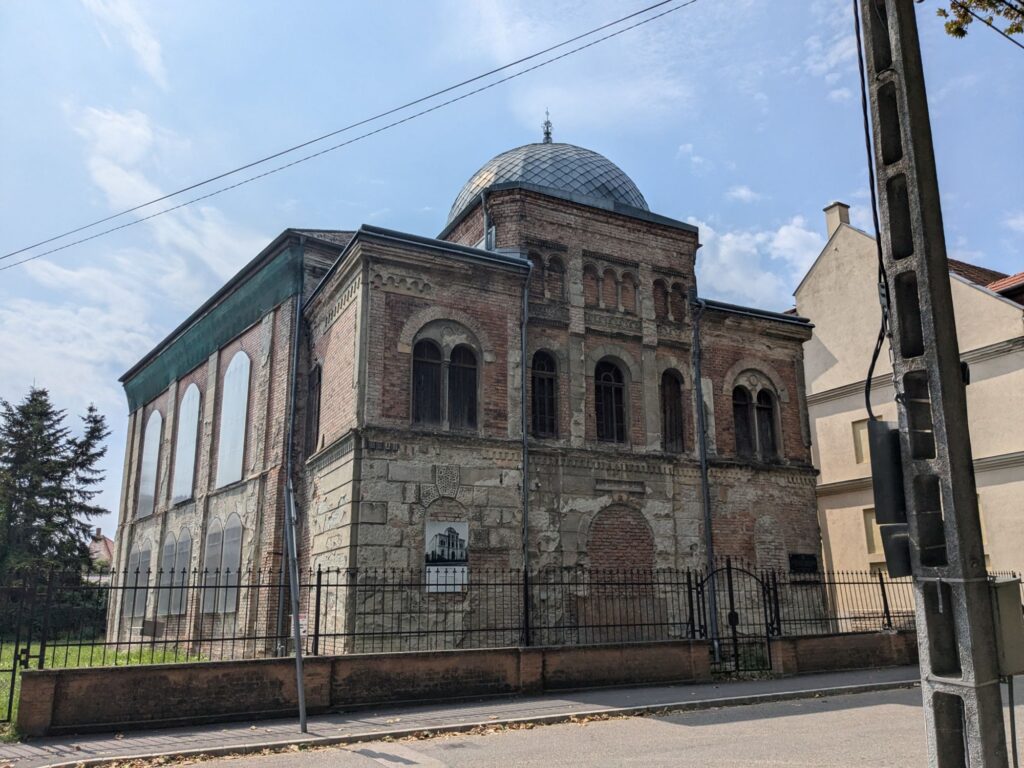
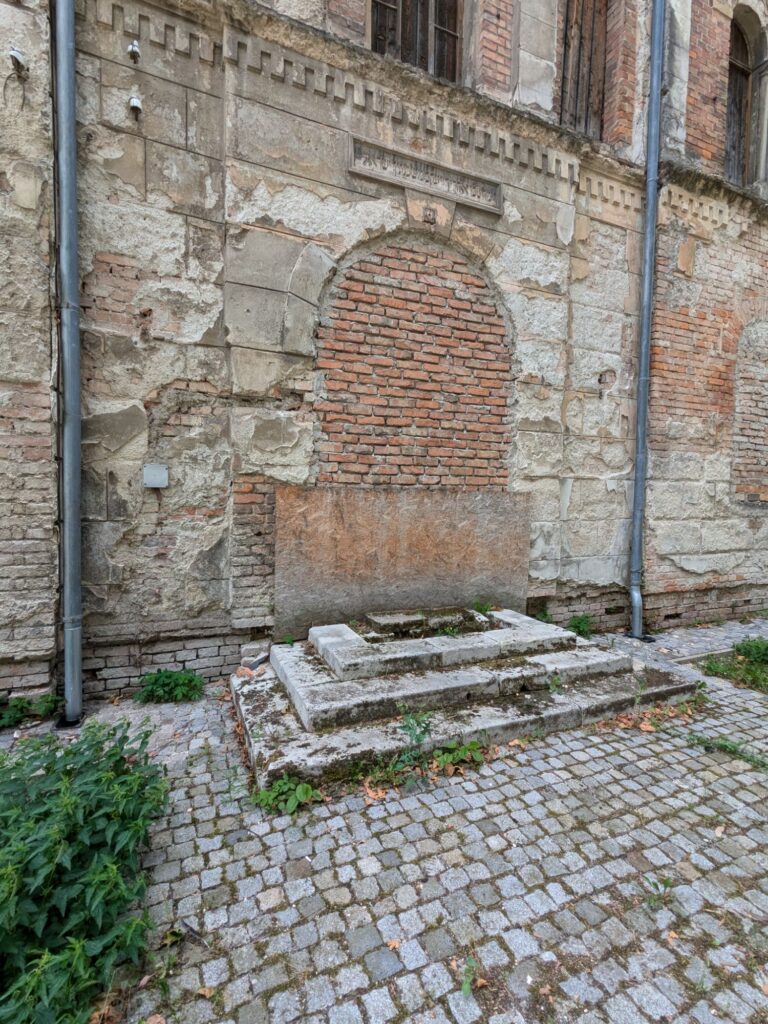
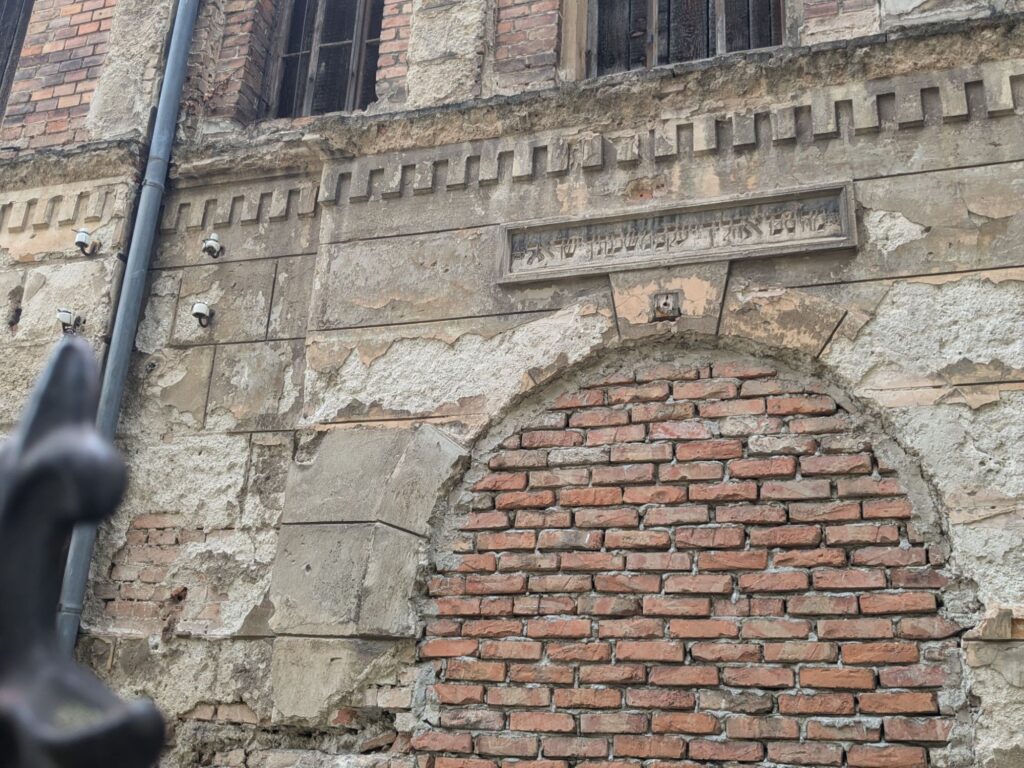
This building stands apart from the neighboring houses. It must have been quite magnificent. However, the windows and doors have been completely blocked with bricks. The roof appears in good condition. It is said that the city of Sopron bought the premises in 2005 and is planning to transform it into an exhibition hall for modern art.
If this is indeed the plan then it will most probably take another twenty years to carry out; for who has ever heard of a small city’s magistrate to be in a hurry about making space for contemporary artists?
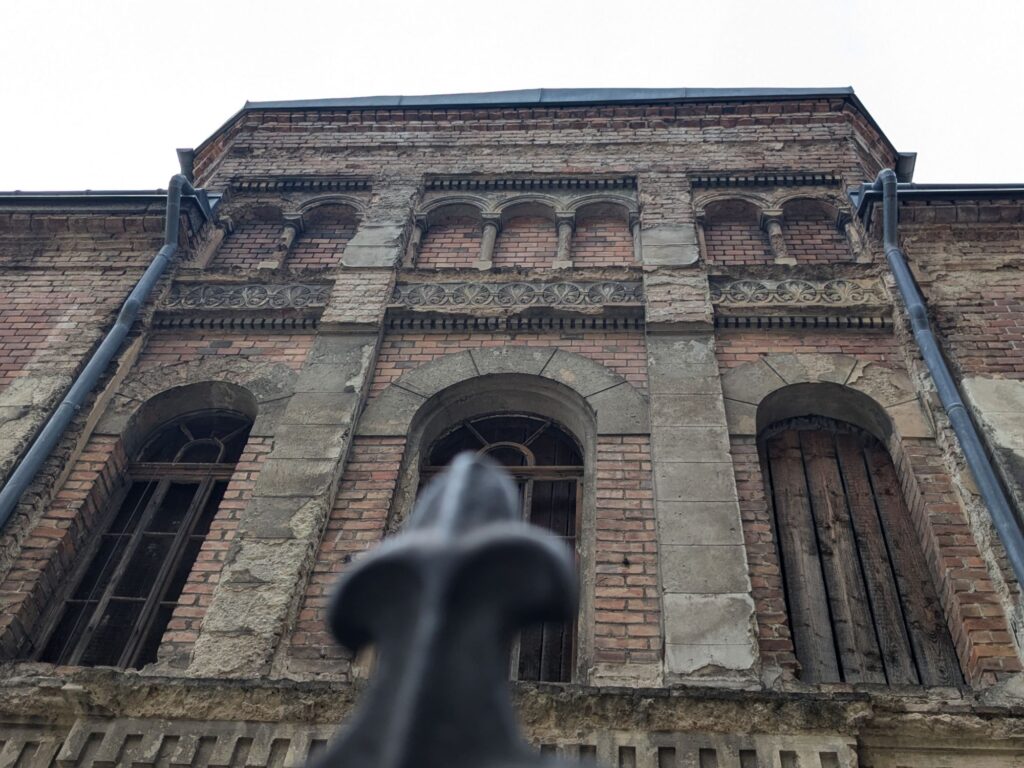

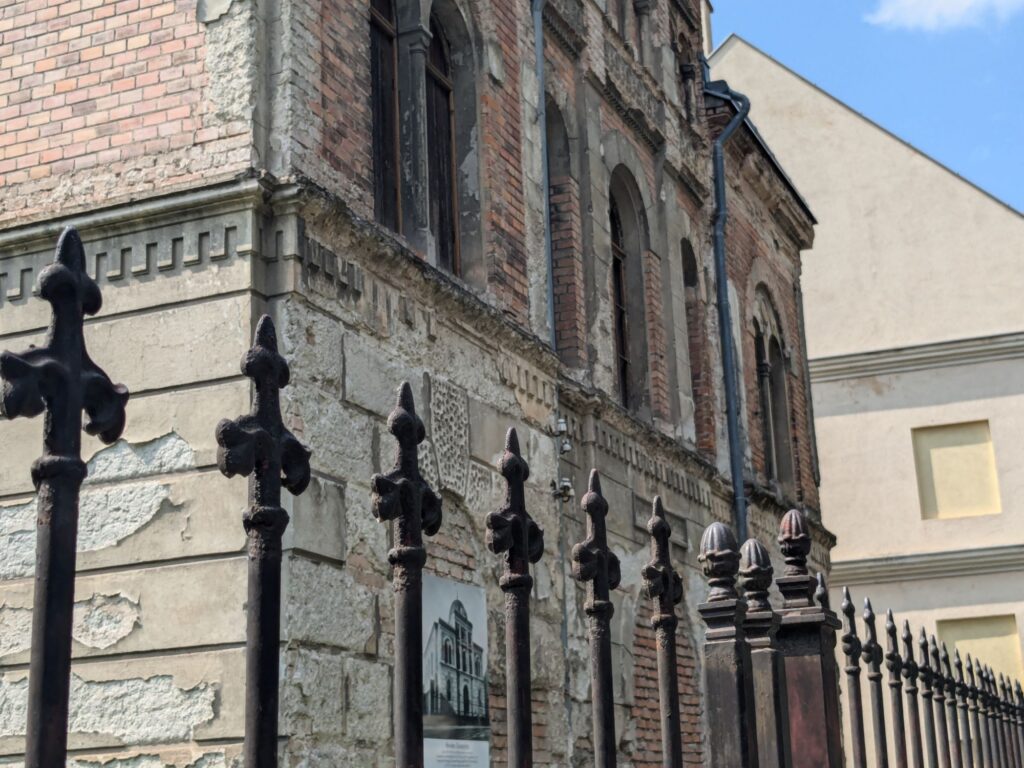


Yes, museums are closed on national holiday in Hungary. So we could not visit the museum in the „old synagogue“ in Sopron. If I drew the entrance of the museum or the synagogue, I don’t know.
The new synagogue is not in such good shape. It is not called the new one (there is a „new“ one opposite of the „old“ one). It is called the orthodox one. And it is waiting for a new purpose. At least with a new looking roof.
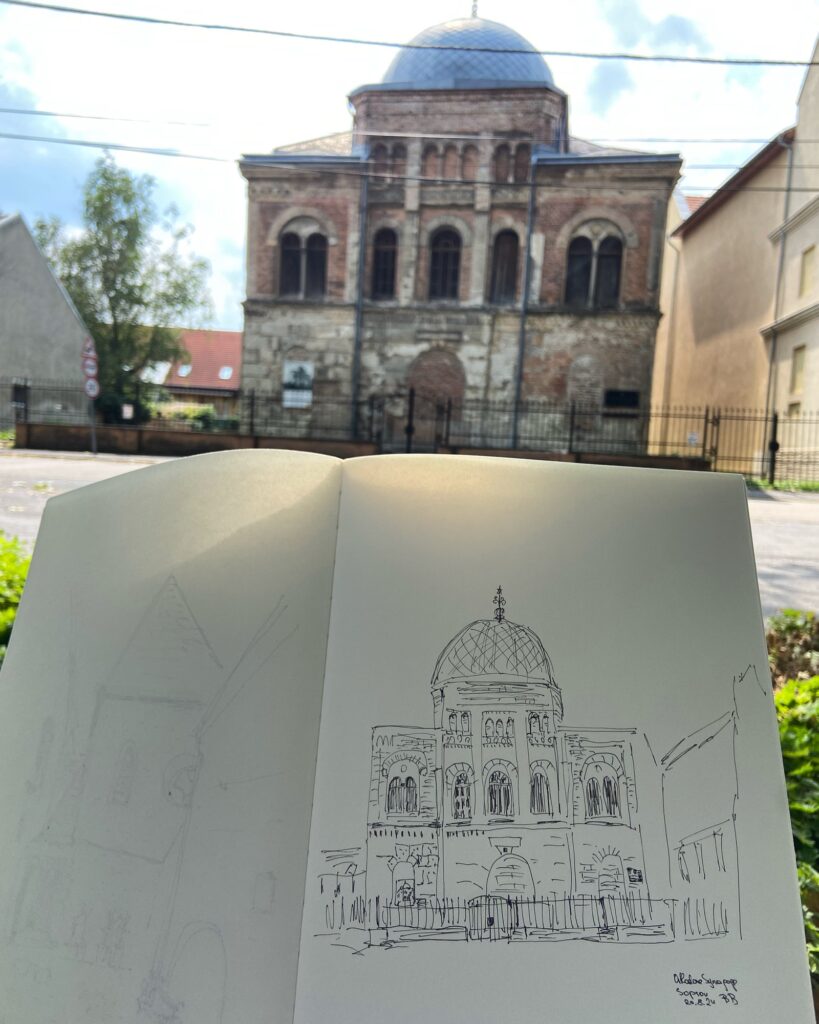
The orthodox synagogue in Sopron
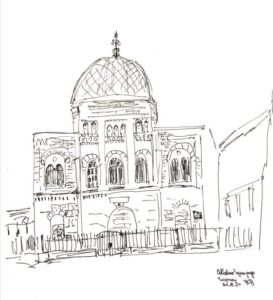
A bit confusing- old, new, orthodox synagogue. To visit the museum would have helped to find out why they are called as such. But Sopron was quiet that day. National holiday means: only a few tourists are around…