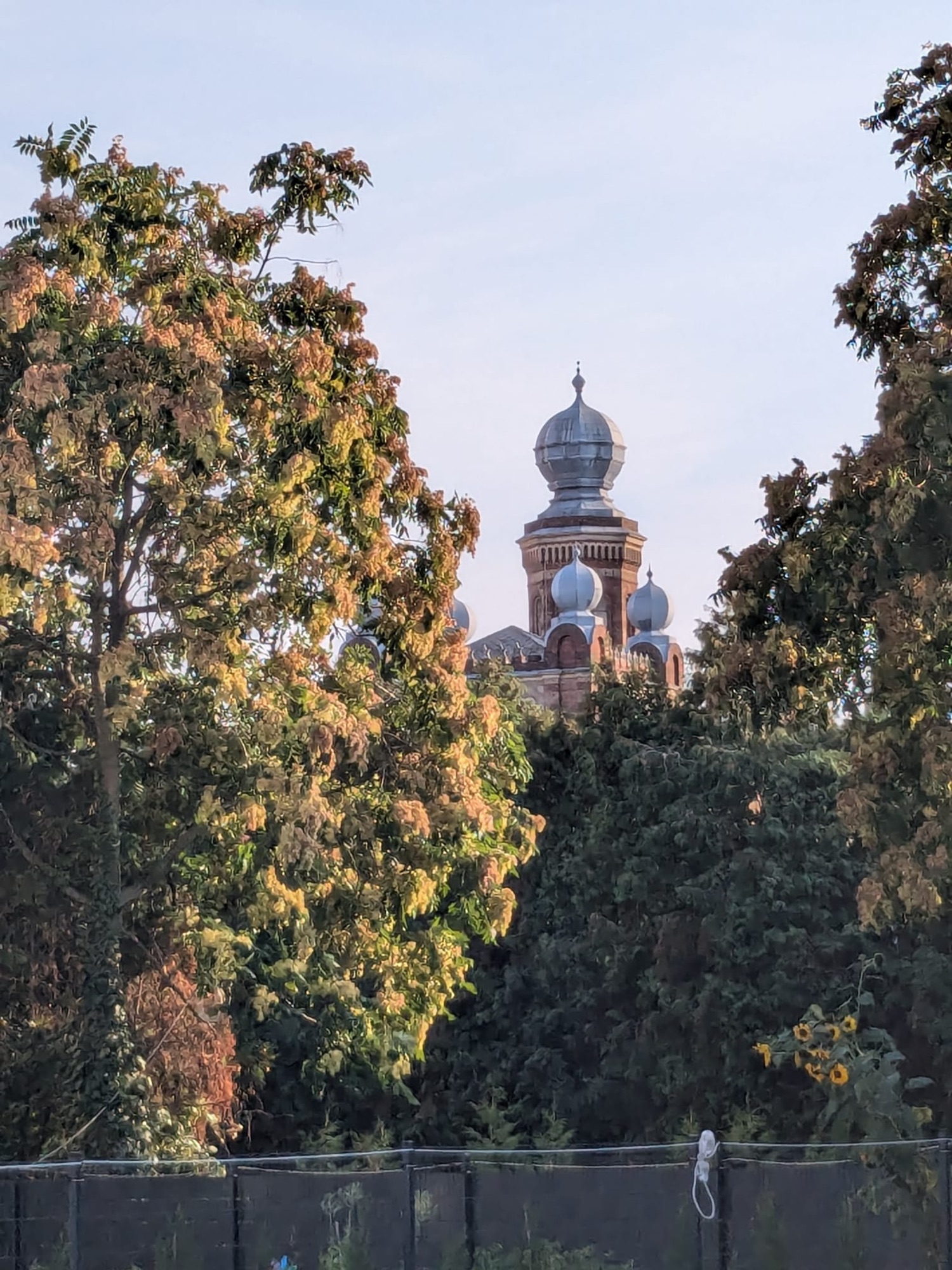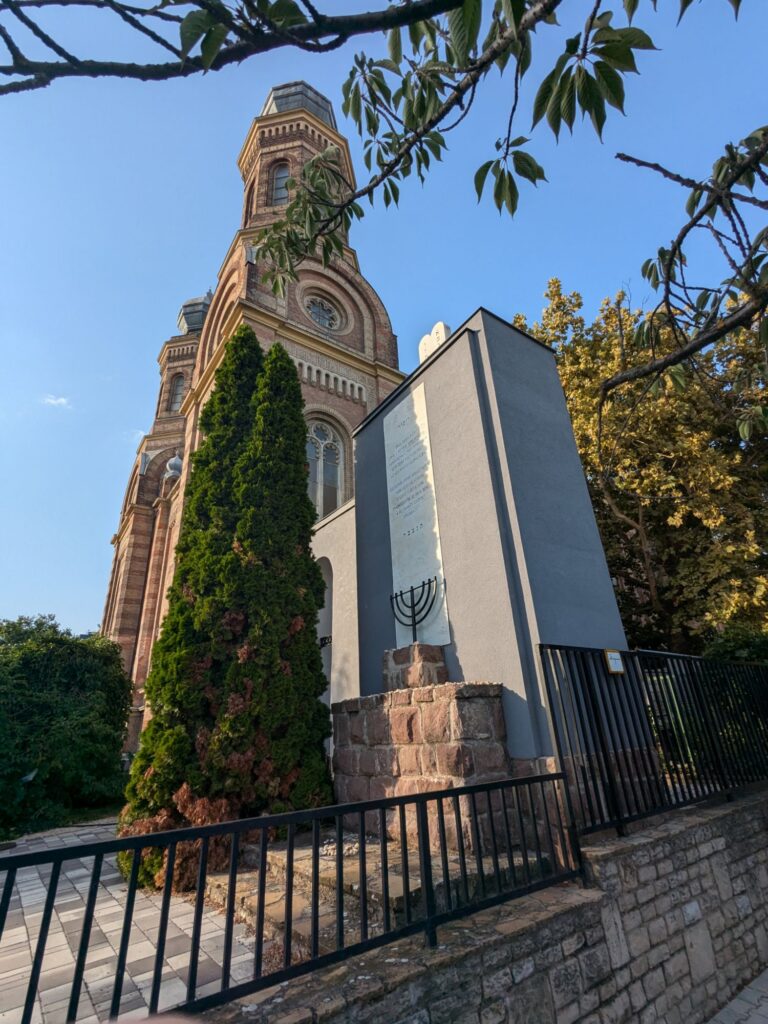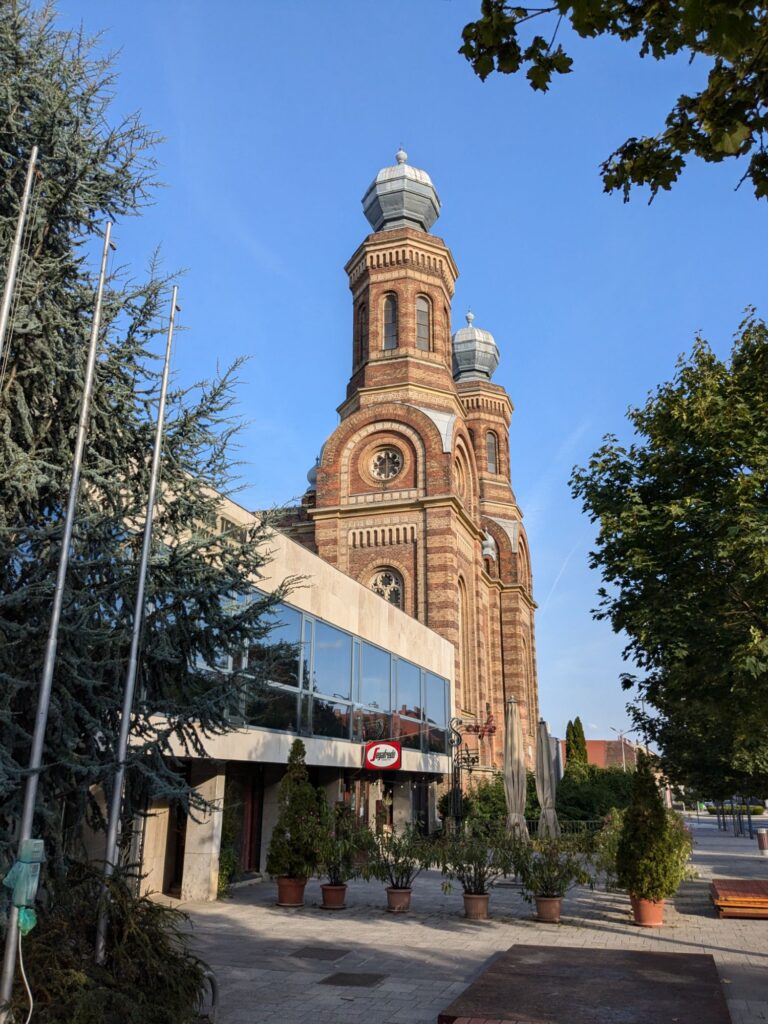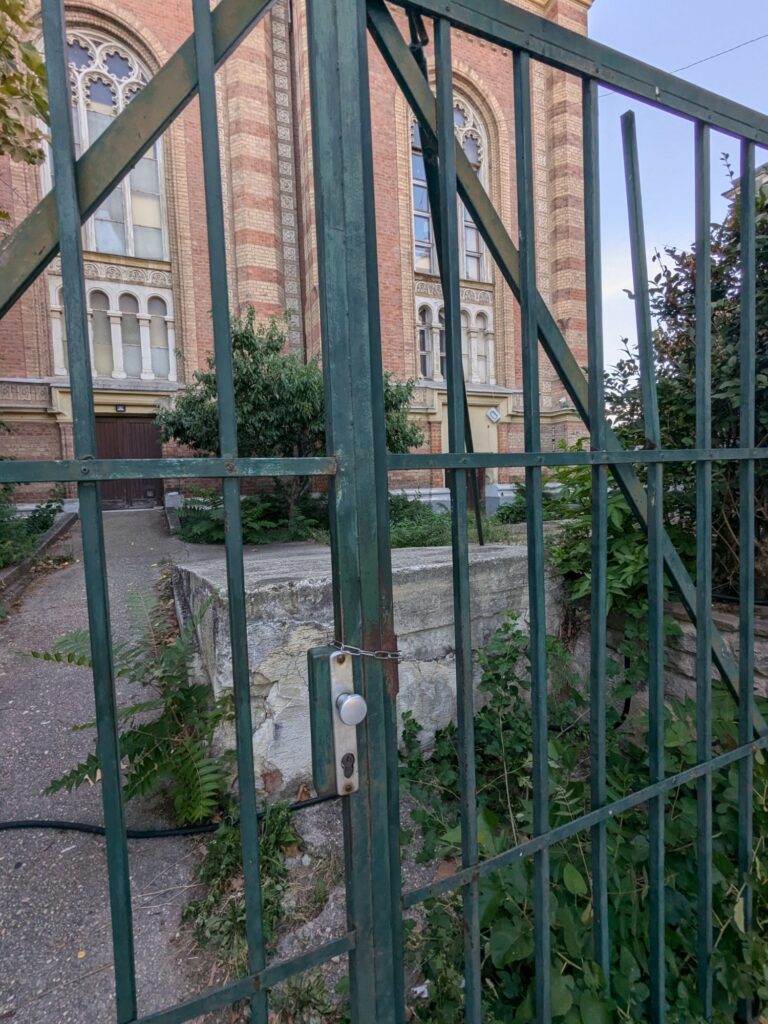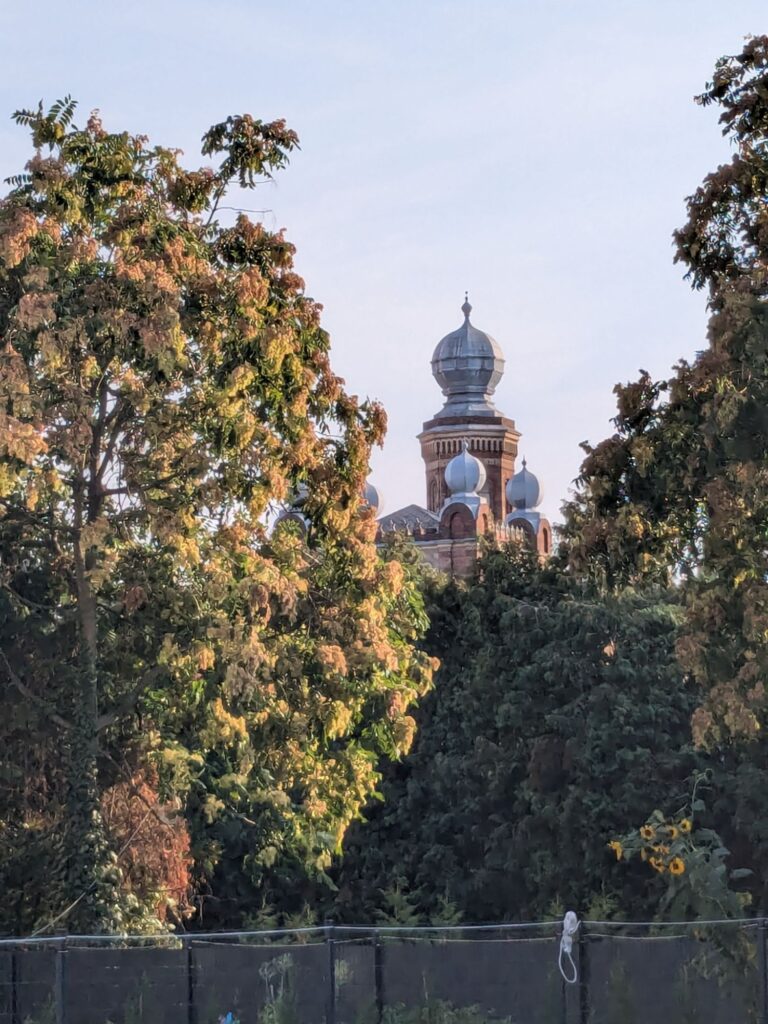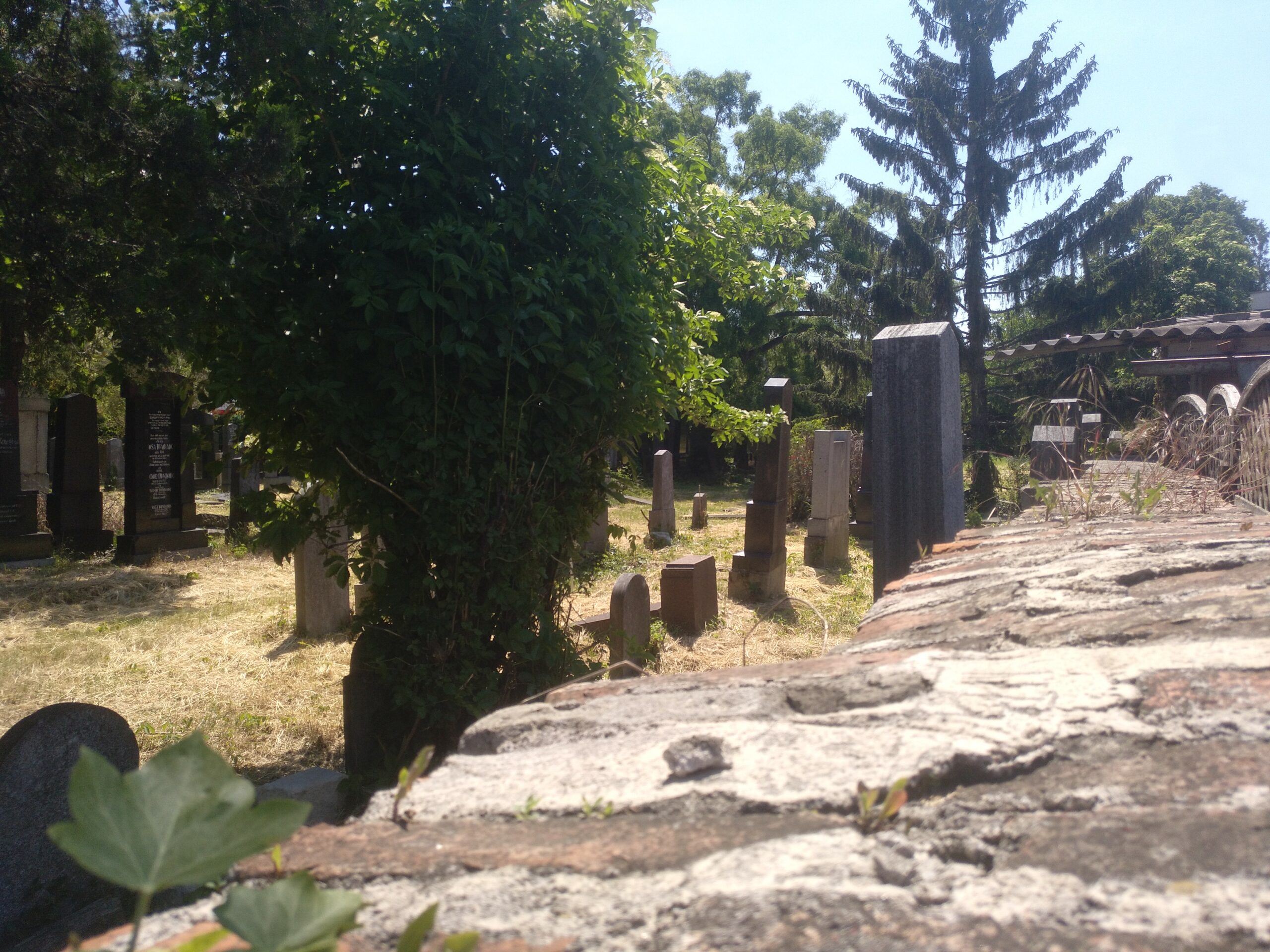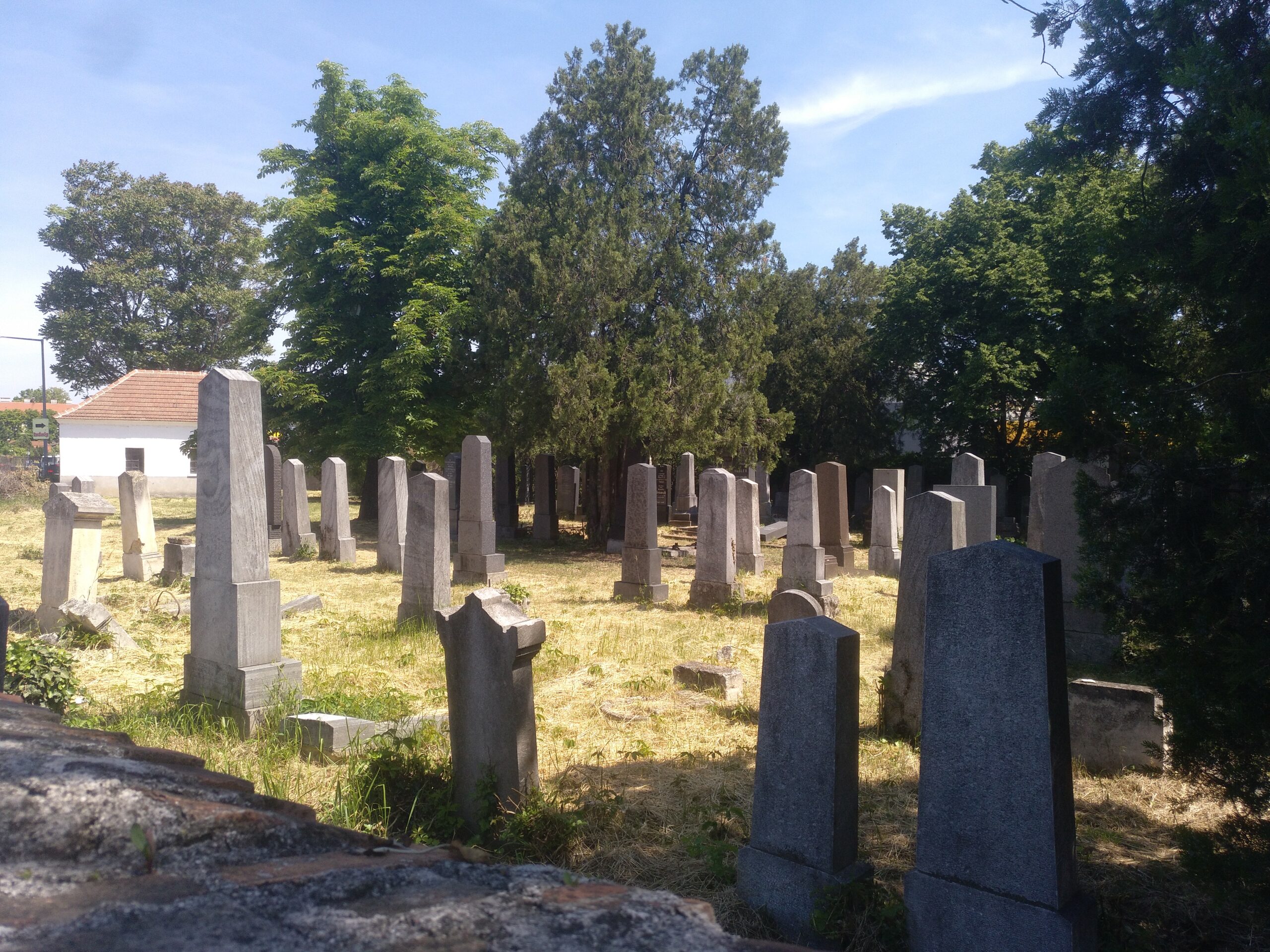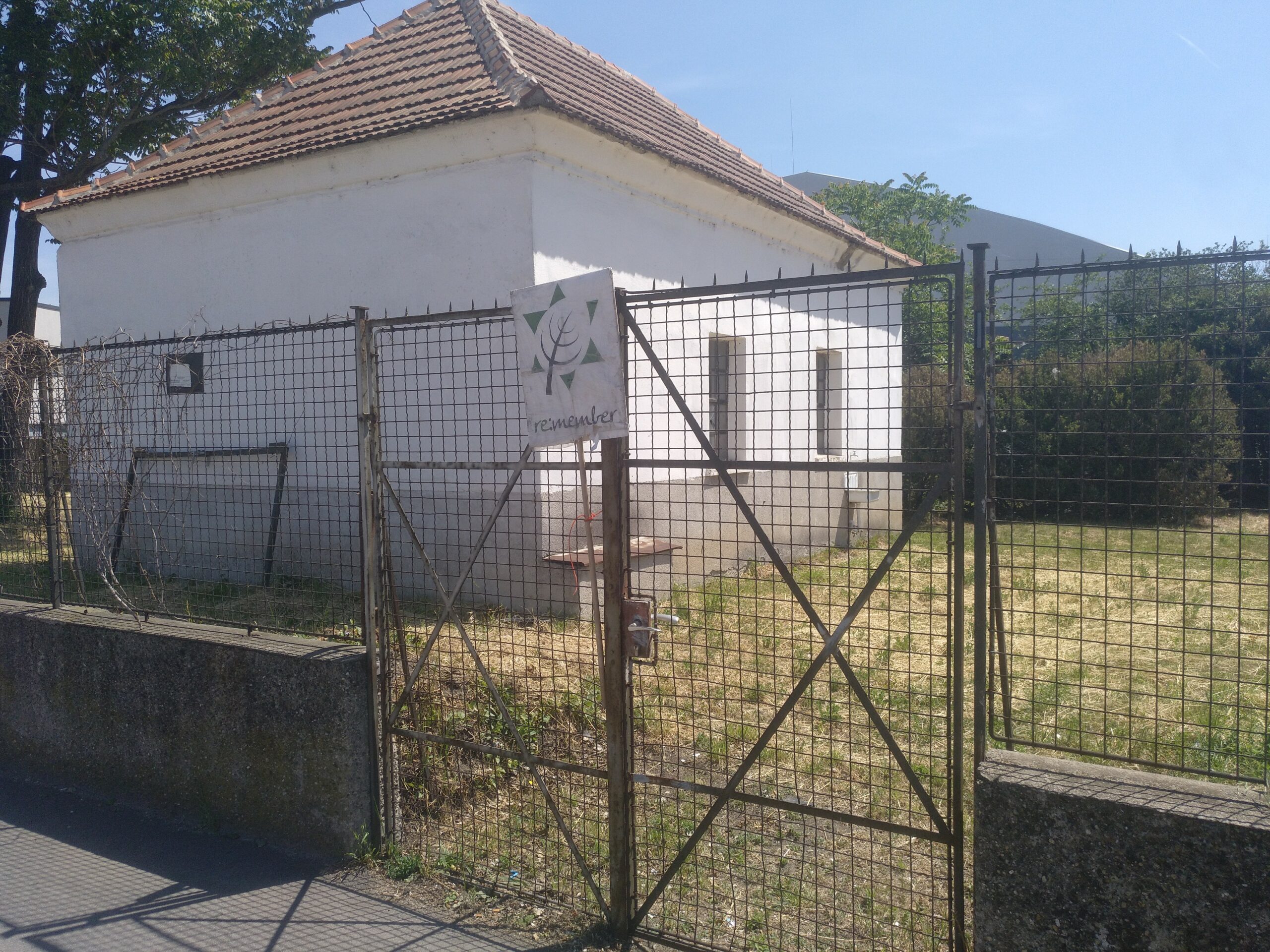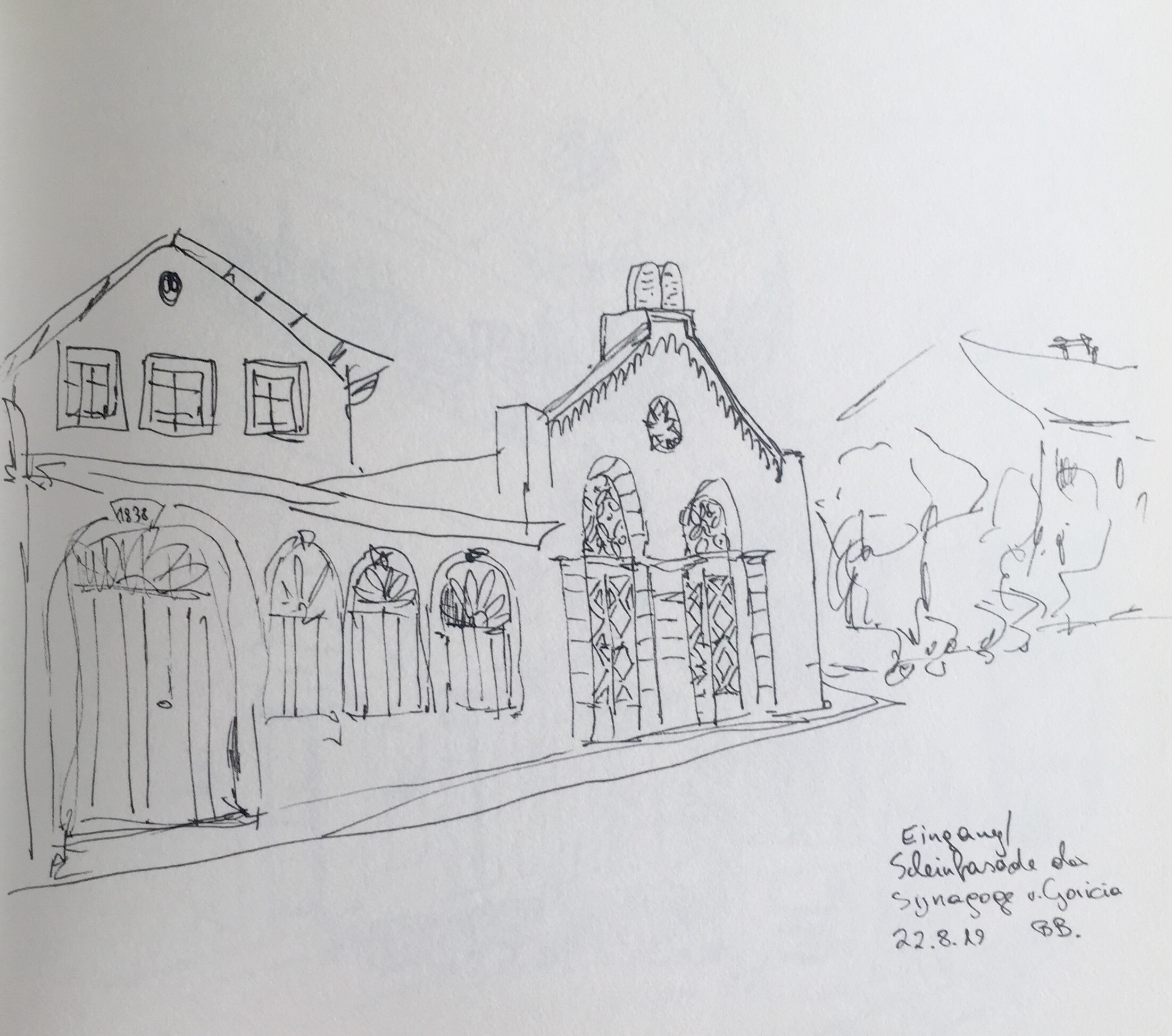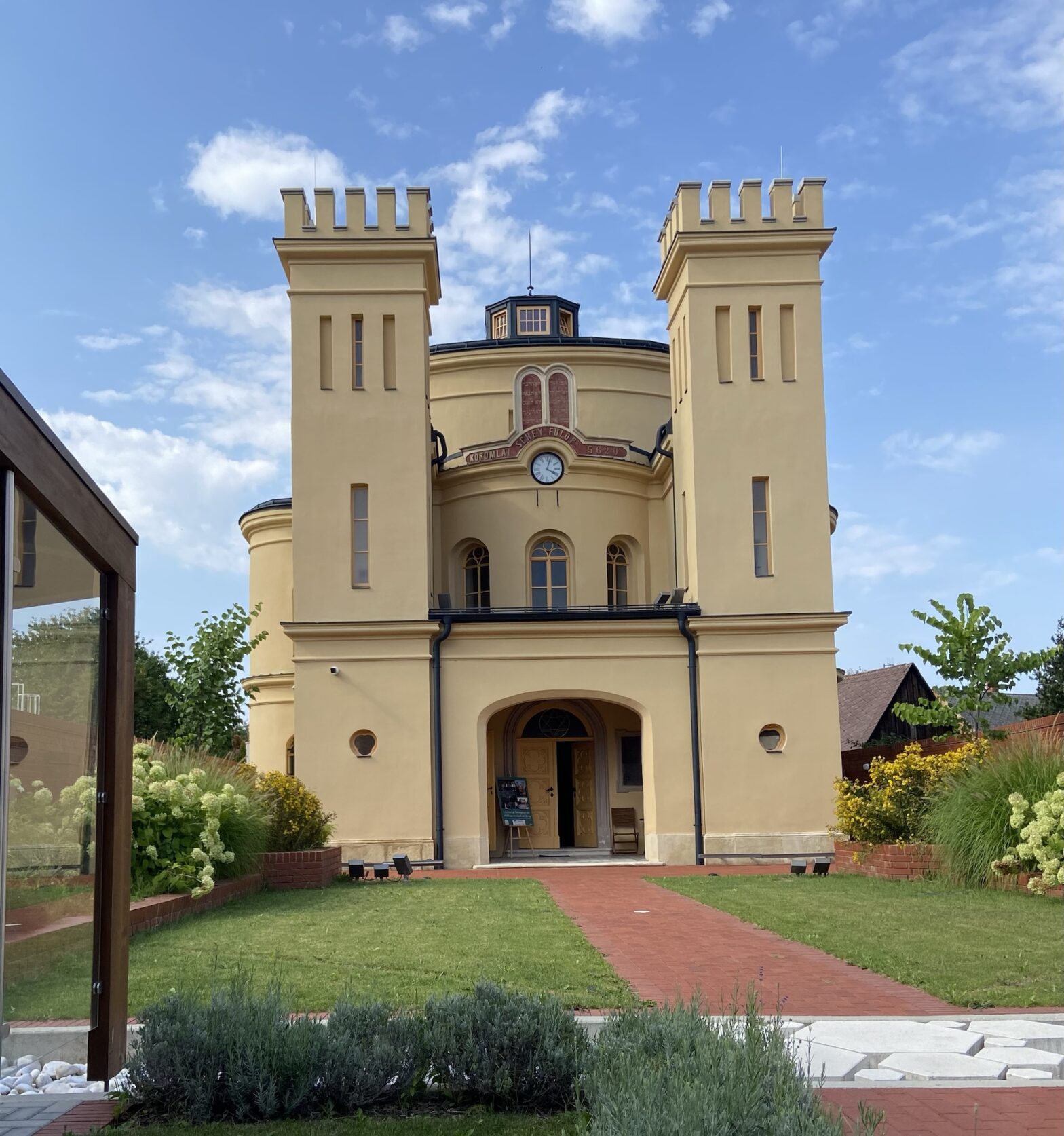
The Circular Synagogue of Köszeg

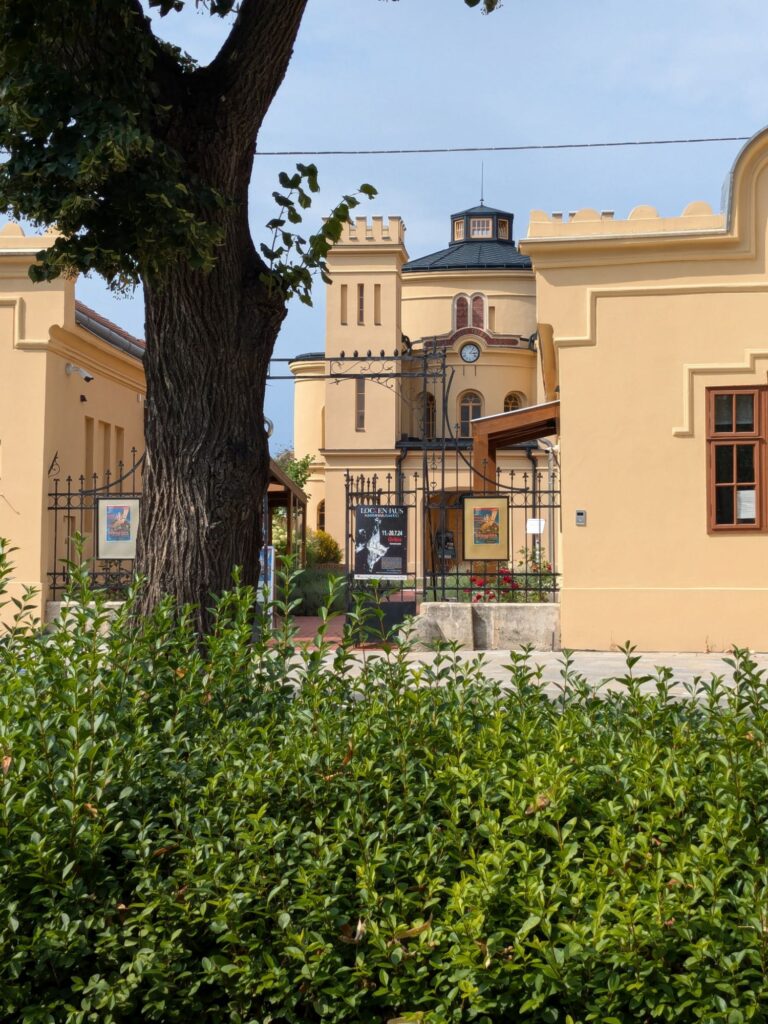
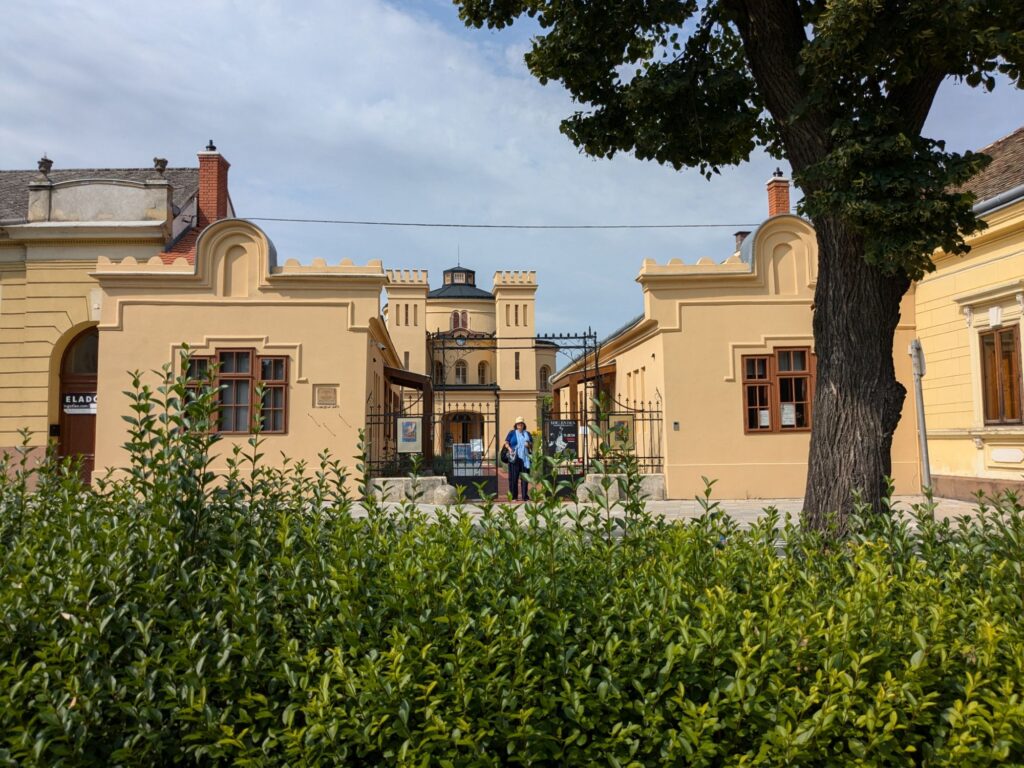
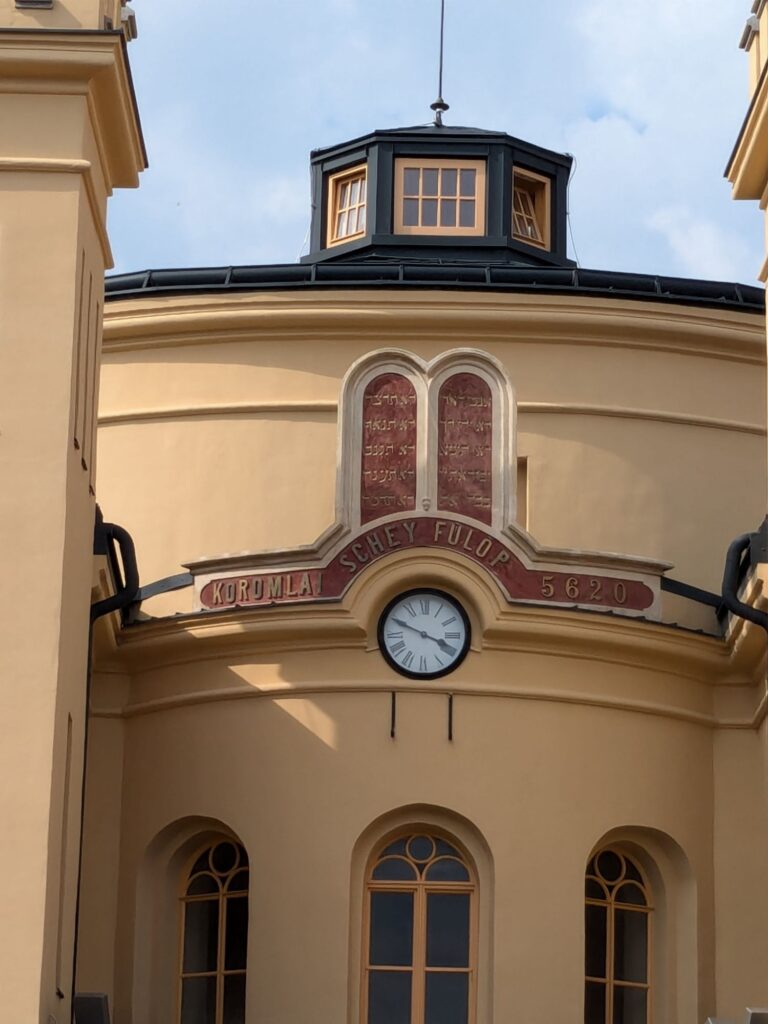
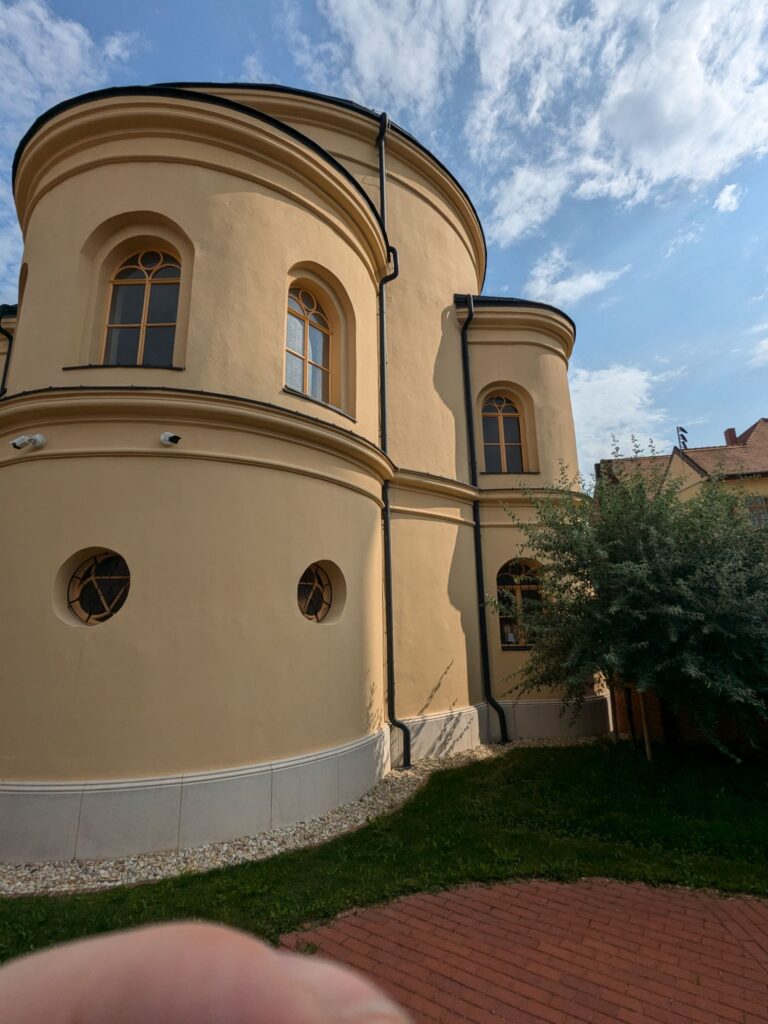
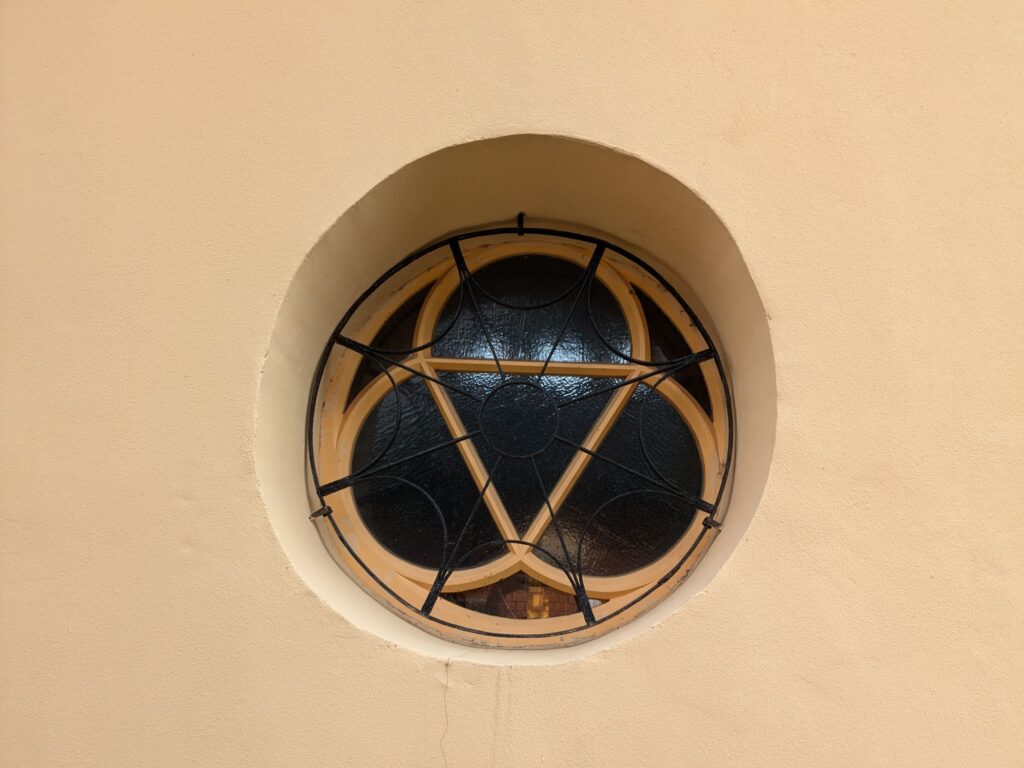
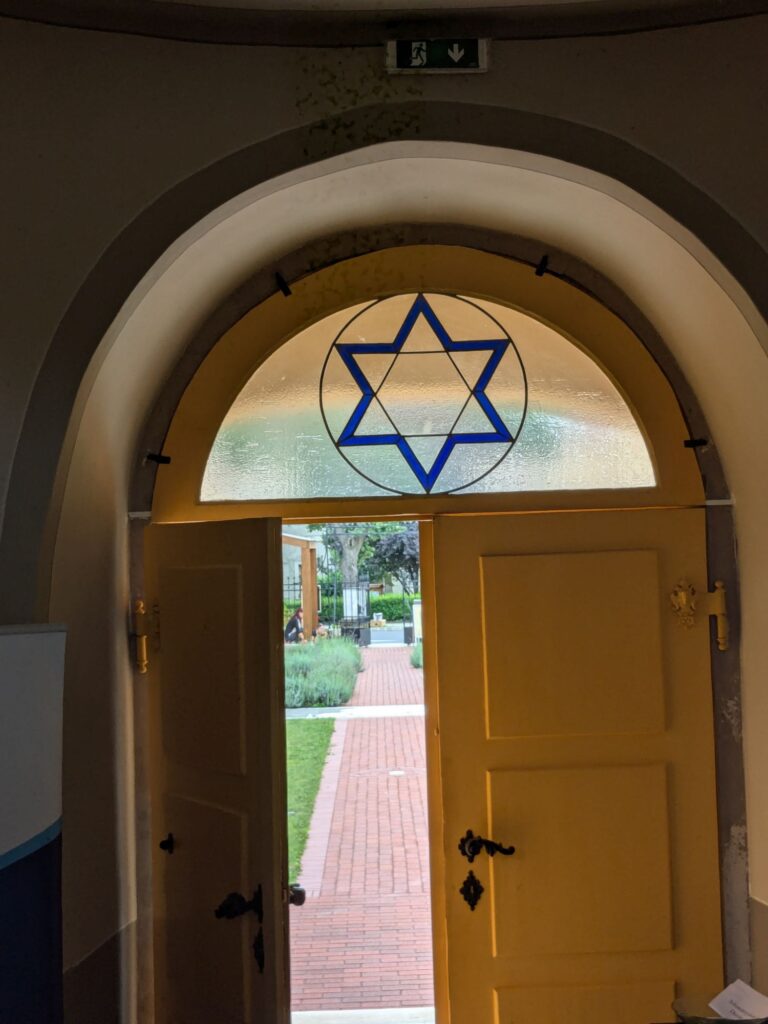
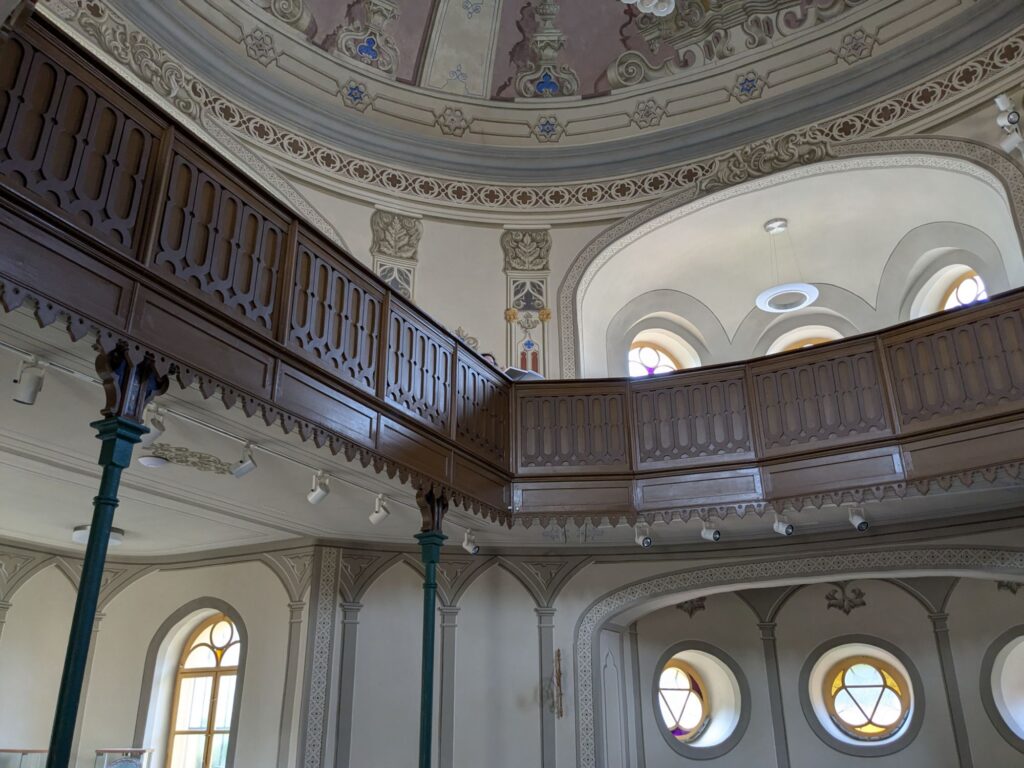
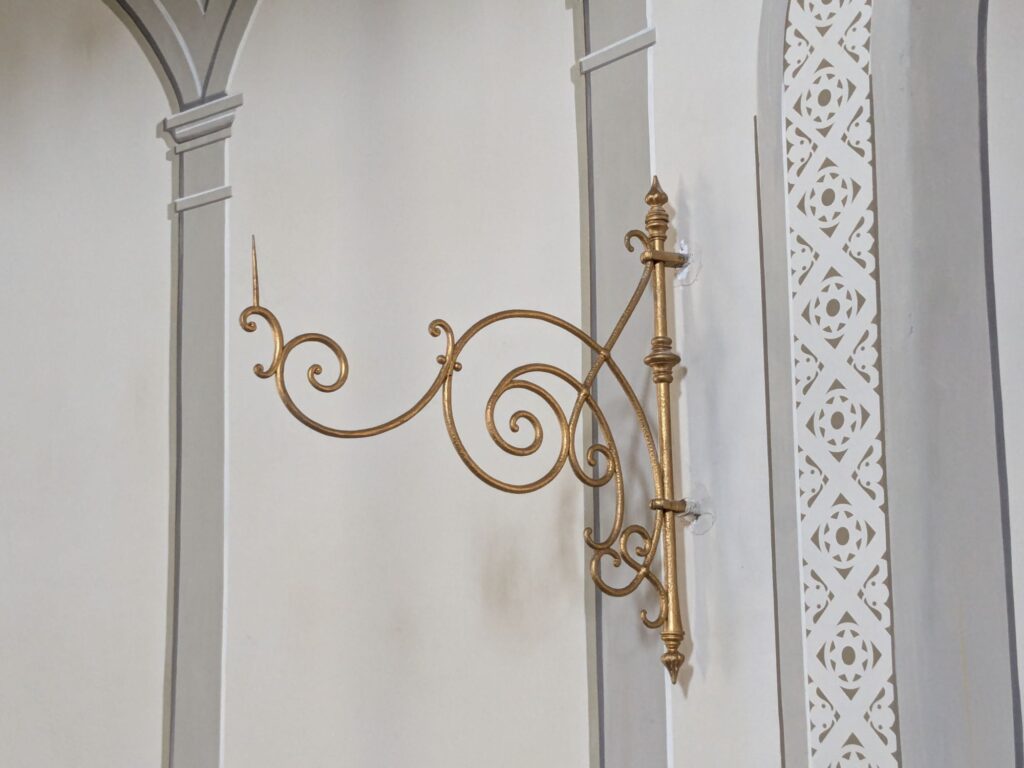
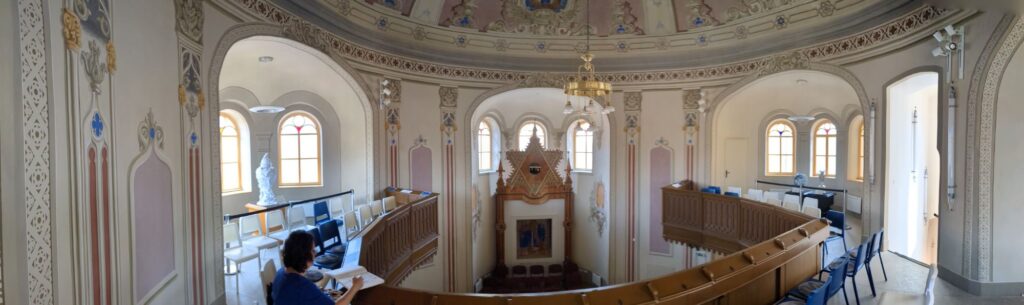
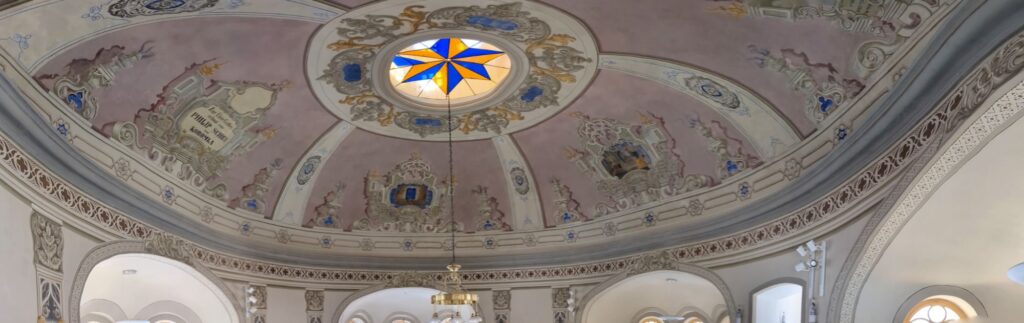
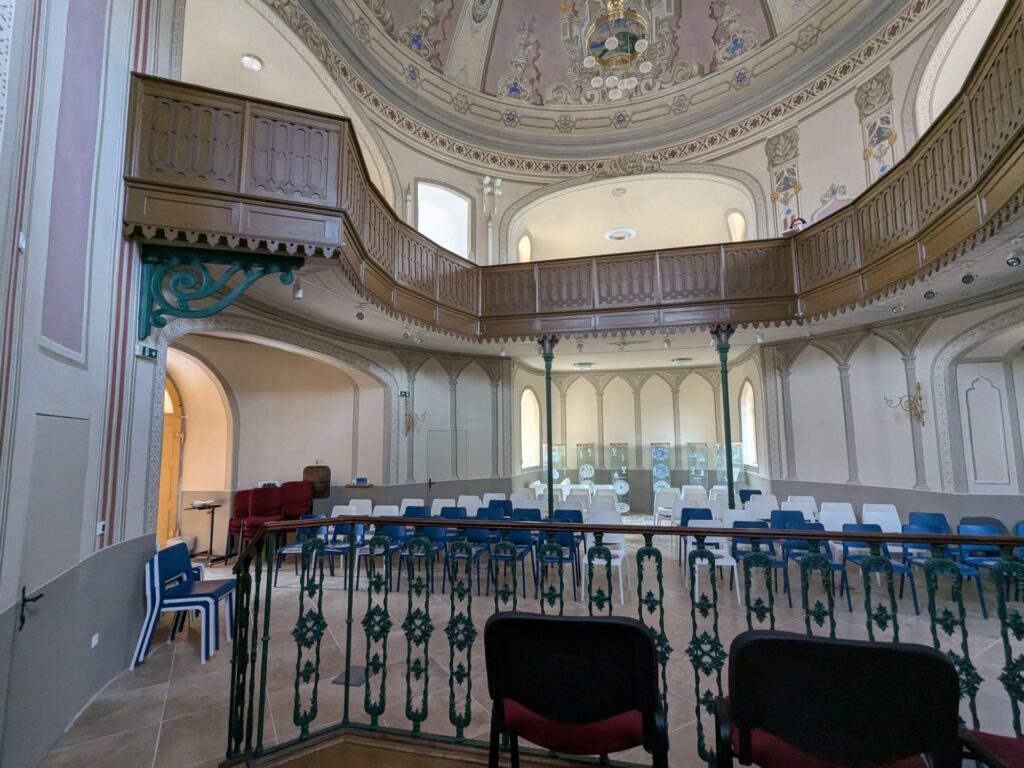
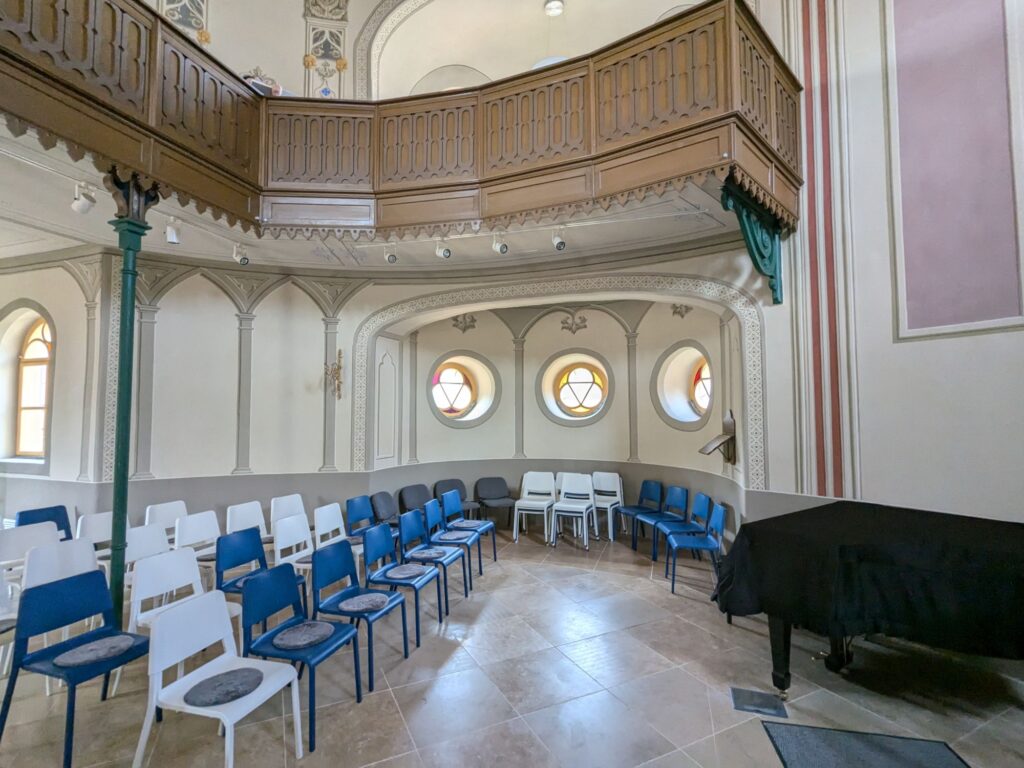
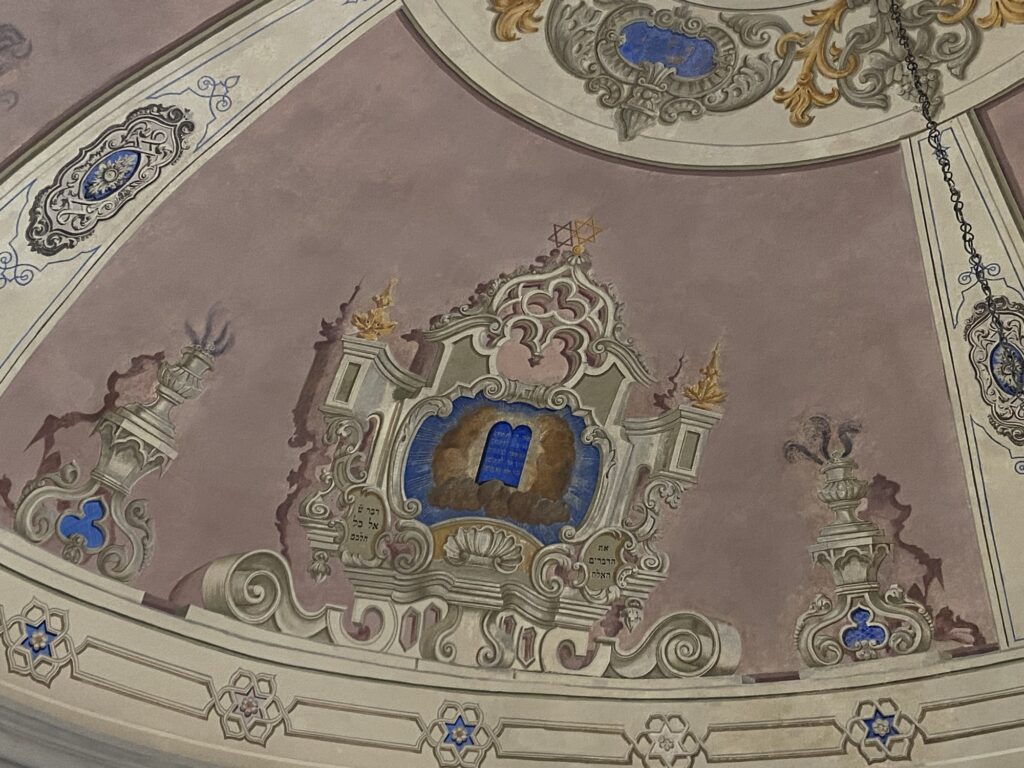
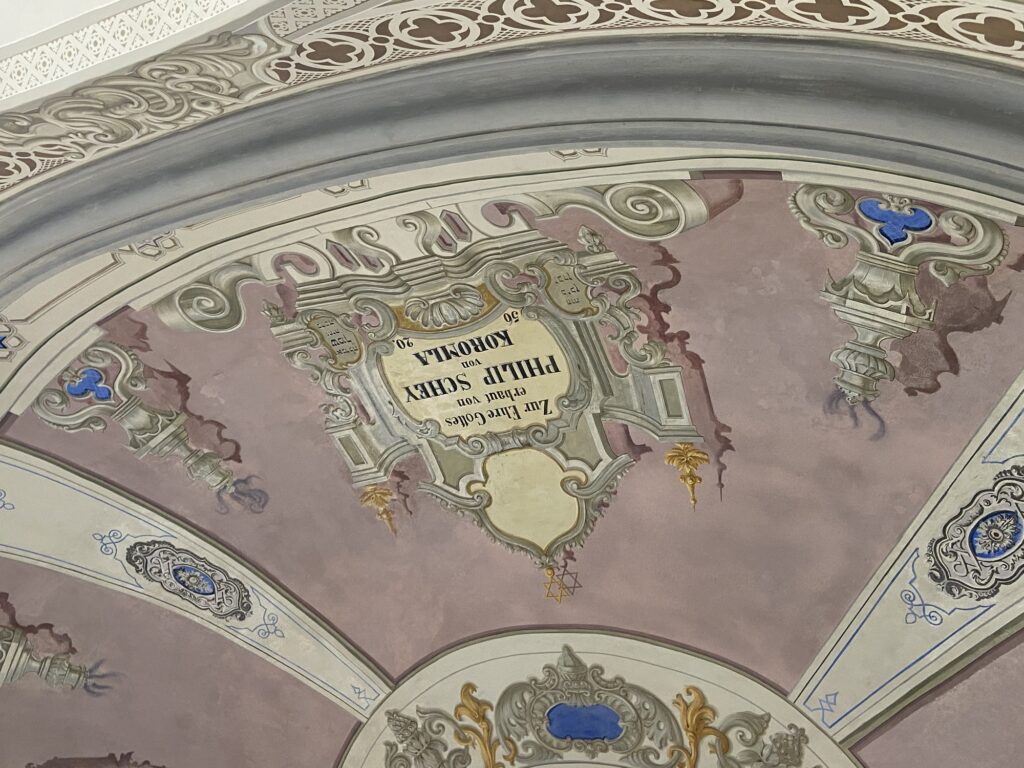
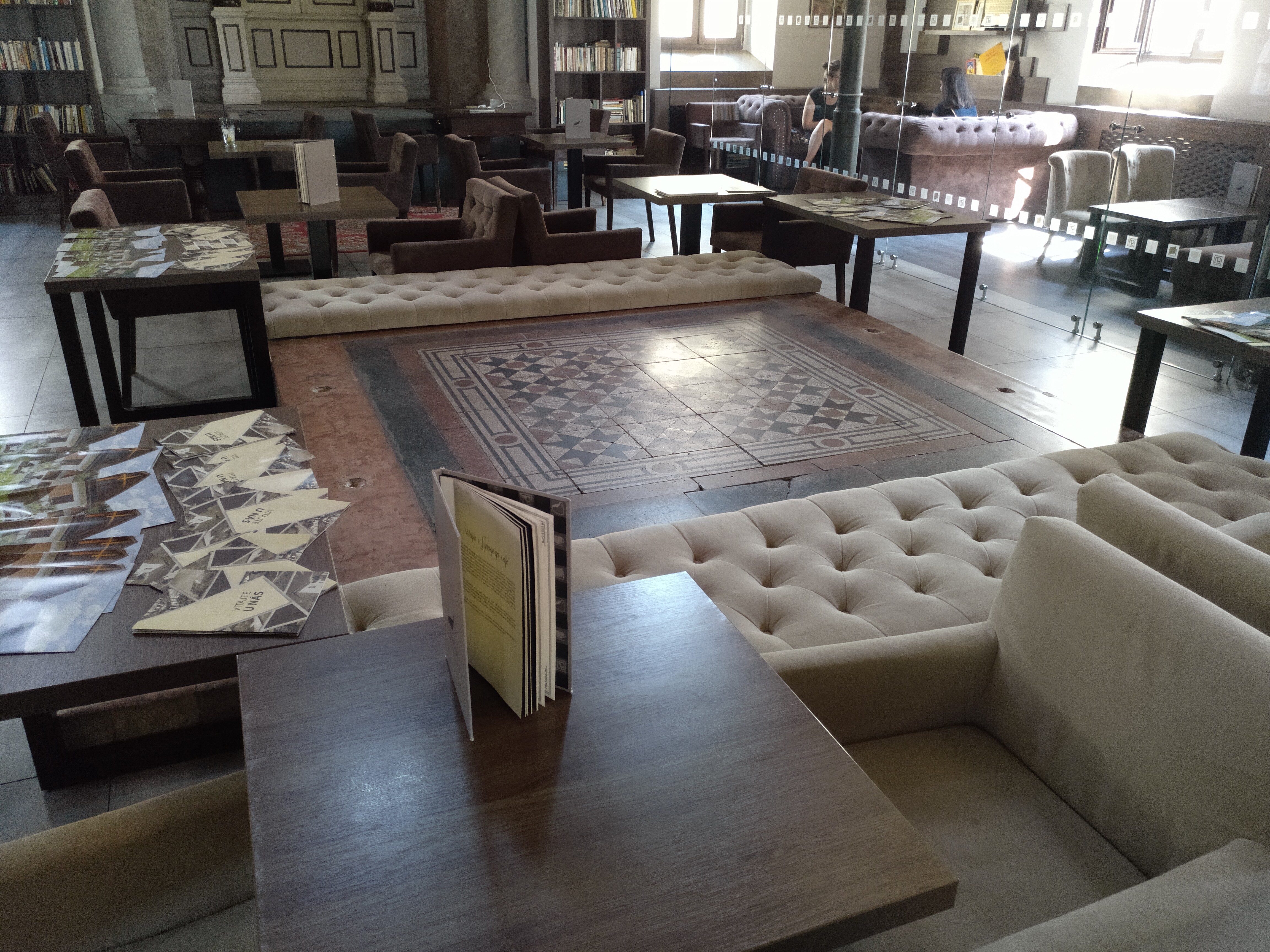
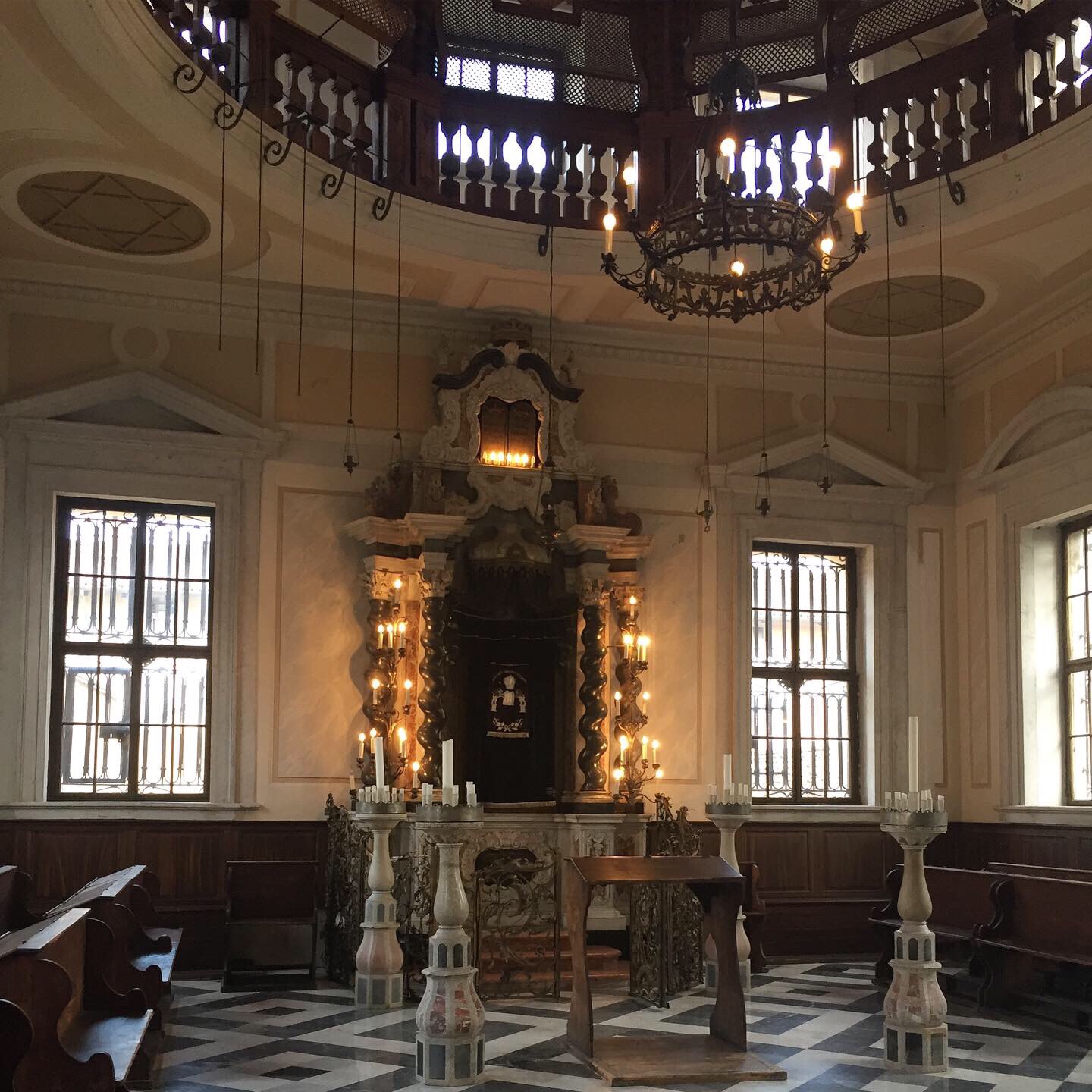
In the year 5620, a certain Philip Schey donated 20.000 Forint (today’s equivalent of about 10 ice cream coffees) to build a most unusual synagogue. It is designed as a circle within a square, topped by a magnificent dome. On any day the space is filled with light from all sides. It is somewhat difficult to imagine how it must have felt at nightfall, what sort of lighting they used at the time.

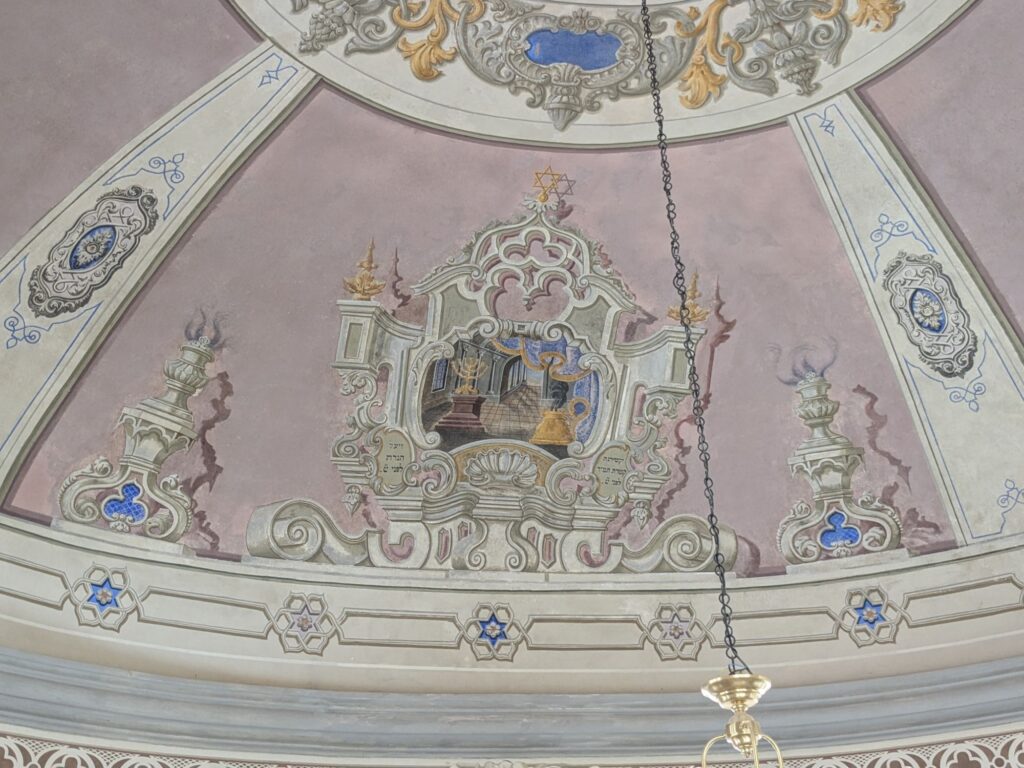
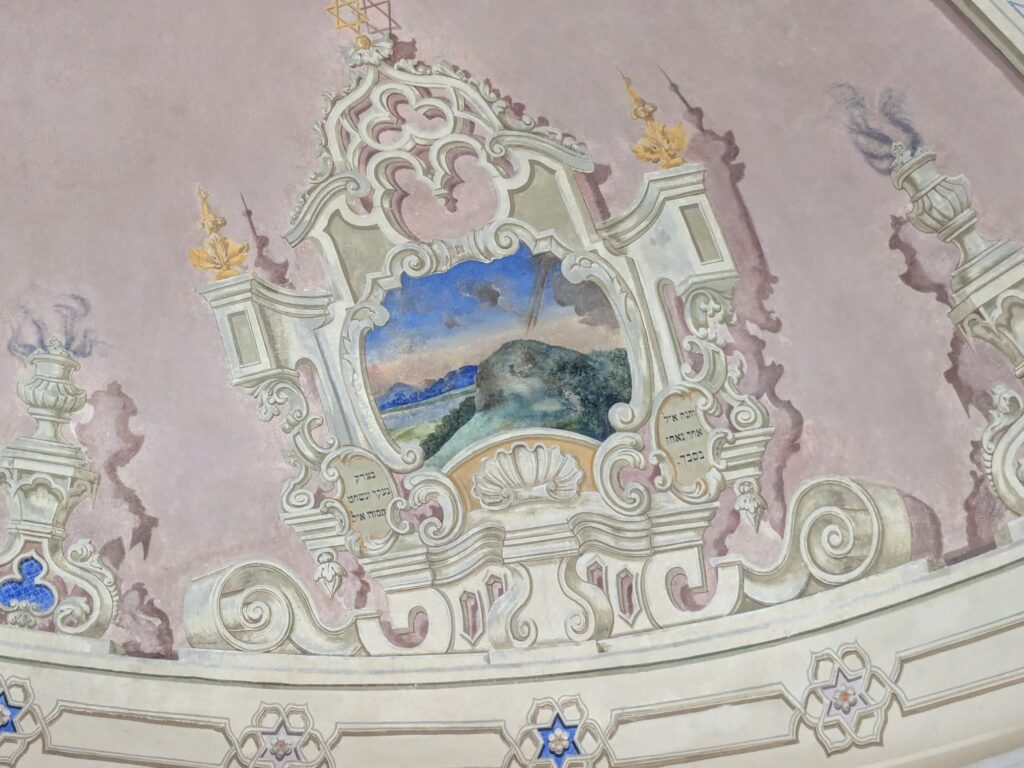
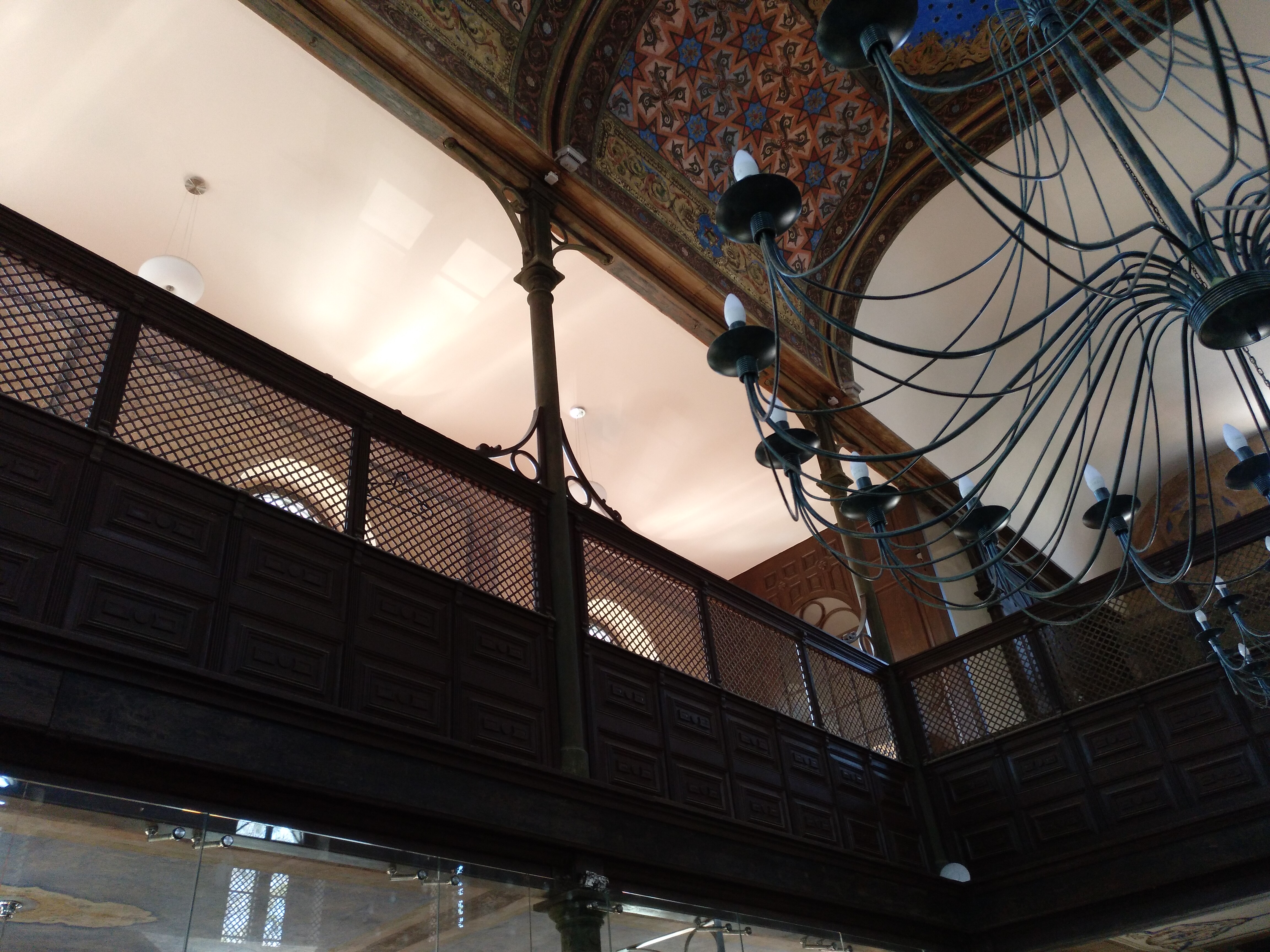
The floors are covered with beautifully laid out tiles and the walls, be they flat or curved, are covered with colourful decorations and artful mimicry of (much more expensive) stucco.

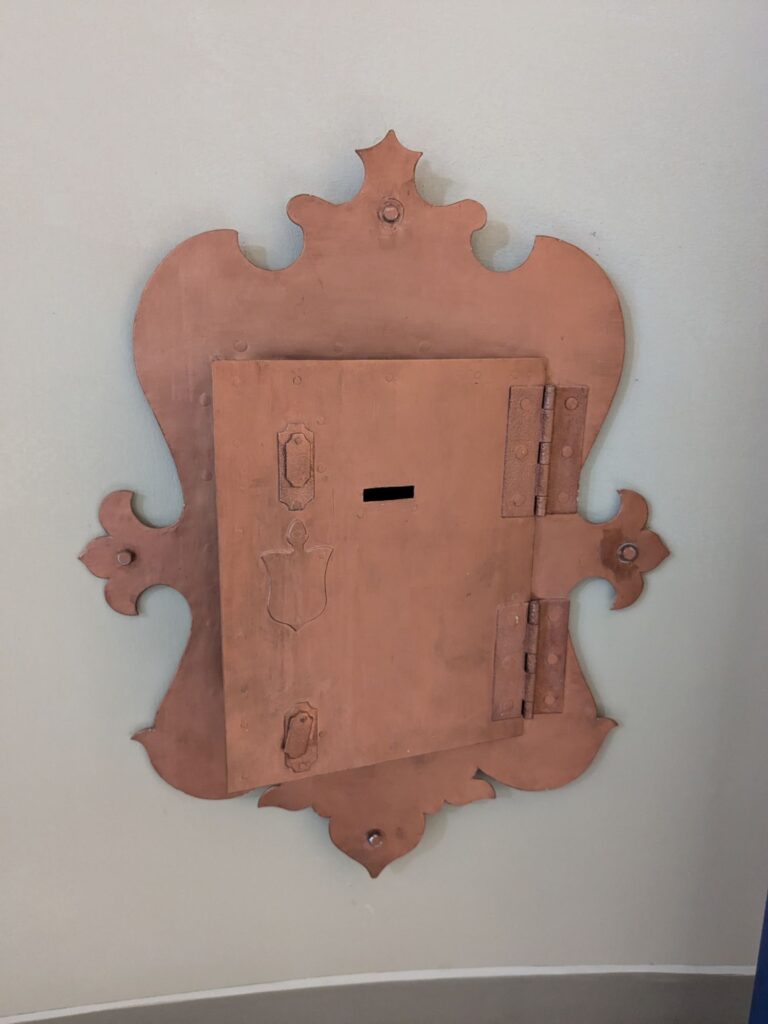
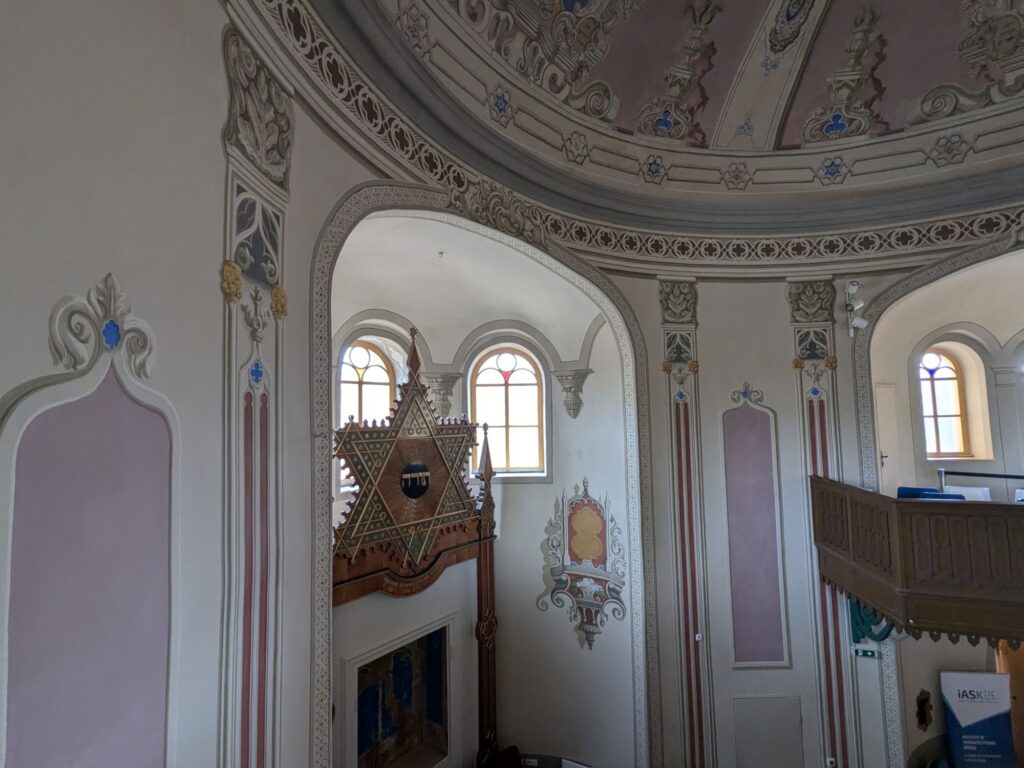
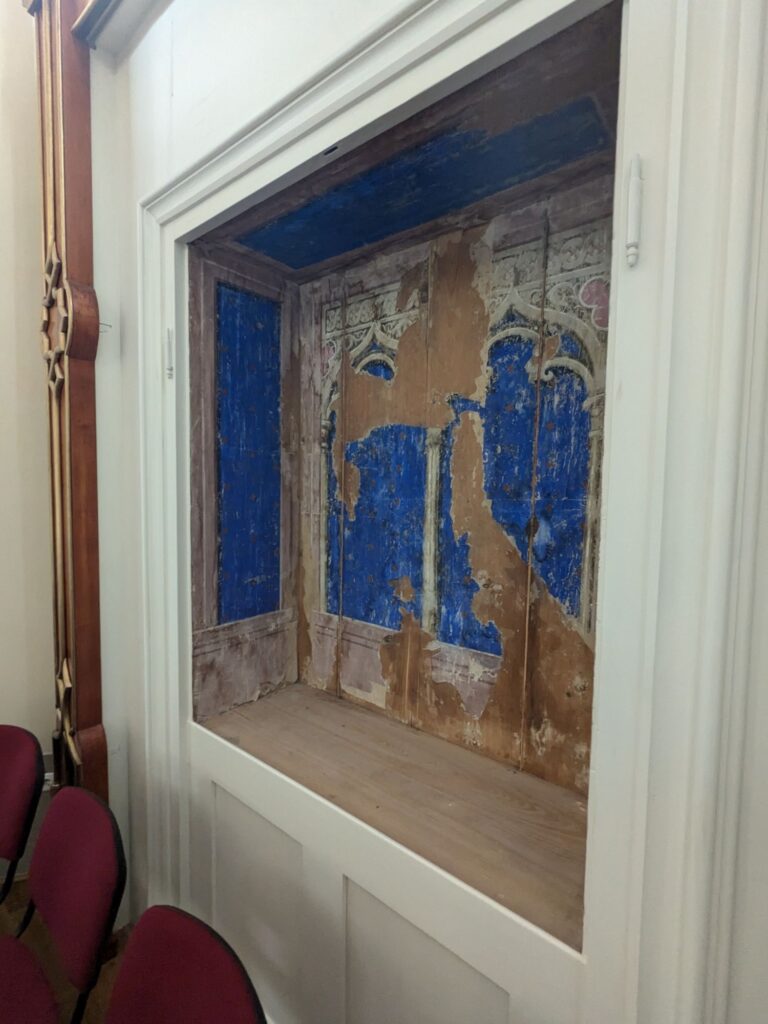
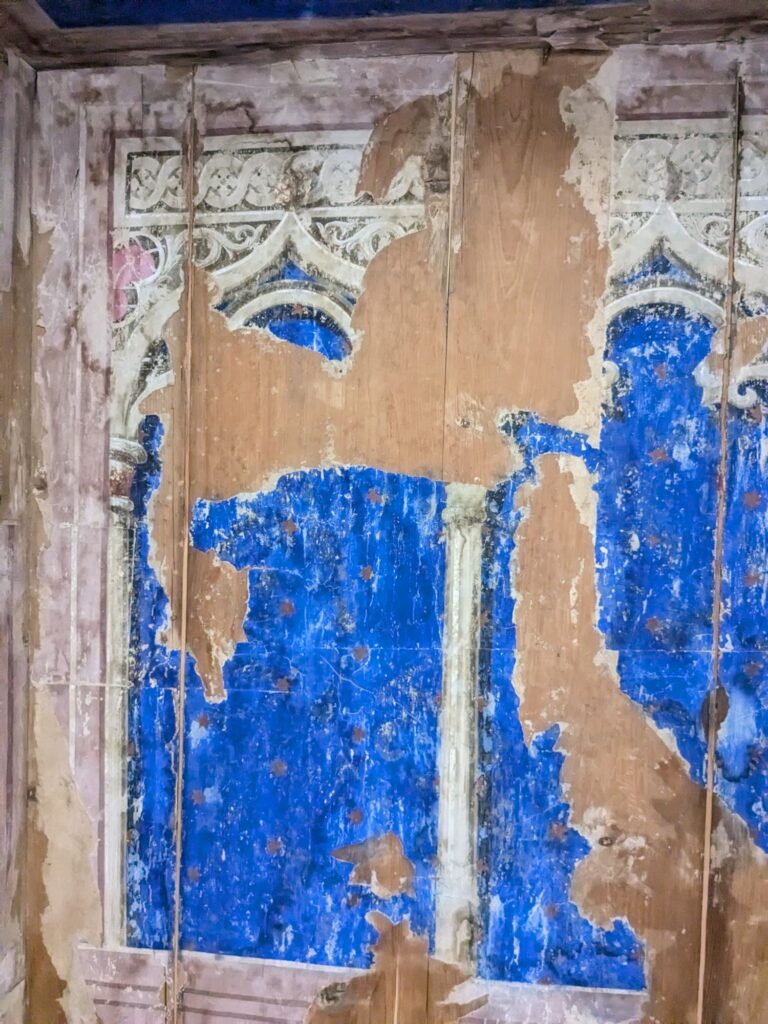
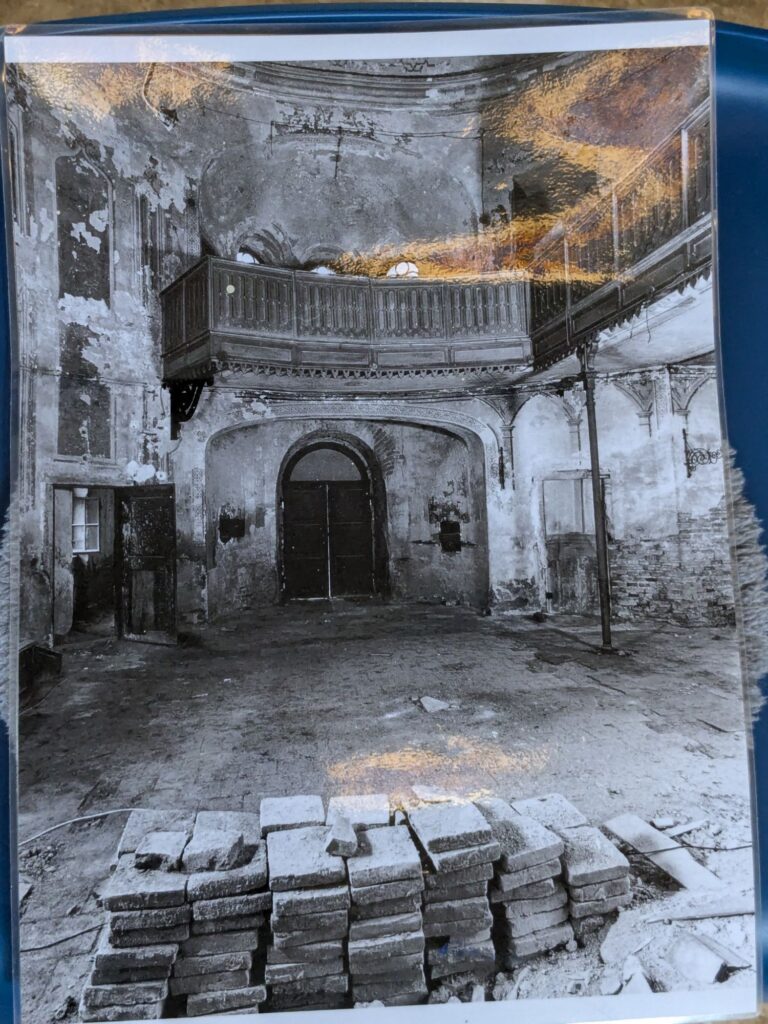
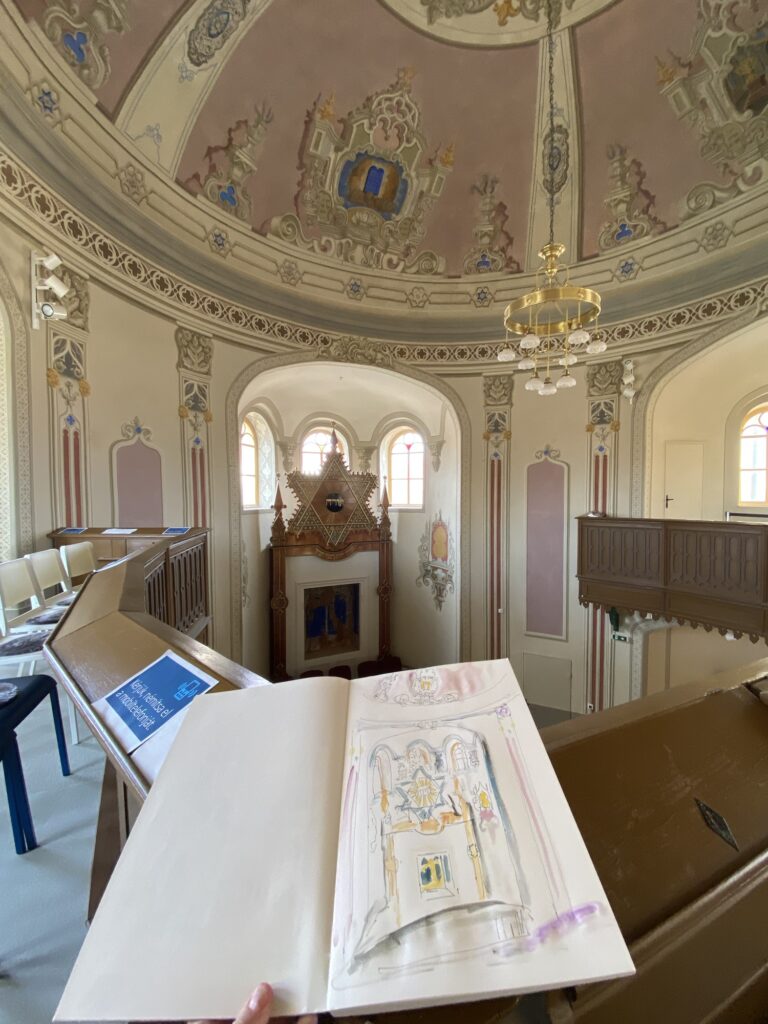
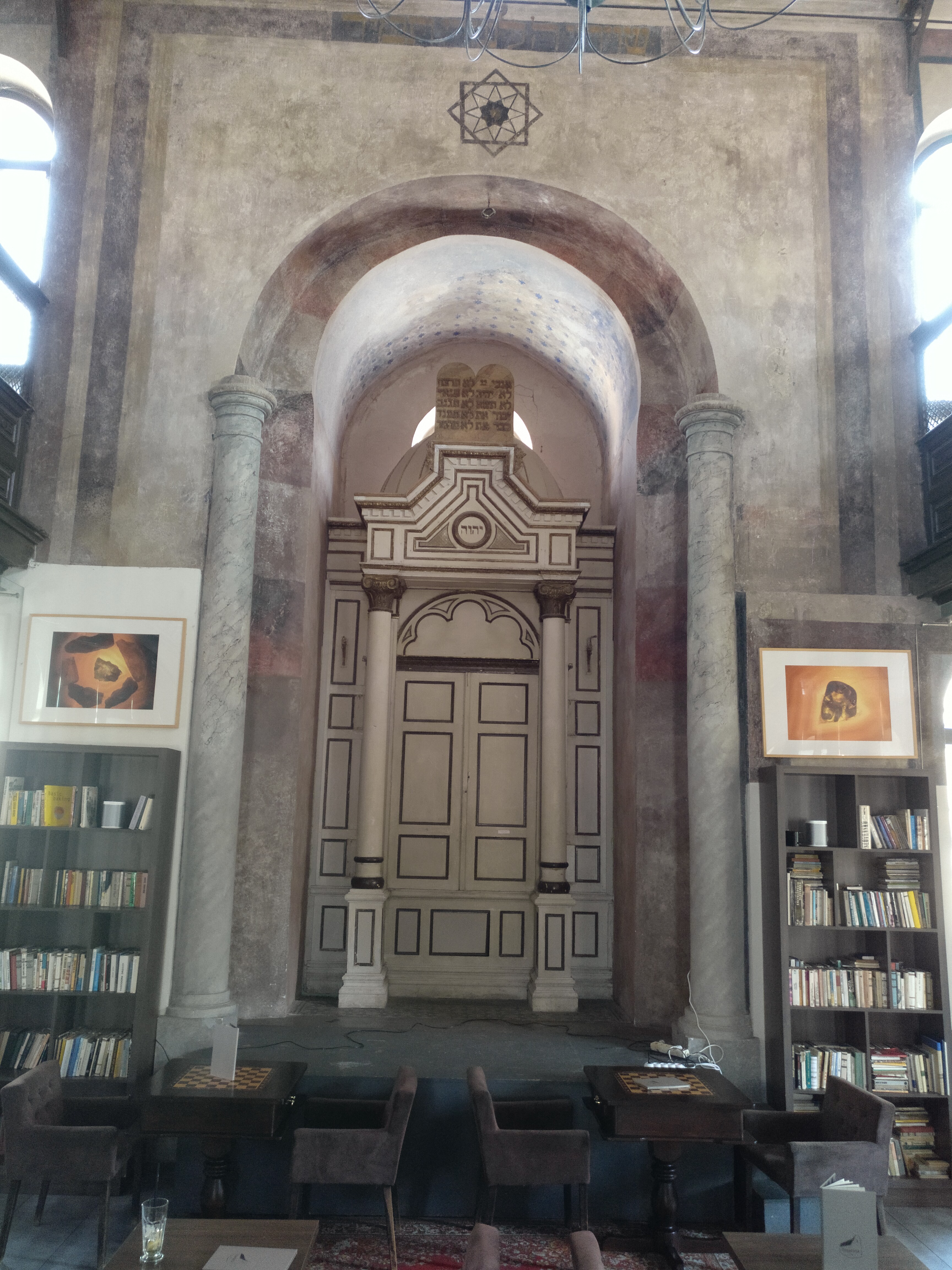
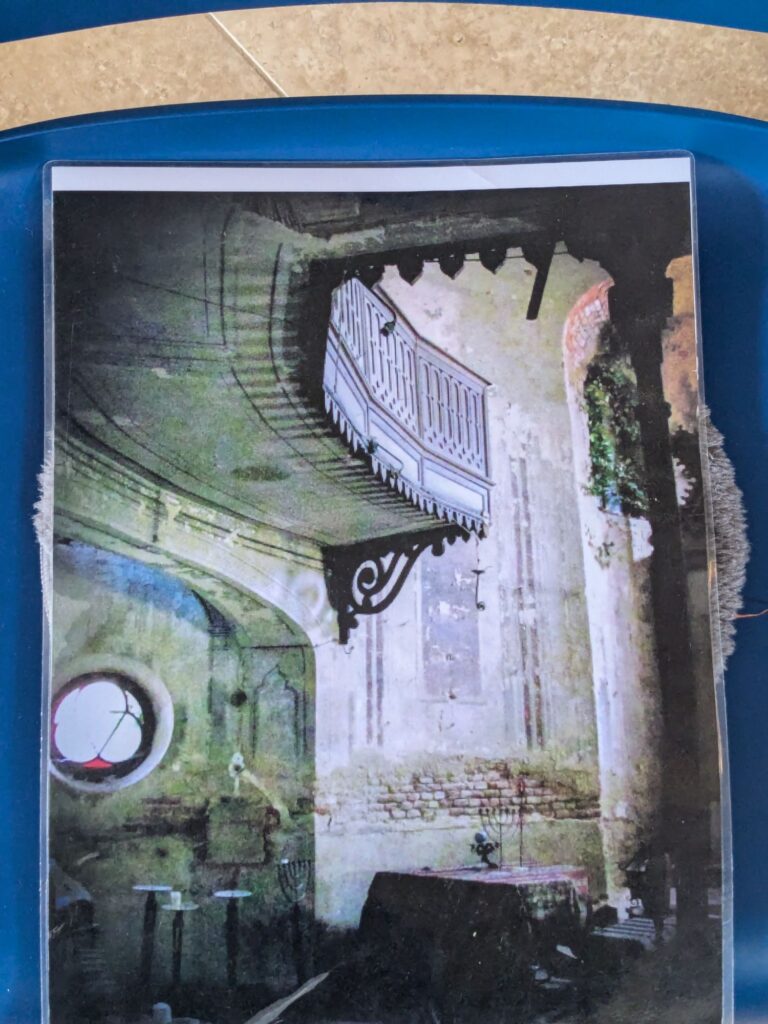
The place has been marvelously well renovated (there are photographs on display showing what it looked like just a few years ago). Only the Aron Kodesh apparently has been left at it was: without doors, without a curtain and without the former (no doubt intricate) ornaments.

It appears to me that leaving the Aron Kodesh as it was must have been a conscious choice, and a good one. It reminds us that this house of worship has been destroyed and no amount of painstaking renovation can repair the damage: the destruction of a vibrant and proud Jewish community.

Sadly, the architect of this beautiful Synagogue is unknown. No doubt he was a great artist. The sponsor, however, Mr. Schey was a well-known businessman who — among other enterprises — helped build railway lines throughout the Habsburgs’ lands.

When the Synagogue was inaugurated in 1860, the ceremony was attended by (at least in hindsight) illustrious guests from Vienna: Chief Rabbi Adolf Jellinek and Chief Cantor Salomon Sulzer along with members of the Viennese Tempelchor. The latter fact, of course, makes me feel especially connected to this place.
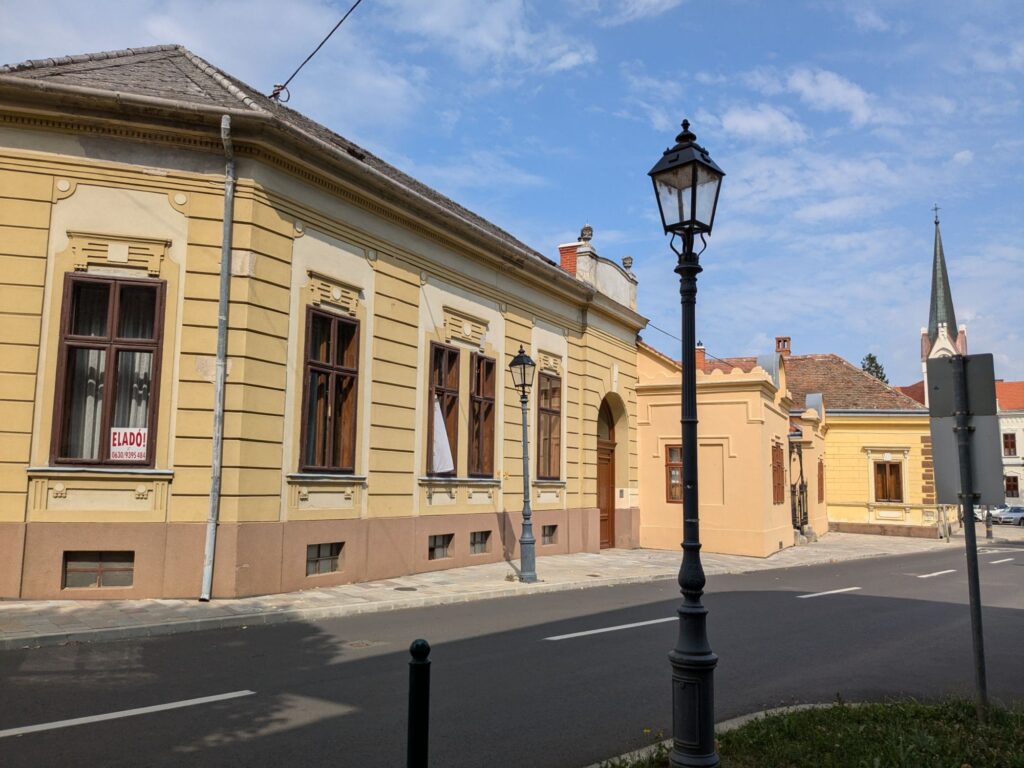
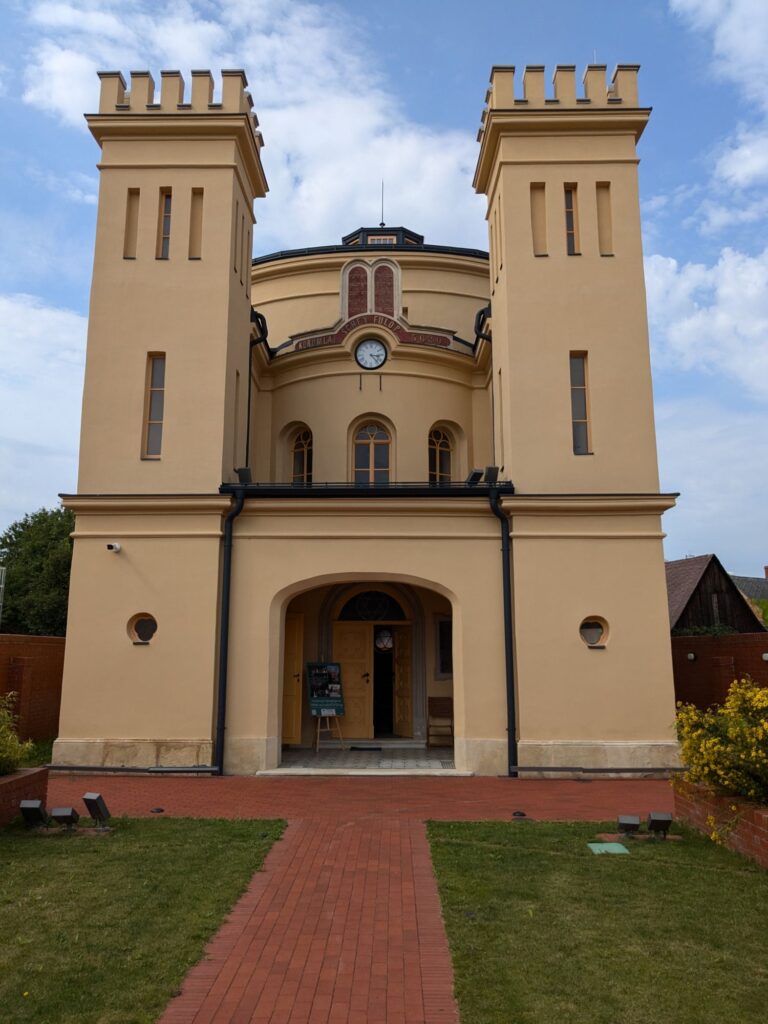
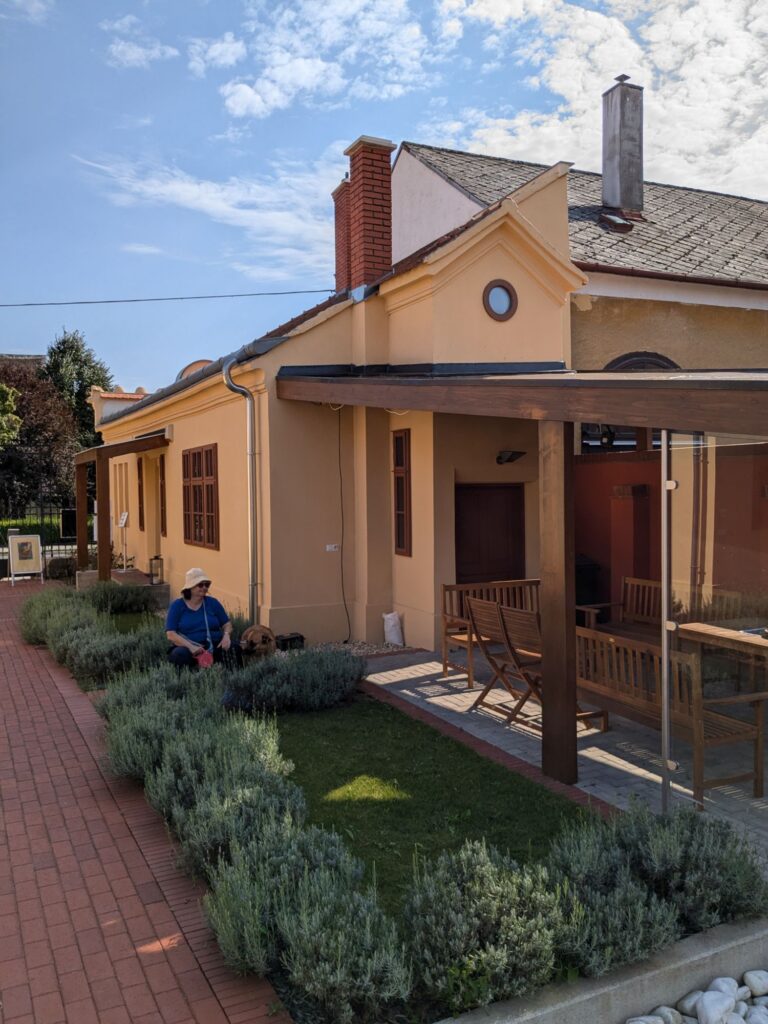
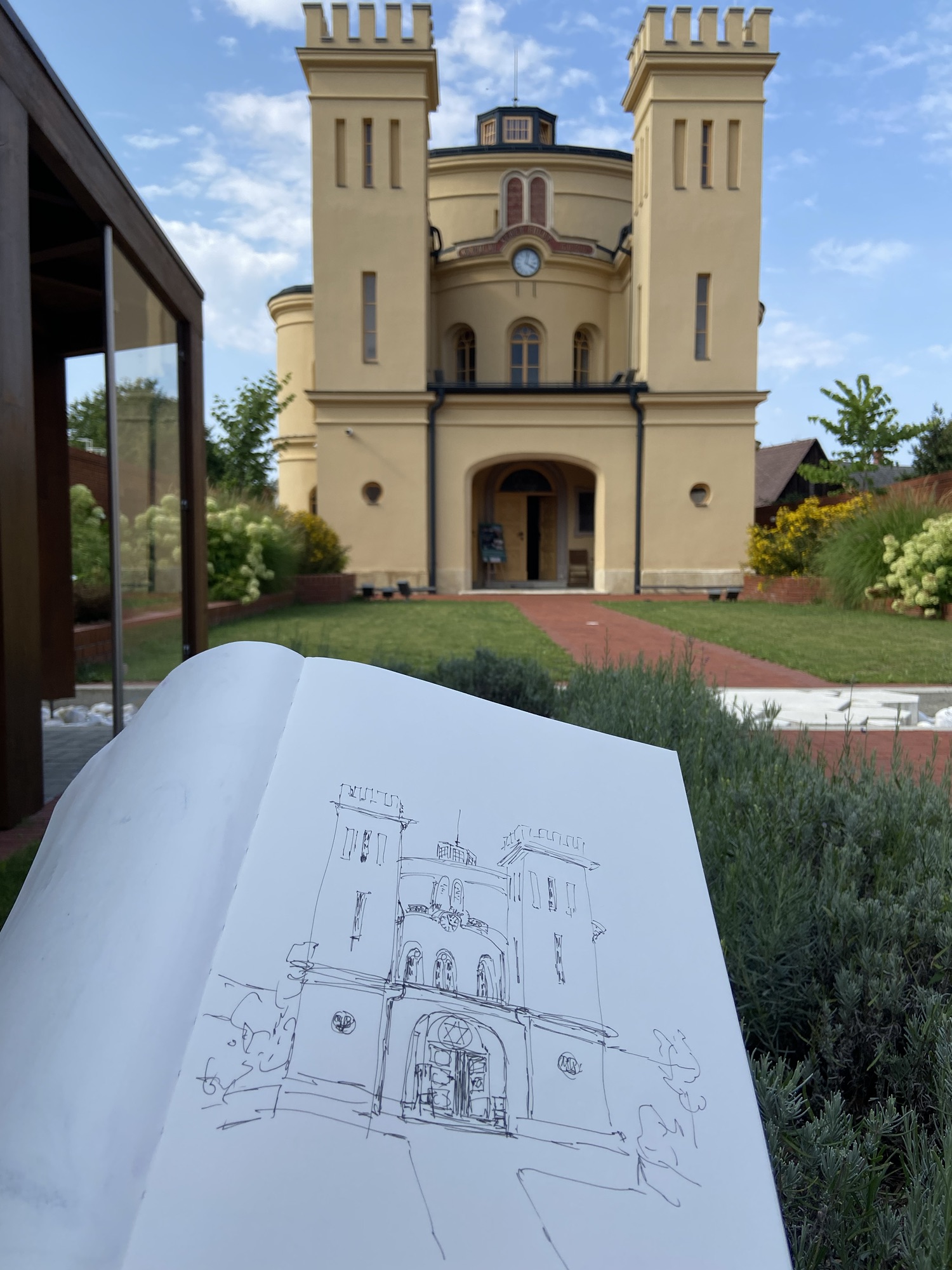
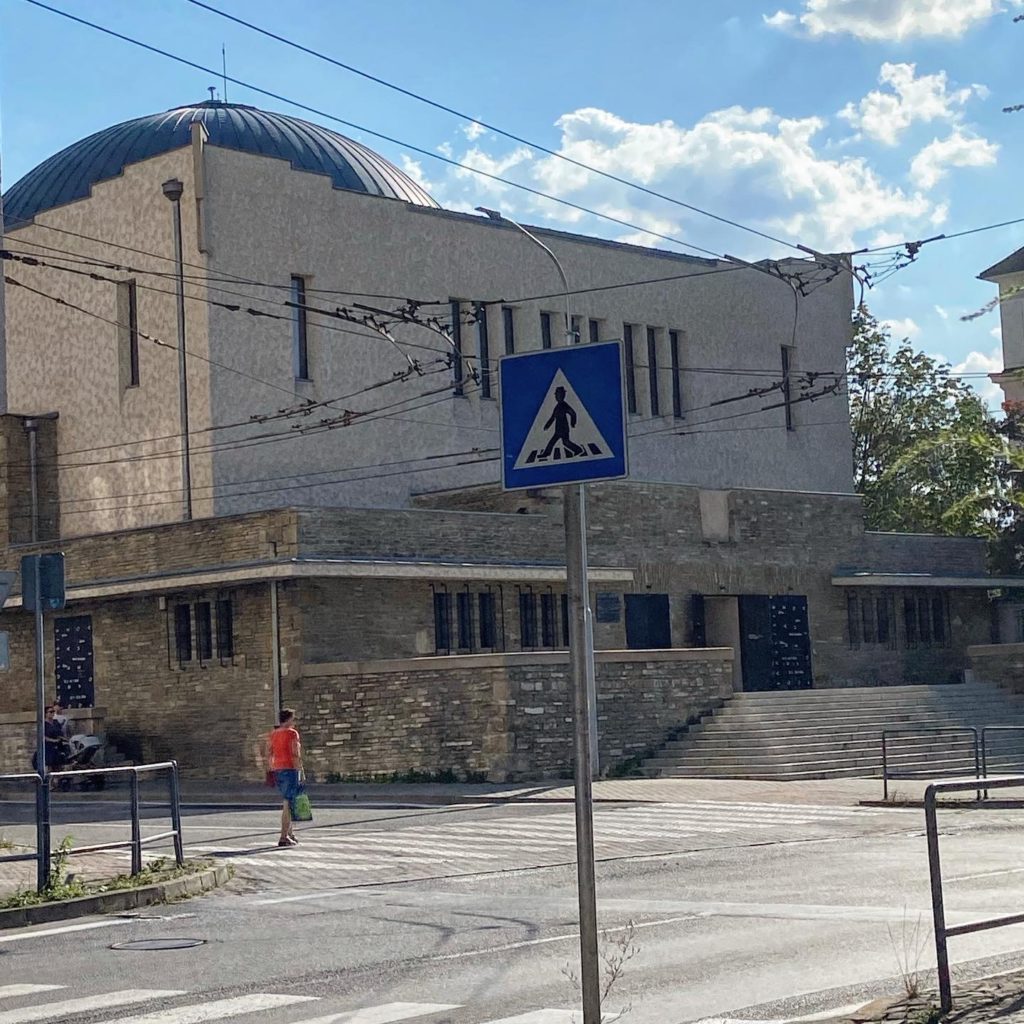
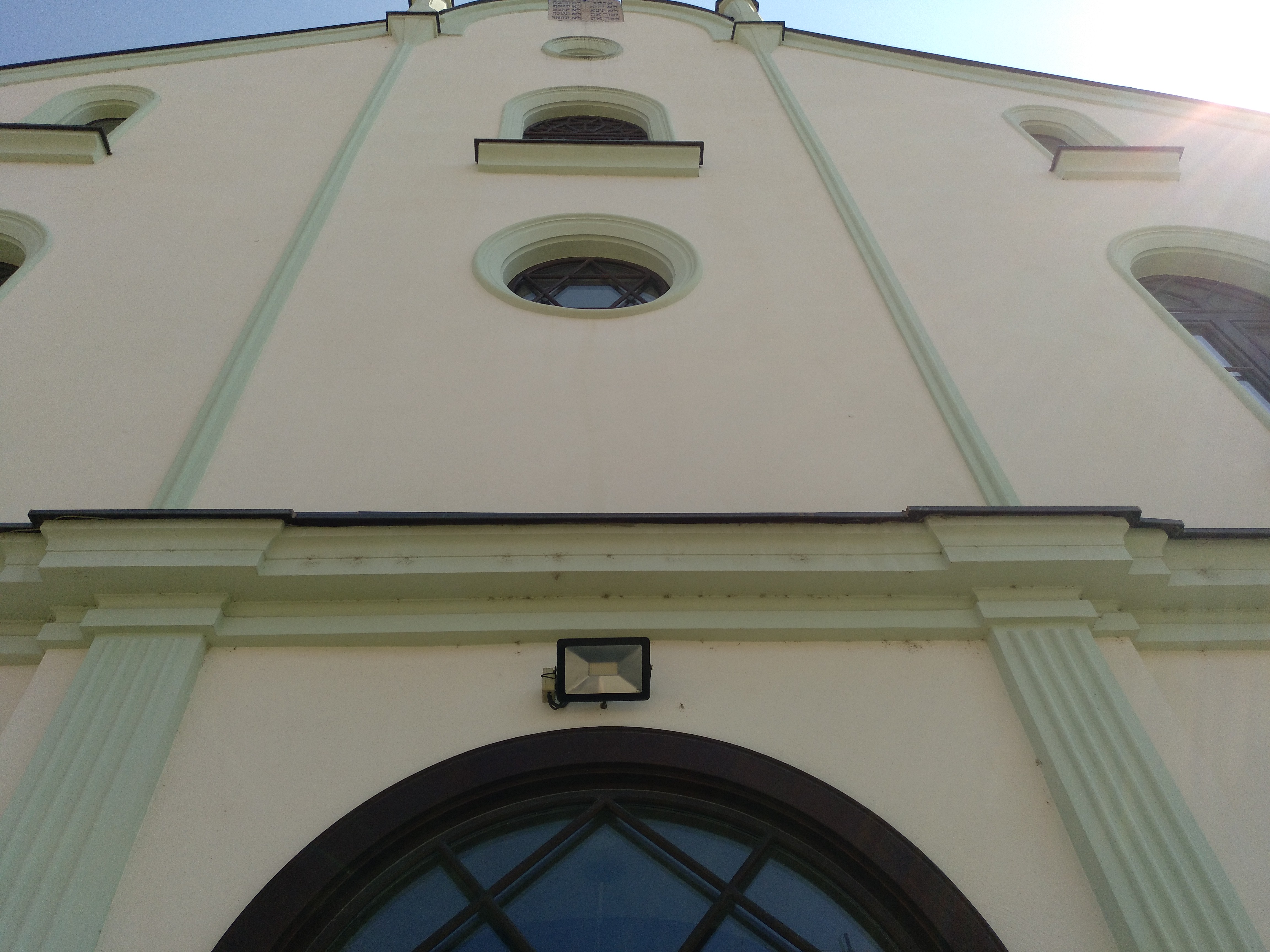
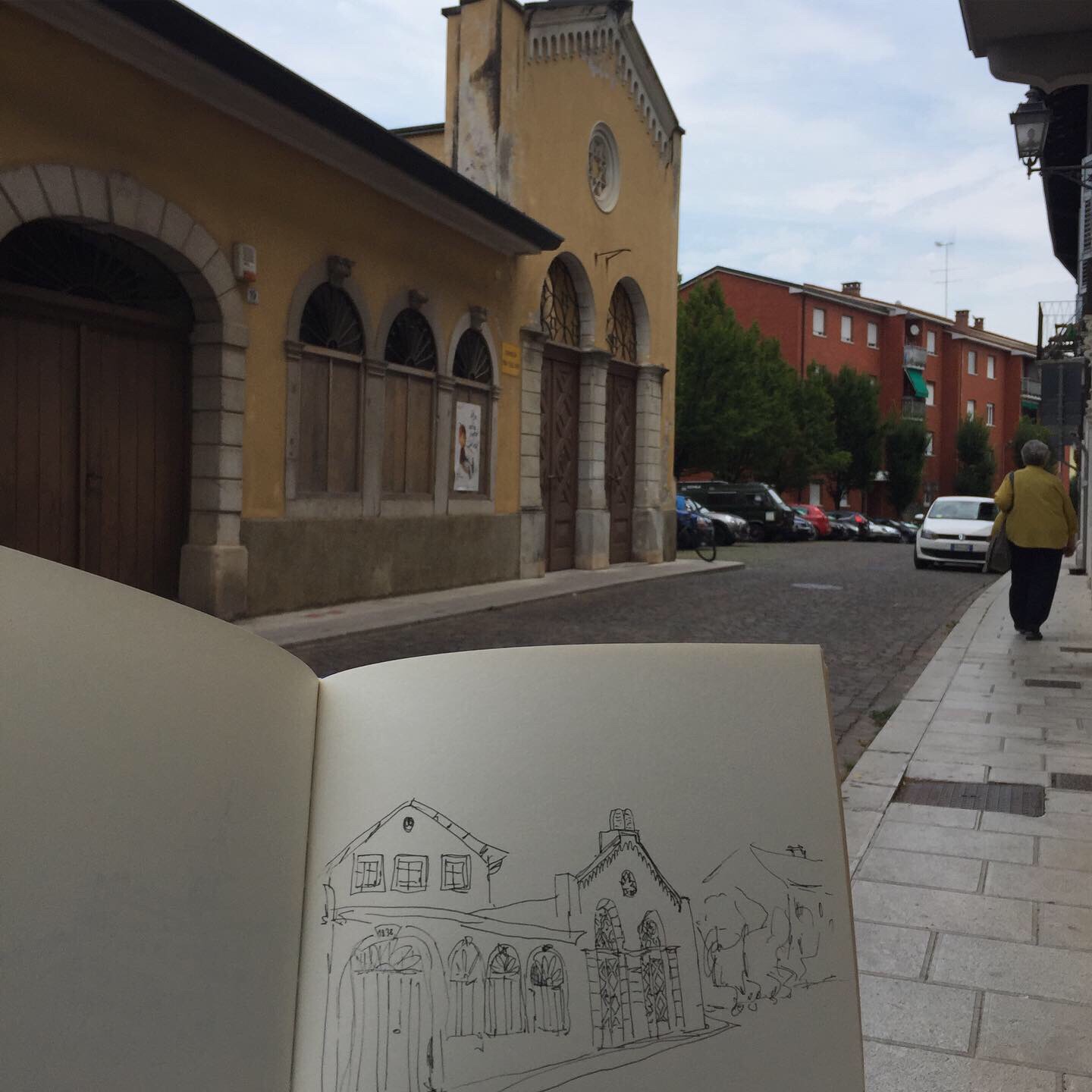
Seen from the street
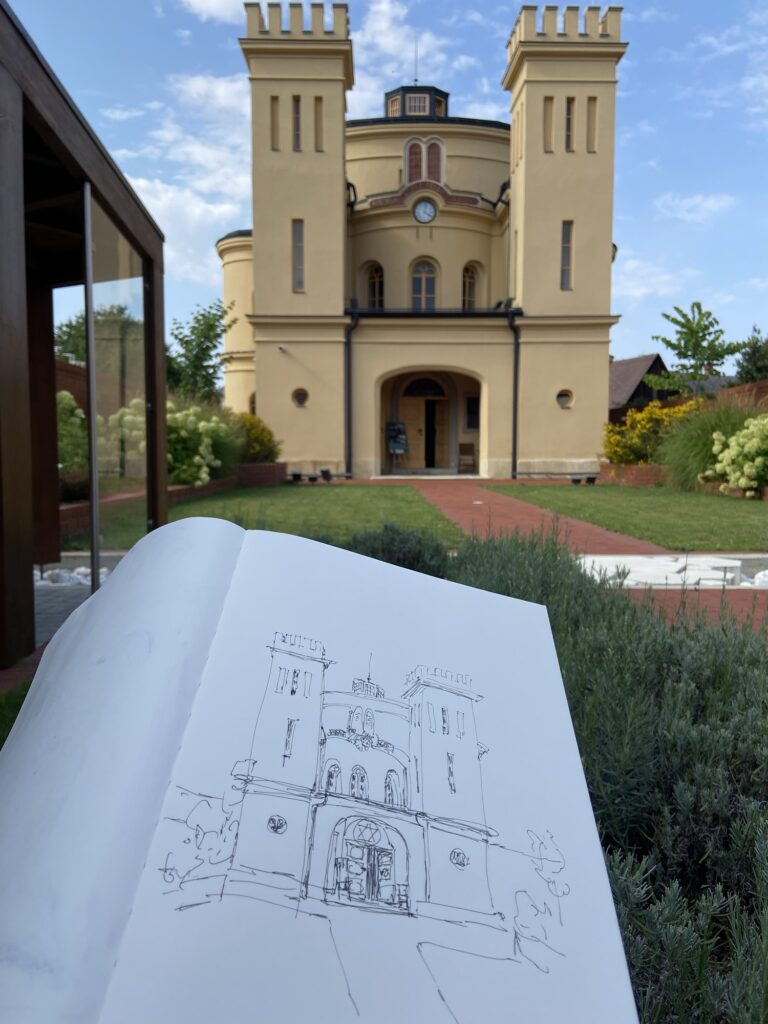
From the park across the street
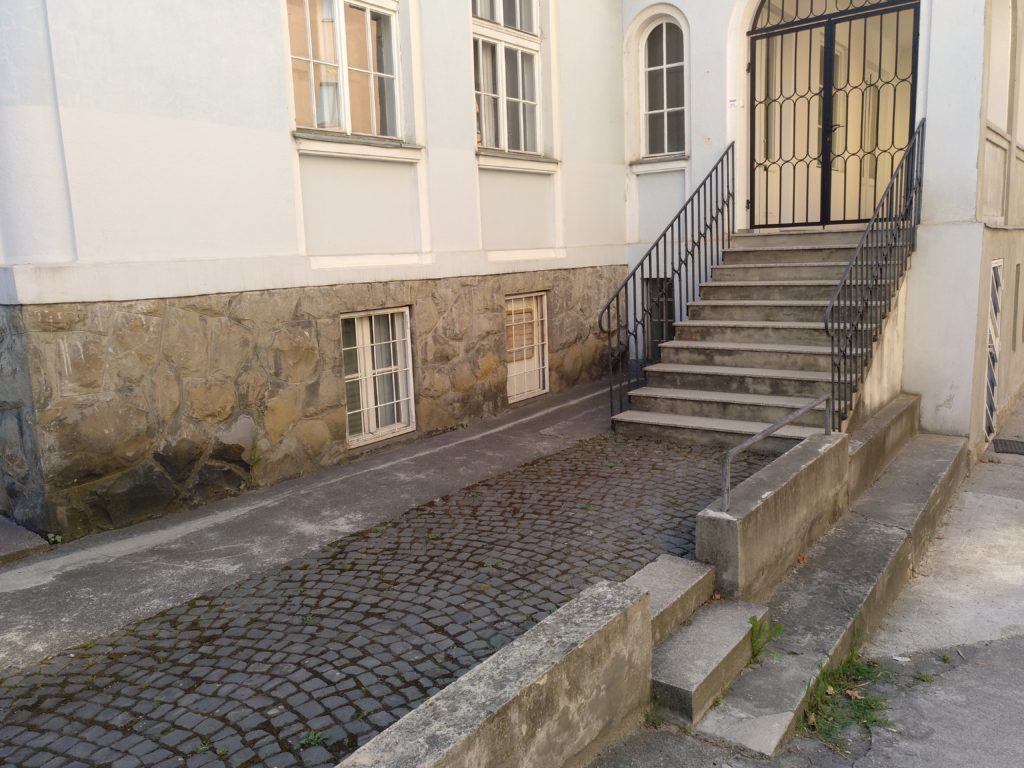
The rabbi’s house contains a small exhibition

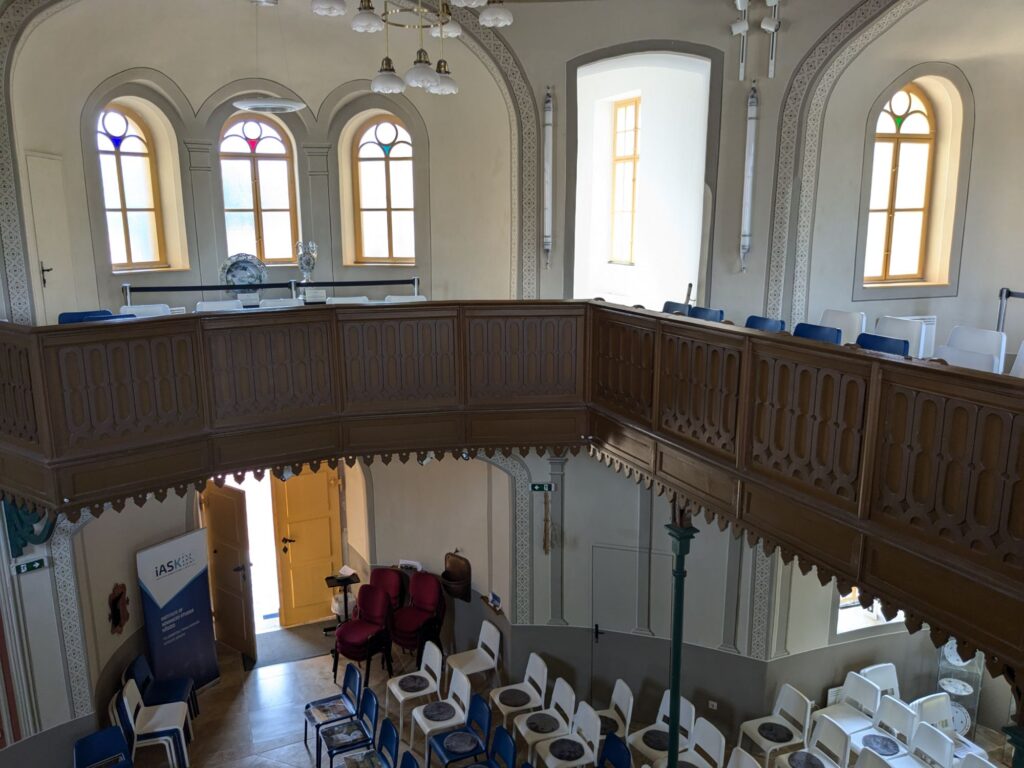
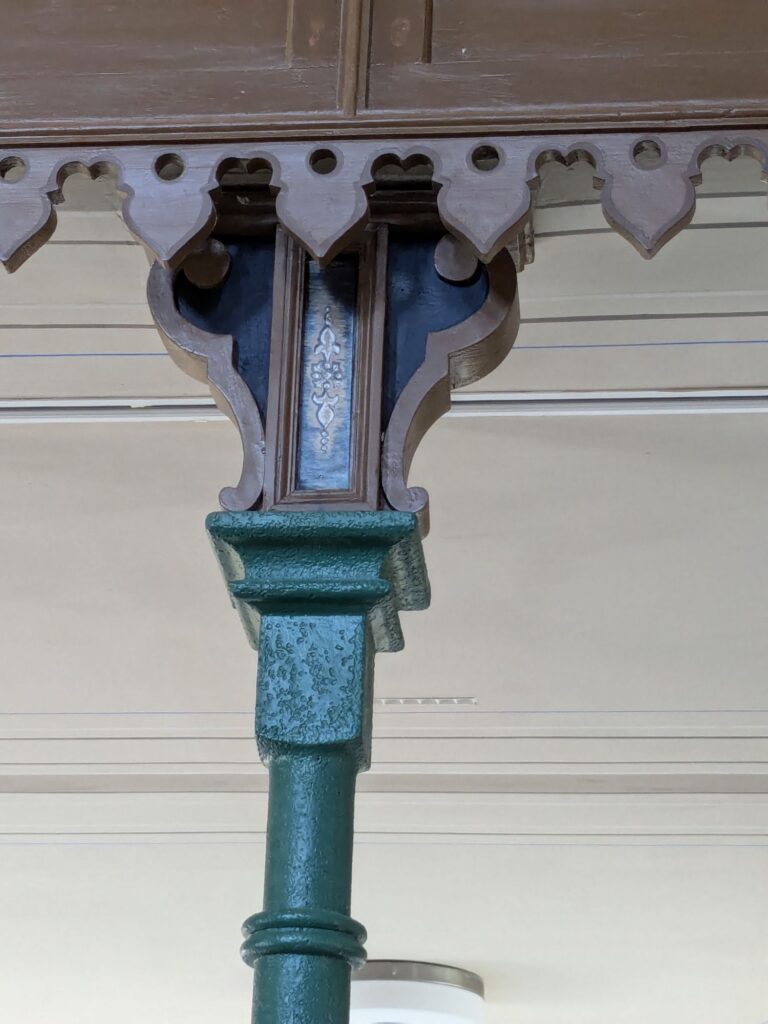
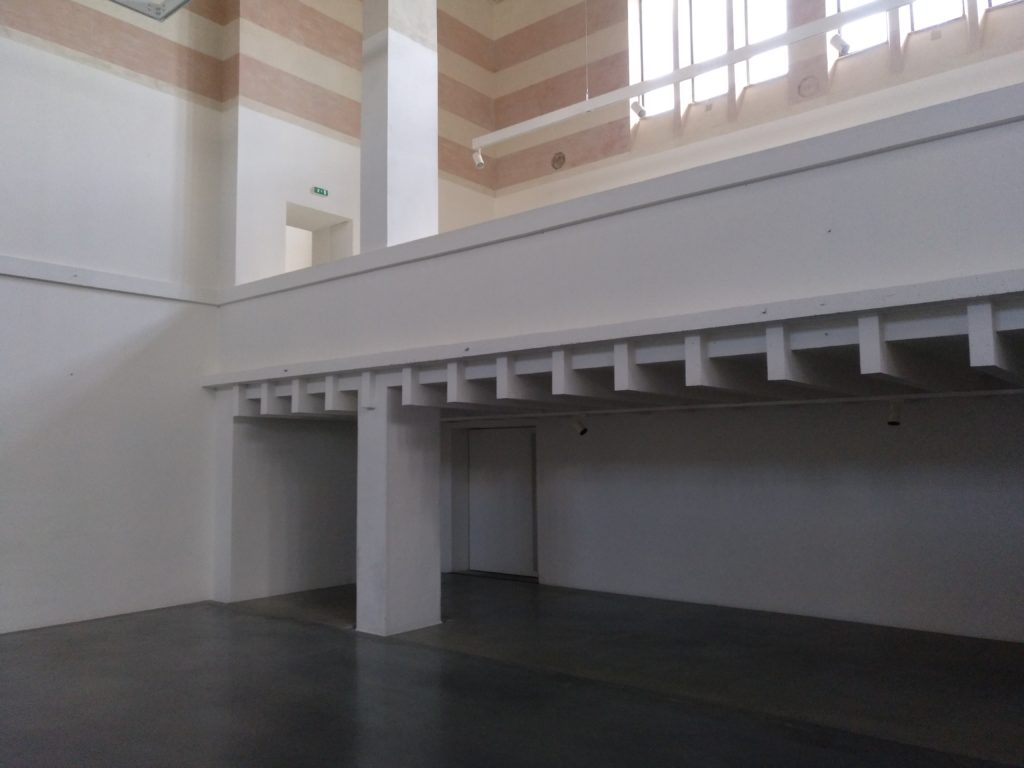
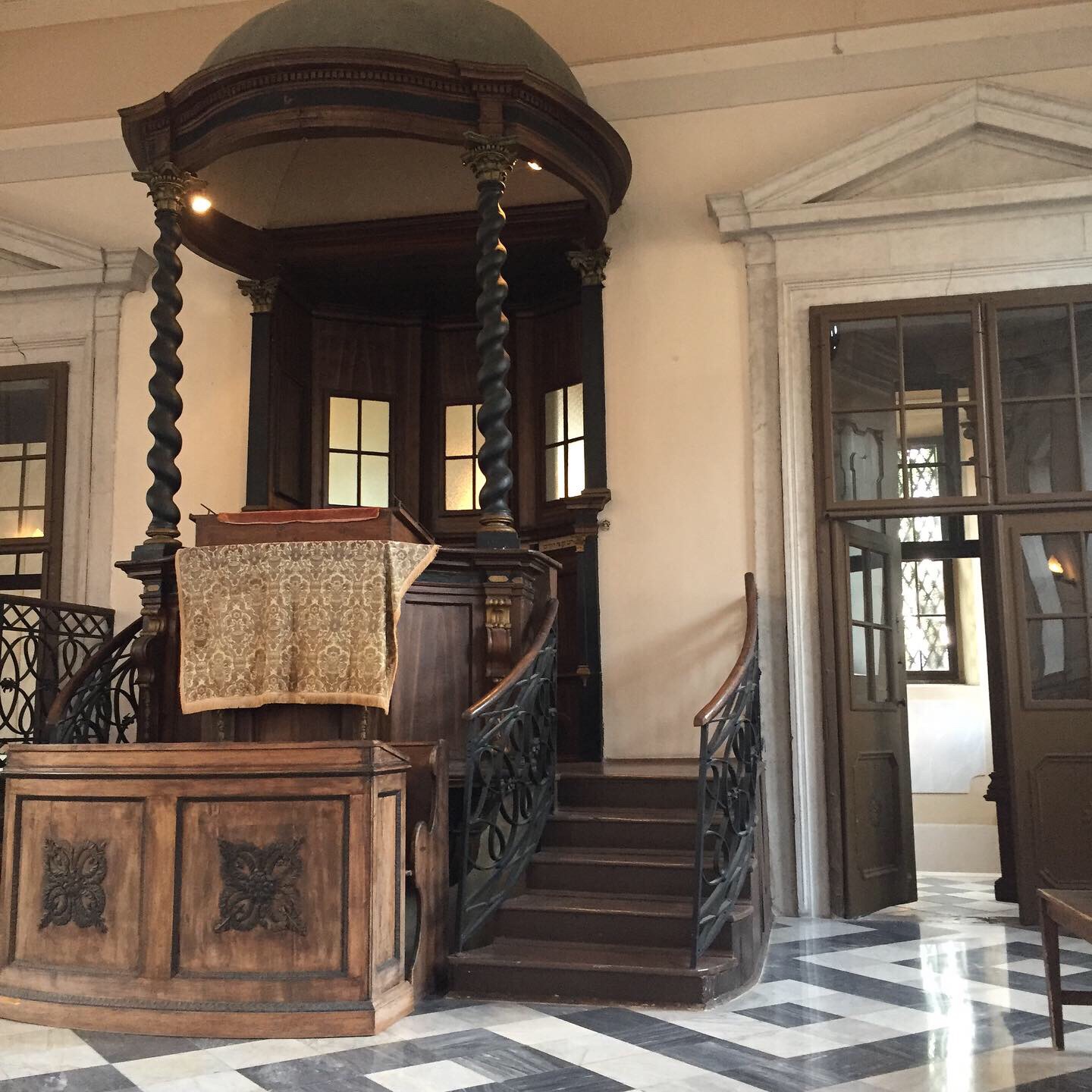
Some photographs of the interior:

Give Zdoke!
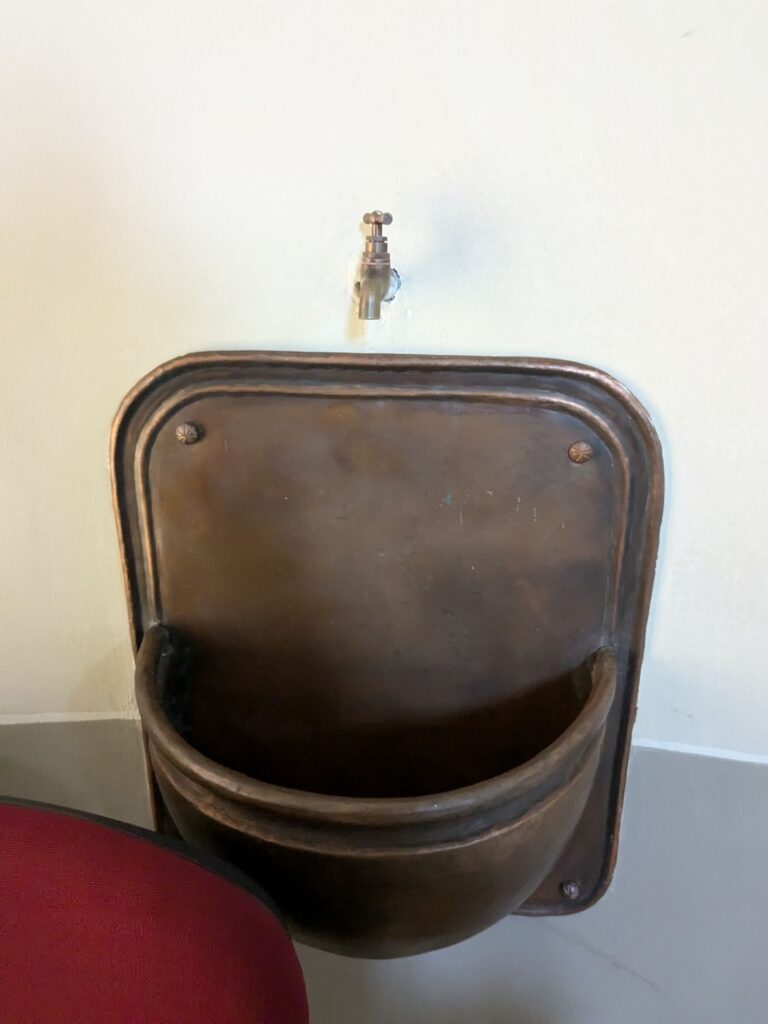
Before prayer, wash your hands!
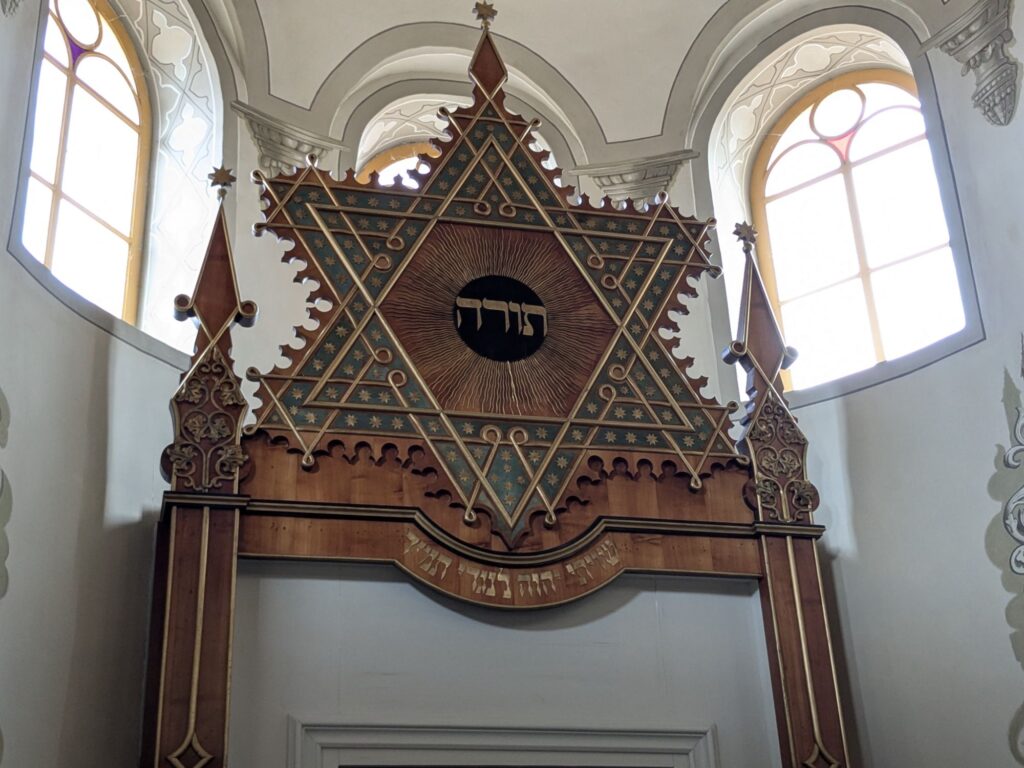
The Aron Kodesh
The Aron Kodesh

Some photos from before the renovations:
The Köszeg Synagogue: A Jewel that must be seen

If one knows baroque Catholic Churches or just buildings from the baroque period, this is the place to go. From the outside you won‘t get the impression what to expect: a real baroque jewel.

The synagogue has been renovated recently and this work is really impressive. It shows what is possible even if it looks everything but encouraging. What has been done here is really encouraging. Thanks for all this hard work! It was worth it!

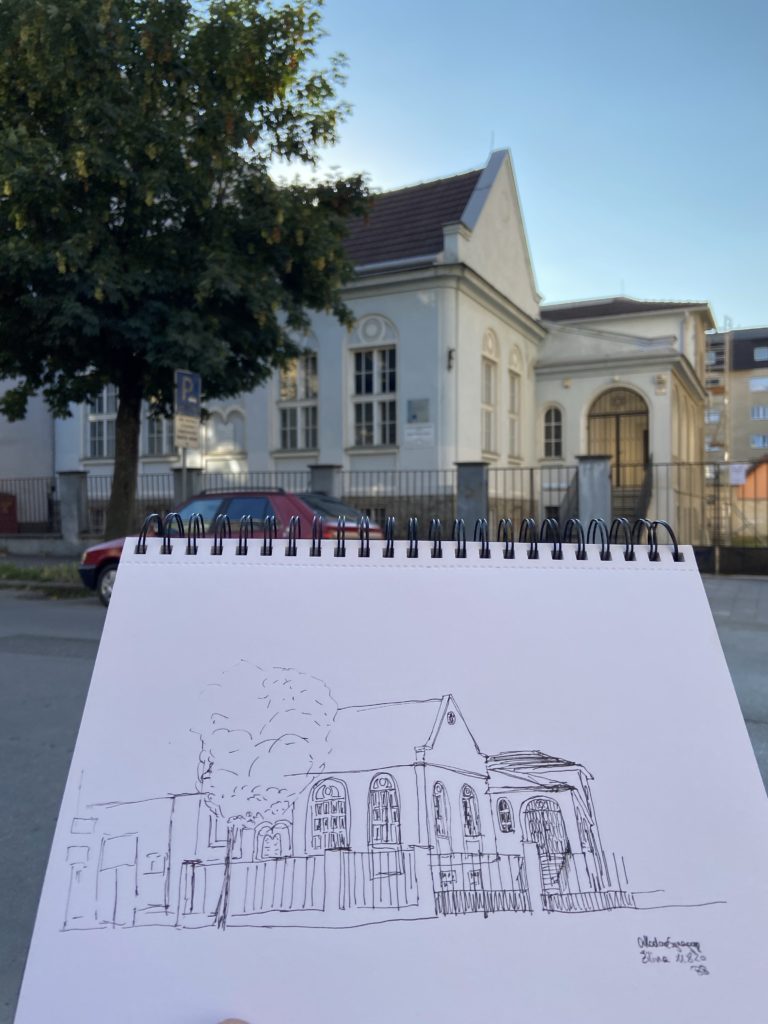
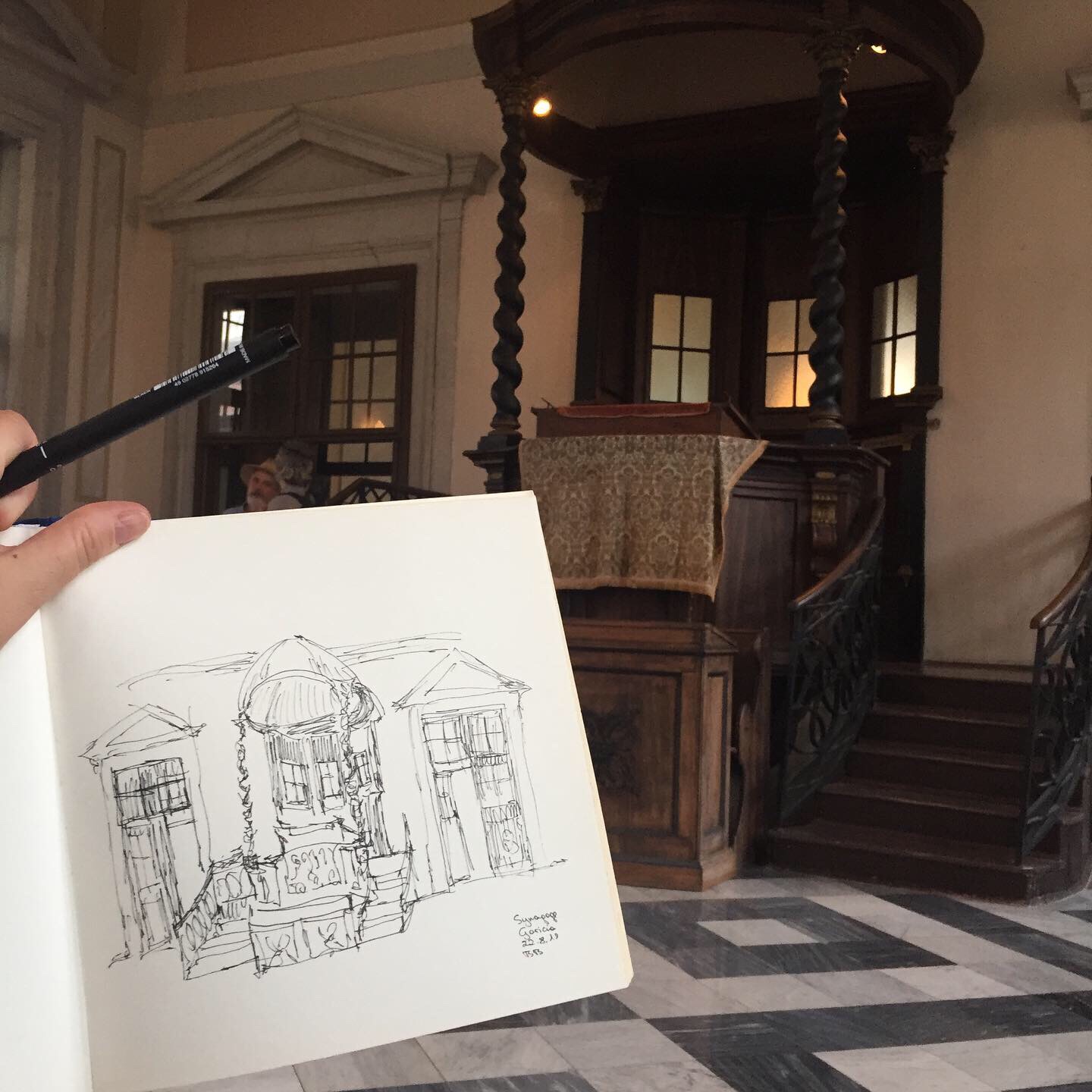
Drawing the outside view of the synagogue. Only if you look closely you can imagine: the inside must be somehow round.

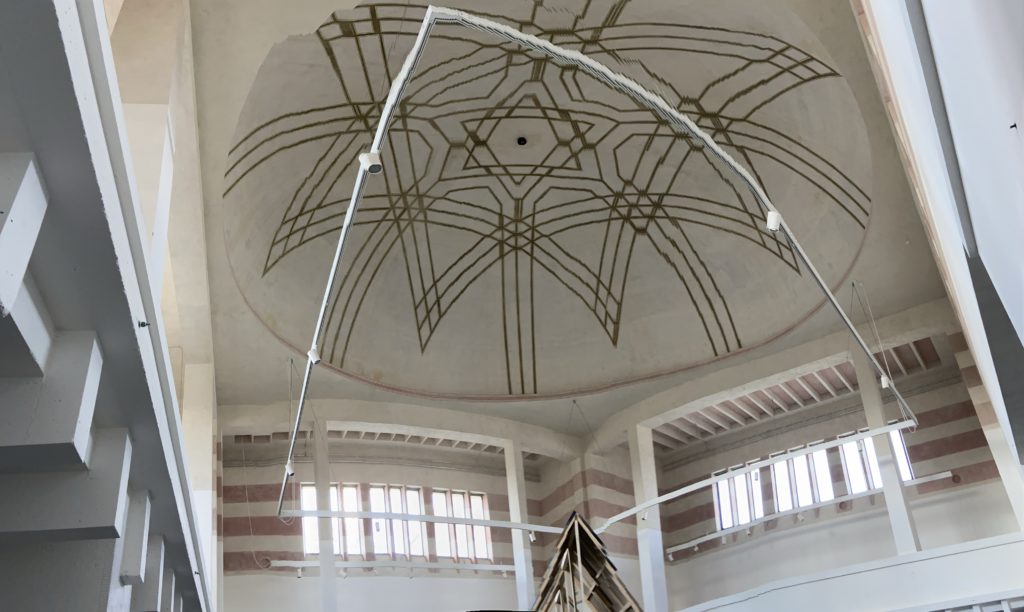
The inside is really something special: mural colouring in baroque style giving the impression of a fancy design.

Difficult to show this place on paper and camera. Go see for yourself!

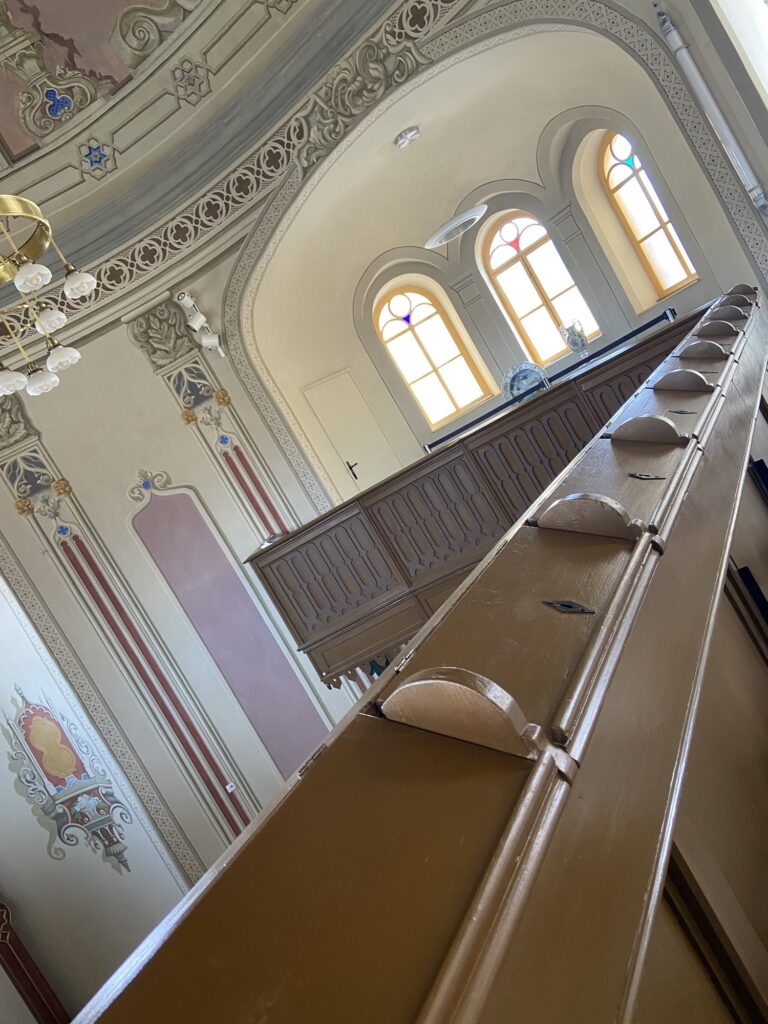
The beauty can be seen better from the women gallery . The stairs are from outside accessible. beautiful wooden stairs have been recreated.

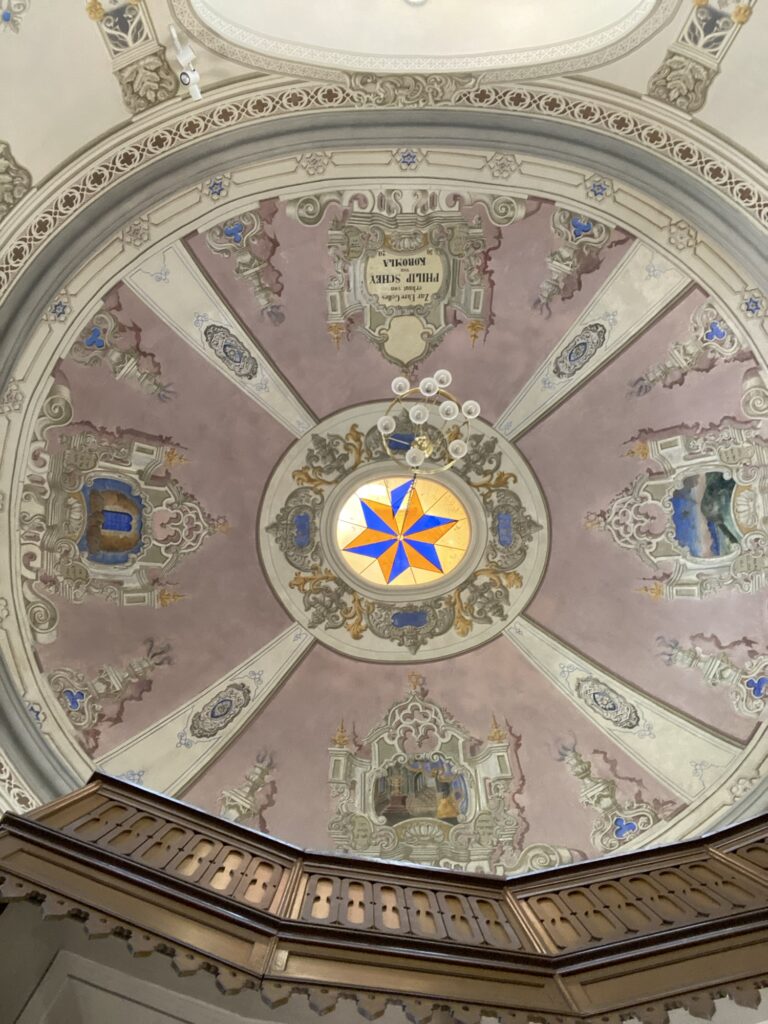
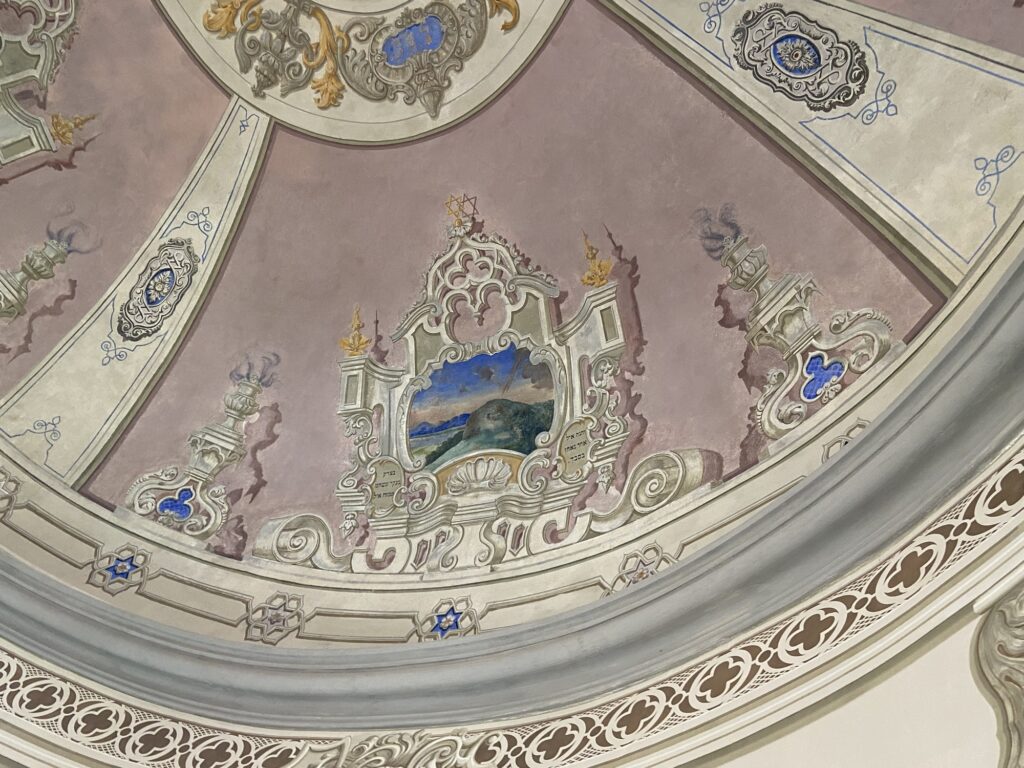
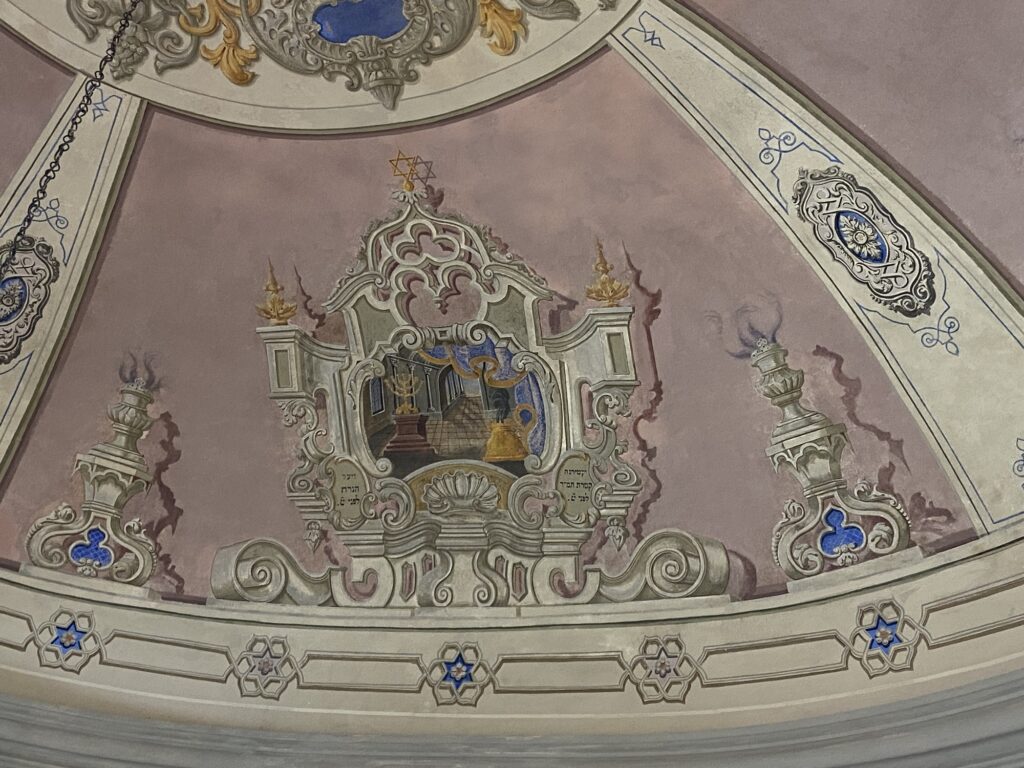
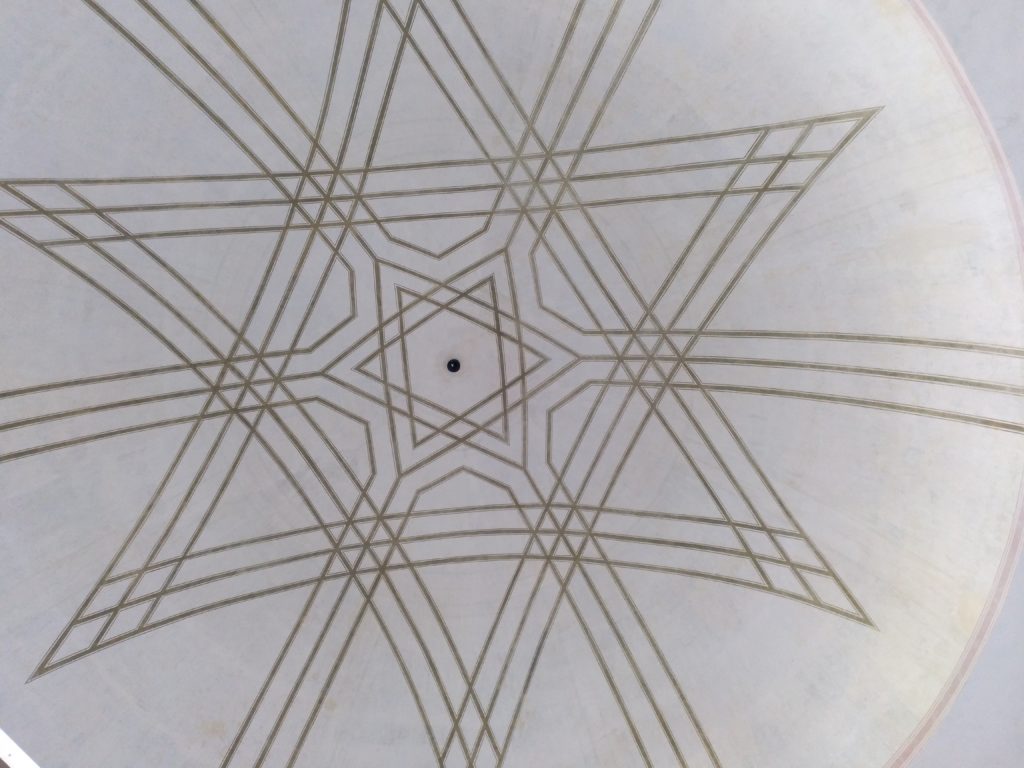
The round ceiling which shapes the roundness of the whole place
The founder of the synagogue is visible at the ceiling painting.
Maybe an image of mount Sinai
Maybe an image of the temple
Womens gallery

In the little museum there are more ideas to visit other synagogues…

Postcards showing Synagogues in Apostag, Tokaj, Mád, Budapest, Szeged, Zalaegerszeg, Köszeg and Szombathely

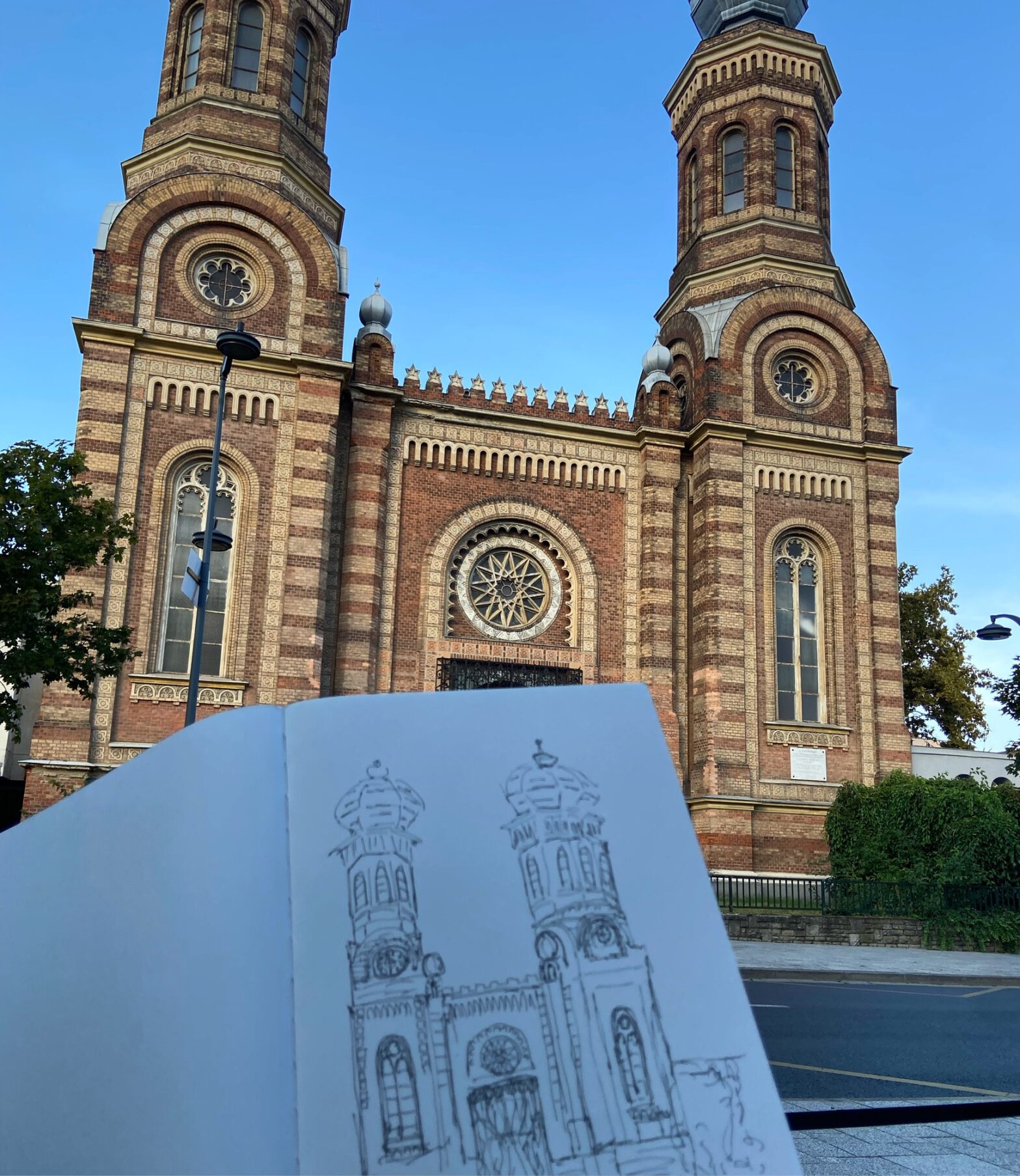
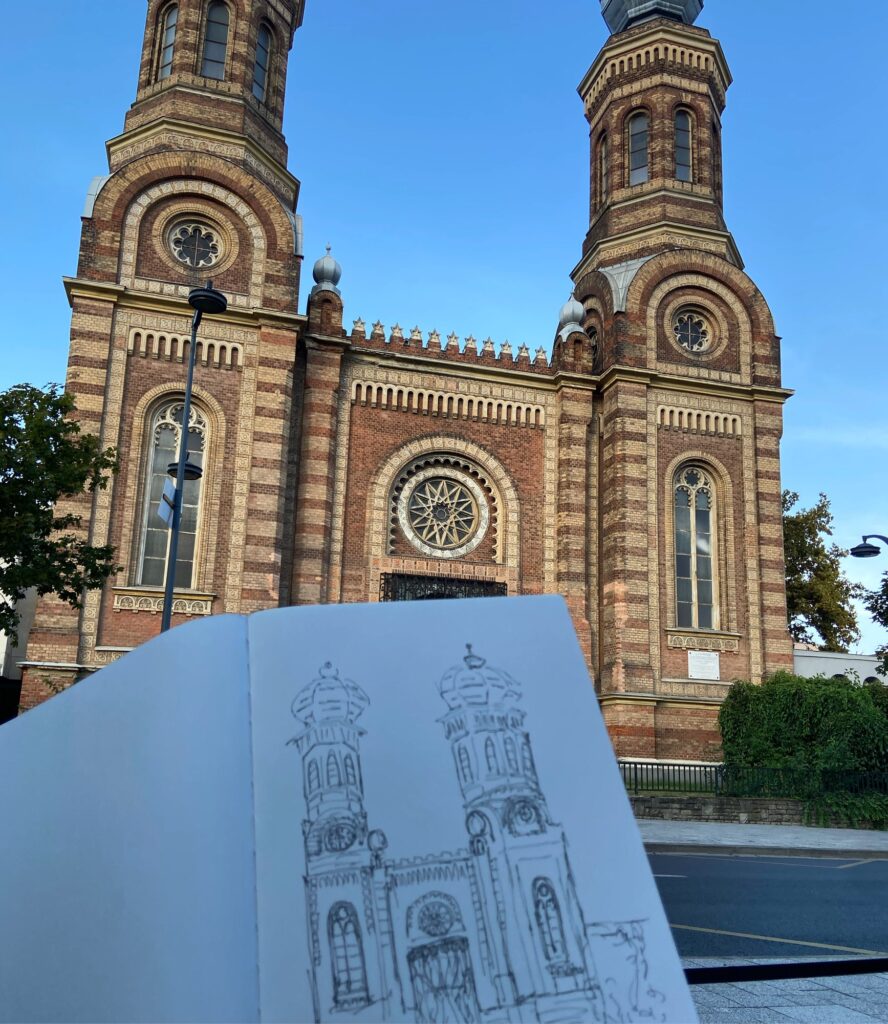
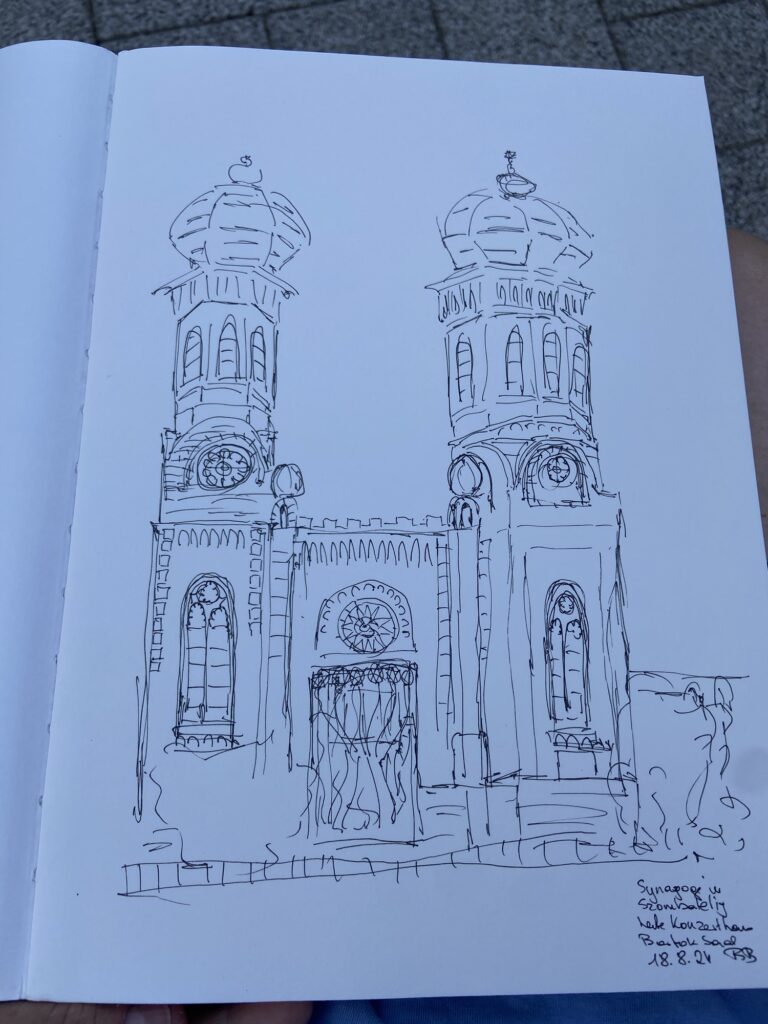
Drawing in Szombathely

An really warm afternoon. Some tourists are around. A small dog passing by. What a great place to draw!

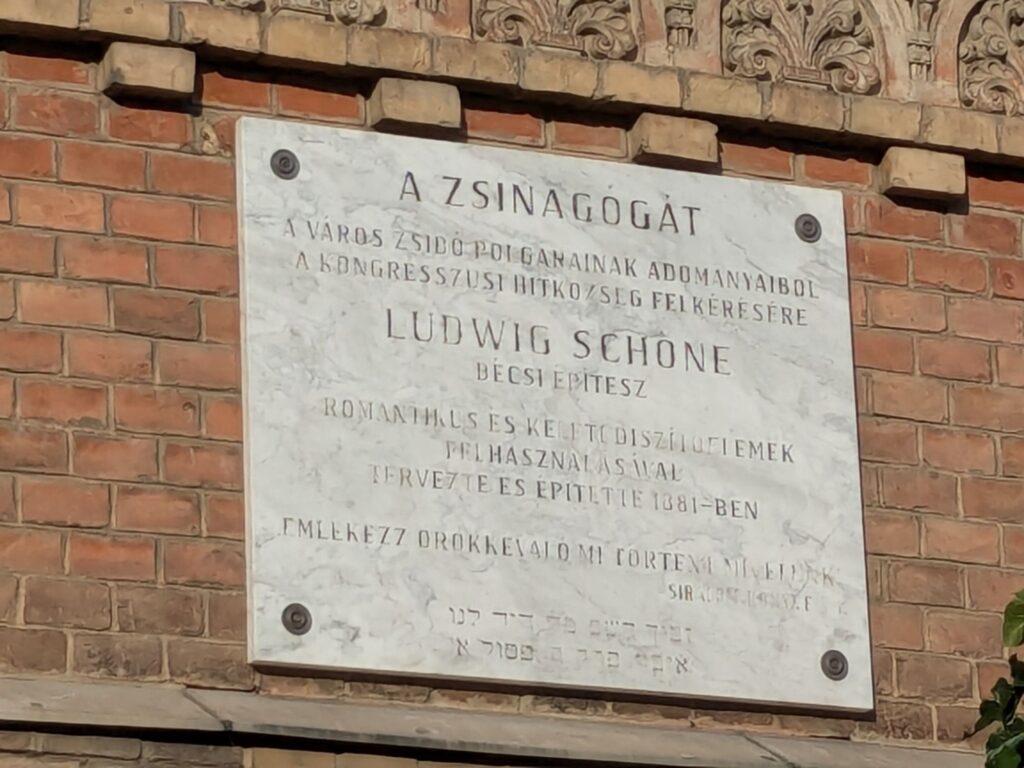
The synagogue is built in a moorish style, as seen on the towers, windows and details.

It was built after 1870, as the Jewish community parted and this building was newly built. Source: Wikipedia

Today it is used as a concert hall for the neighbouring music school/hall.

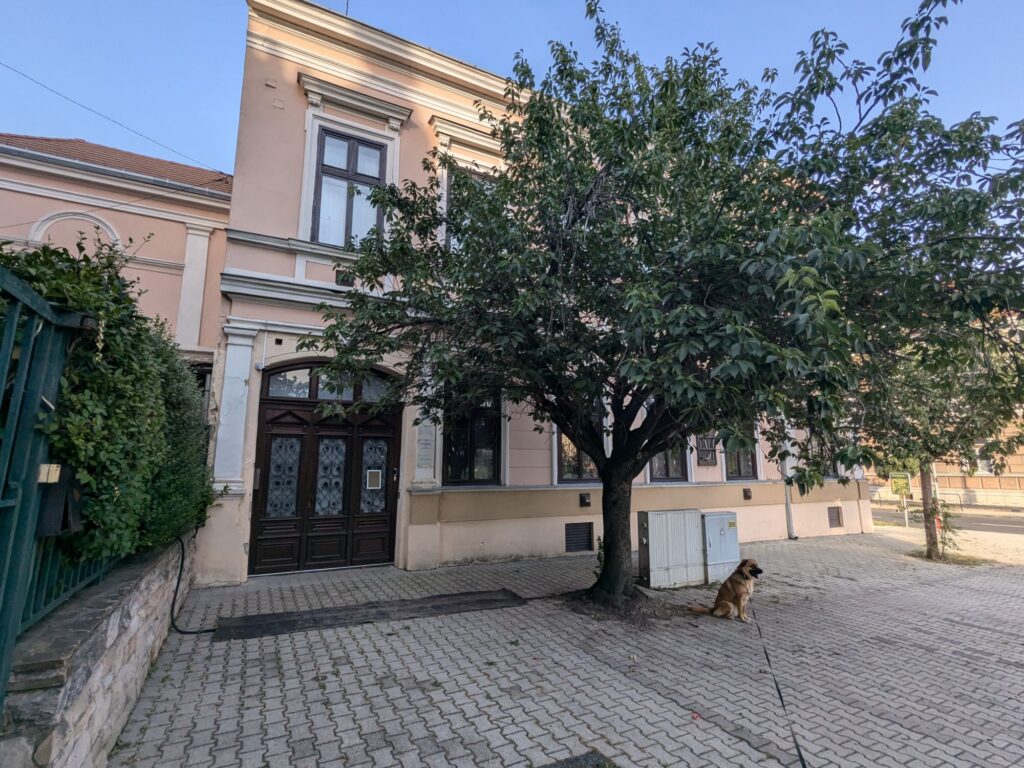
Sunday afternoon in Szombathely

It is blisteringly hot. Few people on the streets, most coffee houses are closed. On Rákóczi Ferenc utca, the main street leading to Batthyány Tér, a large square where the defunct Neolog Synagogue of Szombathely is located, components of wooden huts have been distributed on the sidewalks. This is in preparation to the Hungarian national holiday this coming Tuesday, August 20th.

(Rákóczi is a Hungarian national hero who led a rebellion against the Habsburgs at the beginning of the 18th century. When the rebellion failed he fled to Paris where he ran a gambling establishment. He spent his last 18 years in relative comfort in Turkey.

Batthyány, on the other hand, is the name of one of the oldest Hungarian families of nobility, typically to be found on the Emperor’s side. Hungarian history is complicated.)

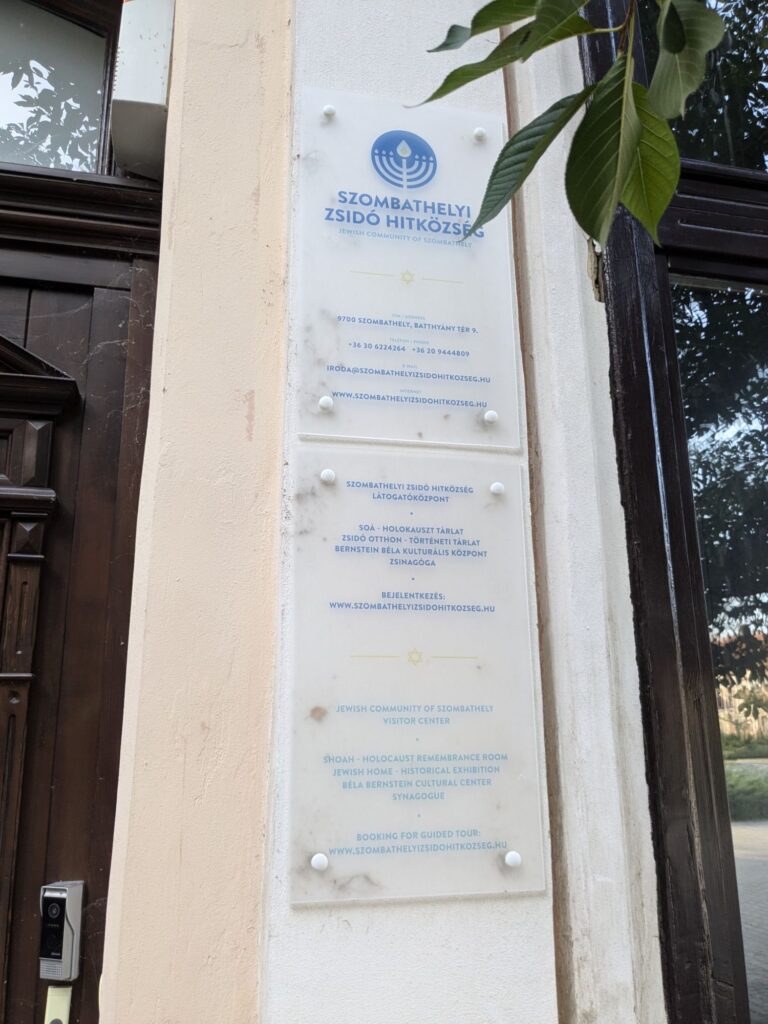
The Synagogue is used as a concert venue for the adjoining Bartók Béla School of Music and can be visited only by prior appointment. Contact may be made via the Jewish community’s web site https://www.szombathelyizsidohitkozseg.hu/ — a domain name apparently aiming at pure obfuscation!

(This is what happens to those magnificent Neolog Synagogues: they are renovated with great effort and turned into music schools, concert venues or museums. Scroll down to what happens to the Orthodox Shuls!)
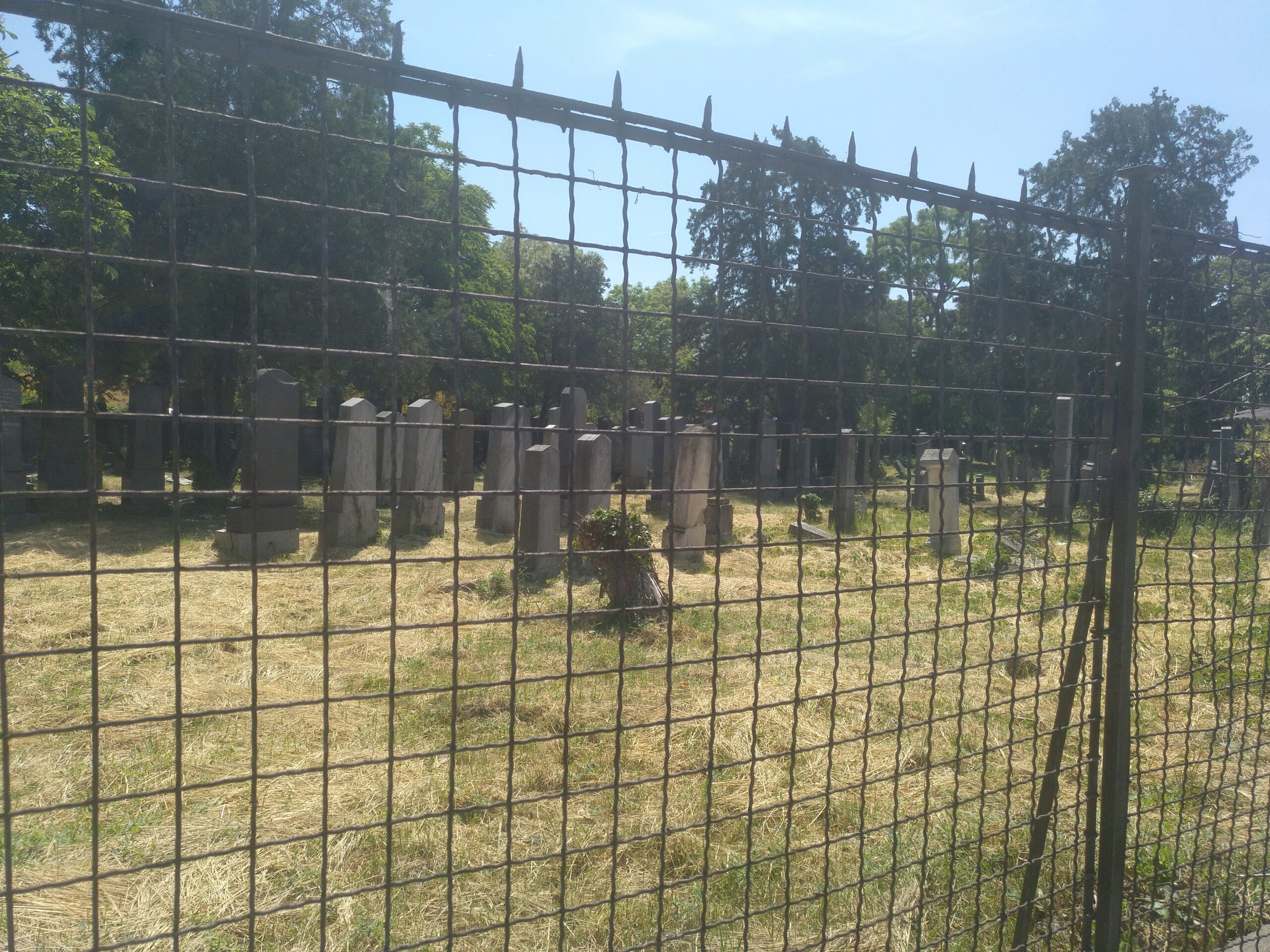
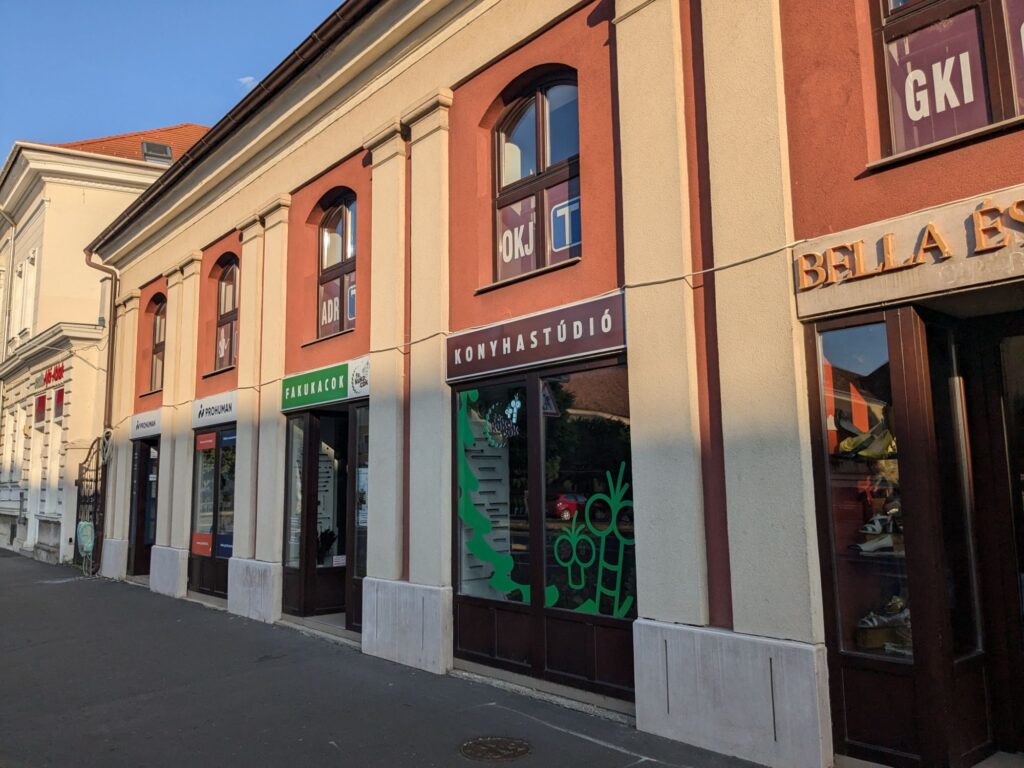
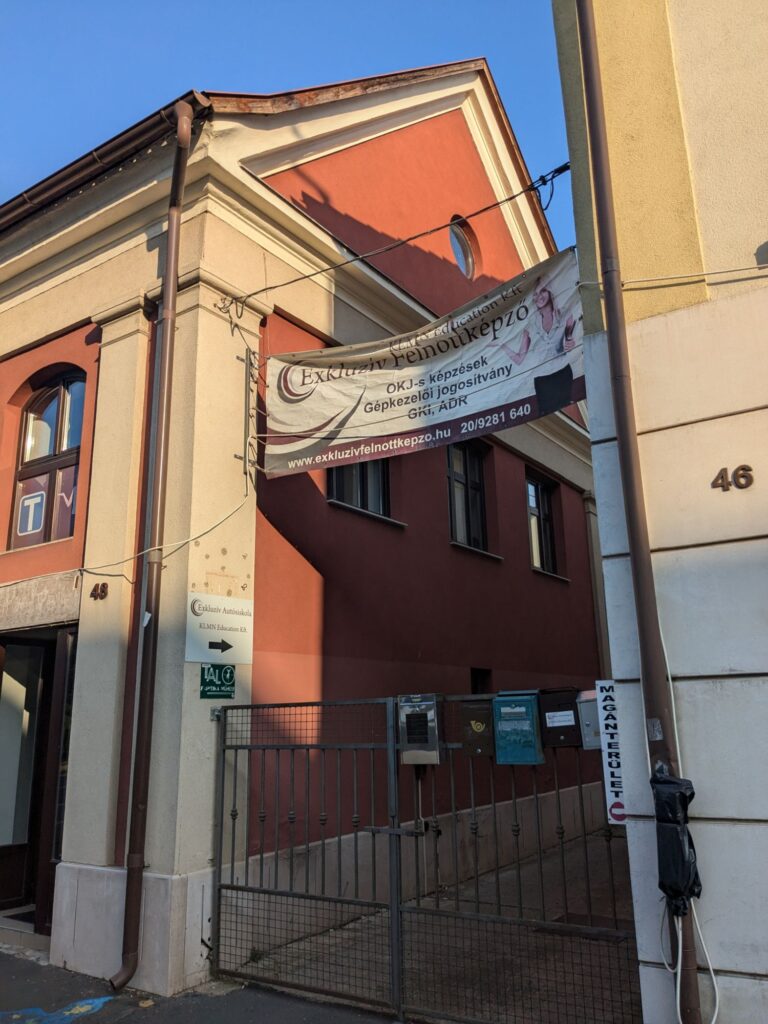
The next day we returned to Szombathely to visit the Orthodox Shul in Thököly Imre utca number 48.

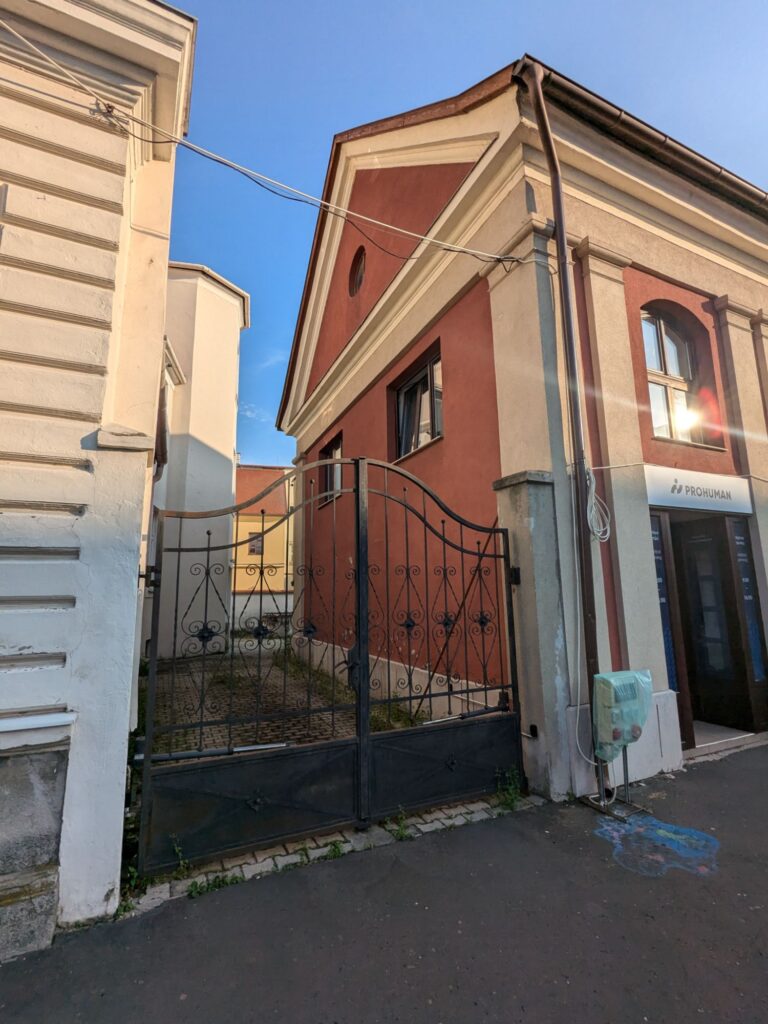
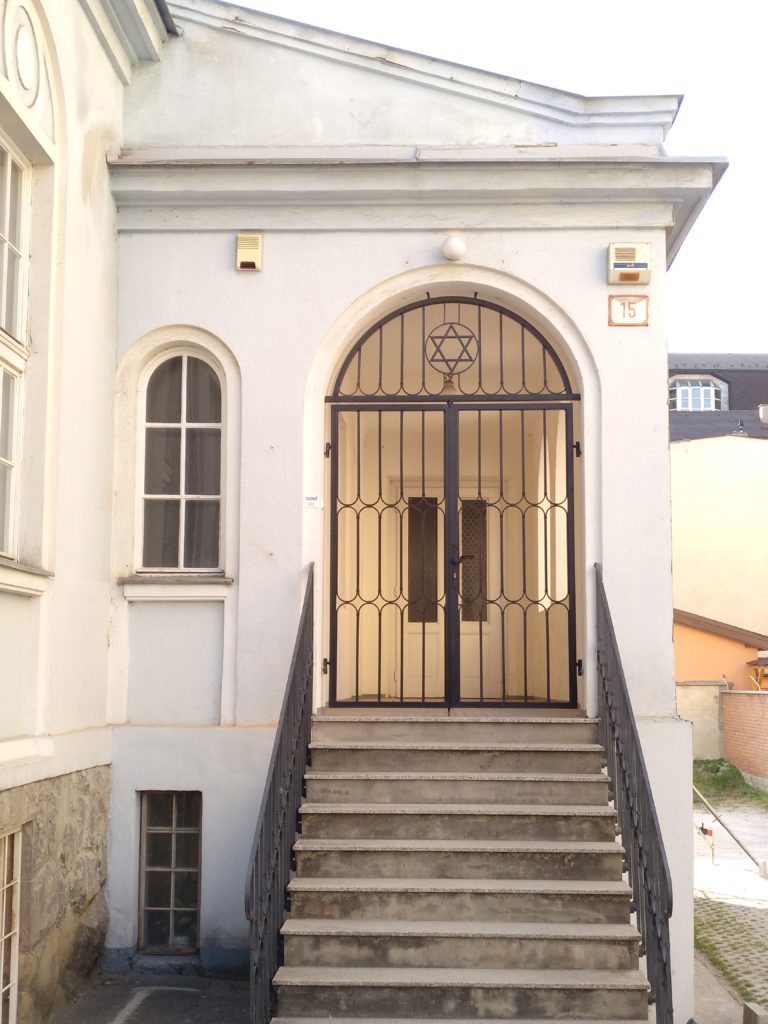
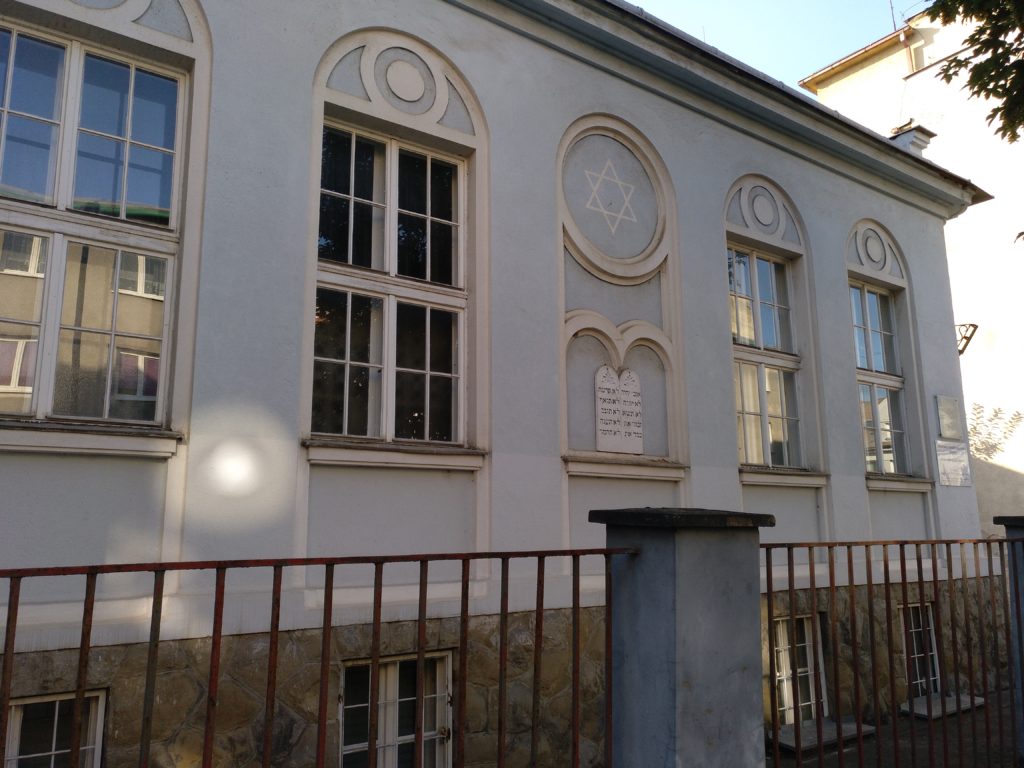
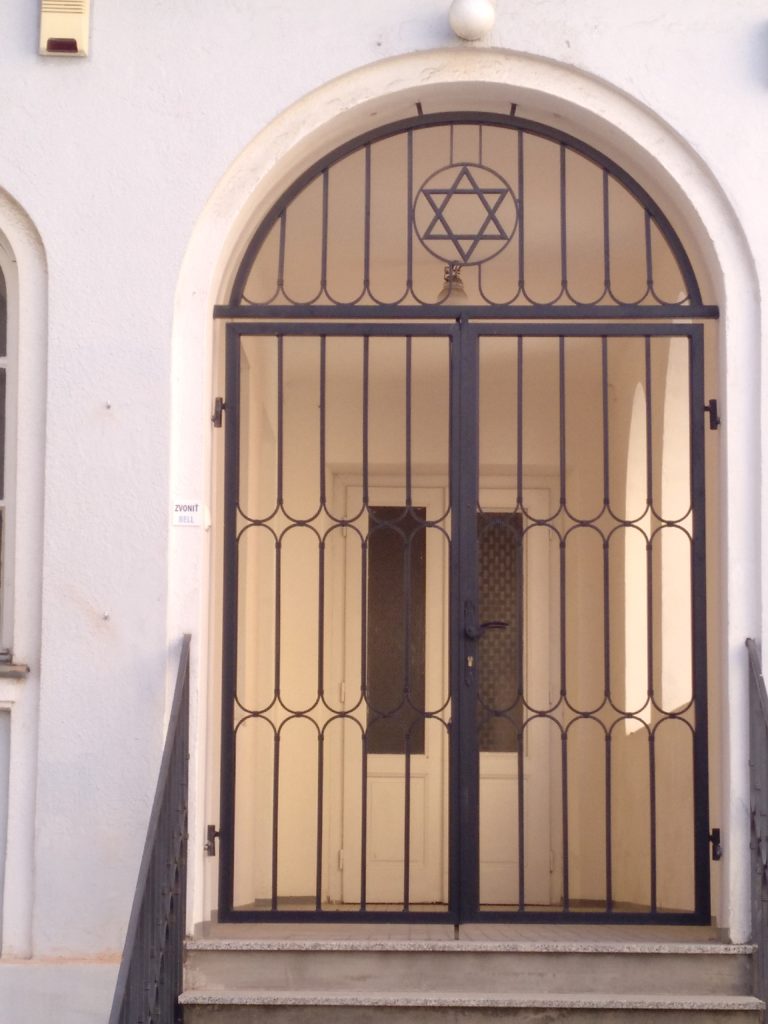
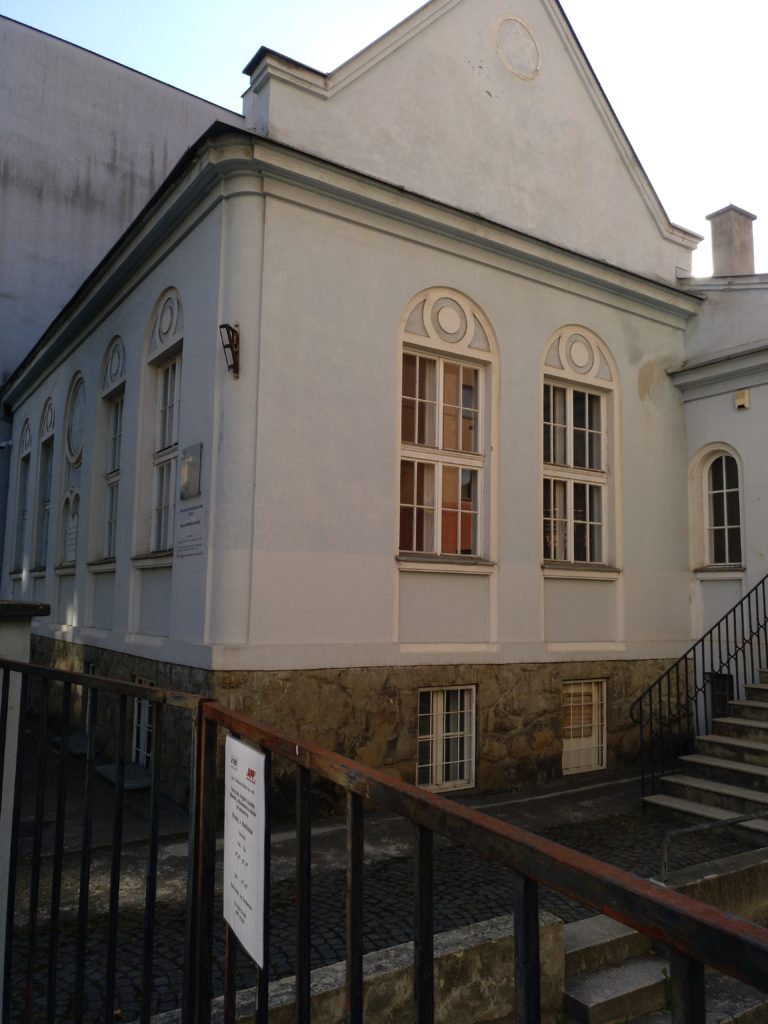
It is not a museum, it is not a concert hall. Instead it contains a barber shop, a driving school, a kitchen studio, a carpenter and other small shops. Except for the slightly unusual facade there is nothing to indicate that this was once a building for worship of the Almighty.

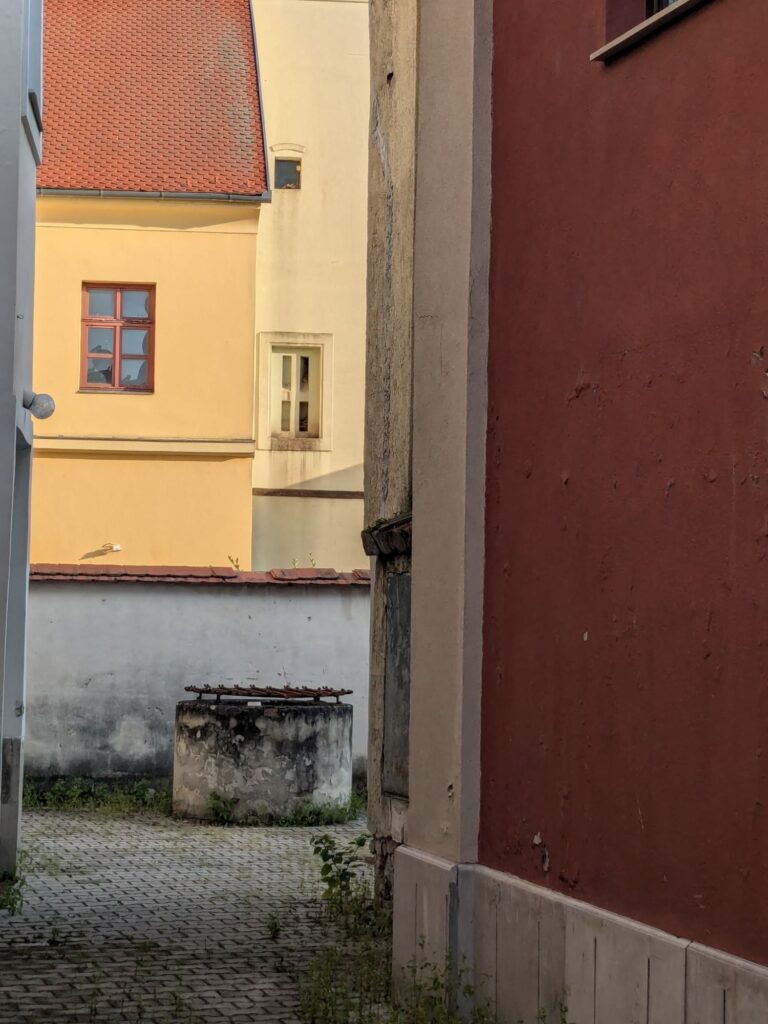
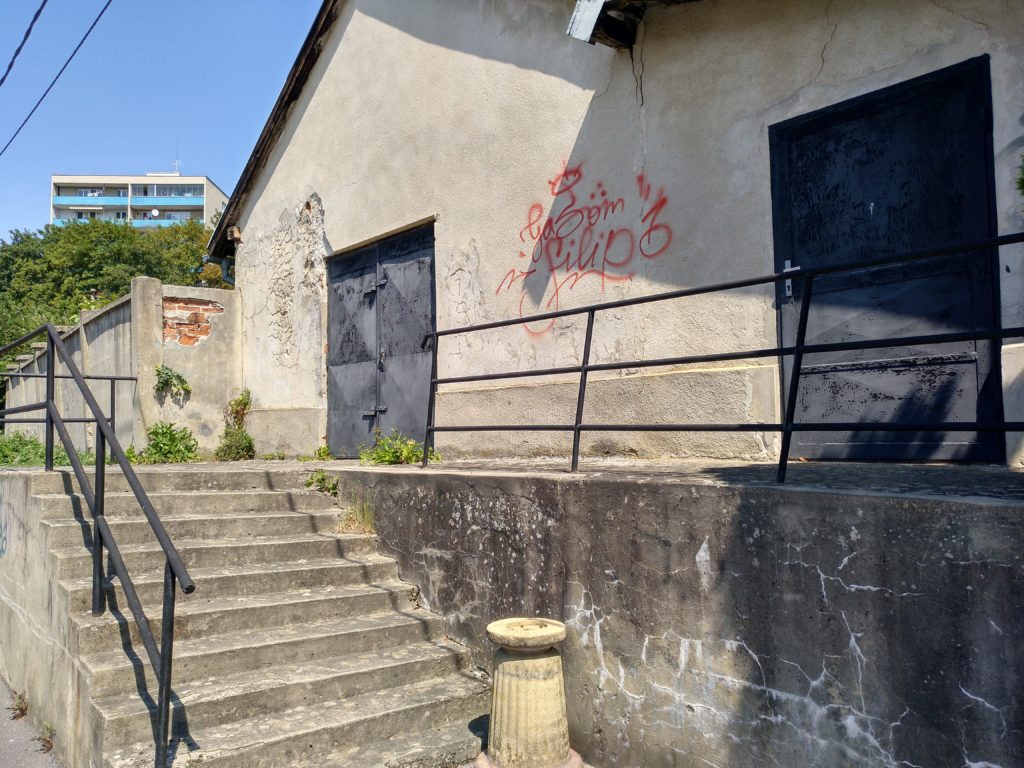
I tried the gates to the left and to the right to get a glimpse of the back, and I surrounded most of the block to see if I could reach the back yard. No luck.

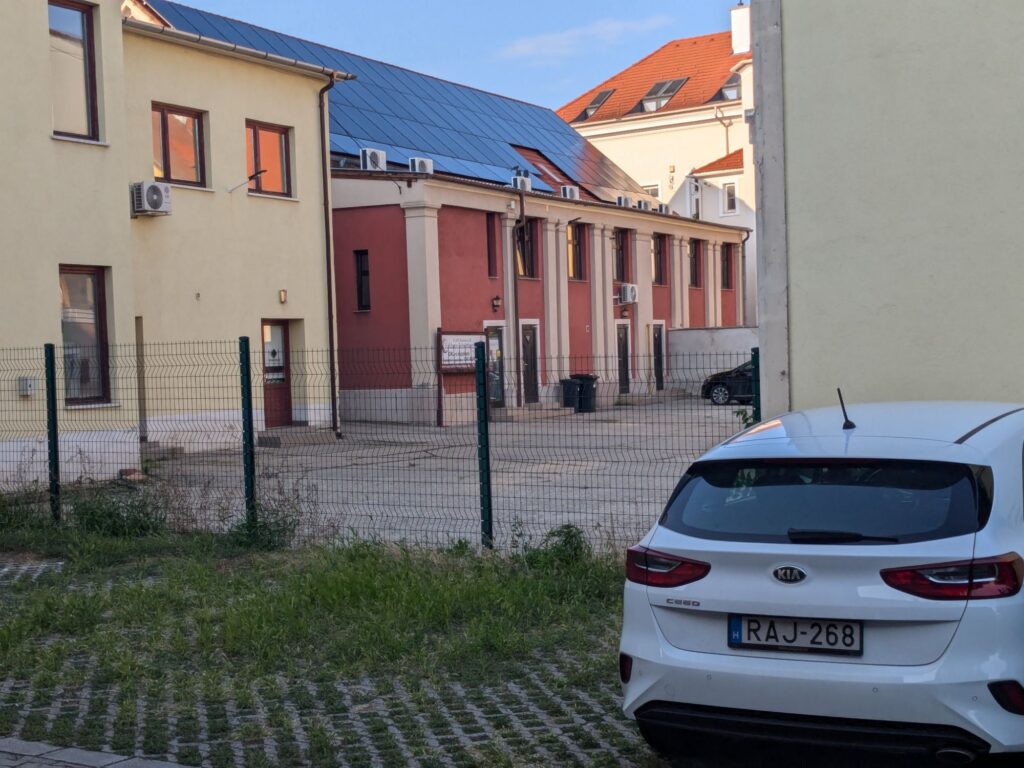
View from the back

But when I turned to walk back to the car, I suddenly saw this in the distance:
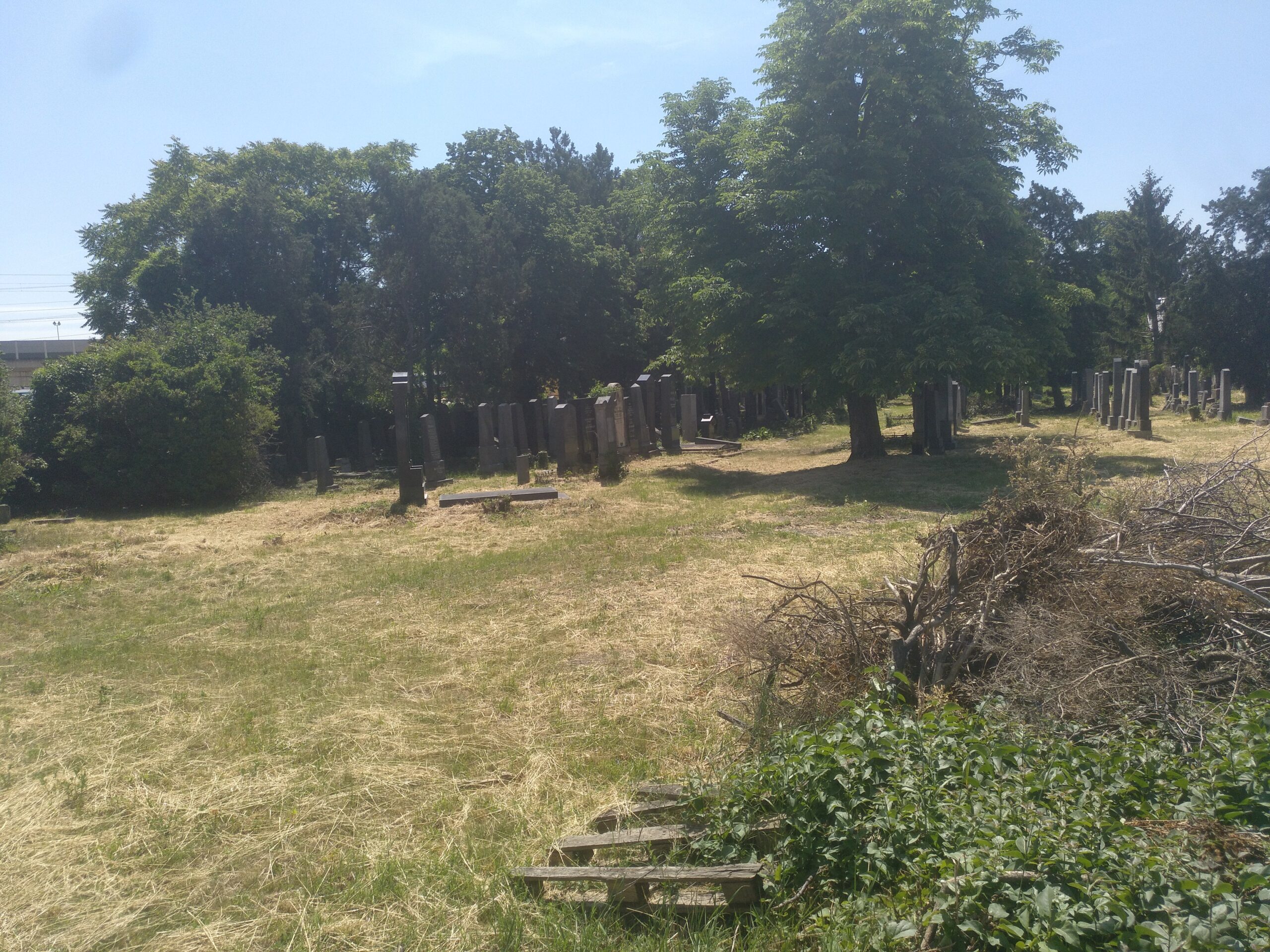
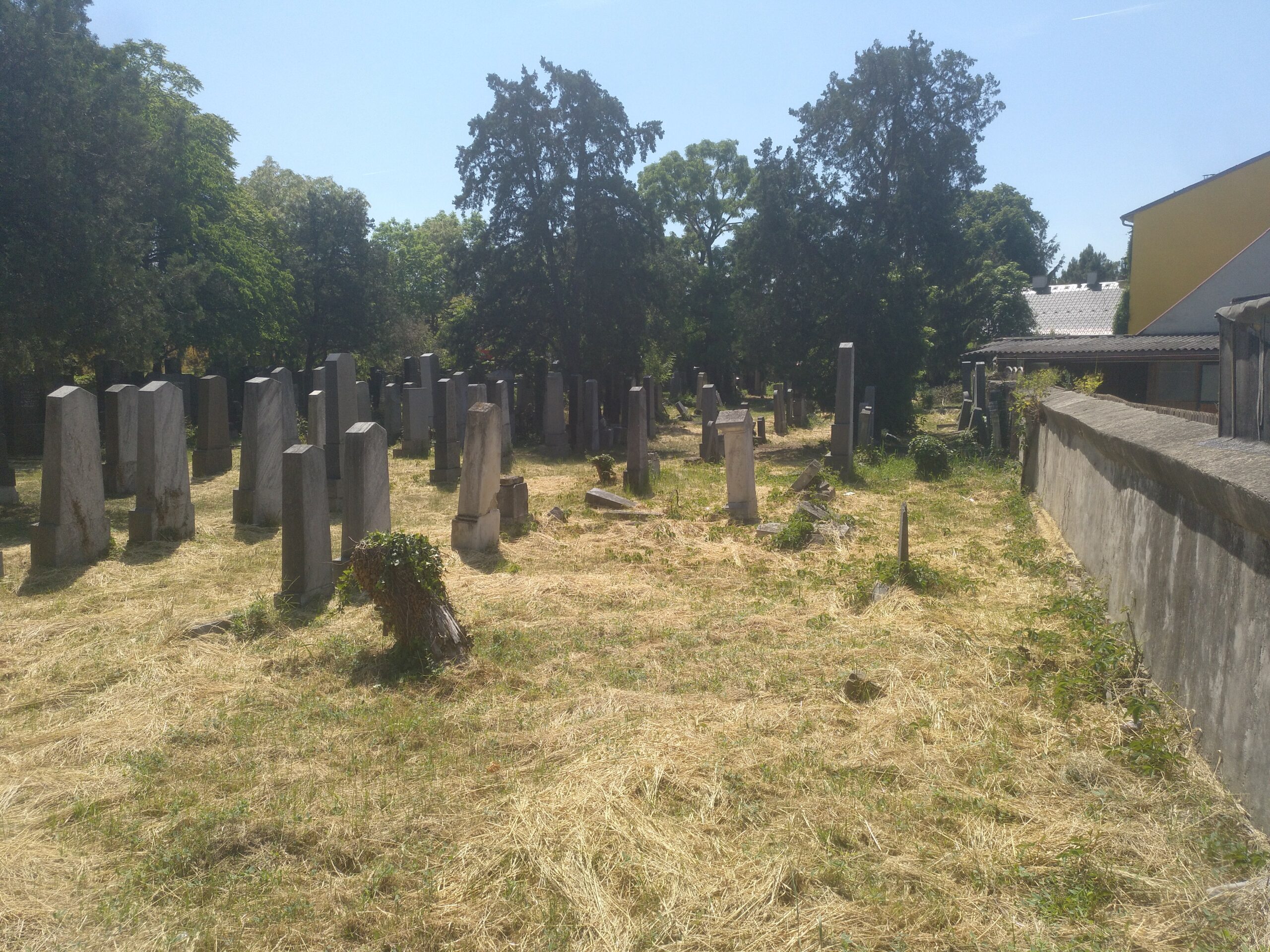
Jewish Cemetery Floridsdorf

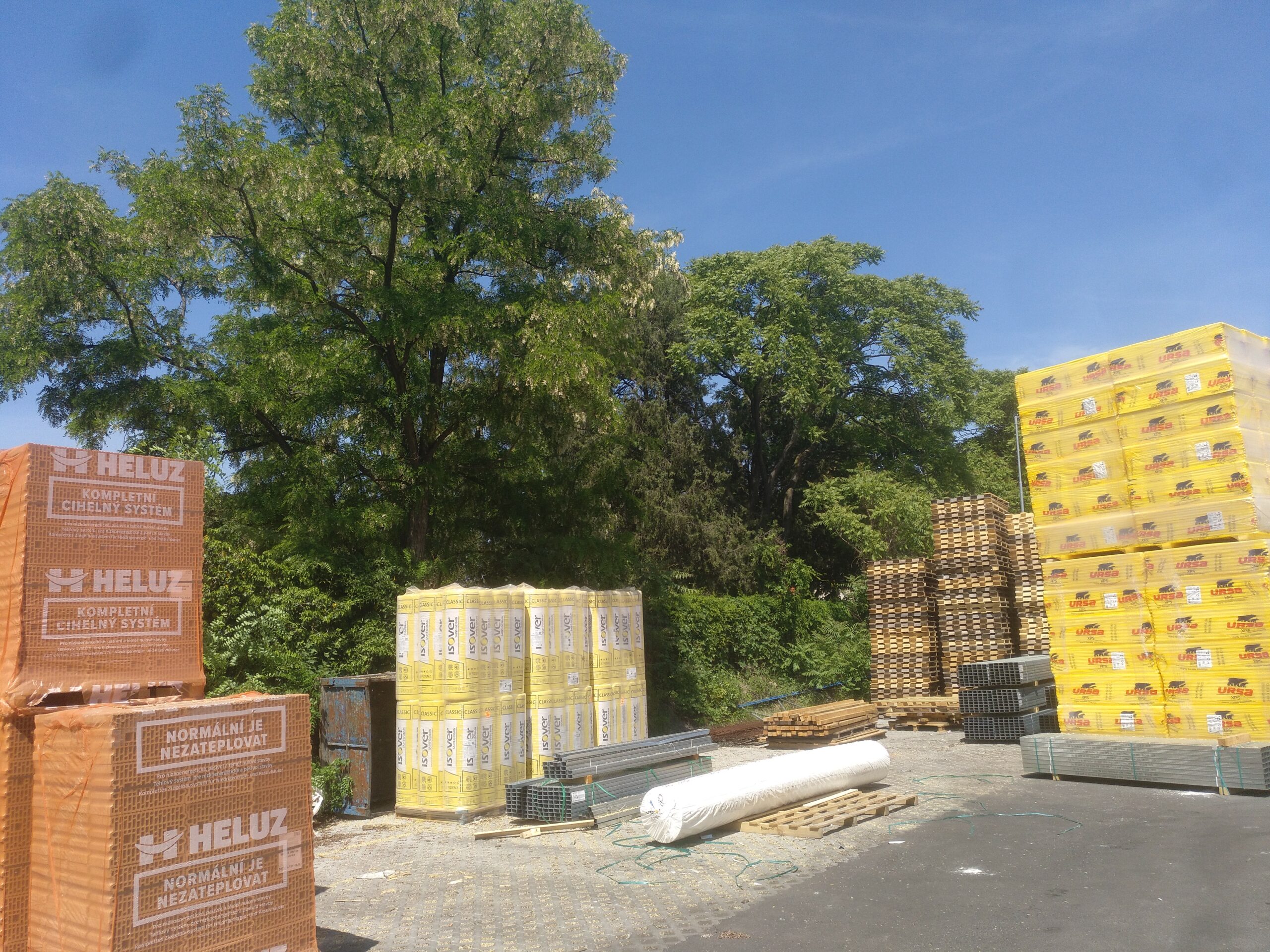
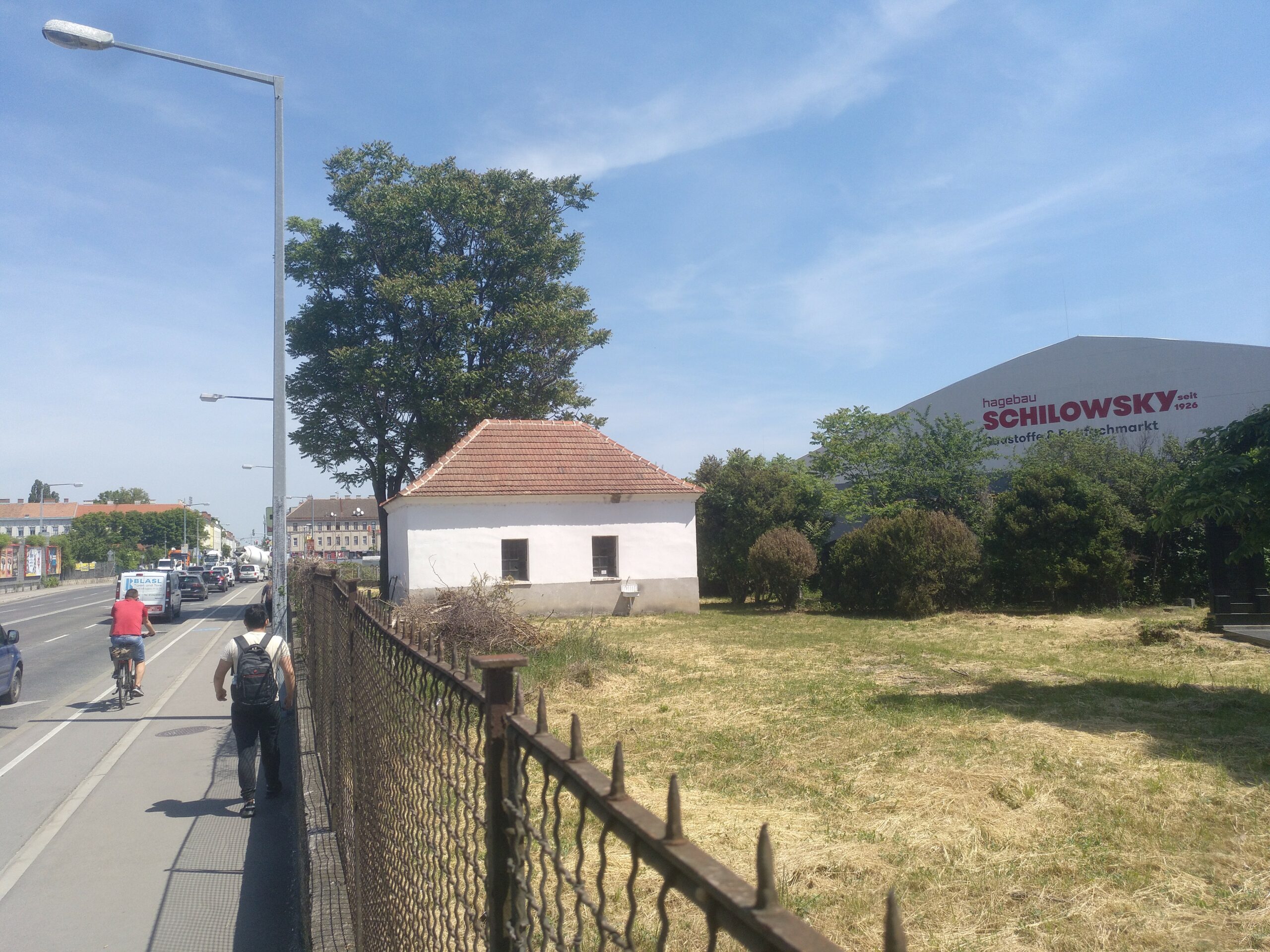
Squeezed in between a railroad viaduct and a building materials dealership a tiny Jewish cemetery may be found.

Floridsdorf is one of the Viennese districts on the “other” side of the Danube (viewed from the city center), huge in size and population, containing industrial as well as agricultural areas. Before the Shoah it was home from to a very small Jewish community that ran one single Shul and their very own cemetery.

Nowadays the area is surrounded by the new Northern hospital (“Krankenhaus Nord”), Vienna’s biggest commercial data center (InterXion) and a railway shunting yard.

https://g.co/kgs/J5vM2L

Seen from the building materials dealer’s yard

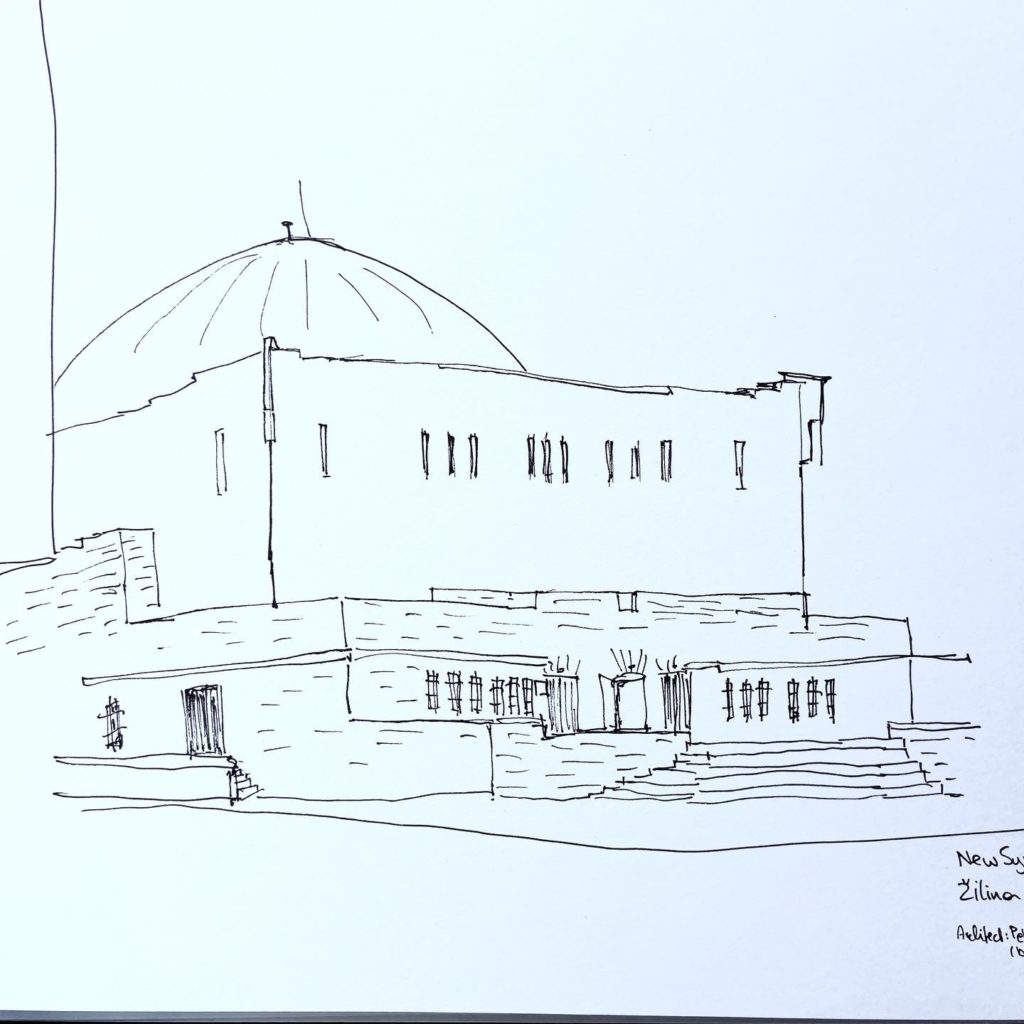
Žilina’s Neolog Art Center and Orthodox Shil

When the Neolog movement spread throughout Hungary and related territories in the 2nd half of the 19th century, the Jewish community of Žilina adopted the new ideas and left the old ways behind. Only a small number of jews stayed faithful to Orthodox judaism. They broke away and formed their own community.

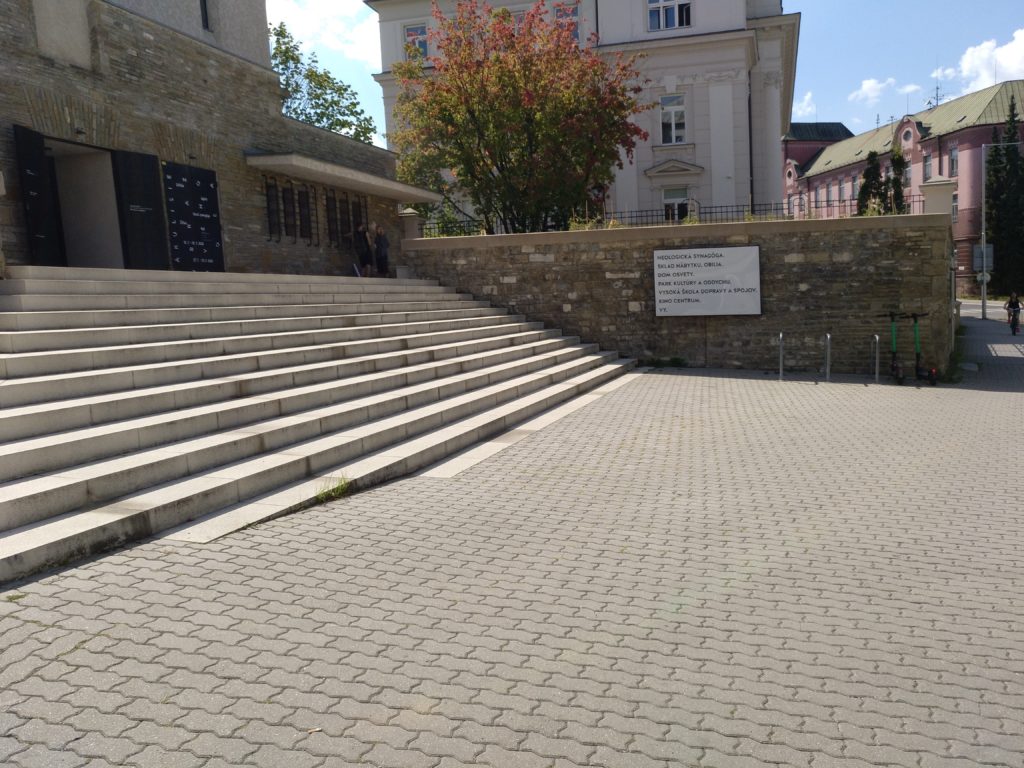
Then came the Shoah, the creation of Israel, and communism. Three factors that resulted in Žilina losing almost all of their Jewish population. Today, the fancy Neolog synagogue with its very interesting architecture has become an art center.

The orthodox synagogue and (defunct) Mikvah is a small and modest, though from the outside a very heimish building in a small street slightly outside the town center. And most importantly, it still functions as a Shil (though I really don’t know when was the last time an actual Minyan assembled here).

Sadly, we were unable to take a look inside.

Orthodox Shil in Žilina

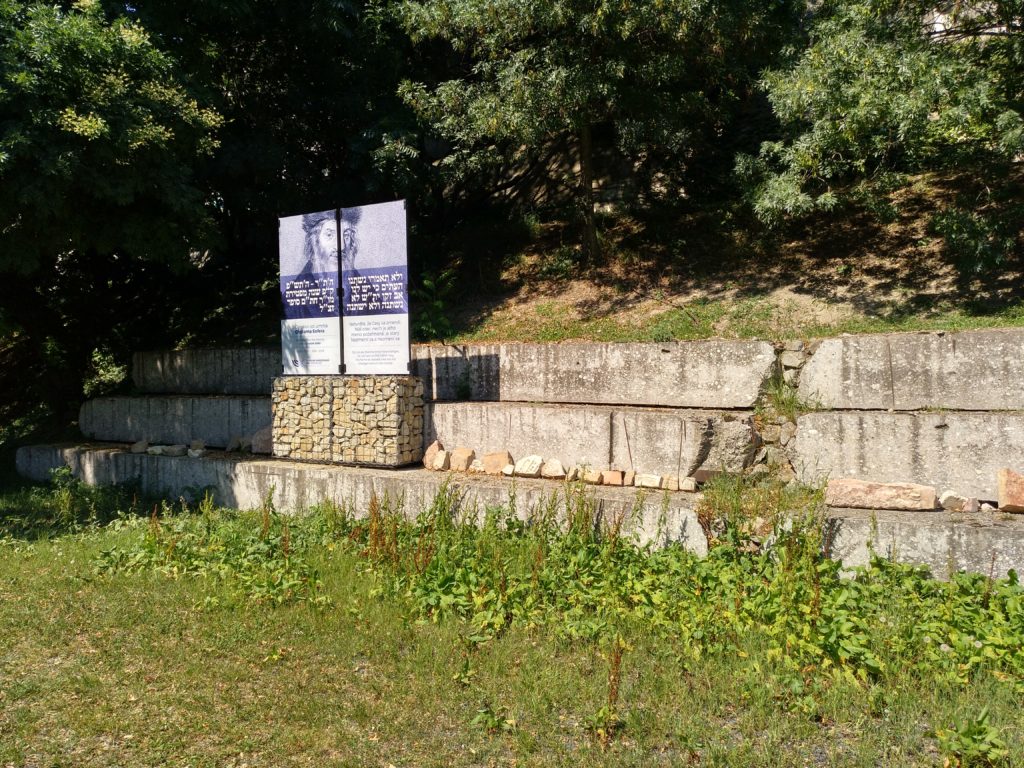
The Grave of The Chatam Sofer

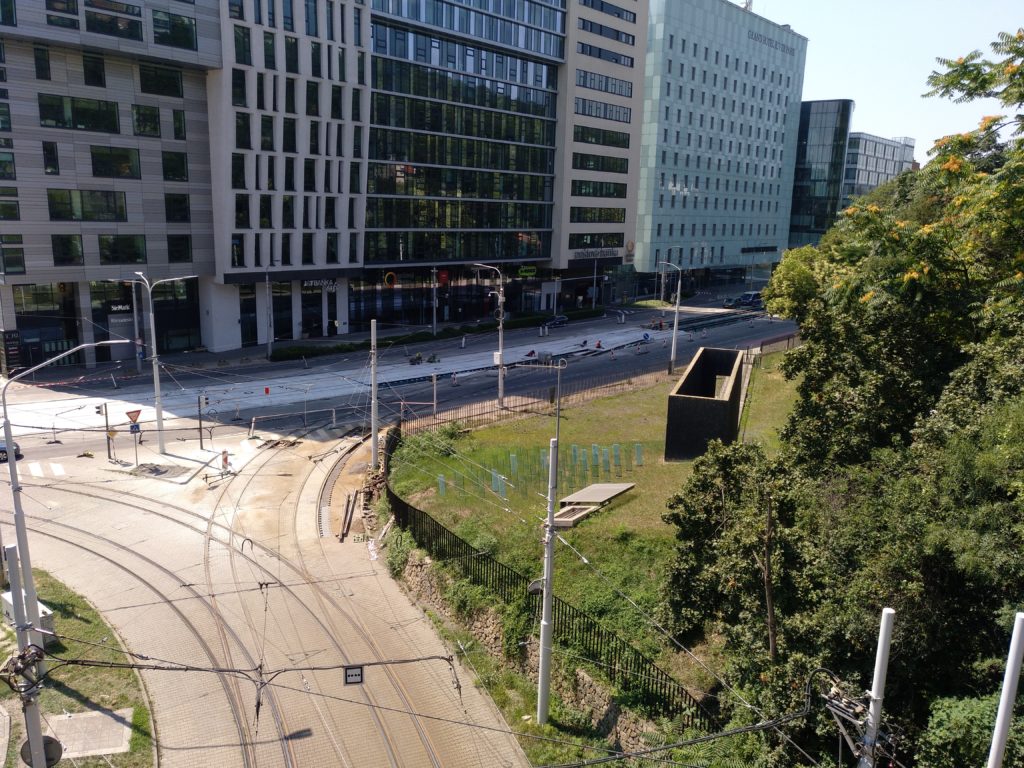
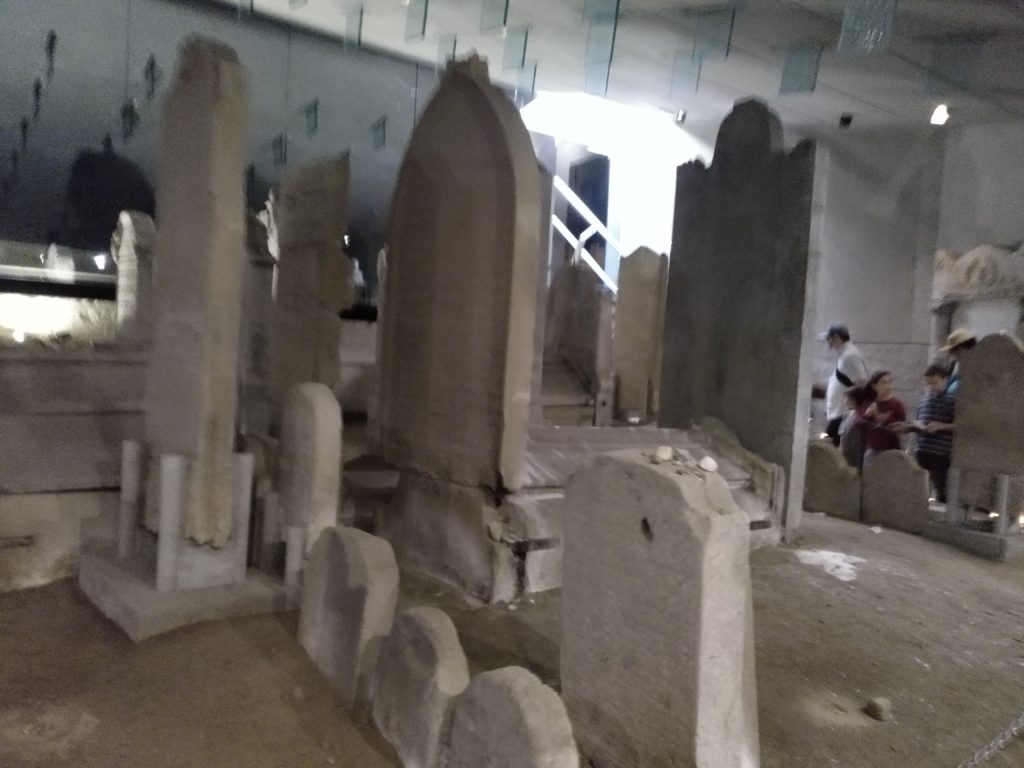
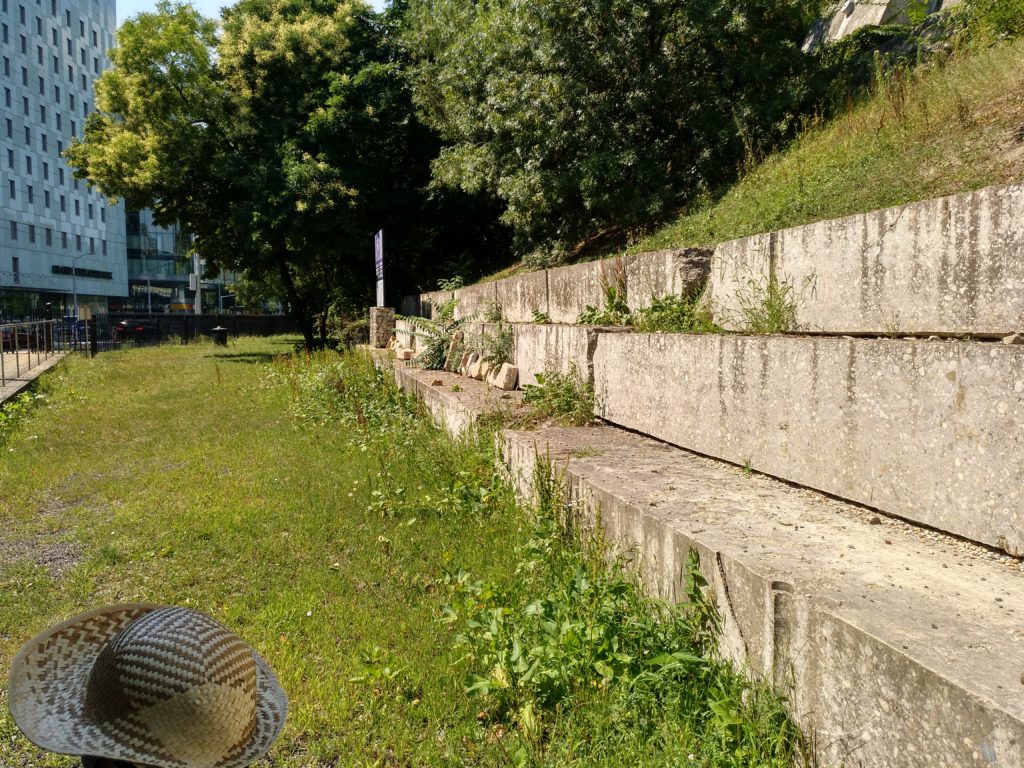
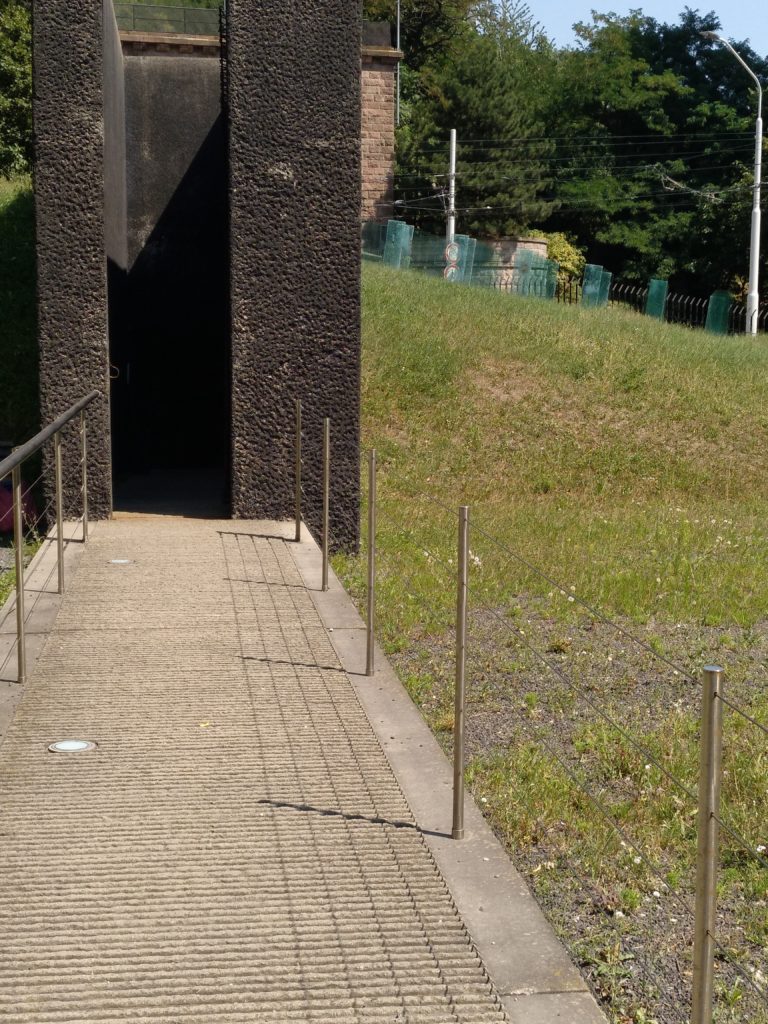
The site of the memorial as seen from above the streetcar tunnel

Near the banks of the river Danube in Bratislava there is a streetcar station (tram stop for our friends from the UK) named for non other than the Chatam Sofer who is buried here.

Moshe Schreiber, better known as the Chatam Sofer was one of the greatest rabbis of his generation and served for some years in Mattersdorf (today Mattersburg, one of the Sheva Kehillot, located the Austrian province of Burgenland) and from 1806 in Bratislava, or rather Pressburg, as it was then called.

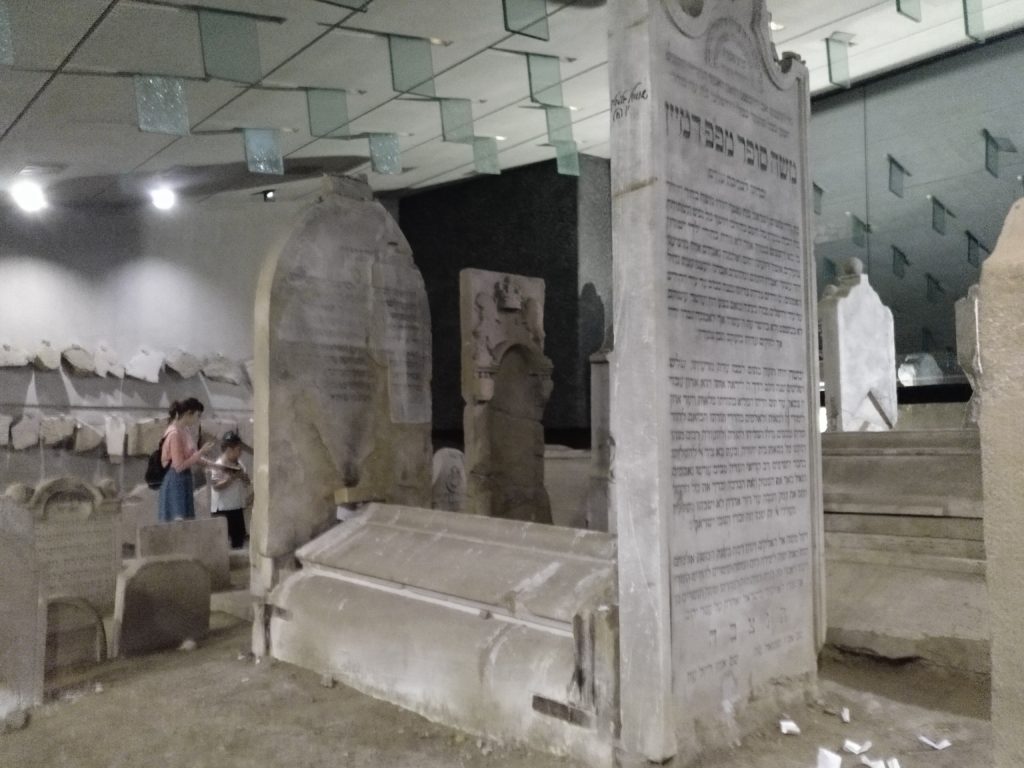
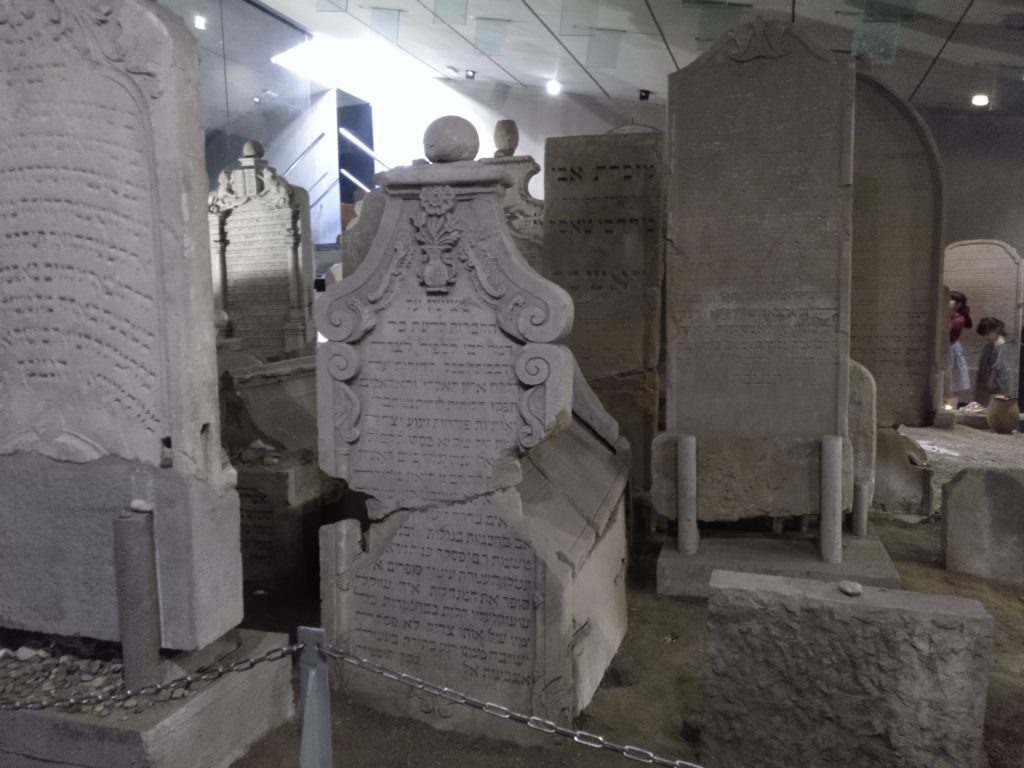
During the 2nd World War, most of the cemetery was destroyed to make way for a broad street along the danube. Our guide through Jewish Pressburg, Maroš Borsky told us that most of the graves were transferred to the newer orthodox Jewish cemetery in Žižkova 36. However, the graves of the Chatam Sofer and some others were preserved and are accessible to visitors today.

Indeed, there are prayer facilities there, underground. Care has been taken to avoid halachic problems for Kohanim who mustn’t approach graves; but given that the whole area used to be a cemetery, personally I would not recommend for Kohanim to visit this memorial.

The Trenčín Jewish Cemetery

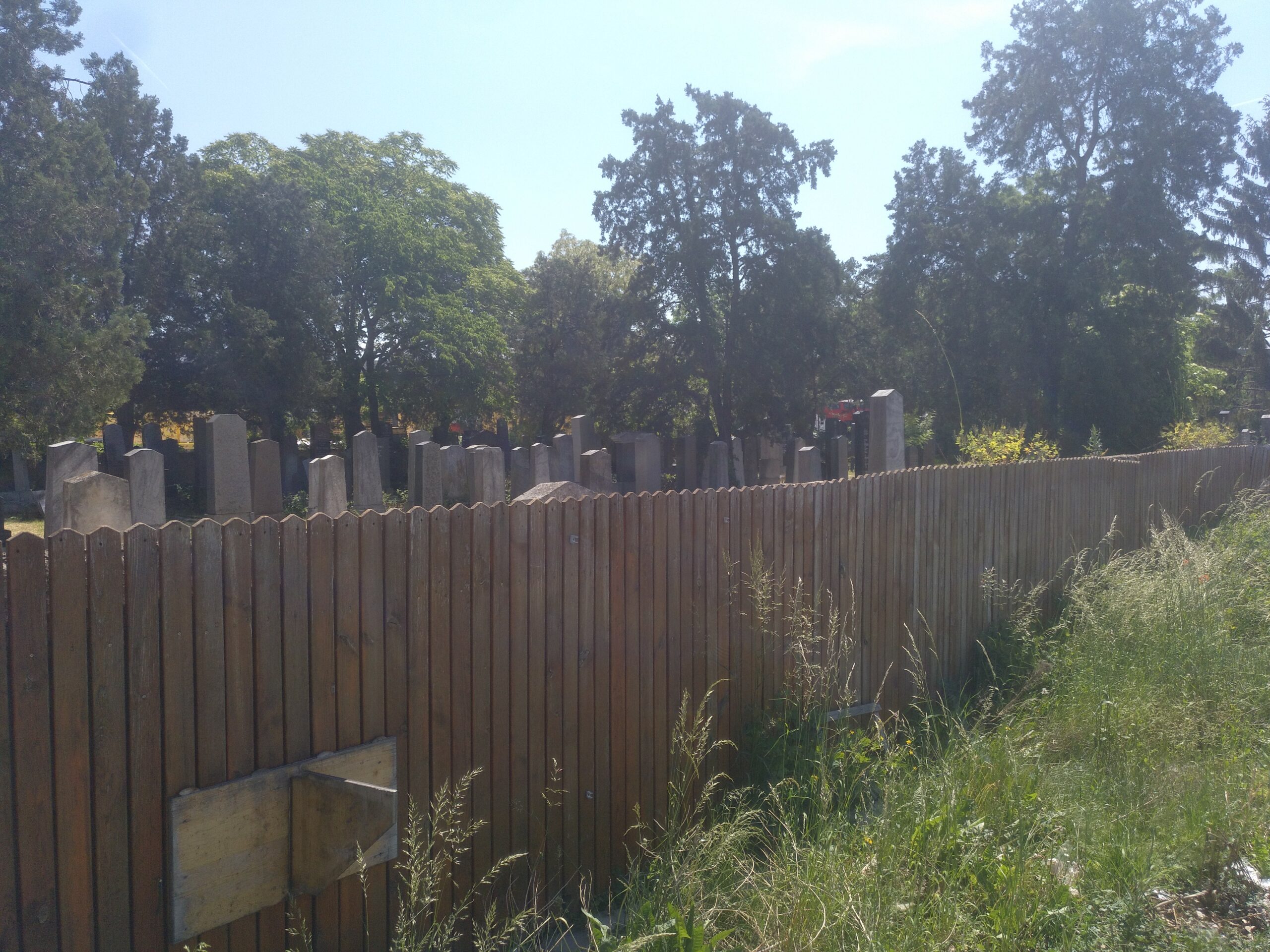
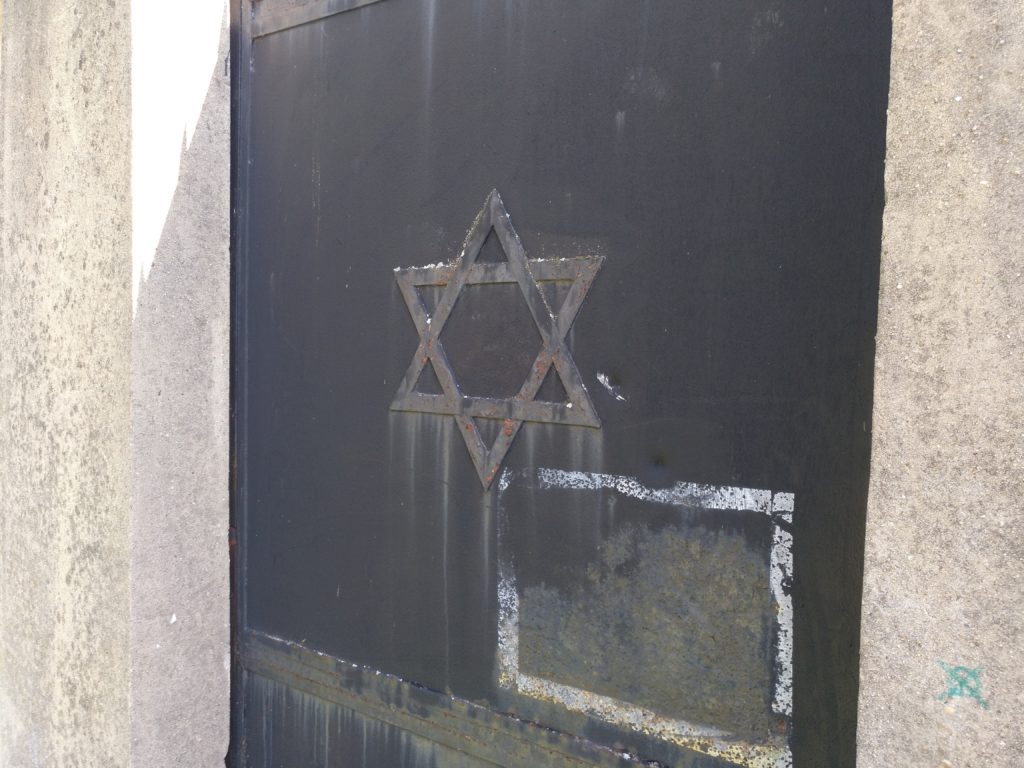
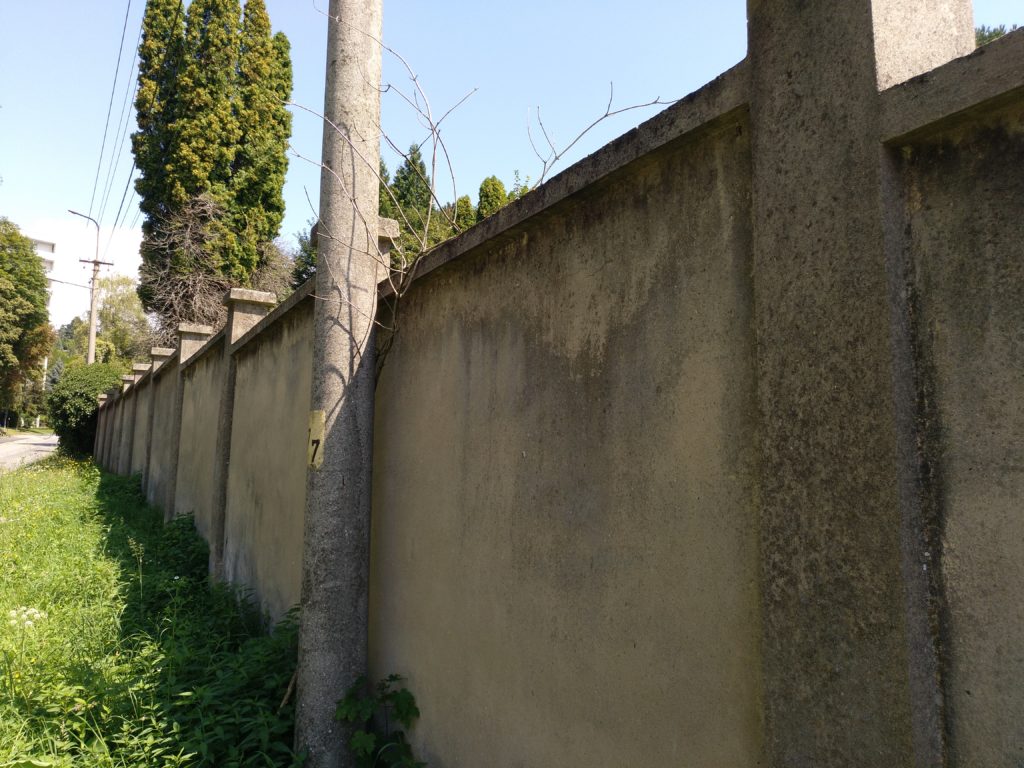
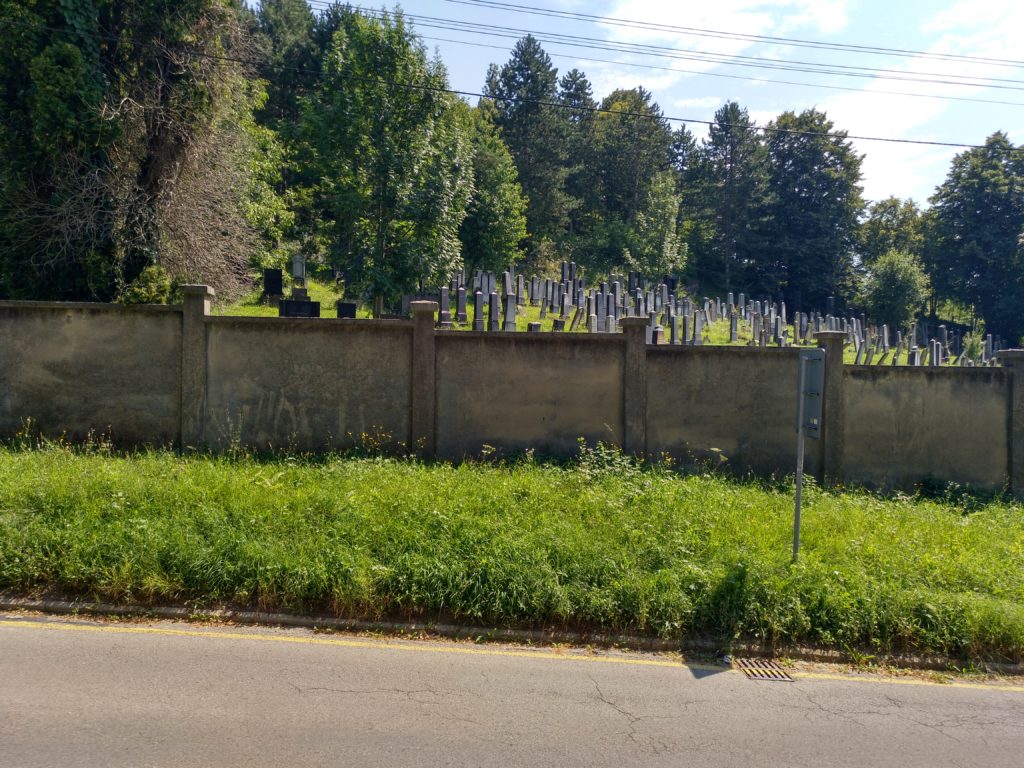
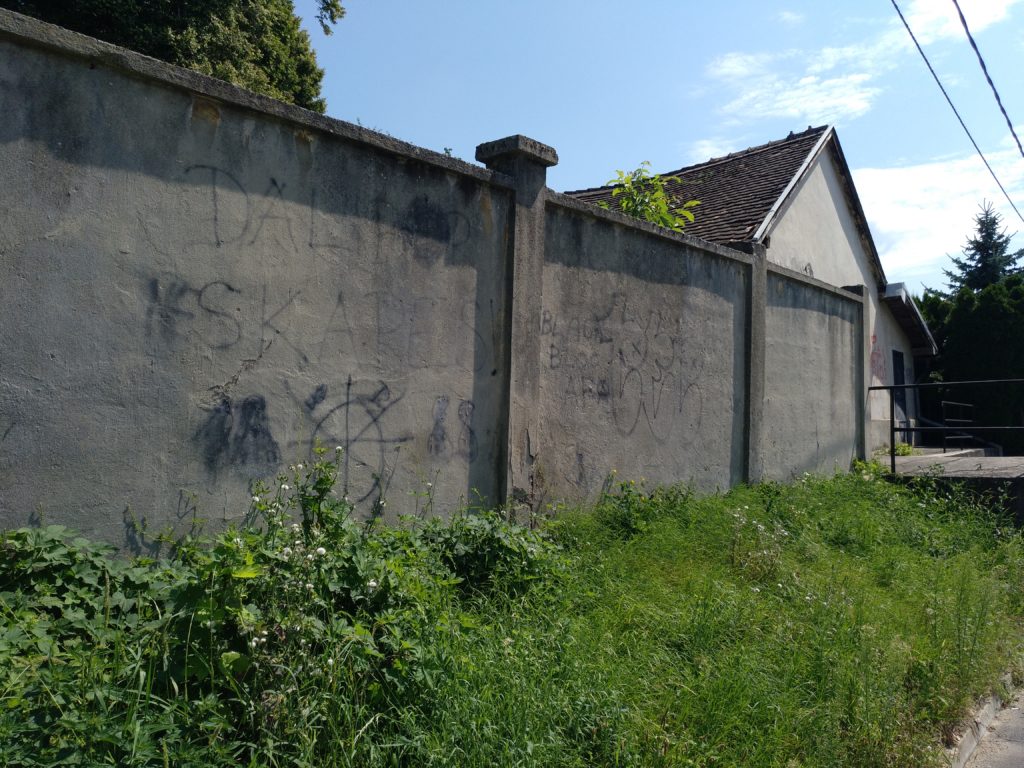
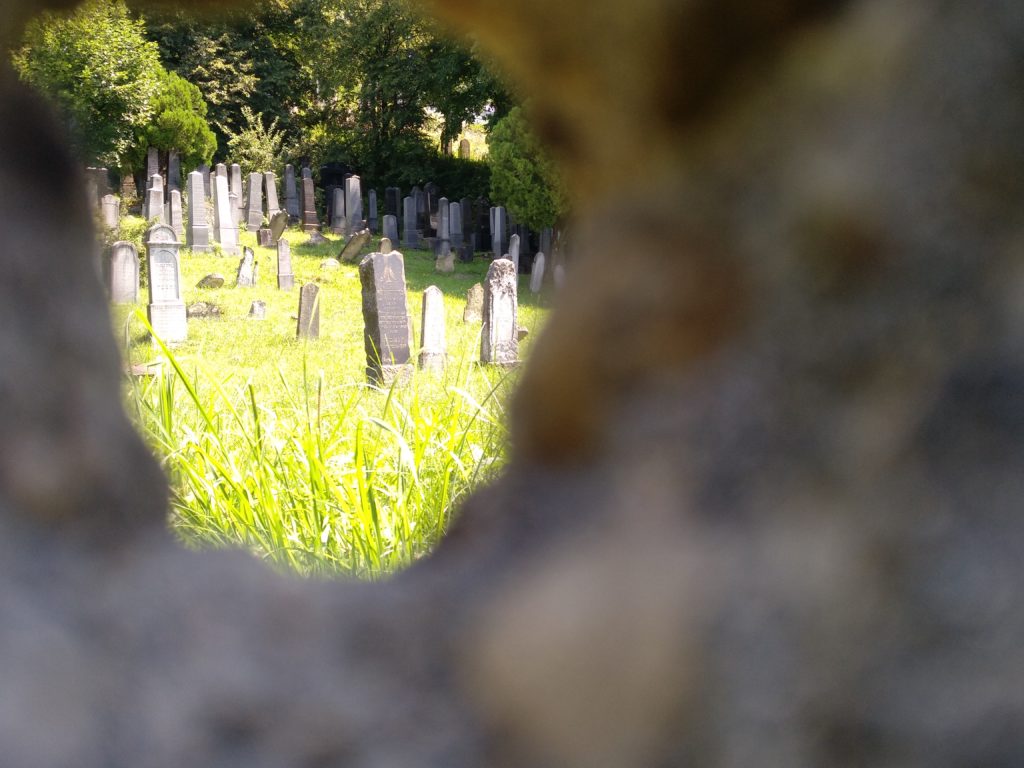
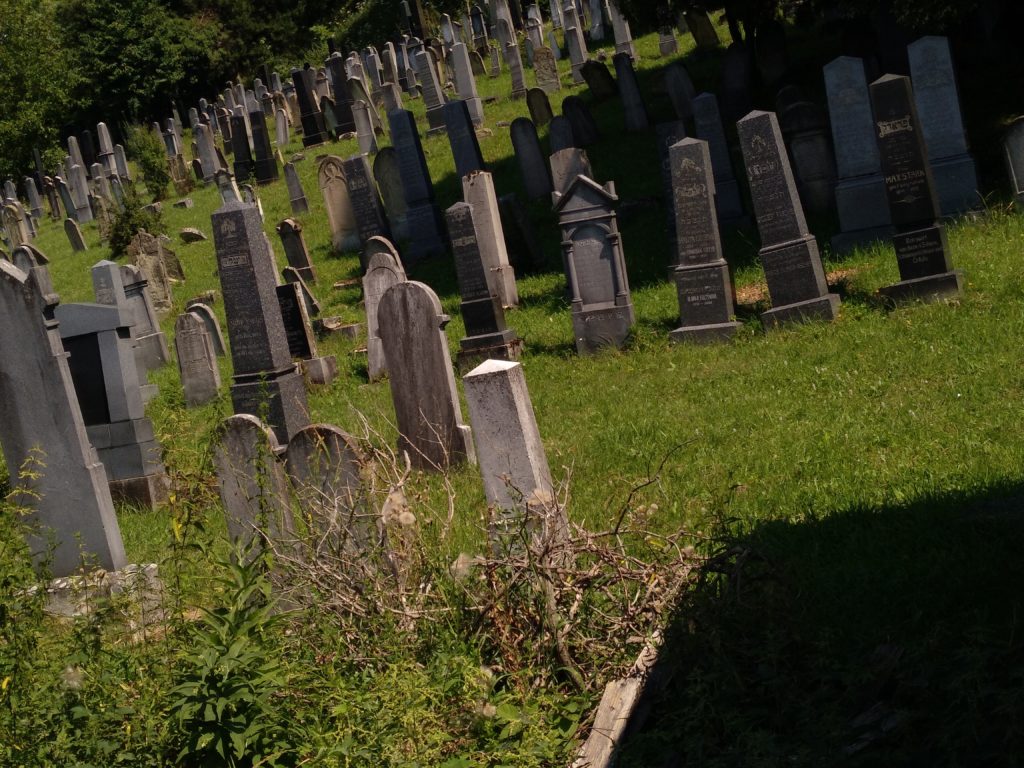
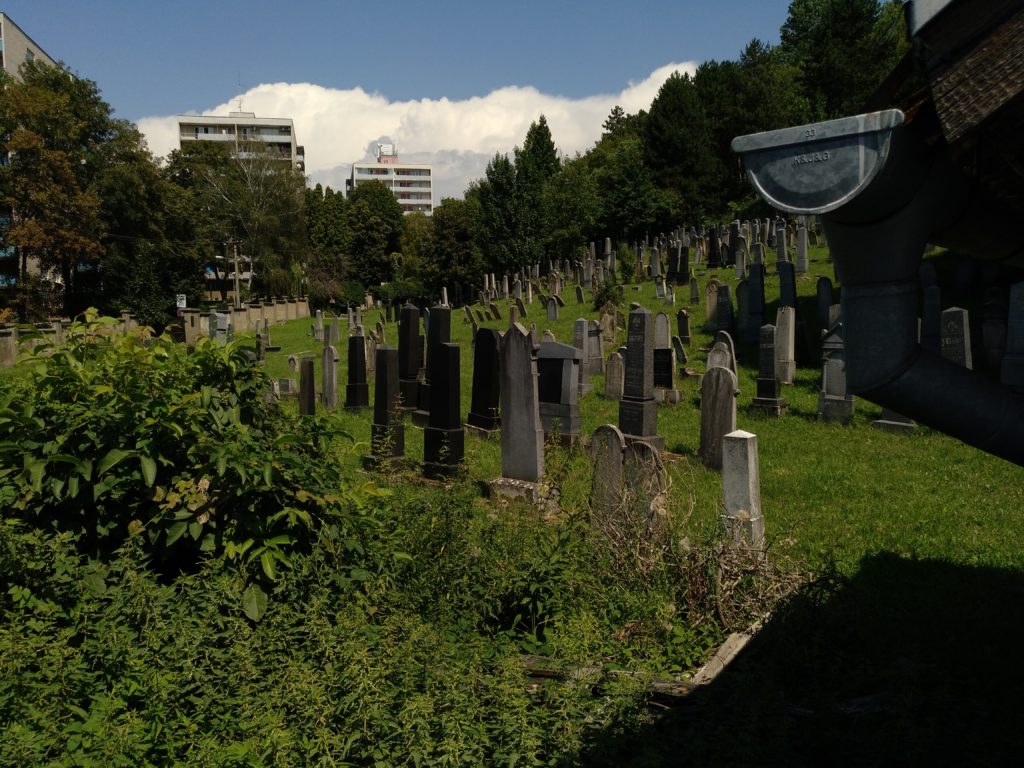
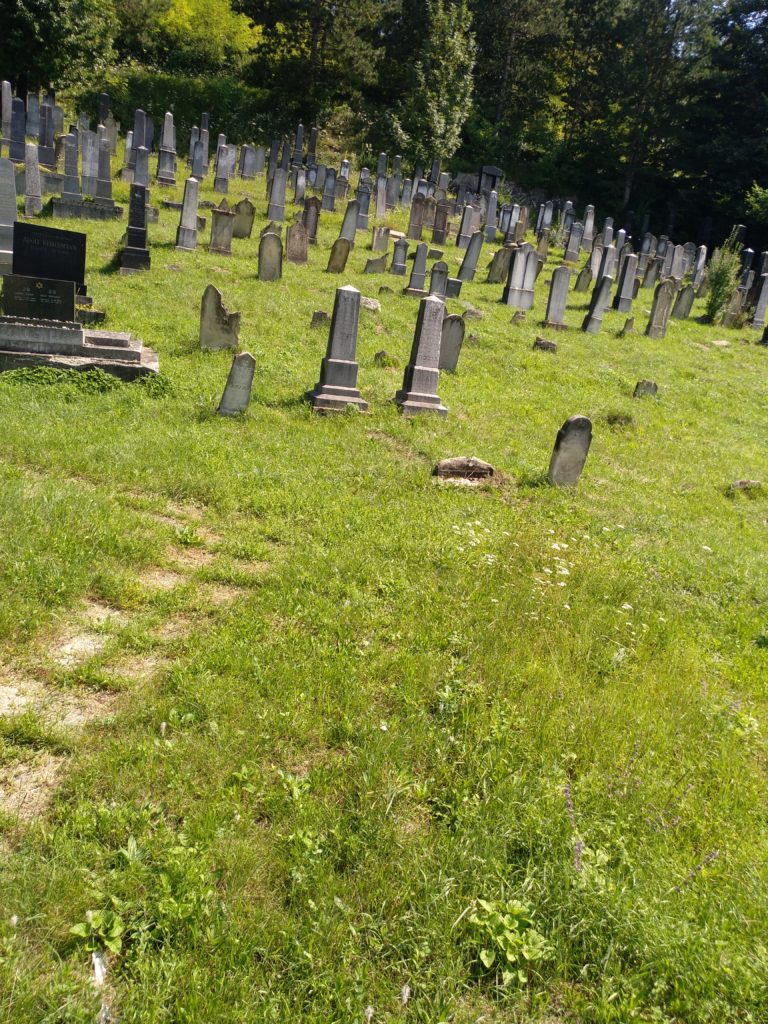
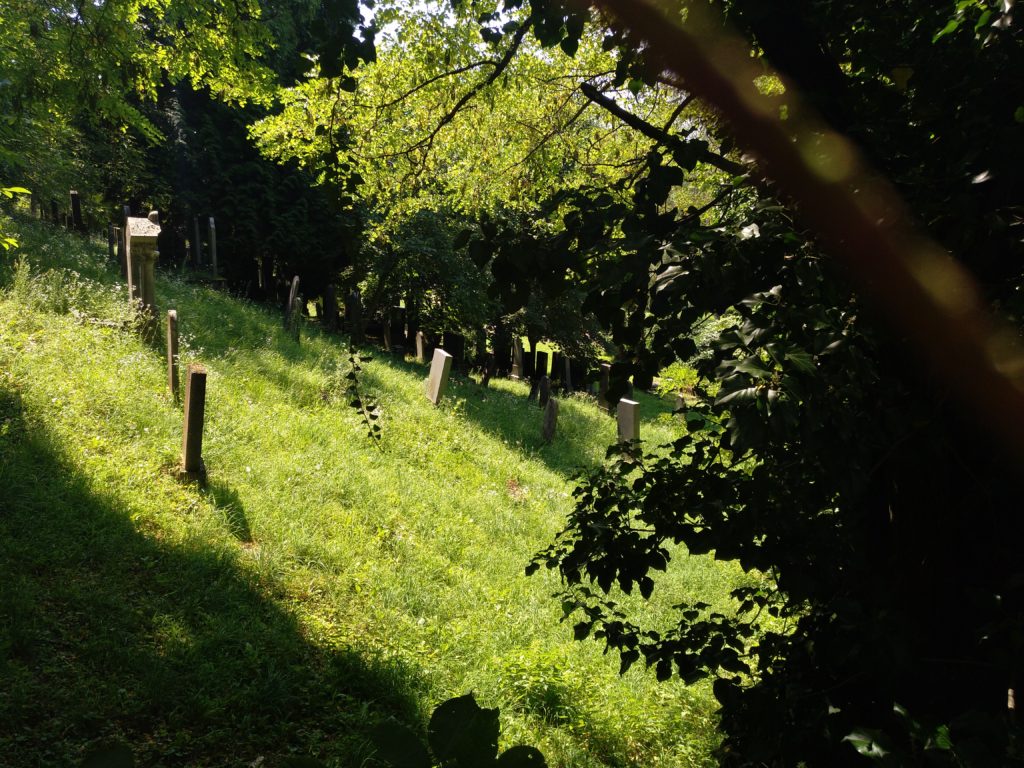
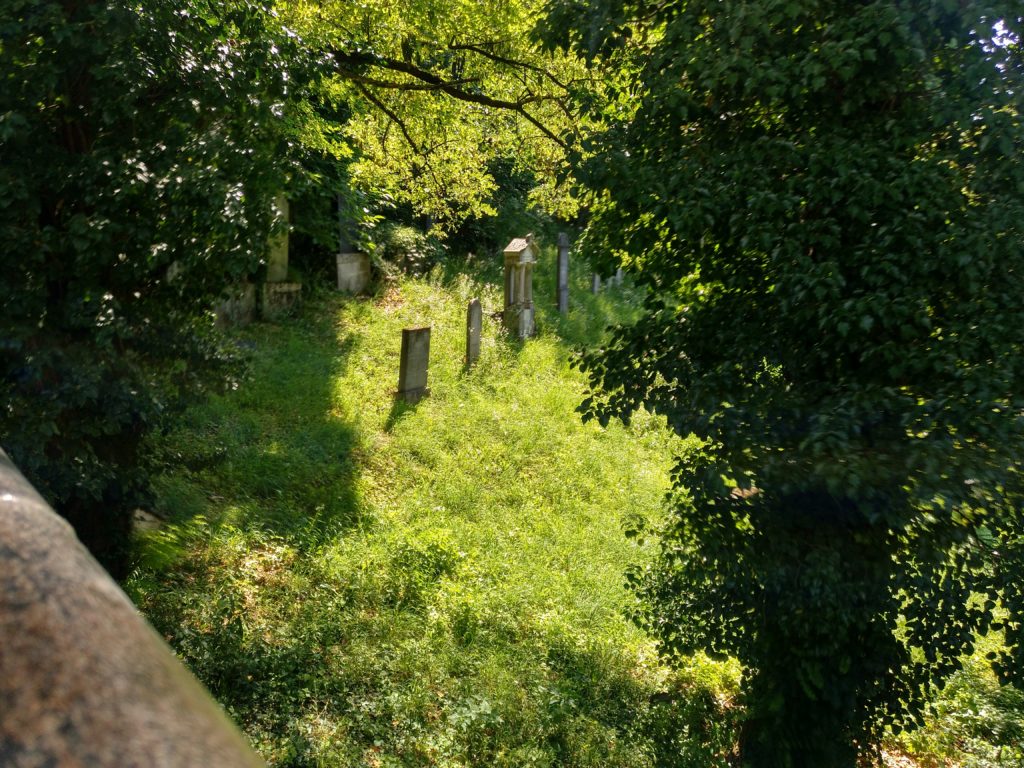
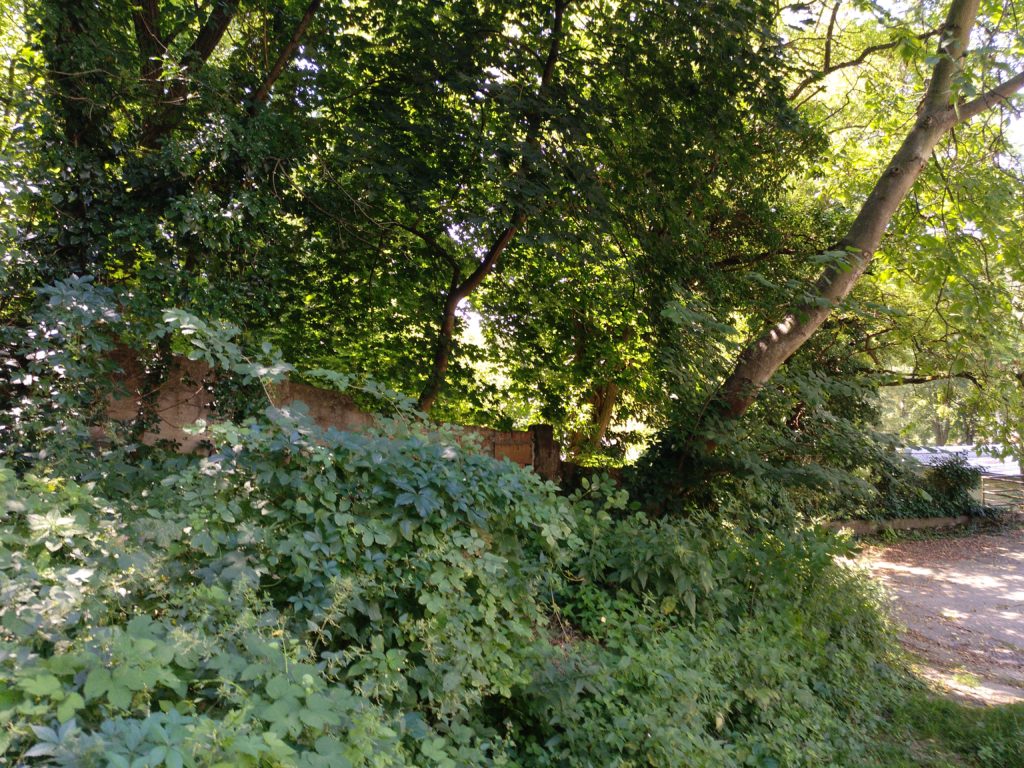
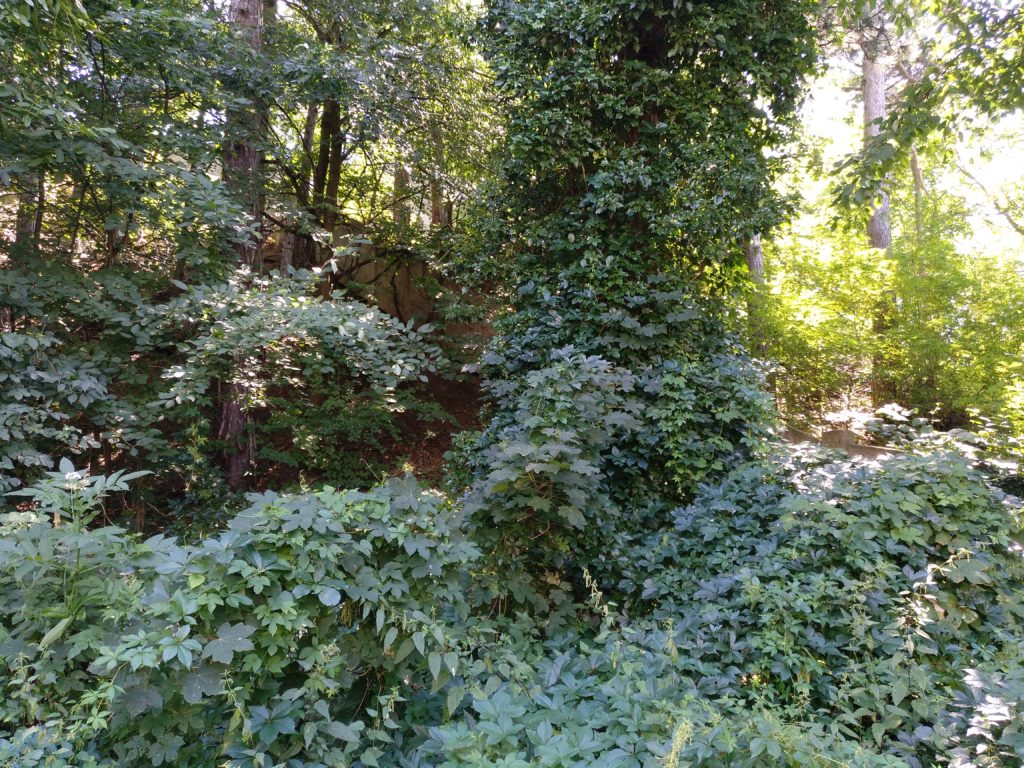
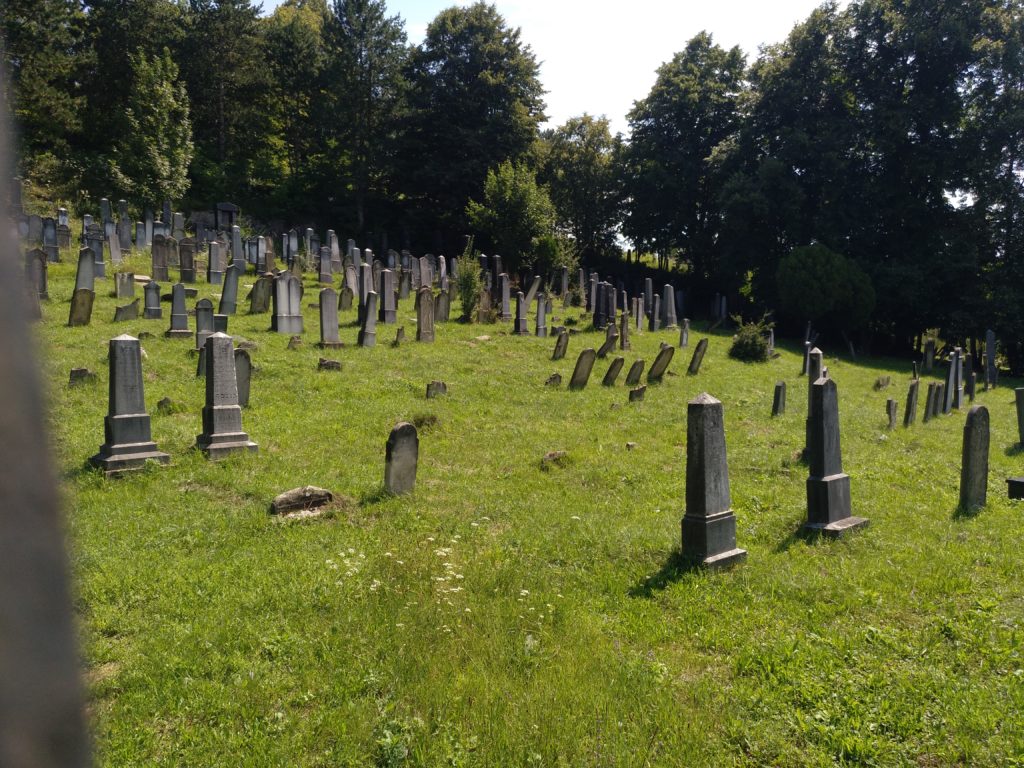
The Cemetery is on Partizánska road, perhaps 1km from the town center. It is on a slope and enclosed by a wall approximately 2m high. The gates are safely locked and it is difficult to get a glimps inside. We did our best, however, and managed to take some photographs from over the wall or through little holes.

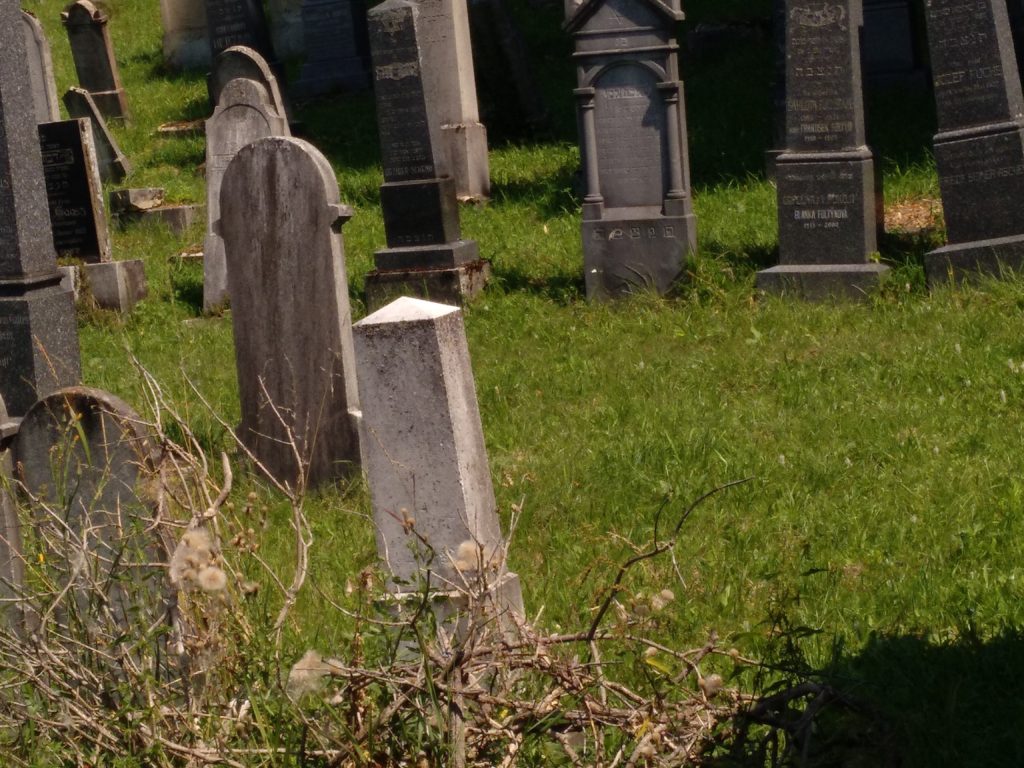
The cemetery, as far as we could see from outside, appears in fairly good shape. Most (though not all) headstones are standing (some at precarious angles) and the grass seems about knee-high. The place is not an overgrown jungle.

Further up the slope are fewer graves and some quite large trees. I wonder how they were able to dig graves into this certainly rather rocky ground.

If there is a caretaker we could not find him, nor could we find a telephone number.

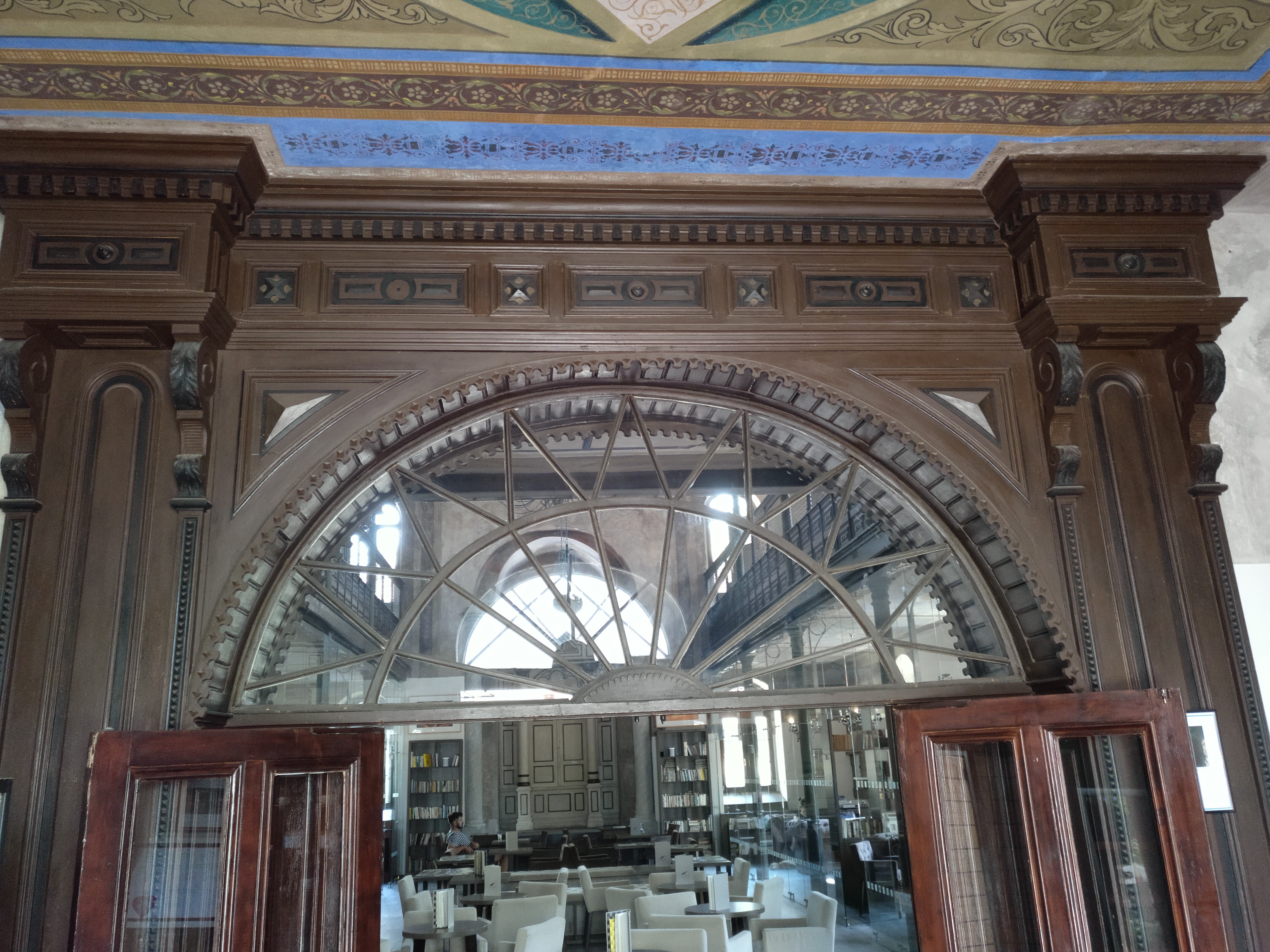
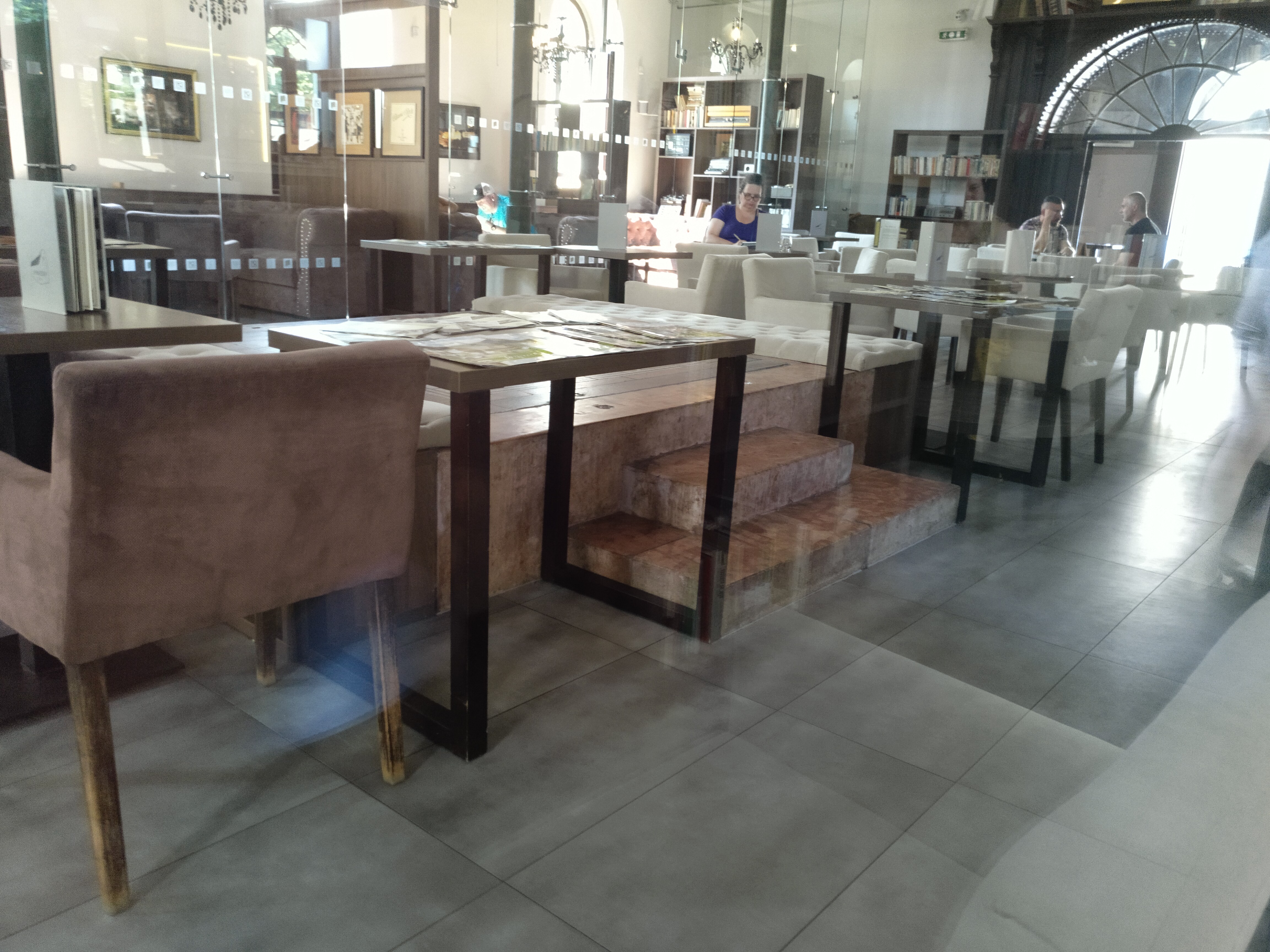
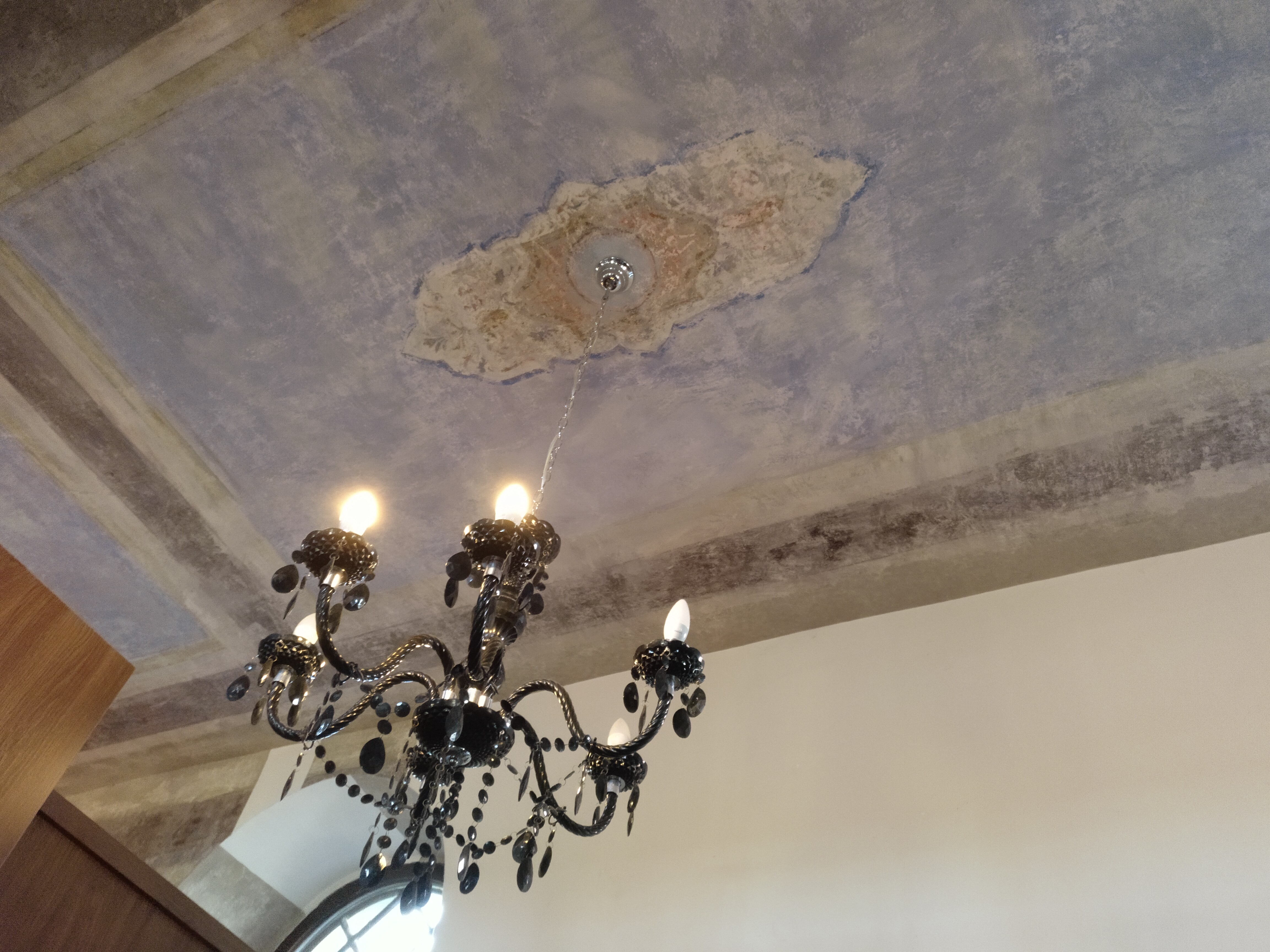
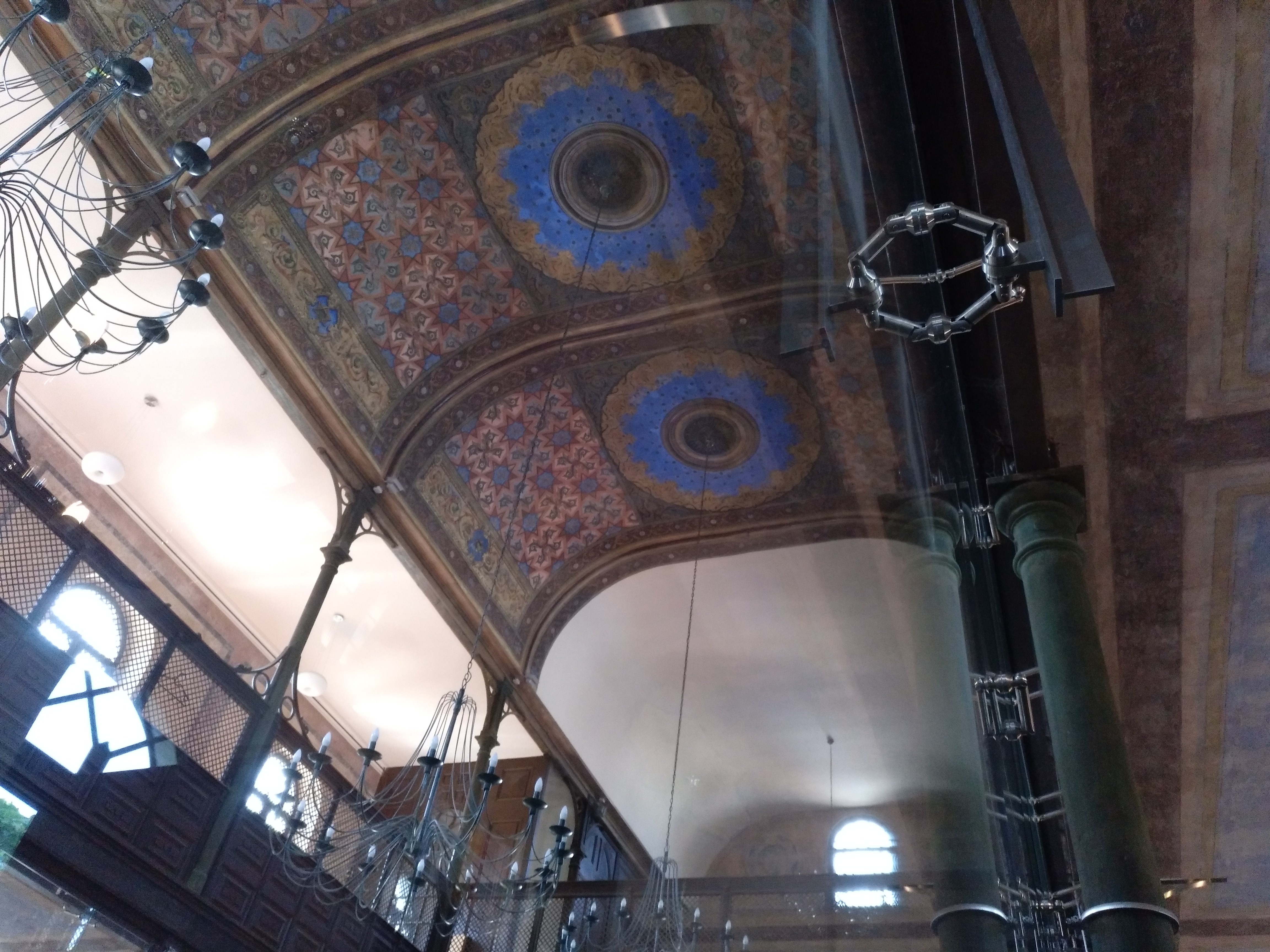
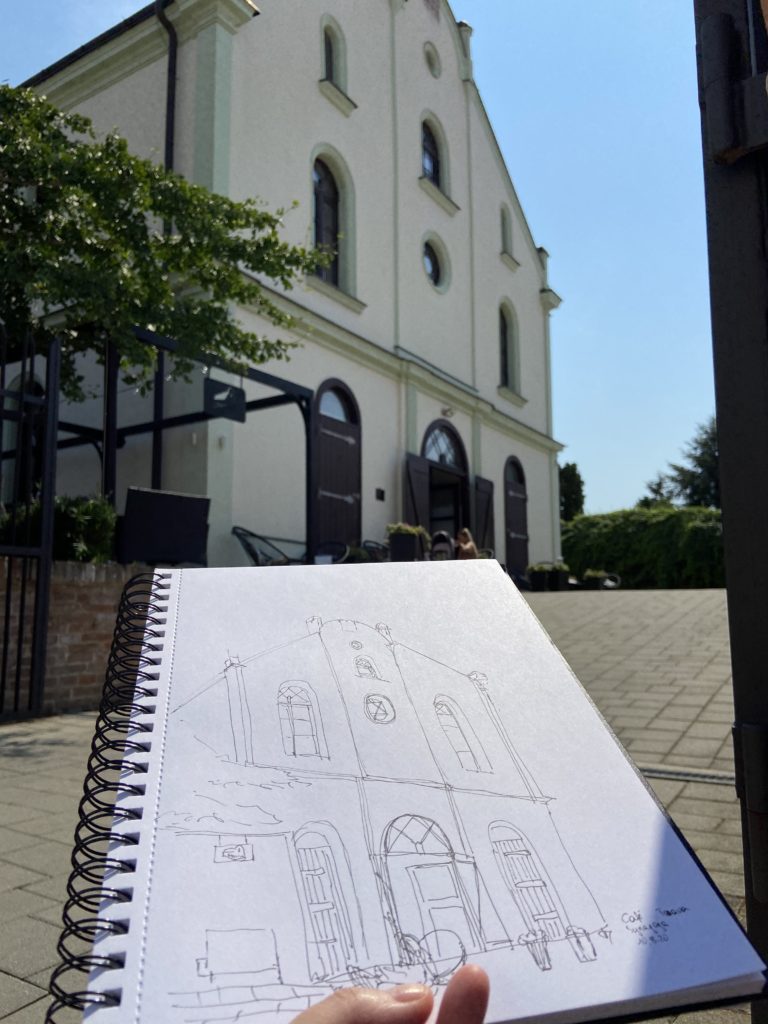
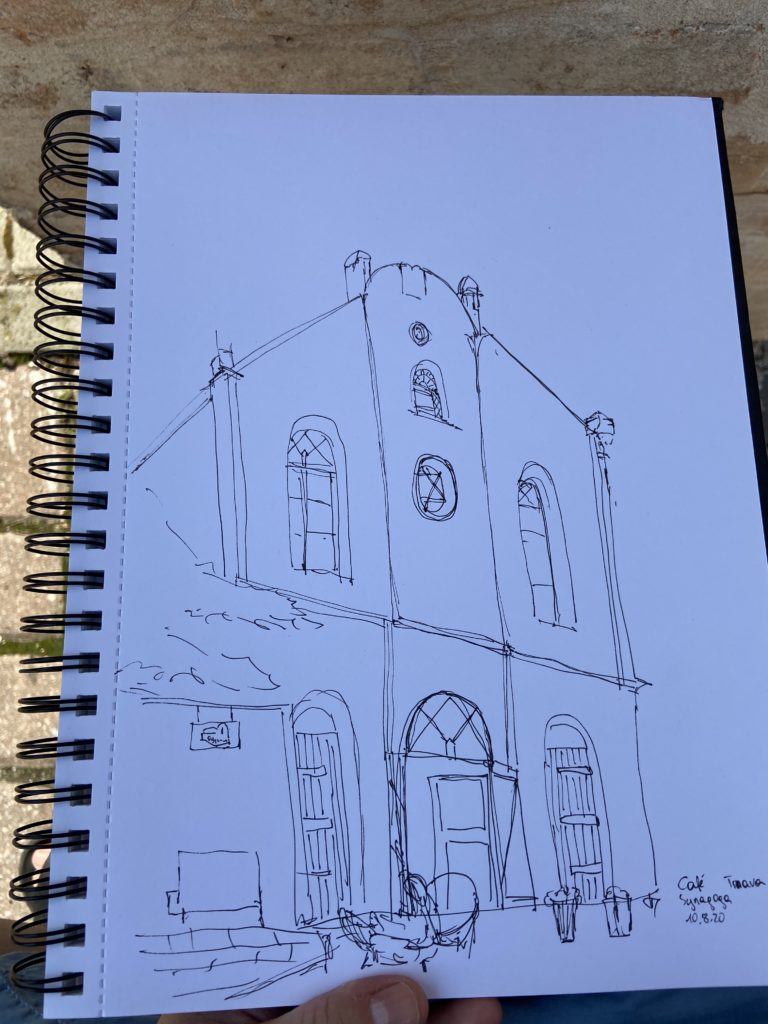
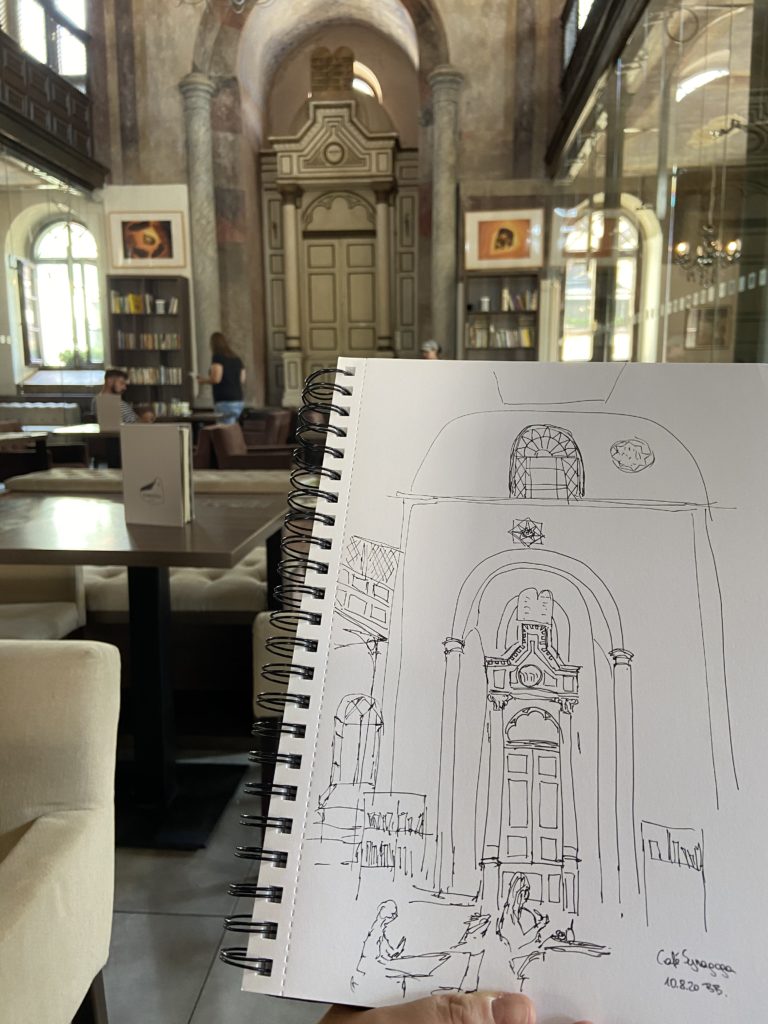
Synagóga Café, Trnava

My first reaction was dismay. But then I sat down, had a lemonade and began to argue with myself.

The Entrance

The dismay I experience is not really with the proprietors who have turned this beautiful building into a beautiful, pleasant, spacious coffee house. It is the decline and destruction of Jewish life in Slovakia and the rest of Central and Eastern Europe that disconcerts me. But what would the alternative be? To let these fabulous buildings fall into disrepair?! Hardly better!

By the way, the home made lemonade is excellent and not too sweet.

http://www.synagogacafe.sk